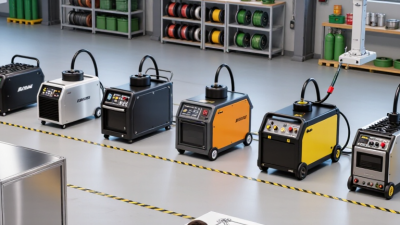


Choosing a laser welding gun supplier in China requires more than comparing power ratings or quoted prices. Buyers need to examine beam stability, cooling design, wire-feeding compatibility, consumable availability, and after-sales support. A gun may look compact on a product sheet, yet its weight, cable handling, and nozzle access matter during a full production shift. Small details count.
The industrial context is substantial. The International Federation of Robotics’ World Robotics 2024 report recorded 541,302 new industrial robot installations worldwide in 2023, including 276,288 in China. Those figures describe robot installations, not laser welding gun sales. They do, however, show the scale of China’s automation ecosystem and why supplier capabilities deserve careful evaluation. Reported market estimates for laser equipment also vary by scope, so buyers should check what each study actually measures.
This overview compares leading Chinese suppliers through practical criteria: technical documentation, application support, product range, and evidence of manufacturing capability. It also considers whether a supplier can explain parameters clearly and provide test results relevant to the buyer’s materials and workflow. A precise expert quotation should be traceable to its original source. No source article or verifiable quotation was provided here, so attributing a statement to a named expert would risk inventing one. That gap matters. A credible shortlist should rest on verifiable specifications, direct supplier checks, and independent testing—not polished claims alone.
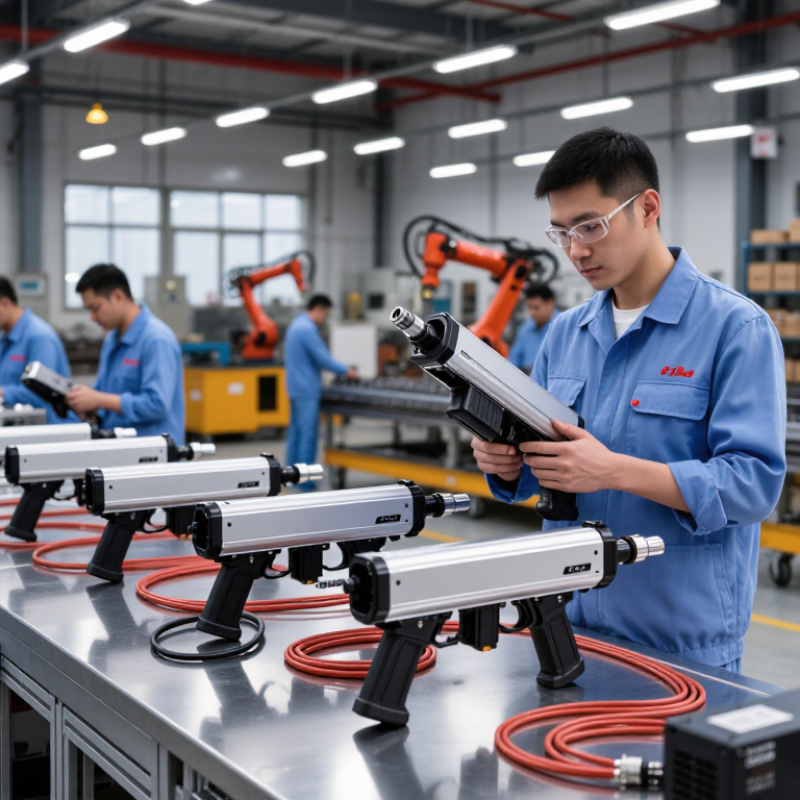
A laser welding gun directs a concentrated beam onto two metal surfaces, creating a narrow molten pool. Most handheld systems use a fiber laser source, a collimating lens, and a focusing lens. The focused beam melts the joint, while shielding gas limits oxidation around the weld. Some guns also use beam wobble, moving the spot in a small pattern to widen the weld and improve gap tolerance.
The process is fast and produces a smaller heat-affected zone than many conventional methods. Grand View Research estimated the global laser welding machine market at about USD 2.68 billion in 2023, with a projected 9.6% compound annual growth rate from 2024 to 2030. This growth explains the rising number of Chinese suppliers, but market growth does not guarantee equal equipment quality. A practical buyer should inspect laser stability, cooling performance, wire-feeding accuracy, and available process data.
Settings matter greatly. Power, travel speed, focal position, and gas flow can change penetration within seconds. Poor alignment may create porosity or an uneven bead. It happens. Independent testing remains essential. Ask suppliers for weld samples on the same stainless steel, aluminum, or galvanized material used in production. ISO 3834 welding-quality principles can support this evaluation, although certification alone cannot replace hands-on verification. A clear maintenance plan, operator training, and traceable test records often reveal more than a polished product brochure.
| Evaluation Dimension | Typical Industry Data | How It Works or Why It Matters | Supplier Selection Checkpoint |
|---|---|---|---|
| Product Definition | Handheld laser welding gun with an optical head, focusing lens, protective window, shielding-gas path, and control interface. | The gun focuses a high-energy laser beam onto the joint, locally melting the base materials and forming a weld pool. | Confirm optical design, cooling method, safety interlocks, replacement parts, and compatibility with the selected laser source. |
| Common Laser Wavelength | Approximately 1,030–1,080 nm for widely used fiber-laser welding systems. | Near-infrared energy is delivered through an optical fiber and focused by the gun onto metals such as stainless steel, carbon steel, aluminum, and galvanized sheet. | Check that the gun’s collimation and focusing optics are rated for the intended wavelength and power level. |
| Typical Handheld Power Range | Common commercial configurations are around 1–3 kW; higher-power systems are available for thicker materials and faster travel speeds. | Higher power can increase penetration and welding speed, but it also requires suitable optics, cooling, shielding gas, and operator protection. | Request measured welding samples at the required thickness instead of comparing rated power alone. |
| Beam-Focusing Configuration | Fixed-focus or adjustable-focus optical assemblies; many handheld systems use interchangeable focusing lenses. | The focal spot determines energy density, penetration, bead width, and tolerance to joint gaps. | Review focal-length options, spot-size range, lens availability, and the cost of protective-window replacement. |
| Wobble or Beam Oscillation | Many handheld guns provide selectable oscillation patterns and adjustable wobble widths, commonly from a few millimeters up to roughly 5 mm depending on the design. | Beam oscillation broadens the molten pool, improves coverage of wider joints, and can help accommodate small fit-up variations. | Verify pattern control, maximum oscillation width, frequency range, and whether parameters can be locked for repeatable production. |
| Shielding Gas | Argon, helium, or gas mixtures may be used; the suitable flow rate depends on material, nozzle design, joint geometry, and travel speed. | Shielding gas protects the hot weld pool from atmospheric contamination and helps reduce oxidation and porosity. | Check gas inlet design, nozzle options, flow-control requirements, and documented process recommendations. |
| Cooling and Duty Cycle | Air-cooled and water-cooled configurations are used; continuous production at higher power generally requires more effective thermal management. | Cooling protects the focusing optics, seals, sensors, and housing from heat generated during extended operation. | Ask for rated duty cycle, cooling requirements, alarm functions, recommended coolant, and service procedures. |
| Material Compatibility | Frequently processed materials include stainless steel, mild steel, galvanized steel, aluminum alloys, and some copper applications. | Reflectivity, thermal conductivity, surface condition, and joint design affect absorption, penetration, and process stability. | Evaluate sample welds using the actual alloy, thickness, surface treatment, and joint configuration. |
| Welding Thickness Capability | Actual thickness capability varies widely with laser power, material, joint preparation, travel speed, and whether one-sided or multi-pass welding is used. | Laser welding is most effective when the joint fit-up and process parameters allow stable energy coupling and adequate penetration. | Use validated process records and cross-section inspection; avoid relying only on generalized thickness claims. |
| Operator Safety Features | Typical safeguards include a contact sensor, trigger control, key switch, emergency stop integration, protective-gas monitoring, and laser-safe enclosure requirements. | Industrial welding lasers are hazardous Class 4 sources and require engineered controls, suitable personal protective equipment, and controlled access. | Require documented compliance with applicable laser-safety and machine-safety standards for the destination market. |
| Control and Parameter Management | Common controls include laser power, wobble width, wobble frequency, welding mode, wire-feed settings, gas timing, and alarm status. | Controlled parameters provide repeatable energy input and help operators adapt the process to different materials and joint geometries. | Check language options, password protection, recipe storage, parameter traceability, and remote diagnostics. |
| After-Sales and Spare Parts | Key consumables typically include protective windows, focusing lenses, nozzles, seals, sensors, and wire-feed components where applicable. | Clean optics and correctly fitted consumables are essential for stable beam delivery, weld quality, and operating life. | Compare documented service response, spare-part availability, training, warranty terms, and technical support coverage. |
| Recommended Supplier Verification Method | Technical sample testing, factory or laboratory inspection, serial-number traceability, conformity documents, and reference checks. | A supplier’s practical capability is best demonstrated by repeatable weld results, documented specifications, and reliable support rather than marketing claims alone. | Use the same test coupon, material, thickness, joint design, filler wire, shielding gas, and acceptance criteria for every shortlisted supplier. |