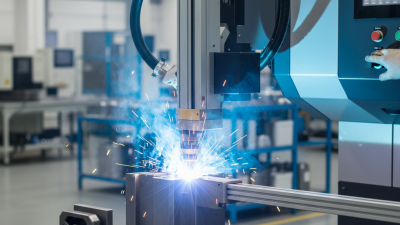


Choosing the 2026 best laser welder for industrial use requires more than comparing power ratings. A reliable decision must connect machine capability with material, joint design, production volume, and operator skill.
Fortune Business Insights valued the global laser welding machine market at USD 2.49 billion in 2023. Its report projects substantial growth through 2032, driven by automotive, aerospace, electronics, and medical manufacturing. MarketsandMarkets also identifies automation, fiber-laser adoption, and robotic integration as important growth factors. These figures show momentum, but they do not identify one universal winner.
Dr. John Ion, a respected laser-processing specialist and author of Laser Processing of Engineering Materials, has emphasized that “the laser is only as good as the process built around it.” That principle matters on a factory floor. A 4-kilowatt fiber laser may weld thick steel quickly, yet it can waste energy on thin stainless components. A compact 1.5-kilowatt laser welder may deliver better control, lower distortion, and simpler maintenance.
Real evaluation starts with test coupons. Inspect penetration depth, porosity, spatter, bead consistency, and heat-affected zones. Measure cycle time beside the machine, not only in a brochure. Ask whether replacement optics, protective windows, and service engineers are available locally.
No ranking is perfect. Actual results depend on setup quality. Even an excellent machine can produce weak welds when shielding gas, focus position, or clamping is poorly controlled. This guide therefore compares leading systems through practical performance, verified specifications, safety features, lifecycle cost, and industrial support.
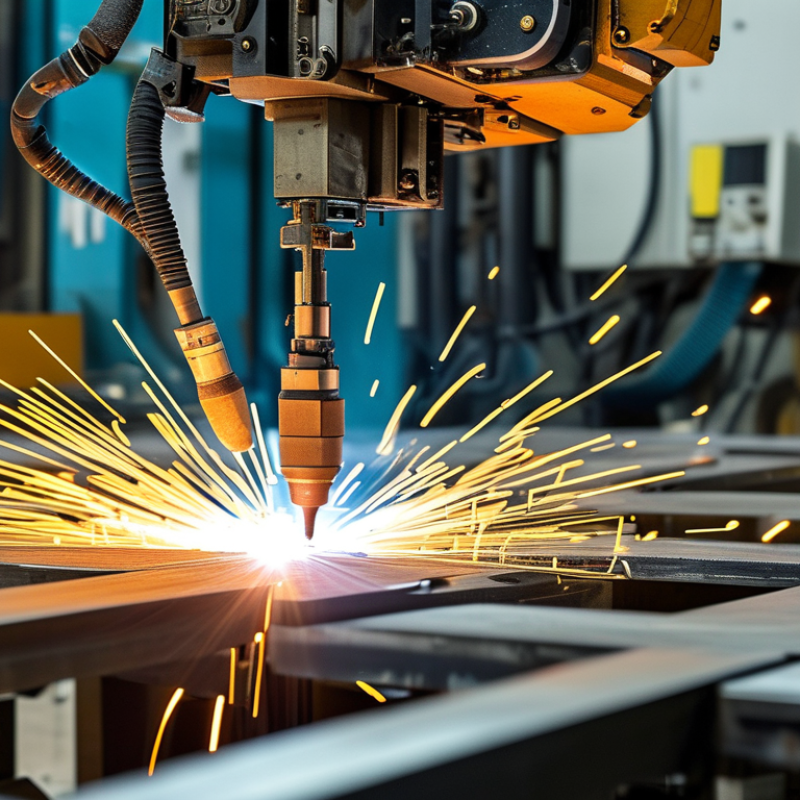
An industrial laser welder is a production system, not simply a handheld torch with a laser. It combines a laser source, focusing optics, motion control, shielding gas, cooling, safety interlocks, and process monitoring. The concentrated beam creates a narrow weld zone with limited heat distortion. This matters when joining thin stainless-steel panels, battery enclosures, medical components, or precision machinery.
In practical use, operators adjust power, travel speed, focal position, and gas flow for each material. A 0.8-millimeter sheet can burn through within seconds if the focus is wrong. I have also seen clean-looking seams fail because joint preparation was inconsistent. Appearance can mislead. Weld penetration and metallurgical testing still matter.
Market reports indicate strong industrial interest. Grand View Research estimates the laser welding machine market will expand at about 9% annually through 2030. MarketsandMarkets reports similar growth, although its market boundaries differ. These figures show momentum, not guaranteed productivity. A high-power system may waste money on low-volume work. A lower-power machine may struggle with thick sections or reflective metals.
Industrial selection should therefore begin with material thickness, cycle time, joint design, and required inspection methods. ISO 15614-11 provides a framework for qualifying laser welding procedures. Reliable systems also record weld parameters and detect unstable penetration during production. That evidence supports traceability. It does not replace skilled process validation.
| Laser Welder Type | Typical Output Power | Common Wavelength | Typical Materials | Practical Weld Thickness Range | Typical Efficiency | Key Advantages | Typical Industrial Applications | Best Suited For |
|---|---|---|---|---|---|---|---|---|
| Continuous-Wave Fiber Laser Welder | 1–6 kW for general industrial systems | Approximately 1,070 nm | Carbon steel, stainless steel, aluminum, galvanized steel, copper alloys, titanium | Approximately 0.5–12 mm, depending on power, joint design, material, and welding speed | Approximately 25–35% electrical-to-optical efficiency for the laser source | High beam quality, low maintenance, narrow heat-affected zone, high welding speed, and good automation compatibility | Automotive components, sheet-metal fabrication, machinery, industrial enclosures, energy equipment, and metal assemblies | Most general-purpose industrial welding operations |
| High-Power Fiber Laser Welder | 6–20 kW and above for deep-penetration systems | Approximately 1,070 nm | Carbon steel, stainless steel, aluminum, nickel alloys, and selected copper applications | Approximately 8–30 mm or more in multi-pass, hybrid, or specially prepared joints | Approximately 25–35% for the laser source; complete system efficiency is lower | Deep penetration, high deposition rates, reduced filler-metal use, and suitability for mechanized production | Heavy machinery, shipbuilding components, structural fabrication, rail equipment, pressure-related components, and large assemblies | High-volume production and thick-section welding |
| Diode Laser Welder | 1–10 kW, with higher-power systems available | Approximately 800–1,000 nm | Stainless steel, aluminum, copper, nickel alloys, plastics with suitable laser absorption, and coated metals | Approximately 0.2–8 mm, depending strongly on beam quality and material | Approximately 35–50% electrical-to-optical efficiency for many direct-diode sources | High electrical efficiency, compact design, good surface heating, and strong performance on reflective materials | Battery components, automotive parts, heat exchangers, plastics processing, cladding, and surface treatment | Reflective materials, surface processing, and applications prioritizing energy efficiency |
| Disk Laser Welder | 2–16 kW for industrial systems | Approximately 1,030 nm | Steel, stainless steel, aluminum, copper alloys, titanium, and nickel-based alloys | Approximately 1–25 mm, depending on system configuration and joint preparation | Approximately 20–30% electrical-to-optical efficiency | High beam quality at elevated power, stable deep penetration, and good performance in demanding automated applications | Automotive body structures, aerospace components, precision machinery, and large automated production lines | High-precision, high-power automated manufacturing |
| Pulsed Fiber Laser Welder | Average power commonly 50–500 W; peak power can be several kilowatts | Approximately 1,070 nm | Stainless steel, gold, silver, nickel alloys, titanium, copper, and small electronic components | Approximately 0.05–2 mm, depending on pulse energy and joint geometry | Varies by pulse energy, repetition rate, and laser architecture | Low heat input, precise control, minimal distortion, and excellent suitability for small or delicate parts | Medical devices, electronics, jewelry, sensors, small precision components, and repair welding | Micro-welding and heat-sensitive components |
| CO₂ Laser Welder | 1–20 kW in industrial systems | Approximately 10.6 μm | Carbon steel, stainless steel, ceramics, glass, and selected nonmetallic materials | Approximately 0.5–20 mm, depending on power and process setup | Approximately 10–15% electrical-to-optical efficiency | High power availability and effective absorption by many nonmetallic materials | Legacy automotive production, thick steel processing, ceramics, glass, and specialized fabrication | Specialized installations where long-wavelength processing is advantageous |