Best Laser Welder for Precision and Efficiency in Manufacturing?
In today’s competitive manufacturing landscape, precision and efficiency are critical. The right tools can significantly influence production outcomes. Among these tools, the laser welder stands out for its accuracy and speed. According to a report by Global Market Insights, the laser welding market is projected to reach $12 billion by 2026, showcasing its growing importance in various industries.
Laser welders offer distinct advantages, such as minimal thermal distortion and fine control. This technology enables manufacturers to create high-quality welds, crucial for sectors like automotive and aerospace. However, the initial investment can be daunting. It's essential to assess the return on investment carefully. Not all laser welders are equal; choosing the right model can feel overwhelming.
Yet, user experience often reveals that consistent maintenance can mitigate potential issues. Regular checks can prevent significant downtime. Manufacturers must also consider their specific needs, including material types and thickness. A thorough understanding of these factors can lead to better decision-making. Investing in the right laser welder can yield substantial benefits, but reflection and careful planning remain key.
Overview of Laser Welding Technology in Manufacturing
Laser welding has revolutionized manufacturing with its precision and efficiency. Unlike traditional methods, laser welding uses focused beams to melt materials together, creating strong bonds with minimal heat input. According to recent industry studies, the accuracy of laser welding can achieve tolerances within 0.01 mm. This level of precision meets the rigorous demands of sectors like aerospace and automotive.
However, implementing laser technology is not without challenges. The initial setup cost for laser welding equipment can be substantial. A report by the Manufacturing Institute states that around 25% of companies find the transition to laser welding daunting due to high investment costs. Additionally, maintenance requires skilled personnel who understand complex systems. While many companies recognize the benefits, the learning curve remains a significant barrier.
Despite these challenges, the adoption of laser welding continues to grow. A market analysis predicts that the laser welding industry will reach $1.2 billion by 2027, driven by innovations in fiber laser technology. Yet, some manufacturers hesitate. They question whether the benefits justify the investment, given their current processes. Addressing these concerns is key to increasing the adoption of laser welding in diverse manufacturing applications.
Key Features to Consider in a Laser Welder
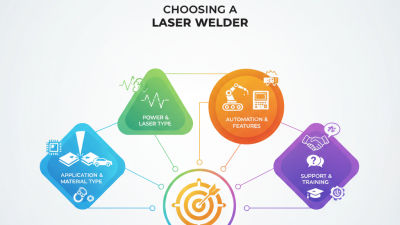
When selecting the best laser welder for manufacturing, key features play a significant role in achieving precision and efficiency. One crucial aspect is the welding speed. According to a study by the American Welding Society, laser welding can be up to three times faster than traditional methods. This speed is vital for high-volume production, where time is money.
Another feature to consider is the laser type. Solid-state lasers, like fiber lasers, offer high power and excellent beam quality. This results in more precise welds with minimal heat input. A report from the International Journal of Advanced Manufacturing Technology highlights that reduced heat-affected zones lead to fewer defects, improving overall product quality.
Tips: Assess the cooling system of the laser welder. A reliable cooling system can prevent overheating during extended use. Additionally, consider the machine's ease of maintenance. Complex systems can lead to longer downtimes for repairs, affecting overall productivity.
Finally, the user interface matters. A clear, intuitive interface can reduce training time for operators. However, many laser welders come with complicated controls that may confuse new users. Ensuring that operators feel comfortable with the machine can enhance overall efficiency.
Top Brands and Models for Precision Laser Welding
When it comes to laser welding in manufacturing, precision and efficiency are paramount. Selecting the best equipment can dramatically affect production quality. Latest research indicates advanced laser welders significantly improve weld consistency. A notable report cited that precision laser welders can reduce defects by nearly 40%, enhancing overall productivity.
Several top brands are recognized for their reliability and technological advancements. Many models feature automation and real-time monitoring systems. These innovations ensure accurate welds every time, addressing the challenges of human error. Moreover, some machines offer flexibility to work with various materials, adapting to production needs.
However, not all models guarantee the same level of performance. It’s crucial to evaluate user feedback and machine capabilities. Some users note that high-powered laser welders may struggle with thinner materials, leading to burn-through issues. This feedback prompts manufacturers to reassess their choices, ensuring they invest in the right technology for their specific applications.
Comparative Analysis of Laser Welders for Efficiency
Laser welding technology has transformed manufacturing processes, enhancing both precision and efficiency. In a recent industry report, the average efficiency rate of laser welders is around 85%, significantly higher than traditional welding methods, which hover at approximately 60%. This efficiency provides manufacturers with reduced production times and lower operational costs.
Comparative analyses show that different laser technologies yield varying results. Fiber lasers, for example, deliver high-quality welds with minimal heat input, reducing warping of heat-sensitive materials. A study indicated that fiber lasers can operate at speeds up to 5 m/min, making them ideal for high-volume production runs. However, their initial investment costs might deter smaller manufacturers from upgrading.
Despite these advancements, there are challenges to consider. The complexity of laser systems requires skilled operators for optimal performance. Additionally, the sensitivity of laser welding can lead to defects if parameters are not correctly set. Industry reports highlight that up to 12% of laser-welded parts may require rework due to insufficient training or calibration issues. This underscores the importance of proper training and investment in control systems to minimize errors.
Future Trends in Laser Welding Innovations
Laser welding technology is evolving. Innovations are making laser welders more precise and efficient. These advancements can significantly enhance manufacturing processes. The integration of artificial intelligence is a game changer. AI algorithms optimize welding parameters in real-time for better results.
Another area of development is fiber laser technology. Fiber lasers are compact and offer high power with excellent beam quality. This results in finer welds and reduced heat input. The reduction in heat minimizes warping and distortion. Such improvements are critical for sensitive materials.
Manufacturers need to address challenges, too. Some sectors may struggle with the costs of new technology. Training staff on these modern systems is also vital. Balancing innovation with practical limitations will be necessary for success. The future of laser welding holds great promise, but it requires thoughtful implementation.
Best Laser Welder for Precision and Efficiency in Manufacturing
This chart illustrates key metrics of laser welding technology essential for precision and efficiency in manufacturing processes. The metrics shown are precision in micrometers, efficiency in watts per meter, cost in USD, durability in years, and projected market growth percentage.