hero image

Top 10 Metal Laser Welding Machines for Global Buyers

Choosing a metal laser welding machine is not just a matter of comparing wattage or price. Buyers must consider the metals they process, joint design, production volume, operator skill, and available service support. A stainless-steel seam on a thin enclosure needs different control from a deep weld on a thick component. Small details matter: a stable wire feed, clear parameter settings, and accessible safety enclosures can shape everyday results. Sometimes the brochure looks better than the workshop reality.

Laser-manufacturing researcher Dr. Frank Vollertsen is associated with a practical principle: “Reliable welding depends on matching the process to the material and joint.” This is an editorial paraphrase, not a verified verbatim quotation. It captures why buyers should examine more than headline specifications. A useful comparison asks how each machine handles heat input, fit-up variation, repeatability, and maintenance. It also checks what the supplier can demonstrate with the buyer’s own sample parts.

This Top 10 guide introduces machines for different budgets, applications, and production needs. It considers power, portability, automation options, control systems, and after-sales support, while recognizing that no single model suits every factory. A lower-cost unit may be adequate for occasional work, yet less practical on a busy production line. A premium system may offer speed and integration, but it still needs trained operators and careful setup. The rankings are a starting point, not a substitute for testing. Ask for a sample weld, inspect the finished joint, and confirm support before choosing.
Top 10 Metal Laser Welding Machines for Global Buyers

Laser Welding Fundamentals: 1.06 μm Fiber and 10.6 μm CO₂ Lasers

At about 1.06 μm, fiber lasers deliver energy through a flexible optical cable and are widely used for metal welding. Many common metals absorb this wavelength more readily than 10.6 μm CO₂ light, though surface condition and alloy matter. Polished copper is a difficult case. High reflectivity can send energy back toward the source, so suitable machine protection and settings matter. That matters.

A 10.6 μm CO₂ beam is usually guided by mirrors rather than a delivery fiber. That optical path needs careful alignment and clean optics. Bare metals often absorb CO₂ energy less readily, yet coatings, temperature, and beam intensity can change the result. CO₂ welding of metal is possible in specific setups, but it is not a like-for-like substitute for fiber welding.

For a real joint, wavelength is only one variable. Check material thickness, joint gap, focal position, travel speed, and shielding gas; small changes can alter penetration and spatter. Ask for a sample weld on the actual alloy, not just a polished coupon. Inspect the cross-section and bead, then record settings for repeat runs. Even a good-looking seam can hide lack of fusion. I would leave room for trial runs.

Machine Types and Configurations: Handheld, Robotic, and 3-Axis Systems

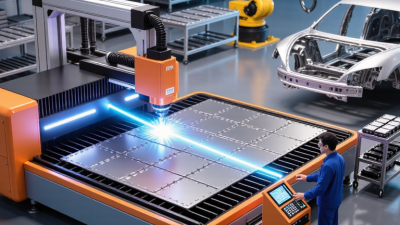
Machine configuration affects reach, repeatability, and how consistently a weld can be reproduced. Buyers should compare part size, joint access, production volume, and operator skill before choosing a system. A clean-looking sample weld is not enough; inspect the joint and verify settings on representative material. Fit-up, focal position, and shielding conditions can all change the result.

Handheld machines suit varied parts and short runs. An operator can follow seams around corners or reposition quickly between components. But hand movement introduces variation, especially on long seams or thin sheet. It takes practice. Check torch weight, cable handling, and access to the workpiece during a real trial, not just a brief demonstration. A handheld setup can feel forgiving, but it is not a substitute for consistent technique.

Robotic systems can repeat programmed paths across higher-volume production, provided fixtures locate each part reliably. Poor part positioning can undermine even a carefully taught path. Three-axis systems guide the laser along X, Y, and Z directions, making them useful for planned work areas and controlled component movement. They may be less adaptable around complex angles than multi-axis robots. The trade-off is real. Before purchase, ask how the supplier validates sample joints, manages changeovers, and supports operator training. Real production parts often reveal details a showroom sample misses.

Top 10 Metal Laser Welding Machines Compared by Power and Duty Cycle

Top 10 Metal Laser Welding Machines for Global Buyers

Top 10 Metal Laser Welding Machines Compared by Power and Duty Cycle

Power ratings only tell part of the story. A 1 kW unit can suit thin stainless panels, while 2–3 kW machines may handle thicker sections faster, depending on joint design and travel speed. Grand View Research’s 2024 Laser Welding Market report valued the global market at USD 2.7 billion in 2023 and projected 5.7% annual growth through 2030. That growth makes clear comparisons useful, but market size does not tell buyers which machine fits their production line.

Check what each supplier means by “duty cycle.” It may describe pulse timing, not how long the machine can weld continuously. If a supplier defines it over a ten-minute period, a 60% rating means six minutes operating and four minutes cooling. Confirm the test conditions, ambient temperature, and cooling system before comparing ratings. A higher-power unit with restricted operating time may produce less usable output across a shift than a lower-power, continuously rated unit. Small details matter.

For a fair shortlist, compare rated output, weld thickness on your actual metal, and sustained operating time. Run sample welds on the same material and joint, then inspect penetration and heat distortion. I find duty-cycle comparisons imperfect when suppliers use different definitions; buyers should ask for written test data. Keep one practical check: can the machine maintain the required weld quality through a real production run?

Buyer Selection Criteria: Joint Thickness, Weld Speed, Cooling, and Class 4 Safety

When comparing machines in a top-ten shortlist, start with the joint, not the headline power rating. Check the full thickness range and actual material grade, then inspect how the parts meet. A tight, repeatable seam is easier to weld than a joint with variable gaps. Small gaps matter. Ask for sample welds on your own components, including corners and thin sections. Record penetration, bead width, distortion, and cleanup; appearance alone can mislead.

Tips: Bring a drawing and representative coupons to a supplier trial. Test real parts. Confirm the stated speed on your seam length and chosen thickness. A fast travel setting may still cause rework if fit-up or penetration is inconsistent.

Cooling should match the planned duty cycle, not just occasional demonstrations. Compare chiller capacity and alarms with the machine’s operating requirements, and consider room temperature and dust. Plan for Class 4 laser controls, including guarded work areas, functioning interlocks, wavelength-rated eyewear, and trained operators. Verify setup and maintenance procedures with qualified safety personnel. These details can feel secondary during a purchase. They are not. Material batches, joint access, and operator technique can change results, so validate the process before production.

Global Quality and Safety Benchmarks: ISO 13919-1:2019 and IEC 60825-1

When comparing the top ten metal laser welding machines, buyers should look beyond power ratings and cycle speed. ISO 13919-1:2019 provides quality levels for imperfections in laser-beam welded joints made from specified metals, including steel, nickel, and titanium alloys. It helps teams describe issues such as pores, cracks, and incomplete fusion consistently. It does not, by itself, prove that a weld is suitable for every application. The required quality level should match the component’s design, service conditions, and inspection plan.

Ask suppliers how they verify sample welds against the chosen quality level. Request documented results from representative material thicknesses and joint designs; a polished demonstration coupon may hide real production challenges. Small details matter. IEC 60825-1 addresses laser product classification and safety requirements. For each machine, review its classification, enclosure, interlocks, warning labels, and instructions for safe operation and maintenance. Check how access panels behave during servicing, too. A strong enclosure is useful, but it cannot replace trained operators or routine checks. Standards are a practical reference, not a shortcut to judgment; even careful buyers may need independent review when the application is critical.

Metal Laser Welding: Quality and Safety Benchmarks

A comparison of the defined categories in two international standards relevant to global buyers.

ISO 13919-1:2019 defines three quality levels for imperfections in specified electron- and laser-beam-welded joints: B, C, and D. IEC 60825-1 uses seven laser product classes: 1, 1M, 2, 2M, 3R, 3B, and 4. These counts describe the standards’ category schemes—not machine rankings or directly comparable performance scores. Buyers should verify that welding quality and laser safety documentation applies to the specific equipment and use conditions.