

Why Choose a Laser Welder for Your Business?
Manufacturers are under pressure to weld faster, reduce rework, and protect product consistency. A laser welder addresses these demands with a concentrated heat source, narrow welds, and limited distortion. The difference is visible on the shop floor: cleaner seams, smaller heat-affected zones, and less post-weld grinding.
The International Energy Agency’s Global EV Outlook 2024 reported nearly 14 million electric car sales worldwide in 2023. That growth increases demand for precise battery, motor, and lightweight-body assembly. MarketsandMarkets also identifies automotive, electronics, and aerospace as major laser-welding application sectors in its Laser Welding Market report. These industries need repeatable results, not merely impressive speed.
Professor John Norrish, a respected welding specialist, has described laser welding as “a high-speed, low-heat-input process.” That phrase explains its business value clearly. Lower heat can reduce distortion, material waste, and corrective labor. However, equipment is not a magic shortcut. Operators still need suitable joint design, beam alignment, shielding gas control, and process validation.
The overlooked detail is training.
A poorly configured system can produce expensive defects quickly. Buyers should compare cycle-time evidence, maintenance support, safety controls, and return-on-investment assumptions. The International Federation of Robotics reported 541,302 industrial robot installations in 2023, showing how strongly factories are adopting automation. Yet automation without disciplined quality checks can create problems at higher speed.
A laser welder may be the right investment. It deserves measured testing first.
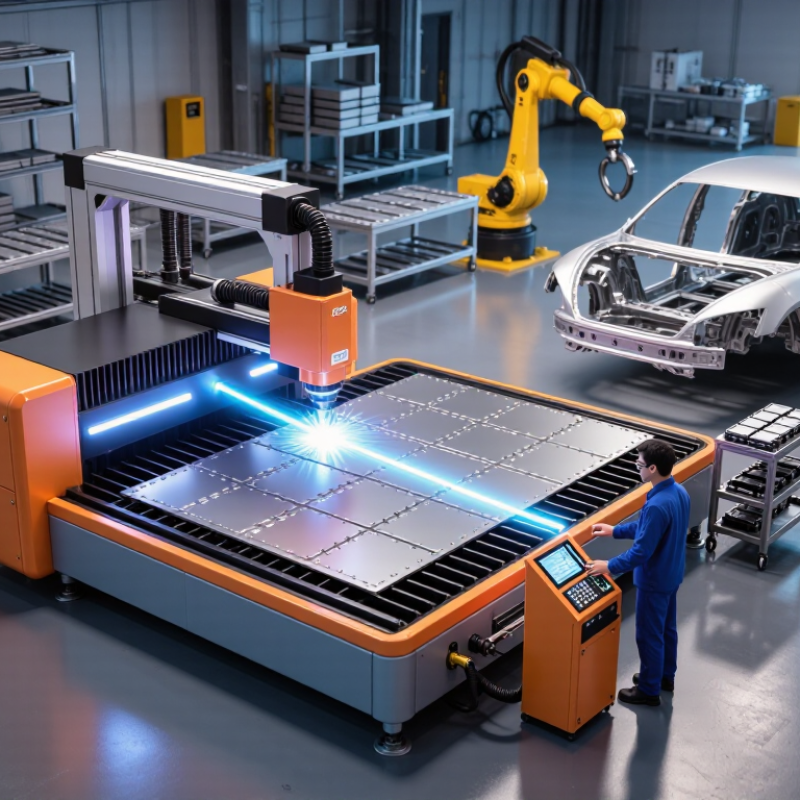
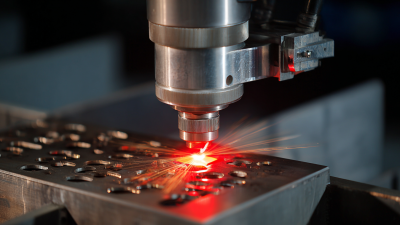
A laser welder uses a concentrated beam of light to join metal parts. The beam comes from a laser source and passes through focusing optics. At the joint, it creates intense, localized heat. The metal melts, then cools into a narrow weld.
Many systems use continuous or pulsed energy settings. Operators can adjust power, speed, pulse duration, and beam size for different materials. Shielding gas protects the molten pool from air contamination. Filler wire may be added when the joint has a gap or needs extra strength. In practical workshops, this process can produce clean seams with less heat distortion than traditional welding. Still, it is not effortless. A small alignment error can weaken the joint.
Tips: Clean the surfaces carefully before welding. Test settings on scrap metal first. Check focus, gas flow, and joint fit before production. Use the required enclosure, ventilation, and eye protection. Training matters because reflected laser energy can cause serious injury, even when the beam looks small. Record successful settings for repeat jobs, but review them when material thickness changes.
For a business, this control can reduce grinding and rework. Faster welding may also improve production flow. However, results depend on material type, operator skill, machine maintenance, and realistic process testing. A laser welder is powerful, but it cannot correct poor preparation.
| Data Dimension | Typical Laser Welder Characteristics | Business Relevance | Important Consideration |
|---|---|---|---|
| What It Is | A non-contact welding system that uses a concentrated laser beam to melt and join metal surfaces. | Supports precise, repeatable joining for production, repair, fabrication, and customized metalwork. | Results depend on machine configuration, material condition, joint design, and operator settings. |
| How It Works | The laser creates a focused heat source on the joint. The material melts locally and solidifies to form a weld, with or without filler wire. | Controlled energy input can reduce distortion and improve consistency between parts. | Correct focus position, travel speed, shielding gas, and laser power are essential for weld quality. |
| Common Laser Source | Industrial fiber lasers commonly operate at a wavelength near 1,070 nm. | Fiber systems provide efficient beam delivery and are widely used for metal processing. | Near-infrared laser radiation is hazardous to eyes and skin and requires a suitable safety enclosure and controls. |
| Typical Power Classes | Handheld and light fabrication systems commonly use approximately 1–3 kW; heavier applications may require more power. | Power can be matched to material thickness, joint type, penetration target, and required production rate. | Higher power does not automatically produce better welds; excessive heat can increase defects and distortion. |
| Suitable Materials | Commonly used with carbon steel, stainless steel, aluminum alloys, galvanized steel, and selected nickel-based alloys. | One machine can serve several product lines when appropriate parameters and fixtures are available. | Reflective materials, coated metals, dissimilar metals, and highly conductive alloys may require specialized process development. |
| Typical Thickness Range | Many systems handle thin sheet and plate applications from roughly 0.5 mm to 6 mm in a single pass, depending on power and joint design. | Suitable for enclosures, cabinets, appliances, automotive components, furniture, and general fabrication. | Actual capacity varies significantly with material, weld geometry, edge fit-up, shielding, and machine settings. |
| Welding Speed | Typical process speeds may range from about 0.5 to 10 m/min for suitable thin-metal applications. | Higher travel speed can increase throughput and reduce labor time on repetitive seams. | Speed must be balanced with penetration, bead appearance, porosity control, and joint strength. |
| Heat-Affected Zone | Generally narrower than many conventional arc-welding processes because the laser delivers energy to a small area. | Can help minimize warping, discoloration, rework, and post-weld straightening. | A narrow heat-affected zone does not eliminate thermal effects; material properties and process parameters still matter. |
| Filler Material | Autogenous welding is possible for well-fitted joints; filler wire can be added for gaps, reinforcement, or alloy control. | Less filler consumption may reduce consumable handling and cleanup for suitable applications. | Joint fit-up and edge preparation must be accurate when welding without filler wire. |
| Shielding Gas | Argon, helium, or argon-based gas mixtures may be used to protect the molten pool from atmospheric contamination. | Proper gas coverage helps improve bead appearance and reduce oxidation and porosity. | Gas selection and flow rate should be validated for the specific material, nozzle, and welding position. |
| Precision and Repeatability | The focused beam can create narrow, accurately positioned welds with programmable process parameters. | Useful for products requiring consistent dimensions, clean appearance, and repeatable quality. | Repeatability also depends on fixture accuracy, part tolerances, beam alignment, and maintenance. |
| Post-Weld Finishing | Clean laser welds may require less grinding, polishing, or correction than visibly rougher welds. | Can reduce secondary operations and shorten the time from welding to shipment. | Finishing requirements depend on appearance standards, surface condition, joint design, and welding technique. |
| Energy Efficiency | Fiber laser systems can convert electrical power to laser light efficiently, with wall-plug efficiency commonly reported above 25% for the laser source. | Lower heat input and efficient beam generation can support reduced operating energy per weld in suitable production conditions. | Total energy use also includes cooling, extraction, compressed gas, motion systems, and facility equipment. |
| Operator Skill | Modern systems can simplify parameter adjustment compared with some manual welding processes, but trained operators are still required. | Standardized settings and guided controls can improve process consistency across shifts. | Training must cover welding practice, material preparation, laser hazards, protective equipment, and emergency procedures. |
| Production Flexibility | Available as handheld, workstation-based, robotic, and CNC-integrated systems. | Businesses can select a format for prototypes, low-volume work, repetitive production, or automated lines. | Automation requires suitable fixturing, part presentation, programming, guarding, and integration planning. |
| Safety Requirements | Class 4 industrial laser systems require engineered controls such as enclosures, interlocks, warning indicators, beam management, and documented procedures. | A properly designed safety system supports compliant operation and protects employees and visitors. | Laser safety requirements vary by jurisdiction; a qualified laser-safety professional should review the installation. |
| Maintenance Needs | Routine tasks may include cleaning optics and nozzles, checking shielding gas delivery, inspecting cooling systems, and verifying alignment. | Preventive maintenance helps preserve weld quality and reduce unplanned downtime. | Maintenance intervals depend on duty cycle, shop conditions, consumable design, and manufacturer specifications. |
| Best-Fit Applications | Thin and medium-gauge metal fabrication, stainless-steel products, sheet-metal assemblies, enclosures, kitchen equipment, and precision components. | Particularly valuable where appearance, speed, low distortion, and repeatability influence profitability. | Very thick sections, poor joint fit-up, outdoor work, or highly variable repair jobs may favor other welding methods. |
| Primary Business Advantages | High speed, precise heat control, low distortion, clean weld appearance, and reduced secondary finishing for suitable jobs. | These benefits may increase throughput, improve product consistency, and reduce labor associated with rework and finishing. | Return on investment should be evaluated using actual part mix, utilization, labor rates, consumables, safety infrastructure, and maintenance costs. |