1101 W. Sanilac Rd. Caro, MI 48723
989.673.6690
Choosing a laser welder is not just a matter of picking the highest power or the lowest price. The right machine should suit the metals, thicknesses, and joint shapes you actually work with. A unit for thin stainless-steel panels may not perform well on thicker parts or frequent production runs. Check rated output, adjustable settings, cooling requirements, and the torch’s weight before comparing models.
Small details matter. Can the controls be understood without repeated guesswork? Is the cooling system practical for your workshop? A short, supervised demonstration on your own sample material can reveal more than a polished product photo. That matters. A polished brochure is not proof of reliable results.
This guide compares ten laser welders through practical buyer considerations, including material compatibility, weld consistency, ease of setup, maintenance, support, and total operating costs. Specifications are useful, but they do not tell the whole story. Ask how a model handles your typical weld length and daily workload. Also confirm what training, consumables, and service support the seller provides. Even experienced operators may need time to adjust to a new system; that is easy to underestimate. No single machine is best for every shop. Use the comparisons to build a shortlist, then verify key claims with the manufacturer and, where possible, test representative parts before buying.
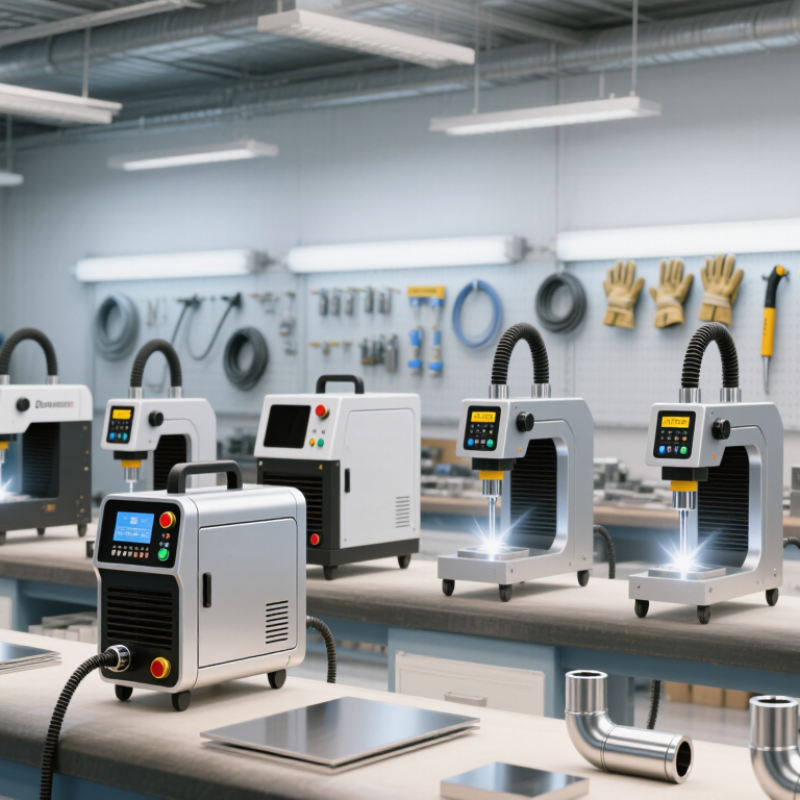
A laser welder directs a concentrated beam onto the joint between two parts. The surface absorbs the energy, heats rapidly, and melts along a narrow seam. As the molten metal cools, it forms the weld. Some processes use shielding gas to limit oxidation, while precise fixturing keeps parts aligned. Small gaps can still cause uneven seams. Details matter.
Depending on the material and settings, the beam may melt only the surface or penetrate more deeply. Operators adjust power, travel speed, focus, and shielding to suit the joint. A shiny stainless-steel sheet and a thicker aluminum bracket will not respond the same way. That is why test pieces and inspection are useful before production runs.
Laser welders are used for vehicle components, appliance housings, electronic enclosures, and precision metal assemblies. Their narrow heat-affected zones can help reduce distortion on thin parts, though results depend on setup and material condition. In a workshop, a clean, well-clamped joint is often more valuable than a complicated setting. Enclosures, suitable eye protection, and local fume extraction also matter; bright light and metal fumes are not minor concerns.
Wavelength is one factor buyers consider when comparing laser welders. The chart shows typical source wavelengths; actual specifications vary by system.
Where they are used: Fiber lasers are widely used for production welding of metals such as steel and aluminum; Nd:YAG lasers are used for precision spot and seam welding; CO₂ lasers are used in industrial metal processing; and blue diode lasers are useful for welding highly reflective metals such as copper. Wavelength alone does not determine weld quality—material, thickness, beam delivery, power, and process settings matter too.
Laser welders differ by beam source, operating mode, and delivery format. Fiber lasers are common for metals because they deliver energy through flexible optical cables and suit automated production. Pulsed operation sends brief bursts, helping limit heat around thin sheet edges. Continuous-wave systems maintain a steady beam and can weld thicker sections faster, but may create a wider heat-affected zone. Small parts need careful control.
Diode systems can offer compact equipment and efficient energy use, while solid-state systems such as Nd:YAG can support pulsed welding and specialized applications. These categories overlap: source type and operating mode are not the same thing. Handheld units improve access to large assemblies, though weld quality depends heavily on operator technique and consistent joint fit. Automation offers repeatability, but fixtures and programming add cost.
The choice has real market momentum. Grand View Research valued the global laser welding market at USD 2.7 billion in 2023 and projected a 9.8% compound annual growth rate from 2024 to 2030. That growth does not mean every shop needs a high-power system. Buyers should compare material thickness, reflective surfaces, duty cycle, seam access, and extraction needs using sample welds. A neat demo seam can still hide weak penetration. Test the actual joint.
A useful laser welder should match the materials, thicknesses, and joint shapes buyers actually handle. Check the adjustable power range and pulse or beam settings, not just the maximum wattage. Thin stainless sheet may need a different setup from a thicker aluminum component. Small details matter. Ask for test welds using your own material, then inspect penetration, distortion, and consistency.
Safety and heat management deserve equal attention. Look for a suitable enclosed work area, reliable interlocks, clear operating instructions, and provisions for fume extraction where the process requires it. Check the cooling system and stated duty cycle against your expected production pace. A machine that performs well for a brief demonstration may behave differently during a long shift. That distinction is easy to overlook.
Consider the controls, torch or handpiece comfort, and how quickly operators can adjust settings without guesswork. Confirm what maintenance involves, whether consumables are readily available, and what technical support is offered. Even a neat sample can be misleading. A reflective surface, awkward seam, or inconsistent fit-up may change the result. Buyers should compare repeatable trials, not rely on one impressive weld or a specification sheet alone.
When comparing the top 10 laser welders in practice, look beyond rated power. Ask each machine to join the same metal thickness and joint type. A clean bead on a flat coupon may look impressive, yet a tight corner can expose poor control. Watch for burn-through, uneven edges, and spatter. Small details matter.
Test the controls with a real operator, not just a specification sheet. Can the user adjust power, pulse, and wire feed without hunting through menus? Check how stable the weld remains across several minutes of work. Duty cycle, cooling performance, and torch comfort affect output over a full shift. Heat builds quickly. So does fatigue.
Compare service access, training, and documented safety features alongside weld quality. A machine that is easy to clean and maintain can reduce avoidable downtime. Ask suppliers for sample welds on your own material, then inspect both the surface and the reverse side. Keep the test consistent. Results can still vary with fit-up and operator skill, so one polished sample proves little. That caveat is easy to miss.
A laser welder should match the actual parts on your bench, not an idealized sample. Check material, thickness, joint gap, and surface finish; copper and aluminum, for example, can reflect laser energy differently from steel. Ask for trials using your own parts, including awkward corners and slightly uneven gaps. Test real parts. A neat coupon can mislead; production parts rarely behave so politely. Also confirm power, pulse or continuous-wave options, wire feeding, and fixture access. More wattage is not automatically better if your seams are short or your parts are thin.
Budget for the complete workflow: extraction, guarding, fixtures, operator training, consumables, and service. A lower purchase price may hide setup costs. The International Federation of Robotics reported 541,302 industrial robots installed worldwide in 2023, in its World Robotics 2024 report. That figure does not predict laser-welder demand, but it signals why buyers should check integration needs early. Will the welder run by hand, fit a robotic cell, or serve both? The MarketsandMarkets Laser Welding Market report estimated a 2023 market value of USD 2.7 billion and forecast USD 4.4 billion by 2028. Growth figures are not buying advice. Compare quoted cycle times with your own part mix, then price downtime and maintenance. Ask suppliers to document weld quality, setup time, and repeatability across several operators—not just one polished demonstration.
| Rank | Welder Configuration | Typical Materials and Applications | Best Workflow Fit | Indicative Equipment Budget (USD) | What Buyers Should Check |
|---|---|---|---|---|---|
| 1 | Handheld continuous-wave fiber laser, approximately 1–2 kW | Commonly used for stainless steel and mild-steel sheet, enclosures, cabinets, and light fabrication. Aluminum can be weldable with suitable joint design and process settings. | Flexible, short-run work; varied part sizes; shops seeking faster welding with less post-weld cleanup than many conventional processes. | $8,000–$35,000 | Verify output power, duty cycle, wire-feeding options, service support, and whether the quoted package includes a chiller and required safety equipment. |
| 2 | Handheld continuous-wave fiber laser, approximately 3 kW | Steel and stainless-steel fabrication, including heavier sections than many lower-power handheld setups. Results depend on joint fit-up, travel speed, and process configuration. | Higher-throughput fabrication with frequent changes in part geometry and operators who need a portable welding head. | $18,000–$60,000 | Ask for weld trials on representative parts. Check power stability, torch ergonomics, cooling capacity, and the system’s interlocks and operating limits. |
| 3 | Automated fiber-laser welding cell | Repeatable steel, stainless-steel, and aluminum assemblies, such as brackets, frames, and components produced in batches. | Medium- to high-volume production where consistent positioning and repeatable cycle times matter. | $70,000–$250,000+ | Include robot or motion system, fixtures, enclosure, fume extraction, programming, integration, and commissioning when comparing quotations. |
| 4 | Precision pulsed Nd:YAG or pulsed fiber laser | Thin stainless steel, nickel alloys, and small metal components; often selected for localized heat input, fine seams, and repair work. | Tooling, medical-device, electronics, jewelry, and small-part production where controlled pulses are more useful than continuous output. | $20,000–$100,000 | Compare pulse energy, pulse duration, repetition rate, spot size, and microscope or vision options. Confirm the process on the actual material and part thickness. |
| 5 | Scanner-based fiber-laser welding system | Repeatable weld patterns on sheet-metal assemblies and components with multiple weld locations within a defined field. | High-speed production of similar parts, particularly where reducing repositioning time can improve throughput. | $80,000–$300,000+ | Check scan field, positioning accuracy, part presentation, fixture requirements, and whether seam tracking or vision is needed for production tolerances. |
| 6 | Blue- or green-wavelength laser welding system | Copper and other highly reflective materials, including electrical contacts and battery-related components. Material response varies with alloy, surface condition, and wavelength. | Specialized production where conventional near-infrared fiber-laser coupling or process stability is a concern. | $100,000–$400,000+ | Request application data for the exact copper grade and joint. Assess beam delivery, process monitoring, system availability, and total cost of ownership. |
| 7 | Laser-arc hybrid welding system | Thicker steel structures and long seams where laser penetration and an arc process can be combined in one operation. | Large-scale fabrication, shipbuilding, heavy equipment, and other production with stable part handling and substantial setup needs. | $250,000–$1,000,000+ | Budget for the laser, arc equipment, integrated head, motion system, fixtures, safety enclosure, extraction, and process engineering—not just the laser source. |
| 8 | Diode-laser welding system | Selected metal joining, cladding, and heat-sensitive applications; suitability depends strongly on wavelength, beam quality, material, and required seam geometry. | Dedicated production tasks where its source characteristics and operating costs fit a defined application. | $30,000–$200,000+ | Compare the actual delivered beam and process results rather than source power alone. Confirm weld quality and production rate using sample parts. |
| 9 | Remote or robotic laser-welding system with vision | High-volume metal assemblies requiring repeatable seams or weld placement across multiple parts and positions. | Automotive and industrial production lines with controlled part flow, repeatable fixtures, and a need for automated inspection or tracking. | $150,000–$600,000+ | Evaluate takt time, robot reach, vision and seam-tracking performance, integration scope, maintenance access, and the cost of line downtime. |
| 10 | Ultrafast laser micro-welding system | Specialized micro-joining of fine metal features and heat-sensitive assemblies where very short pulses may limit the heat-affected area. | Research, precision manufacturing, and low-volume specialist production rather than general-purpose fabrication. | $150,000–$500,000+ | Confirm that ultrafast pulses are necessary for the application. Check pulse parameters, motion accuracy, process validation, service access, and production economics. |
Buyer’s note: Budget bands are broad, indicative equipment-only estimates; actual quotations vary by power, automation, enclosure, accessories, integration, region, and service package. Weldable thickness and quality are process-specific, not guaranteed by laser power alone. Validate the system using your actual material, joint design, fit-up, and production rate. Laser-welding systems can present serious eye and fire hazards; assess the required enclosure, interlocks, operator training, and fume extraction before purchase.