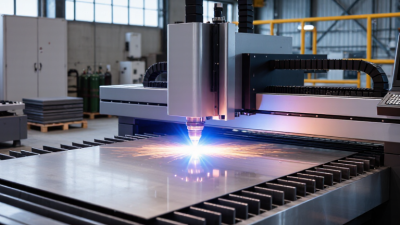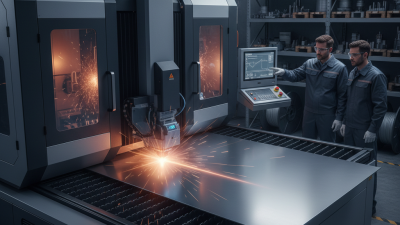
hero image

7 Fiber Laser Buying Tips for Global Buyers

Buying a fiber laser for an overseas factory is not just a power decision. It is a production decision. A machine that cuts thin stainless steel cleanly may struggle with thicker plate, reflective metals, or long shifts. The right choice depends on your materials, thickness range, daily workload, and target edge quality. A useful paraphrase of the buying approach associated with Valentin Gapontsev, founder of IPG Photonics, is: “Judge a laser by dependable process results, not headline power alone.” Treat that as a principle, not a verified verbatim quotation.

These seven buying tips help global buyers compare systems beyond the brochure: define the application, match output power to the work, inspect cutting samples, check source and machine quality, assess software and automation, confirm local service and spare-parts access, and review the full cost of ownership. Ask suppliers for a test cut using your material. Look closely at the edge, dross, and repeatability—not only the advertised speed. Also check voltage compatibility, training, warranty terms, and delivery support for your destination. Small details matter.

A spreadsheet can still mislead. A low purchase price may hide costly consumables, slow service, or limited training. I would not treat a polished demonstration as proof of long-term performance. Compare evidence, ask specific questions, and leave room for uncertainty. A careful buyer gets a better fit—not simply a bigger machine.
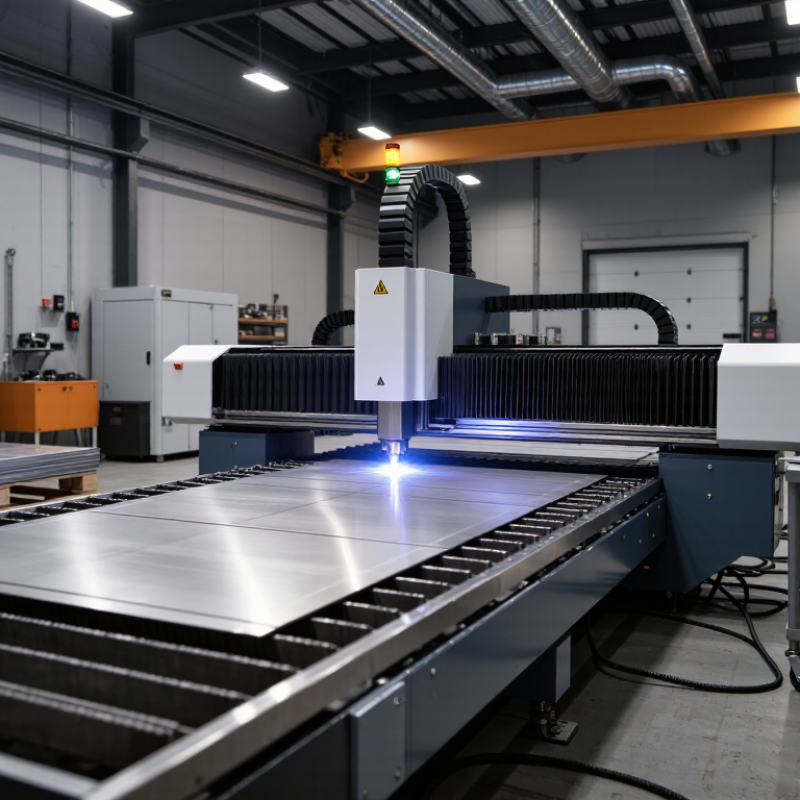
7 Fiber Laser Buying Tips for Global Buyers

Understanding Fiber Laser Technology and Its Industrial Applications

7 Fiber Laser Buying Tips for Global Buyers
Understanding Fiber Laser Technology and Its Industrial Applications

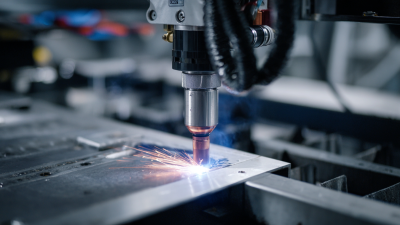
A fiber laser guides light through an optical fiber doped with rare-earth elements. This compact design can deliver a stable, concentrated beam for cutting, welding, marking, and surface treatment. In thin stainless-steel sheet, a focused beam can trace intricate contours with a narrow heat-affected zone. Industrial use is growing alongside automation: the International Federation of Robotics’ World Robotics 2024 report records 541,302 industrial robot installations worldwide in 2023. That matters. Robotic cells can pair lasers with repeatable part handling, though actual results depend on materials, settings, and operator skill.

Buying tip: Match power and beam quality to your actual work, not the largest number on a quotation. Check sample cuts on your own material, including edges, corners, and reflective surfaces. Ask about duty cycle, assist-gas needs, cooling, maintenance intervals, and local service access. A machine’s rated speed is not a production guarantee.

Consider the complete process. Cutting thick plate differs from marking small components, and each application needs suitable optics, motion control, extraction, and guarding. Request documented test conditions and verify that quoted tolerances apply to your part geometry. Market estimates for laser equipment vary by scope, so treat forecasts as context rather than proof of performance. One awkward reality: a capable laser can still be a poor fit for a shop’s workflow.
Defining Material, Power, and Production Requirements

Define the job before choosing laser power. List the materials, grades, thicknesses, sheet sizes, and daily mix you actually process. A machine cutting thin stainless steel all day faces different demands from one handling occasional thick plate. Measure twice. Include required edge quality, hole size, and acceptable dross. ISO 9013:2017 provides quality classifications for thermal-cut edges, so use a defined quality target rather than relying on a supplier’s “clean cut” claim.

Material volumes help explain why this detail matters. World Steel Association’s World Steel in Figures 2024 reports 1,892.2 million tonnes of crude steel production in 2023. That figure is not a laser-machine forecast; it shows how broad steel processing needs can be. Specify your own material mix, including aluminum or reflective alloys, and ask for sample cuts using your actual grades and thicknesses. Keep the test parts. Small details matter.

Then match power to the workload, not just the thickest sheet in the brochure. Record the proportion of jobs at each thickness, expected shifts, and target cycle times. IEA’s Energy Efficiency 2023 report says industry accounts for about 37% of global final energy consumption, making facility energy and extraction worth checking alongside cutting speed. Compare tested throughput, assist-gas use, duty cycle, and extraction requirements. I would not buy from a maximum-thickness chart alone; that shortcut can miss the jobs you run every day.

7 Fiber Laser Buying Tips for Global Buyers - Defining Material, Power, and Production Requirements

Buying Tip What to Define Example Requirement What to Verify Before Purchase
1. Specify the materials List each material, grade or alloy, surface condition, and the operations required, such as cutting, welding, or marking. Carbon steel sheet, stainless steel sheet, and aluminum sheet; cutting is the primary operation. Request sample tests using your actual material and thickness. Reflective metals such as copper and some aluminum applications need specific process validation.
2. Define thickness and quality targets State the minimum, typical, and maximum material thickness, plus required edge quality, tolerance, and acceptable dross. Record the full production range for each material rather than specifying only the thickest sheet. Confirm achievable results for the exact material, thickness, assist gas, nozzle, and cutting speed. Maximum stated capacity alone does not describe routine production quality.
3. Match laser power to the job Choose power based on material mix, thickness range, desired cutting speed, and expected operating hours. Compare multiple power options using the same sample parts and stated quality criteria. Ask for test-cut records and clarify whether quoted power is continuous-wave output power. Higher power does not automatically guarantee higher overall throughput.
4. Check wavelength and process compatibility Confirm the laser type and wavelength are suitable for the intended material and process. Many industrial cutting fiber lasers operate near a 1.06 µm wavelength; suitability still depends on the application and machine configuration. Validate performance with the intended materials, especially reflective metals, and confirm the full optical and process configuration is appropriate.
5. Calculate real production capacity Define parts per shift, shift length, batch size, setup frequency, and acceptable downtime. Measure cycle time on representative parts, including loading, unloading, piercing, part handling, and changeovers. Compare usable output per shift—not just cutting speed—and confirm the machine layout supports the required workflow.
6. Plan utilities and operating costs Check electrical supply, compressed air, assist-gas availability, extraction, cooling, and consumable requirements. Document site voltage and frequency, available gas types and pressures, floor space, and ventilation provisions. Obtain utility consumption and installation requirements for the proposed configuration. Nitrogen, oxygen, or compressed air may be used depending on material and cut-quality goals.
7. Confirm safety, service, and acceptance criteria Define guarding, operator training, local compliance needs, support response, spare parts, and acceptance testing. Specify an enclosed machine where applicable, interlocked access, fume extraction, and a documented test using agreed sample parts. Review applicable local laser-safety requirements, commissioning scope, warranty terms, maintenance schedule, and how acceptance results will be measured.

Planning note: Example requirements are starting points, not guaranteed machine capabilities. Final performance depends on the complete machine configuration, material, process settings, site conditions, and acceptance testing.

Comparing Laser Specifications and Machine Configurations

A fiber laser’s power rating is only one part of the buying decision. Compare it with the materials and thicknesses you expect to cut each week. A 3 kW system may handle common sheet-metal work well, but speed depends on material, assist gas, and cut quality targets. Ask for sample cuts using your own material. Check the edge for dross, taper, and heat marks. Small details matter.

Machine configuration affects daily output. Compare the working-bed size with your largest sheets, not just your average job. A 3,000 × 1,500 mm bed is common, but larger sheets may require a different format or loading plan. Review the cutting head, autofocus functions, chiller capacity, and gas connections as one system. Compatibility can be less obvious than it looks. Confirm the supplier’s stated specifications in writing.

Also compare exchange-table options, extraction equipment, software, and maintenance access. An automatic nozzle changer may reduce interruptions, though it adds cost and upkeep. Ask how operators clean optics and check alignment, and whether routine parts are available locally. I still find it easy to focus too heavily on power. That can be a mistake. The best configuration depends on real job mix, floor space, and operator skill, and estimates can change once production begins.

Evaluating Suppliers, Safety Standards, and After-Sales Support

Fiber laser buying is a long-term service decision, not just a power comparison. Grand View Research valued the global industrial laser market at USD 7.5 billion in 2023 and projected 8.3% annual growth through 2030. More suppliers mean more claims to verify. Ask for a live cutting test on your material and thickness, plus written specifications for accuracy, uptime, and consumables.

Tip: Check the exact machine model’s safety documents. IEC 60825-1 covers laser product safety, while ISO 11553-1 addresses laser-processing machinery. Ask for relevant test evidence, enclosure details, interlock checks, and operator training records. A certificate alone is not the whole story. Details matter.

After-sales support can decide whether a small fault costs hours or days. Request response-time commitments, local technician coverage, spare-parts lead times, and remote-diagnostic procedures in writing. Confirm who handles setup, calibration, and training, and whether support continues after installation. One caveat: a polished demonstration may not reflect your shop’s dust, power quality, or workload. Include those conditions in the acceptance test. I would still ask for named escalation contacts; vague promises are easy to overlook.

Calculating Total Ownership Costs and Verifying Performance Before Purchase

A fiber laser’s purchase price is only the first line of its cost. Add installation, extraction, cooling, assist gas, optics, maintenance, and operator training. Then estimate electricity use across realistic shifts, not continuous full-power operation. The U.S. Department of Energy’s Improving Compressed Air System Performance sourcebook reports that compressed air accounts for about 10% of electricity use in U.S. manufacturing. That is a broad industry benchmark, not a laser-machine estimate, but it shows why auxiliary loads deserve attention. Small details matter.

Ask suppliers to itemize expected energy use, service intervals, and common replacement parts. Compare cost per acceptable part, including setup time and scrap, rather than cost per cutting hour alone. Request assumptions in writing. They may be optimistic. Check them against your own electricity tariff, production schedule, and material mix; a spreadsheet cannot fully predict downtime.

Before purchase, run a witnessed test using your actual material grades and thicknesses. Record cut time, edge quality, dross, kerf width, and repeatability across several parts. Measure power draw during cutting and standby, where possible. Keep the test file and settings, and agree on pass criteria beforehand. A polished sample proves little if it uses unusually slow feed rates or extra finishing. One awkward result may reveal more than ten perfect cuts. Ask for a second run.

7 Fiber Laser Buying Tips for Global Buyers: Estimate Total Ownership Costs

Compare more than the purchase price. This illustrative five-year cost model shows how equipment, energy, assist gas, maintenance, consumables, and installation can contribute to total ownership costs. Replace these planning estimates with supplier quotes and local operating costs.

Illustrative cost shares: equipment 55%, electricity 16%, assist gas 10%, maintenance 8%, consumables 7%, and installation and training 4%. Actual costs depend on machine configuration, workload, utility rates, material mix, and service terms. Before purchase, request a written cost breakdown and verify cutting performance with sample materials.