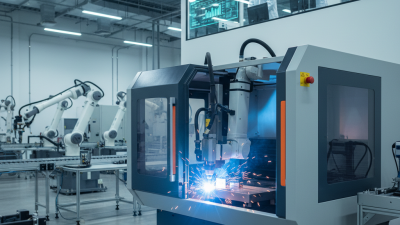


Why Choose a Fiber Laser Cutting Machine?
Choosing a fiber laser cutting machine begins with a practical question: what must your workshop produce every day? Fiber laser technology converts electrical power into a concentrated beam with impressive efficiency. It cuts carbon steel, stainless steel, aluminum, brass, and copper with consistent results. The beam travels through optical fiber, so the system needs fewer delicate alignment adjustments than many older laser designs.
Valentin Gapontsev, founder of IPG Photonics, often emphasized, “Fiber lasers are the future of industrial lasers.” His statement reflects their growing role in modern metal fabrication. Still, that claim needs context. A fiber laser is not automatically the best choice for every business. Material thickness, production volume, ventilation, operator training, and after-sales support matter greatly. A small workshop may value low maintenance more than maximum cutting speed. A high-volume factory may focus on uptime, nesting software, and automated loading.
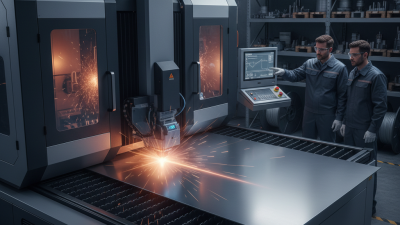
Picture a three-millimeter stainless-steel sheet moving beneath a steady cutting head. Clean edges reduce grinding time. Stable power can improve repeatability across long production runs. That saves labor.
But mistakes remain possible.
Poor lens cleaning, incorrect gas pressure, or weak programming can ruin expensive sheets. Reliable performance depends on routine inspection and qualified service. Buyers should compare beam quality, machine stiffness, safety features, warranty terms, and local technical support. The cheapest machine may become costly when production stops. A well-selected fiber laser offers speed, efficiency, and dependable precision, but only when matched carefully to real manufacturing needs.
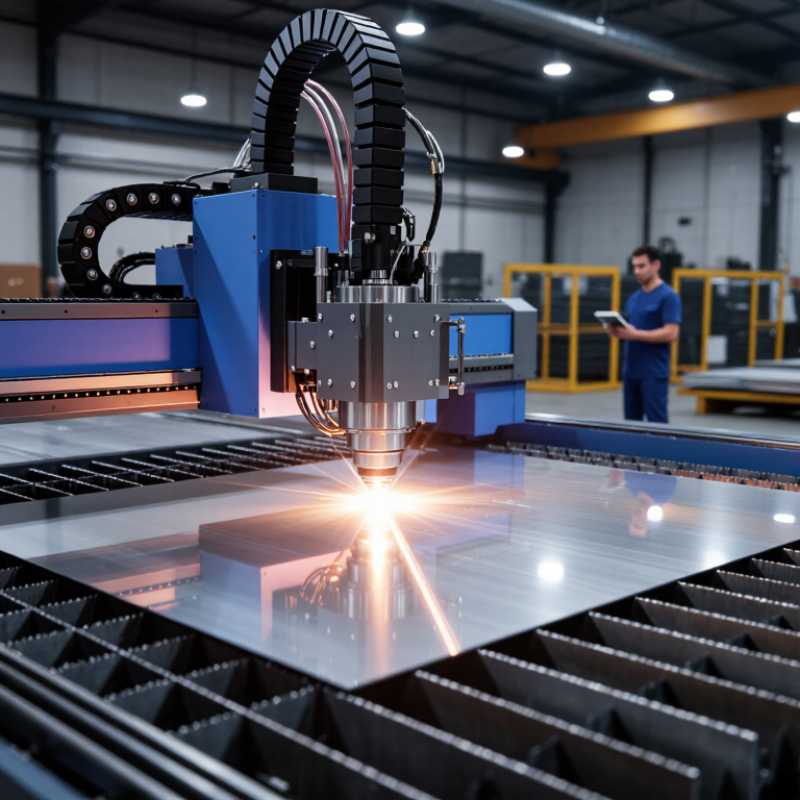
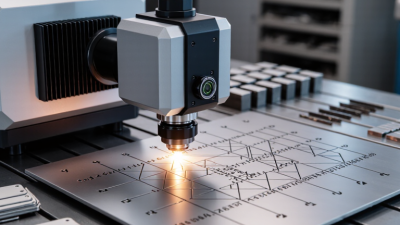
A fiber laser cutting machine uses a solid-state laser to cut metal with a concentrated beam of light. The beam travels through a fiber-optic cable before reaching the cutting head. The beam stays focused. That matters.
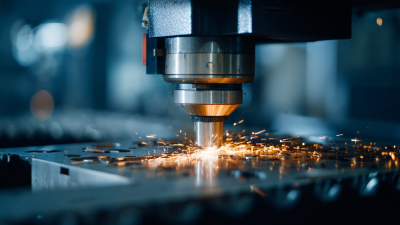
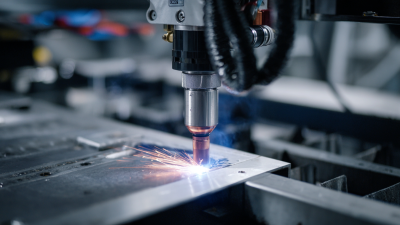
Inside the cutting zone, the laser melts or vaporizes a narrow path through the sheet. An assist gas removes molten material and helps keep the edge clean. Operators commonly process carbon steel, stainless steel, aluminum, brass, and other reflective metals. A typical machine includes a laser source, motion system, cutting head, control software, and safety enclosure.
In practical shop-floor work, fiber lasers are valued for fast cutting, fine kerfs, and repeatable results. A 2-millimeter stainless-steel sheet may leave a bright, narrow edge when power, speed, focus, and gas pressure are balanced. Small errors still show. Warped material can change the focal distance, while dirty optics may create uneven cuts. It is not maintenance-free.
Reliable operation depends on correct setup, trained operators, regular inspections, and suitable ventilation. Cutting performance also changes with material grade and thickness. Some machines handle thin sheet extremely well but require slower settings on heavy plate. That trade-off deserves attention before choosing equipment. The machine is only one part of the process.
| Data Dimension | Fiber Laser Cutting Machine | Practical Significance |
|---|---|---|
| Definition | A CNC machine that uses a solid-state fiber laser to melt or vaporize material along a programmed cutting path. | It combines a laser source, beam-delivery system, cutting head, motion system, CNC controller, assist-gas system, and machine bed. |
| Typical Laser Wavelength | Approximately 1.06–1.08 micrometers. | This near-infrared wavelength is efficiently absorbed by many metals, especially mild steel, stainless steel, aluminum, brass, and copper. |
| Laser Type | Solid-state, ytterbium-doped fiber laser. | The laser-generating components are enclosed in a compact fiber-based system, reducing the need for gas-discharge tubes and complex optical alignment. |
| Common Materials | Carbon steel, stainless steel, aluminum, galvanized steel, brass, and copper, subject to machine configuration and process settings. | The machine is suitable for many metal-fabrication applications, including sheet-metal work, enclosures, automotive parts, appliances, and structural components. |
| Typical Power Classes | Common industrial configurations range from approximately 1 kW to more than 20 kW. | Higher power can increase cutting speed or capacity, but the suitable power depends on material type, thickness, part geometry, assist gas, and required edge quality. |
| Thin-Sheet Performance | Generally provides high cutting speeds on thin and medium-gauge metal sheets. | Fast processing can improve throughput when producing large quantities of parts or frequently changing designs. |
| Cutting Accuracy | Modern CNC fiber laser systems can achieve fine kerfs and repeatable positioning; actual accuracy varies by machine design, calibration, material, and process settings. | Narrow cuts and repeatability support detailed contours, small features, and reduced secondary machining. |
| Energy Efficiency | Fiber laser sources commonly convert electrical power to laser power more efficiently than CO2 laser sources, with wall-plug efficiency often reported around 25–40% depending on system design. | Lower energy consumption can reduce operating costs, although total machine energy use also includes motion drives, cooling, extraction, and auxiliary equipment. |
| Maintenance Needs | Usually requires less routine optical maintenance than a CO2 laser because the beam is delivered through optical fiber rather than a long external mirror path. | Regular inspection is still necessary for protective windows, nozzles, lenses, filters, cooling equipment, lubrication, and fume extraction. |
| Beam Delivery | The laser beam is transported through an optical fiber to the cutting head, where focusing optics concentrate it onto the workpiece. | A compact beam path helps simplify machine integration and supports stable, automated production. |
| Assist Gases | Oxygen, nitrogen, or compressed air may be used according to the material and desired edge characteristics. | Oxygen can support faster cutting of some steels, while nitrogen or air may help produce cleaner or more oxidation-resistant edges in selected applications. |
| Heat-Affected Zone | The focused heat input is localized, so the heat-affected zone is generally narrower than with many conventional thermal cutting methods. | Reduced thermal distortion can help maintain dimensional accuracy, although heat effects still depend on material, thickness, speed, and power. |
| Material Limitations | Not every non-metallic material is suitable, and highly reflective metals require appropriate power, settings, protection, and machine design. | Material compatibility should be confirmed before purchase, particularly for thick copper, brass, reflective alloys, plastics, wood, stone, or coated materials. |
| Production Flexibility | CNC programming allows rapid changes between shapes, hole patterns, and part designs without custom cutting dies. | This is valuable for prototyping, short runs, customized components, and mixed-batch production. |
| Operating Considerations | Performance depends on laser power, focal length, nozzle condition, focus position, cutting speed, gas pressure, material quality, and software settings. | Correct setup and preventive maintenance are essential for consistent edge quality, productivity, and service life. |
| Safety Requirements | Industrial systems require appropriate laser safety controls, enclosure interlocks, fume extraction, fire prevention measures, and trained operators. | A fiber laser is a Class 4 laser source in industrial applications; operation must follow applicable workplace and laser-safety regulations. |
Note: Cutting capacity, speed, accuracy, energy consumption, and edge quality vary according to machine configuration, laser power, material grade, thickness, assist gas, tooling, and operating conditions.