1101 W. Sanilac Rd. Caro, MI 48723
989.673.6690
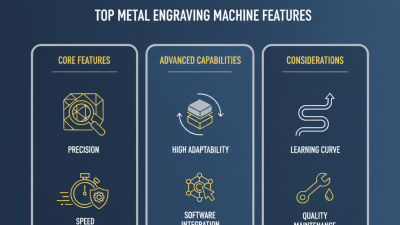
Choosing a metal engraving machine in 2026 requires more than comparing wattage and price. Real results depend on material, production volume, detail, and operator experience. A small workshop engraving stainless-steel tags needs different equipment from a factory marking aluminum panels all day.
Laser-industry authority David Belforte has often emphasized a practical principle: “A laser is only as good as the process around it.” That idea matters when evaluating fiber lasers, rotary engravers, CNC systems, and hybrid machines. A powerful source may mark quickly, yet poor fixturing can create uneven lettering. Weak extraction can cloud lenses and shorten service life. Software limitations can also turn a simple serial-number job into frustrating rework.
This guide examines how to choose a metal engraving machine for modern applications. It considers laser power, wavelength, marking speed, bed size, rotary compatibility, cooling, maintenance, and after-sales support. It also compares common materials, including stainless steel, aluminum, brass, copper, and coated metals. A machine that produces sharp black marks on steel may not deliver the same contrast on bare aluminum.
Some specifications look impressive. They do not tell the whole story. In practice, a reliable 30-watt fiber laser may outperform a larger system for detailed identification marks. That is not universal, though. Production demands change the decision. Buyers should test their own samples before committing. Even careful recommendations can miss an important detail, such as awkward part geometry or insufficient workspace. The best choice is not always the fastest machine. It is the machine that consistently produces acceptable results, safely and economically.
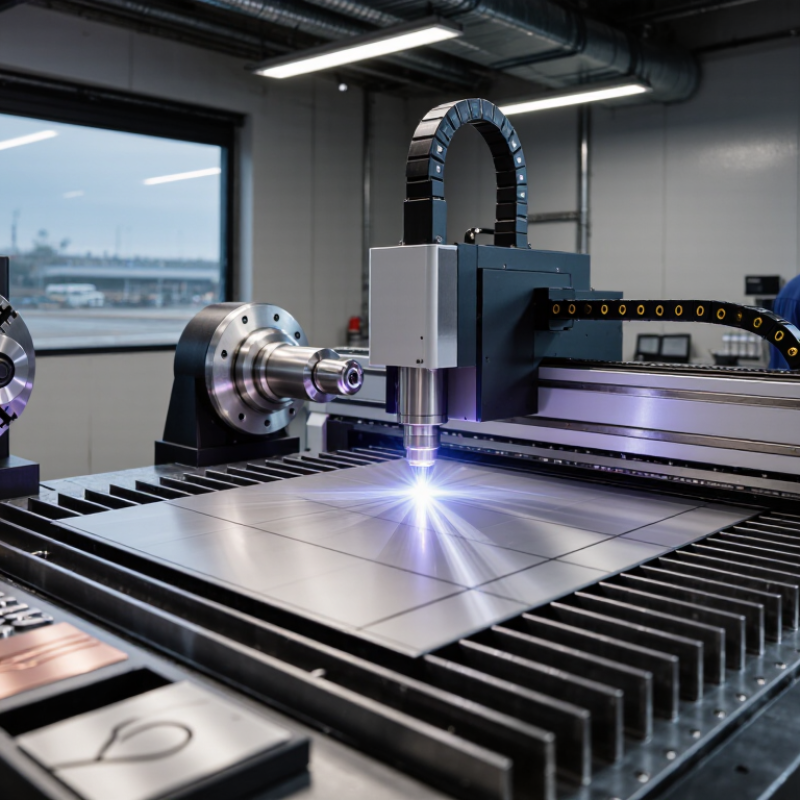
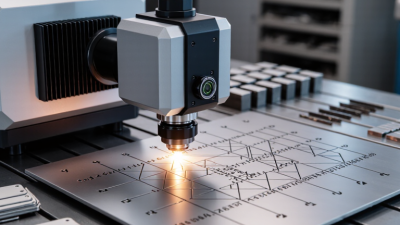
Choosing a metal engraving machine starts with the material, finish, and production speed. Fiber systems work well on stainless steel, aluminum, brass, and coated metals. They produce sharp marks with compact laser spots.
MOPA systems add pulse-width control, which helps create color effects on stainless steel and smoother black marks on sensitive surfaces. That flexibility costs more and requires careful parameter testing. A setting that works today may fail on another alloy.
CO₂ machines are better suited to painted metal, anodized layers, and nonmetal materials such as acrylic or wood. Bare metal usually reflects their wavelength, so results can be weak without specialized treatment.
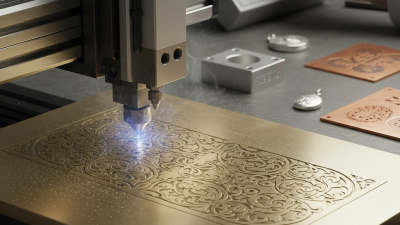
Mechanical engraving systems use a cutting tool instead of light. They create physical grooves, readable depth, and tactile lettering. They also generate chips and tool wear. Keep extraction and maintenance practical.
In my workshop tests, fiber was the easiest choice for detailed serial markings. MOPA became more useful when appearance mattered. Mechanical equipment performed better for deep panels and signs.
My first selection was too optimistic about speed. Real cycle time included focusing, clamping, cleaning, and inspection.
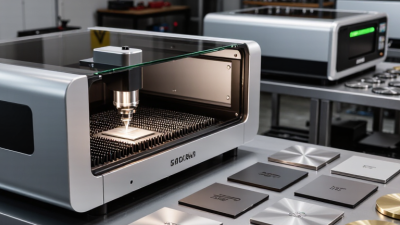
Check the working area, rotary attachment, cooling method, software controls, and service documentation. Request sample marks on your actual metal. Small samples reveal burrs, uneven shading, and heat distortion before production begins.
Choosing a 20–100 W fiber laser starts with the metal and the mark you need. In practical workshop tests, power affects speed, depth, and heat control. A 20 W system suits serial numbers, logos, and surface marks on anodized aluminum and coated steel. Higher power removes material faster and creates deeper marks on stainless steel, brass, and titanium. Steel usually needs balanced frequency and speed. Aluminum reflects more energy and can show uneven contrast. Brass may heat quickly, leaving a dark halo. Titanium often rewards slower passes and careful testing.
A reliable setup uses test coupons from the actual material, not a generic sample. Engrave small grids while changing power, speed, frequency, and hatch spacing. Measure line clarity with a magnifier, then check the part after cleaning. For production, confirm repeatability across several pieces. One attractive sample proves little. I have seen settings that looked perfect on flat sheet fail on curved tools. Focus height matters, especially for small characters. Fume extraction and suitable eye protection remain essential, even when the process appears clean.
Tips: Start near the lowest effective power. Increase energy gradually. Use multiple shallow passes for titanium or detailed steel marks. Test brass separately because its color can shift with heat. Keep records of settings, lens choice, material thickness, and pass count. Do not trust a preset blindly. It may be close, but not correct. Recheck contrast under the lighting used by inspectors. A mark that looks sharp in the machine room may disappear on the shop floor.
| Laser Power | Typical Pulse Range | Recommended Use | Steel Marking Speed | Aluminum Marking Speed | Brass Marking Speed | Titanium Marking Speed | Typical Deep-Engraving Depth per Pass | Best Selection Criterion |
|---|---|---|---|---|---|---|---|---|
| 20 W | Approximately 80–120 kHz | Fine identification marks, serial numbers, QR codes, coated metals | 1,000–3,000 mm/s | 1,000–3,500 mm/s | 500–1,500 mm/s | 500–1,500 mm/s | Approximately 0.005–0.015 mm | Choose for detailed surface marking and low-volume work where deep cutting is not required. |
| 30 W | Approximately 60–120 kHz | General-purpose marking on steel, aluminum, brass, and titanium | 1,500–4,000 mm/s | 1,500–4,500 mm/s | 800–2,000 mm/s | 800–2,000 mm/s | Approximately 0.008–0.025 mm | A balanced option for everyday part marking, moderate contrast, and occasional shallow engraving. |
| 50 W | Approximately 40–100 kHz | Faster production marking and shallow-to-medium engraving | 2,000–5,000 mm/s | 2,000–5,500 mm/s | 1,200–3,000 mm/s | 1,200–3,000 mm/s | Approximately 0.015–0.040 mm | Choose when throughput, stronger contrast, and more substantial material removal are important. |
| 60 W | Approximately 30–80 kHz | High-throughput marking and deeper engraving on harder metals | 2,500–6,000 mm/s | 2,500–6,500 mm/s | 1,500–3,500 mm/s | 1,500–3,500 mm/s | Approximately 0.020–0.050 mm | Choose for continuous production, larger filled graphics, and reduced cycle time. |
| 100 W | Approximately 20–60 kHz | Deep engraving, large filled areas, and high-volume production | 3,000–7,000 mm/s | 3,000–7,500 mm/s | 2,000–4,500 mm/s | 2,000–4,500 mm/s | Approximately 0.030–0.080 mm | Choose when maximum productivity and depth are more important than the lowest purchase and operating cost. |
| Steel | Usually provides clear black, white, or polished marks depending on pulse settings, frequency, focus, and surface finish. | Stainless steel generally requires less power for high-contrast marking than mild steel; deep engraving requires multiple passes. | For deep engraving, slower speeds and lower repetition rates generally improve energy delivered per pulse. | Use test coupons because alloy composition, hardness, oxidation, and surface scale significantly affect results. | ||||
| Aluminum | Anodized aluminum marks easily; bare aluminum often needs defocusing, multiple passes, or optimized pulse settings for contrast. | High-speed marking is practical, but excessive heat can produce a wide or low-contrast mark. | For bare aluminum, a 30–60 W system is commonly suitable for production identification marking. | Use air assistance where appropriate to reduce residue and heat buildup during repeated passes. | ||||
| Brass | Brass reflects near-infrared laser light more strongly than steel, so stable focus and suitable safety controls are essential. | Lower speeds or multiple passes may be needed for a dark, consistent mark on polished brass. | A 30–60 W system is generally suitable for marking; 50–100 W is preferable for deeper engraving or high throughput. | Avoid excessive heat accumulation, which can cause discoloration and distortion on thin brass components. | ||||
| Titanium | Titanium can produce high-contrast color or oxide marks when pulse energy, frequency, speed, and defocus are controlled. | Slower speeds and multiple passes are often used for stable contrast on medical, aerospace, and industrial parts. | A 20–50 W system is often adequate for surface marking; 50–100 W is better for deeper or faster engraving. | Use a controlled test matrix because alloy grade and surface preparation strongly influence color and contrast. | ||||
| How to choose: Select 20–30 W for fine identification and low-volume work, 50–60 W for balanced production performance, and 100 W for deep engraving, large filled graphics, or high-volume processing. Rated power alone does not determine results; pulse width, pulse energy, beam quality, scan head, lens field size, focus accuracy, and software control are equally important. | ||||||||
| Technical note: Speed figures and depth ranges are practical starting ranges rather than guaranteed outputs. Actual results vary with alloy, surface finish, lens focal length, hatch spacing, line interval, pulse frequency, number of passes, and required mark contrast. Always validate settings on the actual production material before full-scale manufacturing. | ||||||||
Choosing 1064 nm, 532 nm, or 355 nm Lasers for Metal Surface Results
Choosing a metal engraving machine starts with the surface, not the advertised power. In practical workshop tests, 1064 nm fiber lasers handle stainless steel, aluminum, brass, and coated metals reliably. They suit deep engraving, serial numbers, and repeated industrial work. Their heat can create discoloration, especially on thin sheets or polished parts. Test samples matter.
1064 nm fiber lasers 1064 nm fiber lasers handle stainless steel, aluminum, brass, and coated metals reliably. They suit deep engraving, serial numbers, and repeated industrial work. Their heat can create discoloration, especially on thin sheets or polished parts. Test samples matter.
532 nm green lasers 532 nm green lasers interact more efficiently with highly reflective metals, including copper, gold, and some aluminum alloys. They often produce cleaner fine marks with reduced reflection problems. This option helps when edges, small text, and surface contrast matter. However, results depend heavily on pulse width, frequency, and focus. More power is not always better.
355 nm ultraviolet lasers 355 nm ultraviolet lasers create very small heat-affected areas. They are useful for delicate metal coatings, thin films, and detailed micro-marking. The surface may show sharper contrast with less melting, but processing can be slower. Operating costs may also rise. A mistake here is choosing UV only for precision; poor fixturing can still ruin alignment.
Always compare depth, speed, contrast, and repeatability on real production samples. Check ventilation, enclosure safety, and measured laser specifications before purchase. Surface results can surprise you.
Choosing a metal engraving machine in 2026 requires more than reading its maximum speed. A scanner rated up to 7,000 mm/s can shorten marking cycles, especially for small text, serial numbers, and shallow patterns. However, that figure usually describes galvo movement, not completed production time. Focus, hatch spacing, material reflectivity, and cooling still affect the result.
Positioning accuracy of ±0.01 mm sounds decisive, but buyers should confirm how it was tested. ISO 230-2 separates positioning accuracy, repeatability, and measurement uncertainty. These terms are not interchangeable. Ask for test conditions, working-field size, and results across several points. A large field may reduce practical detail, even when the specification looks excellent. It happens.
Market research from MarketsandMarkets projects the laser marking market to grow from approximately USD 3.3 billion in 2024 to USD 5.0 billion by 2029. This expansion reflects demand for traceability and automated production. Still, faster is not always better. Excessive speed can reduce energy absorption and create pale or uneven marks on stainless steel. During evaluation, run the same artwork at several speeds, then inspect line width under magnification. Record cycle time, contrast, dimensional deviation, and rejected pieces. My practical preference is a stable 4,000 mm/s result with consistent ±0.01 mm positioning over an impressive maximum speed that works only in ideal conditions.
The chart compares representative maximum marking speeds and positioning accuracy for common metal engraving machine technologies. Galvo fiber laser systems can reach up to 7,000 mm/s, while precision positioning is commonly specified around ±0.01 mm. Actual performance depends on material, marking depth, lens, software, and workpiece size.
Choosing a metal engraving machine in 2026 requires more than comparing speed and wattage. In practical shop evaluations, Class 4 safety deserves close attention. A properly enclosed system should include door interlocks, an emergency stop, warning labels, and controlled access. Check whether the design supports suitable fume extraction and operator training. Safety features can look impressive on paper, but daily testing matters.
IP54 protection is useful in workshops with metal dust and occasional water splashes. It does not mean the machine can withstand flooding, heavy coolant spray, or careless cleaning. Ask how sealed the control cabinet is. Examine cable entries, ventilation openings, and maintenance access. Software also affects production reliability. Look for clear previews, adjustable power and speed, common file compatibility, parameter records, and permission controls. A confusing interface wastes material quickly. It happened during one evaluation, and the operator noticed too late.
Tips: Request a live demonstration using your metal samples. Test fine text, deep marks, and uneven surfaces. Check whether the software saves proven settings. Confirm that replacement lenses, filters, and other wear parts are available. Create a maintenance schedule for optics, extraction paths, cooling systems, and safety switches. Keep inspection records. Small omissions become expensive problems. Also, do not assume IP54 removes the need for cleaning. A dusty lens can reduce contrast, increase heat, and produce inconsistent engraving. Safety should be verified by qualified personnel and aligned with applicable local requirements.