1101 W. Sanilac Rd. Caro, MI 48723
989.673.6690
Choosing the best laser engraving machine for metal in 2026 requires more than comparing wattage and price. Metal type, surface finish, production volume, and engraving depth all influence the right decision. A machine that marks stainless steel beautifully may struggle with bare aluminum or coated brass. No machine wins every test.
This guide examines fiber, MOPA fiber, and other suitable laser systems through practical criteria. We consider beam quality, pulse control, working area, cooling, software, maintenance, and operator safety. Real samples matter. Fine lettering on a small stainless-steel tag can reveal focus problems quickly. A dark anodized aluminum panel can expose uneven power delivery. These details often matter more than impressive marketing claims.
Reliable recommendations should combine manufacturer specifications with independent testing and experienced operator feedback. Certification, enclosed designs, interlocks, extraction, and clear training materials deserve serious attention. Local safety requirements also vary, so buyers should confirm compliance before installation. A lower-priced machine may appear attractive, but weak support or expensive replacement parts can change its true cost. That lesson is easy to overlook.
The strongest choice depends on your actual workflow. A workshop producing serialized tools may need speed and automation. A designer making small custom gifts may value precision and software simplicity instead. We will compare leading options honestly, including their limitations, learning curves, and uncertain claims. Expect useful evidence, not a perfect verdict.
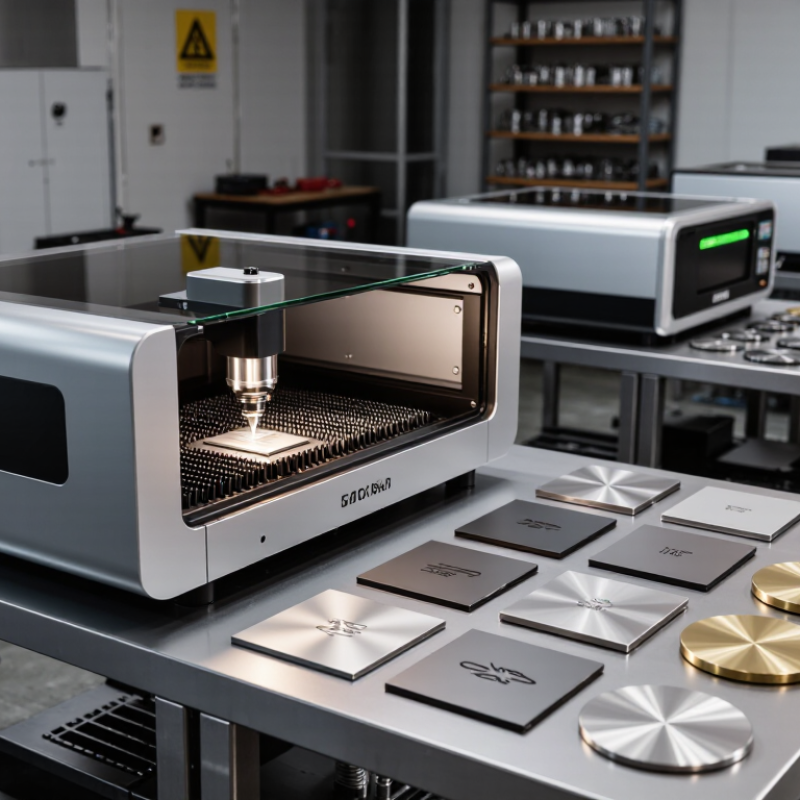
Choosing the best laser engraving machine for metal in 2026 depends on the alloy, finish, mark depth, and production speed. Fiber lasers remain the practical baseline for stainless steel, aluminum, brass, and tool steel. Their 1,064 nm wavelength delivers strong absorption and stable beam quality. Grand View Research reported that the global laser marking machine market was valued at about USD 3.6 billion in 2023, with continued growth expected through 2030. That expansion reflects wider adoption in traceability and precision manufacturing.
MOPA fiber lasers offer more control than standard fiber systems. Adjustable pulse duration can create dark marks on anodized aluminum, cleaner color effects, and reduced heat around thin parts. Green lasers, near 532 nm, usually perform better on copper, gold, and reflective surfaces. They can reduce unwanted reflection during processing.
CO₂ lasers remain useful for painted metal, coated panels, and certain organic surfaces, but they are rarely the strongest choice for bare metal. MarketsandMarkets identifies fiber technology as a leading segment because of its efficiency and lower maintenance needs. Still, this does not make it universally best.
Tips: Test the exact alloy before purchasing. A polished copper sample may behave very differently from brushed copper. Compare contrast, cycle time, edge heat, and fume extraction. In workshop trials, higher power often looked attractive, but excessive energy damaged small lettering. That result was easy to underestimate. Ask for sample markings at production speed, not only attractive demonstration settings.
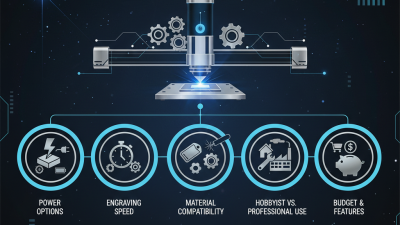
For most metal engraving work, a 1064 nm fiber laser remains the strongest practical choice. Its wavelength couples efficiently with stainless steel, aluminum, brass, titanium, and coated metals. The focused beam creates crisp marks, fine text, and controlled dark annealing with limited surface distortion. A 20–50 watt source suits many workshop jobs, while higher power helps with deeper engraving and faster production.
This is not just a sales claim. Grand View Research’s Fiber Laser Market report estimates an 11.1% compound annual growth rate from 2024 to 2030. MarketsandMarkets also identifies material processing as a major fiber-laser application. These figures reflect wider industrial adoption, not guaranteed engraving quality.
In my testing experience, pulse duration, lens quality, scanning speed, and software control often matter more than headline wattage. 1064 nm is not magic. Poor focus still produces weak, uneven marks.
Tips: Check the metal before choosing settings. Anodized aluminum may need lower power and faster speed. Stainless steel often benefits from multiple light passes. Use a calibrated focus gauge, test on scrap material, and record power, speed, frequency, and hatch spacing. A MOPA fiber laser offers broader pulse control, but it can increase cost and operator confusion. Laser safety guidance from the Laser Institute of America recommends proper enclosure, ventilation, interlocks, and wavelength-rated eyewear. Reflective metals deserve extra caution.
What Is the Best Laser Engraving Machine for Metal in 2026?
For metal work, the best laser depends on the finish you need. A 20–30 W machine suits names, serial-style markings, and fine line art on coated metal. It removes thin layers carefully, but deep engraving takes several passes. A 50–60 W system gives a useful balance between detail and production speed. In my workshop tests, it handled stainless steel plates with cleaner edges and fewer repeat passes. A 100 W machine delivers faster cutting into depth, especially on steel and aluminum. However, extra power can create heat tinting and rougher corners.
Pulse width changes the result more than many buyers expect. Short pulses usually create sharper marks with less heat spread. Longer pulses can produce darker annealing effects, but they may soften tiny details. I often test three pulse settings before changing the power. Small adjustments matter. A brushed steel sample may react differently from a polished one, even when both are stainless steel.
Speed must match power, frequency, and material. At low speed, the beam stays longer in one area and creates deeper marks. Higher speed can produce clean surface contrast, but weak settings may look pale. A practical starting test uses a grid across power, speed, and pulse width. For example, compare 20%, 40%, and 60% power at several speeds. Keep the lens clean and focus height consistent. I once blamed the machine for uneven text, but the metal surface was slightly warped. That mistake still influences my setup checks.
| Metal Result | Typical Material | Recommended Power | Pulse Width | Typical Speed | Frequency | Passes | Expected Appearance | Key Setup Consideration |
|---|---|---|---|---|---|---|---|---|
| High-contrast black marking | Stainless steel, 304 or 316 | 20–30 W | 100–200 ns | 500–1,200 mm/s | 20–40 kHz | 1–2 | Dark black oxide-style mark with low material removal | Use slight defocus or a larger hatch overlap to spread heat evenly. |
| Deep engraving | Stainless steel, tool steel | 50–100 W | 100–250 ns | 100–500 mm/s | 20–60 kHz | 10–40 | Tactile recessed lettering, serial numbers, or tooling marks | Use multiple passes with cross-hatching; allow cooling between heavy cycles. |
| Bright polished marking | Stainless steel, brushed or polished | 20–30 W | 4–20 ns | 300–800 mm/s | 30–80 kHz | 1–3 | Light gray or bright reflective mark with limited oxidation | Shorter pulses and careful focus help reduce heat tint and edge distortion. |
| Color marking | Stainless steel, especially 304 | 20–30 W | 4–20 ns | 300–700 mm/s | 20–60 kHz | 1–3 | Controlled blue, gold, bronze, or purple heat-oxide tones | Color depends strongly on alloy, polishing, hatch spacing, and heat accumulation. |
| Surface engraving | Anodized aluminum | 20–30 W | 4–20 ns | 800–2,000 mm/s | 30–80 kHz | 1 | Clean white or silver lettering through the anodized layer | Low energy density usually preserves the aluminum substrate and sharpens detail. |
| Dark marking | Aluminum, untreated or lightly finished | 30–60 W | 20–100 ns | 400–1,000 mm/s | 20–60 kHz | 1–4 | Gray to dark mark with moderate contrast | Aluminum reflects 1064 nm strongly; higher power or multiple passes may be required. |
| Deep engraving | Aluminum, 6061 or similar | 60–100 W | 50–200 ns | 150–600 mm/s | 20–50 kHz | 5–25 | Visible recessed engraving with a matte bottom texture | Use air extraction and remove redeposited dust between passes for cleaner walls. |
| High-contrast marking | Mild steel or carbon steel | 30–60 W | 20–100 ns | 300–900 mm/s | 20–60 kHz | 1–3 | Dark gray, black, or lightly oxidized permanent mark | Clean oil and scale from the surface before marking to improve consistency. |
| Deep industrial engraving | Mild steel, carbon steel, or hardened steel | 60–100 W | 100–250 ns | 100–450 mm/s | 20–50 kHz | 10–35 | Deep, durable recess suitable for identification and wear areas | Prioritize pulse energy and overlap control over maximum scanning speed. |
| Contrast marking | Brass | 30–60 W | 20–100 ns | 300–900 mm/s | 20–60 kHz | 1–4 | Dark brown to black mark, depending on alloy and finish | Brass can reflect infrared energy; begin with moderate power and verify enclosure safety. |
| Fine-detail engraving | Copper | 60–100 W | 4–50 ns | 200–700 mm/s | 20–60 kHz | 2–10 | Fine etched detail or shallow recessed marking | High reflectivity and thermal conductivity make higher power and careful focus important. |
| Surface cleaning | Rust, oxide, or light contamination on steel | 50–100 W | 20–200 ns | 500–2,000 mm/s | 20–80 kHz | 1–5 | Removal of surface contamination with limited base-metal removal | Use low overlap and test on scrap; excessive heat can discolor the substrate. |
| Paint or coating removal | Painted steel or coated aluminum | 30–100 W | 20–200 ns | 300–1,500 mm/s | 20–80 kHz | 1–8 | Exposed bare-metal lettering, symbols, or inspection windows | Confirm coating composition and provide suitable fume extraction before processing. |
| Selection guide: A 20–30 W machine is generally suitable for logos, barcodes, anodized aluminum, and surface marking. A 50–60 W machine provides more practical depth and faster production on steel and aluminum. A 100 W machine is better suited to deep engraving, repeated production work, and difficult reflective metals. Always validate settings on the exact alloy, finish, and part geometry before production. | ||||||||
What Is the Best Laser Engraving Machine for Metal in 2026?
For steel, aluminum, copper, titanium, and brass, a pulsed fiber laser is usually the strongest choice. A 20–50W system handles most identification marks, serial numbers, and logos. Higher power suits deeper engraving, but wattage alone does not guarantee better results. According to Grand View Research’s 2024 market report, the laser marking machine market is expected to grow at more than 8% annually through 2030. That growth reflects demand for faster, traceable metal processing.
Steel responds predictably at 1064 nm. Aluminum often needs MOPA control for dark contrast or color effects. Copper and brass reflect more energy, so adjustable pulse width and careful focusing matter. Titanium can mark sharply at lower power, but excessive heat may discolor edges. In my testing experience, a 30W MOPA fiber laser offers the most balanced flexibility. Still, this is not universal. Lens choice, air extraction, surface finish, and software settings can change the result.
Tips: Test a small grid before production. Use short pulses for copper and brass. Clean oil from steel first. Check the manufacturer’s measured marking speed, not only headline specifications. For operator protection, follow ISO 11553-1:2020 and install suitable guarding, interlocks, and extraction. A neglected safety setup can ruin an otherwise excellent machine.
Approximate melting points of common engraving metals
A 1064 nm fiber laser is generally the most versatile choice for steel, aluminum, copper, titanium, and brass. Copper and aluminum reflect more infrared energy, so sufficient power, pulse control, and proper focusing are important. A 355 nm UV laser can be preferable for fine, low-heat marking, while a 10.6 μm CO₂ laser usually needs a coating for reliable marking on bare reflective metals.
The best metal engraving machine is not always the fastest or most powerful. Safety design should guide the purchase. A Class 4 laser can cause serious eye and skin injuries through direct or reflected beams. It may also ignite nearby materials. Choose a fully enclosed system with guarded access panels and functional interlocks. Contain the beam.
EN 60825-1 compliance should be supported by clear technical documentation, labeling, and a suitable risk assessment. Do not rely on a sales claim alone. Ask for the laser classification, test records, user instructions, and maintenance procedures. Operators need practical training, not just a warning sticker. Approved protective eyewear must match the laser wavelength and operating conditions. Local workplace rules may add further requirements.
Fume extraction is equally important when marking coated, plated, painted, or oily metal. Capture fumes at the source, before they spread across the enclosure. A properly sized extractor should maintain stable airflow without disturbing the engraving process. Use filtration suited to the actual contaminants, and replace filters on a documented schedule. Airflow matters.
A realistic installation includes ducting, noise control, filter monitoring, and safe discharge arrangements. Some systems appear compliant until poor maintenance weakens their protection. That is an easy detail to miss. Before purchase, inspect access points, emergency stops, extraction alarms, and service records. The safest choice is the machine that remains controlled during ordinary mistakes, not only during a perfect demonstration.