1101 W. Sanilac Rd. Caro, MI 48723
989.673.6690
China’s role in handheld laser welder manufacturing deserves a closer look, but supplier claims need careful reading. A polished product page cannot show how a machine performs through a full shift. Buyers should examine weld consistency, safety features, service access, and documented testing.
The broader market is expanding. MarketsandMarkets’ Laser Processing Market report estimated the sector at about US$20.2 billion in 2023 and projected US$30.3 billion by 2028. This category includes several laser applications, not handheld welding alone. It signals wider investment, rather than proving demand for any single product. That distinction matters.
This guide explores China’s leading manufacturers and the evidence buyers can use to compare them. Look for clear specifications on laser power, cooling, wire feeding, and compatible materials. Ask for sample welds on your own material, not only showroom demonstrations. Request details about warranty coverage, operator training, spare parts, and technical support in your region. Short answers are not enough. A supplier may look strong on price yet offer limited after-sales help; that trade-off is easy to miss. No shortlist can replace a practical trial and a review of the manufacturer’s quality records. The right handheld laser welder depends on the work, the operator, and the support available after delivery.
What Is a Handheld Laser Welder and How Does It Work?
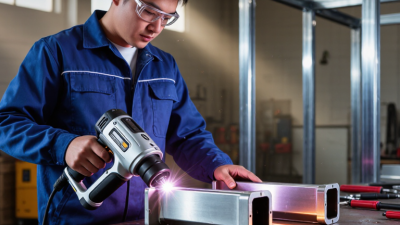
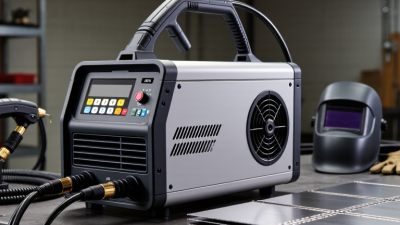
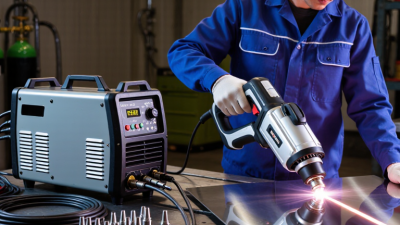
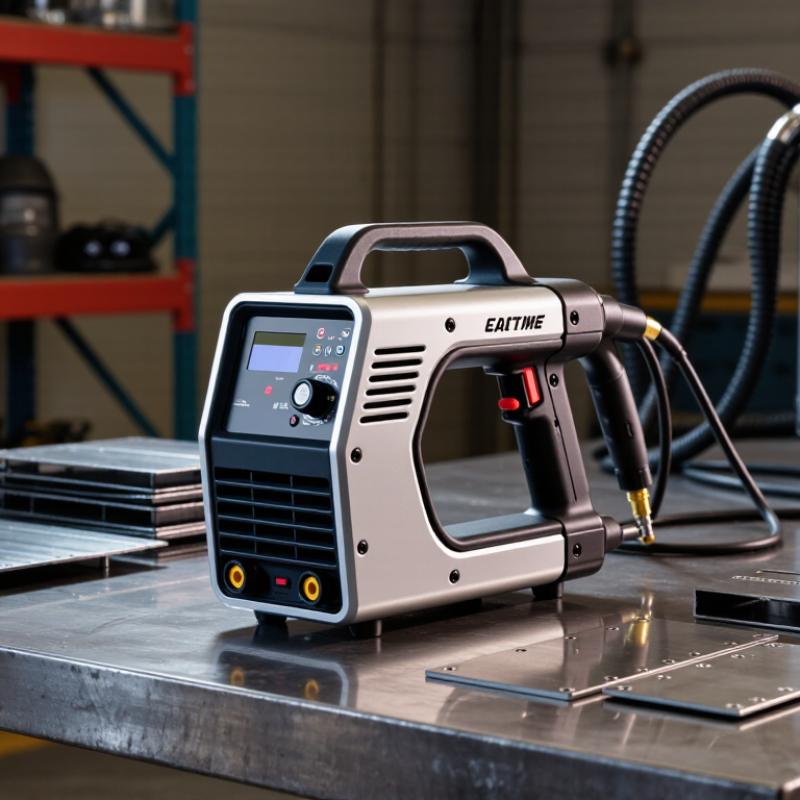
A handheld laser welder uses a focused beam of light to join metal parts. A laser source sends energy through a cable to a hand-guided welding head. Inside the head, optics focus the beam onto the joint, creating a small, intense heat zone. The metal edges melt and fuse as the operator moves the head along the seam. Filler wire may be added when the joint design or material calls for it. Shielding gas helps protect the molten metal from contamination.
The process can produce narrow seams with limited heat spread, but results depend on more than the machine. Material type, thickness, joint fit, travel speed, and power settings all matter. For example, a gap between two thin steel sheets may cause an uneven seam. The learning curve is real. Operators need training, suitable protective equipment, and a controlled work area. Reflections from metal surfaces can also create hazards, so safety procedures should match the equipment and job.
Tips: Keep the joint clean and tightly fitted. Test settings on scrap of the same material before welding the finished part. Check shielding gas flow and follow the equipment manual. A quick test can save rework.
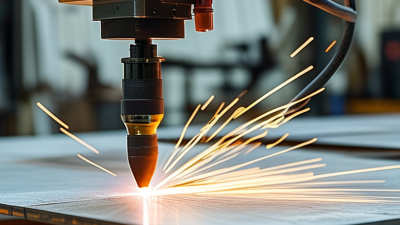
A handheld laser welder directs a focused beam onto a joint, melting the material to form a weld. Shielding gas is commonly used to protect the molten weld pool from oxidation. Many handheld systems use ytterbium fiber lasers, which typically operate near 1,070 nm.
China’s handheld laser welding industry is organized as a production network, not a single line of manufacturers. Upstream suppliers provide laser sources, optical heads, control systems, cooling units, and wire feeders. Equipment makers assemble these parts into portable systems and set parameters for different metals and joint shapes. Some firms focus on contract production, while others develop equipment and provide application support. The boundaries overlap. A supplier may assemble a machine but rely on outside partners for key components.
The wider manufacturing base helps explain this structure. The International Federation of Robotics’ World Robotics 2024 report recorded 276,288 industrial robot installations in China in 2023, or 51 percent of global installations. This is not a handheld-welder sales figure, but it signals a deep pool of automation suppliers and industrial users. Downstream, integrators and distributors configure systems, train operators, and troubleshoot at customer sites. In a workshop, practical checks include stable power, clean optics, correct shielding gas, and consistent wire feeding. Small setup errors matter. Buyers should ask for sample welds on their own material and inspect penetration, bead shape, and heat distortion. Paper specifications alone can mislead. Service coverage and spare-part access also vary by region, and that unevenness deserves more attention.
| Industry Segment | Role in the Supply Chain | Typical Products or Components | Common Capabilities | Typical Customers | What Buyers Should Check |
|---|---|---|---|---|---|
| Laser source suppliers | Provide the fiber laser source used by welding-system builders. | Fiber laser sources, power-control interfaces, and related optical components. | Sources are commonly specified by output power, wavelength, beam quality, and cooling requirements. Handheld systems are often offered in the 1–3 kW range, though configurations vary. | Laser equipment integrators, welding-machine assemblers, and industrial equipment manufacturers. | Confirm rated power, operating duty, service support, warranty terms, and compatibility with the controller and welding head. |
| Handheld system integrators | Combine the laser source, handheld welding head, controller, cooling system, and safety functions into a working machine. | Complete handheld welding systems, often with optional wire feeders and process settings. | May offer continuous-wave fiber laser welding, adjustable wobble patterns, parameter presets, and compatible cleaning or cutting functions, depending on the system. | Fabricators, metal shops, equipment dealers, and production facilities. | Request sample welds using the intended material, thickness, joint design, and production speed; verify the machine’s safety interlocks. |
| Machine assemblers and OEM/ODM suppliers | Assemble equipment to standard configurations or customer specifications; some supply machines for resale under another party’s label. | Cabinets, control systems, cooling units, cable assemblies, and complete welding machines. | Configuration options can include source power, cable length, language settings, voltage, wire feeding, and packaging. | Importers, distributors, private-label sellers, and industrial buyers. | Clarify which components are included, who provides after-sales service, how replacement parts are supplied, and which party handles compliance documentation. |
| Component and accessory suppliers | Supply parts used in system assembly, maintenance, and process setup. | Welding heads, protective windows, nozzles, fiber cables, wire feeders, chillers, and shielding-gas accessories. | Parts must match the machine’s optical, electrical, mechanical, and cooling specifications. | Machine builders, service providers, distributors, and end users. | Check part compatibility, consumable availability, replacement intervals, and whether the supplier provides installation guidance. |
| Distributors and export channels | Connect equipment makers with domestic or overseas buyers and may coordinate logistics, training, and local service. | Complete machines, accessories, spare parts, and application support. | Services vary by channel and market; some provide local demonstrations, commissioning, or technical support. | Small and medium-sized manufacturers, workshops, and international importers. | Confirm delivery terms, local service arrangements, operator training, warranty coverage, and the availability of technical documentation in the required language. |
| Application and service providers | Help users qualify welding procedures, train operators, and maintain equipment. | Process trials, operator training, installation, troubleshooting, and maintenance services. | Support may cover stainless steel, carbon steel, galvanized steel, and aluminum, subject to alloy, thickness, joint geometry, and process settings. | First-time laser users, production teams, and buyers with specialized welding requirements. | Ask for trials on representative parts and confirm that the service provider can support the machine configuration being purchased. |
| End-user industries | Use handheld systems for suitable joining tasks in metal fabrication and maintenance. | Welding of sheet-metal parts, enclosures, frames, tanks, and selected repair work. | Applications can include machinery, kitchen equipment, metal furniture, automotive components, and general fabrication; suitability depends on the part and quality requirements. | Fabrication workshops, manufacturers, maintenance teams, and contract metalworking businesses. | Evaluate weld quality, fit-up tolerance, required finishing, production volume, operator skill, and the cost of shielding gas and consumables. |
Note: The capabilities above describe common industry roles and configurations, not every supplier or machine. Actual weldable thickness and performance depend on laser power, material grade, joint design, surface condition, shielding gas, operator technique, and applicable safety procedures. Laser products and installations should be assessed against the safety and regulatory requirements of the destination market.
China’s recognized leaders in handheld laser welding are not defined by output claims alone. They earn trust through stable equipment, documented testing, and support after delivery. Look for manufacturers that publish clear specifications for laser power, wire-feeding options, cooling, and compatible materials. Ask for a weld sample using the same alloy and thickness you plan to process. A neat bead on a thin coupon proves little. Details matter. Experienced engineering teams should explain how travel speed, focal position, and shielding gas affect penetration and spatter. They should also identify where operator training is needed, rather than promising effortless results.
Recognition also depends on repeatable quality control. Ask how each unit is checked before shipment, and request records for safety features, output stability, and included accessories. Clear manuals and accessible technical support are practical signs of a mature supplier. Review customer references from applications similar to yours, such as repair work or small-batch fabrication. Published case studies may not match your production line, so treat them as useful evidence, not a guarantee. A strong manufacturer will discuss limitations, test your material, and help set realistic expectations for weld appearance and throughput.
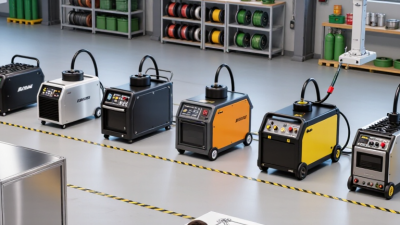
Chinese handheld laser welder manufacturers differ in more than rated power. Some offer stable beam control, adjustable welding modes, and wire-feeding options for varied joint shapes. Others focus on simpler controls and lower equipment costs. Compare the finished weld, not just the specification sheet. Ask for test coupons made from your material and thickness, then inspect the bead for consistency, spatter, and penetration. A clean showroom sample is useful, but it cannot represent every production shift. That matters.
Support can be just as important as the machine. Ask how quickly technicians respond, which spare parts are stocked, and whether setup guidance includes practical parameter ranges. Clear manuals, operator training, and remote troubleshooting can reduce delays when settings need adjustment. Check whether the supplier can explain cooling requirements and routine lens inspection in plain language. A fast reply is not the same as a useful answer. Request a written service process and confirm what assistance is available after delivery. I would also speak with a current user, if possible. Supplier claims deserve verification. Some buyers may overlook this step, then discover that small support gaps become costly during commissioning.
Choosing a handheld laser welder manufacturer in China takes more than comparing quoted power and price. Ask whether the supplier designs the laser source, welding head, and control system, or mainly assembles purchased parts. Request a factory video or live technical call, then look for consistent assembly, traceable component records, and documented final testing. Details matter. A neat showroom is not proof of stable production.
Evaluate a machine using your own metal, joint, and thickness. Have the manufacturer weld matching test pieces, then inspect bead width, penetration, spatter, and heat distortion. Ask for the settings used and repeat the test after a cold start. A polished sample can mislead. Request a continuous run and check whether output remains steady, the cooling unit holds temperature, and alarms work as described. Safety interlocks and clear operating instructions should be demonstrated, not merely listed.
After-sales support deserves equal scrutiny. Get response times, spare-part availability, warranty exclusions, and remote diagnostic steps in writing. Confirm who trains operators and whether manuals explain lens cleaning, nozzle changes, and routine checks. Ask for references from buyers with similar materials and production volumes, while remembering that one successful installation cannot predict every workshop. I would still leave room for uncertainty; advertised specifications rarely capture awkward joints, dusty work areas, or rushed shifts.