hero image

China Top 10 Best Laser Engraving Machine Manufacturers

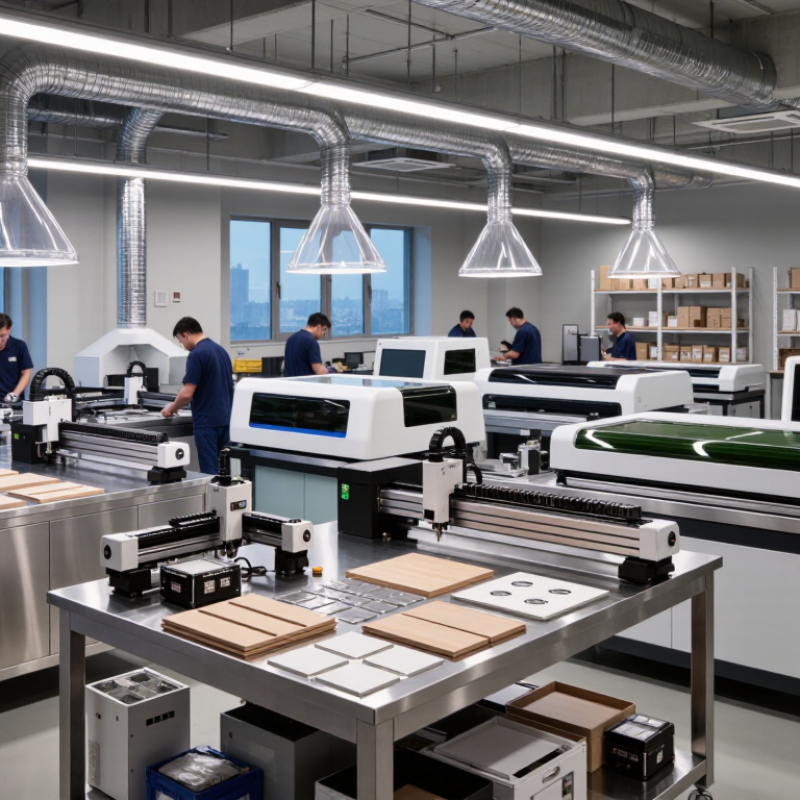
China has become a major manufacturing base for laser engraving equipment, serving workshops, factories, schools, and customized-product businesses worldwide. The country offers broad machine choices, from compact diode engravers to industrial CO2 and fiber systems.

Industry data supports this growing interest. Fortune Business Insights estimated the global laser engraving machine market at about USD 3.1 billion in 2023. Its report also projects continued expansion through the next decade, driven by personalized products, electronics, packaging, and metal marking. Grand View Research similarly identifies automation, digital manufacturing, and improved laser control as important market drivers.

The numbers vary between reports. Their definitions are not identical. That matters.

This guide examines China’s top 10 manufacturers through practical purchasing criteria. These include laser source quality, engraving accuracy, working-area stability, software compatibility, safety design, after-sales support, and export experience. A polished sample is not enough. Buyers should also inspect repeatability, ventilation requirements, spare-part access, and warranty terms.

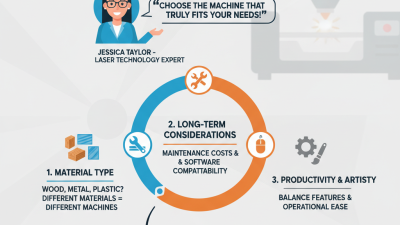
The best laser engraving machine depends on the material, production volume, budget, and operator skill. A fiber machine may mark stainless steel clearly, while a CO2 model may handle wood, acrylic, and leather more effectively. Diode systems can be attractive for small studios, but their limits deserve honest attention.

Some rankings remain subjective. Supplier capabilities can change quickly. Therefore, this overview combines public company information, technical specifications, market evidence, and realistic user considerations. It is designed to help readers compare manufacturers carefully, rather than accept advertising claims without verification.
China Top 10 Best Laser Engraving Machine Manufacturers

China’s Laser Engraving Machine Industry and Market Overview

China’s laser engraving machine industry is moving from simple marking toward connected, automated production. According to Fortune Business Insights, the global laser marking machine market reached about USD 3.77 billion in 2023. It may reach USD 7.17 billion by 2032. Electronics, automotive parts, packaging, and medical devices support this demand.

China benefits from a dense supply chain. Laser sources, scanning heads, motion systems, and control software are widely available locally. This can shorten lead times and reduce maintenance costs. However, price alone is not a reliable quality measure. A low-cost machine may show uneven depth, unstable focus, or poor fume extraction after extended use. Real factory testing matters.

Tips: Ask for sample engraving on your actual material. Check line width, contrast, repeatability, and cycle time. Review electrical safety, enclosure design, and after-sales response. The China Top 10 list should also compare warranties, software support, spare-part access, and compliance documents. A ranking based only on online visibility can mislead buyers. I would treat market reports as direction, not absolute truth, because laser engraving data often overlaps with laser marking categories. That limitation deserves attention.
Key Criteria for Ranking the Top Chinese Manufacturers

China Top 10 Best Laser Engraving Machine Manufacturers

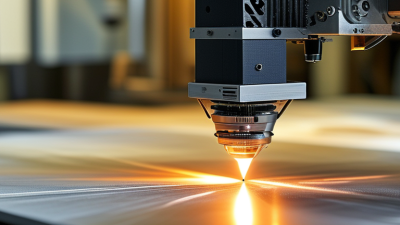
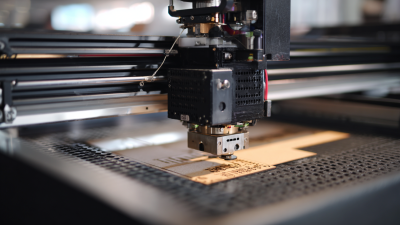
Ranking Chinese laser engraving machine manufacturers requires more than comparing advertised power or prices. Engineering depth should come first. Buyers should examine beam stability, positioning accuracy, cooling design, software control, and performance after continuous operation. A machine engraving tiny serial numbers should not produce uneven edges after six hours.

The International Federation of Robotics reported 541,302 industrial robot installations worldwide in 2023. China accounted for 276,288 units, or 51% of global installations.

This figure reflects a strong automation ecosystem, but it does not prove every manufacturer offers reliable engraving equipment. Evidence matters more. Independent test records, ISO 9001 quality systems, IEC 60825-1 laser safety compliance, and traceable component specifications deserve close attention.

Service capability also affects rankings. Response time, spare-parts availability, remote diagnostics, and technician training can decide production uptime. Grand View Research identifies automation and electronics manufacturing as major drivers of laser marking demand, increasing pressure for stable, repeatable results.

A low price can still mislead. Total ownership cost should include maintenance, software updates, energy use, rejected parts, and operator training.

Some rankings may overvalue factory size or online visibility. That weakness deserves more reflection.

The strongest evaluation combines verified production data, customer references, practical sample testing, and transparent warranty terms.

Profiles of China’s Top 10 Laser Engraving Machine Manufacturers

China’s top ten laser engraving machine manufacturers represent different strengths rather than one identical formula. One focuses on compact desktop systems for schools and small workshops. Another builds large-format machines with reinforced frames for furniture panels. A third emphasizes fiber laser equipment for detailed metal marking, while another develops CO2 systems for wood, acrylic, leather, and glass. Several manufacturers stand out for modular designs, allowing users to replace lenses, mirrors, or control boards without discarding the whole machine. Their engineering teams commonly combine CAD testing with repeated cutting trials on plywood, stainless steel, and coated materials.

The strongest profiles also include manufacturers known for stable motion systems, clear software interfaces, and responsive technical support. Some provide remote diagnostics, spare-part lists, and operator training in multiple languages. Others invest more heavily in dust extraction, enclosure design, and emergency-stop protection. These details matter during daily production. A machine may look impressive in a showroom, yet vibration can reduce accuracy after hours of operation. Published speed figures also require caution because real results depend on material, lens choice, and image density. No manufacturer is perfect. A low-cost model may offer useful performance but weaker documentation. A premium system may deliver better consistency while demanding a larger budget and more maintenance. Buyers should inspect test samples, warranty terms, electrical certifications, and local service capacity before choosing among China’s leading suppliers. Real workshops reveal more than polished brochures.

Product Types, Technologies, and Applications Compared

China’s leading laser engraving machine manufacturers differ mainly by product type, control system, and application focus. Fiber laser machines suit stainless steel, aluminum, and industrial traceability. CO2 machines handle wood, acrylic, leather, and packaging materials. UV systems create finer marks on glass, plastics, and sensitive electronic parts. Diode models remain attractive for small workshops, but their slower speed can limit production.

Technology changes the comparison. Galvanometer scanning supports rapid marking, while CNC tables provide controlled cutting across larger surfaces. MOPA fiber sources can adjust pulse width for color marking and delicate finishes. Rotary attachments help engrave bottles, rings, and cylindrical components. According to Fortune Business Insights, the laser engraving machine market was valued at about USD 3.08 billion in 2023 and may reach USD 5.11 billion by 2032. This growth reflects wider adoption in manufacturing and customized products.

Application testing matters more than catalogue power. A reliable manufacturer should provide repeatability data, sample testing, software support, fume extraction guidance, and documented safety controls. MarketsandMarkets reported that the broader laser processing market is expanding as automation and traceability increase. Still, advertised speed may use ideal settings. Real workshops face dust, uneven materials, operator errors, and maintenance delays. I would compare edge quality after repeated passes, not only the first sample. Small details matter. Machine noise, lens cleaning, calibration, and spare-part access often decide long-term value.

China Top 10 Best Laser Engraving Machine Manufacturers - Product Types, Technologies, and Applications Compared
Comparative overview of major laser engraving machine categories commonly manufactured in China. Company names and brand-specific information are intentionally omitted; specifications are typical market ranges rather than quotations for a particular supplier.
No. Representative Product Type Laser Technology Typical Power Range Typical Working Area Key Materials Primary Technology Features Common Applications Main Selection Consideration
1 Desktop CO2 Engraver Sealed CO2 laser, approximately 10.6 µm wavelength 40–100 W 300 × 200 mm to 600 × 400 mm Wood, acrylic, leather, paper, fabric, rubber and selected plastics Stepper or servo motion, air assist, honeycomb or blade bed, water cooling Craft products, signage, gifts, classroom projects and small-batch customization Compact size and low entry cost; unsuitable for bare-metal marking
2 Large-Format CO2 Cutting and Engraving Machine Water-cooled CO2 laser, approximately 10.6 µm wavelength 100–300 W 900 × 600 mm to 1600 × 1000 mm Acrylic, plywood, MDF, wood, textiles, leather, foam and non-PVC signage materials Motorized Z-axis, pass-through design, autofocus, exhaust filtration and rotary attachment options Architectural models, packaging prototypes, interior decoration, signage and industrial cutting Bed size, extraction capacity and thermal stability are critical for production work
3 Desktop Fiber Laser Marker Q-switched fiber laser, normally around 1064 nm 20–50 W 70 × 70 mm to 200 × 200 mm Stainless steel, carbon steel, aluminum, brass, copper and some engineering plastics Galvanometer scanning, air cooling, EZCAD-type control compatibility and optional rotary axis Serial numbers, QR codes, tools, hardware parts, nameplates and jewelry Excellent for permanent metal marking; cutting capability is limited at lower power
4 MOPA Fiber Laser Marker Pulse-adjustable MOPA fiber laser at approximately 1064 nm 20–60 W 100 × 100 mm to 300 × 300 mm Anodized aluminum, stainless steel, plastics, coated metals and sensitive electronic components Adjustable pulse width, fine color-marking control, high-frequency pulsing and rotary marking Consumer electronics, medical parts, black marking on aluminum and high-contrast plastic marking More process flexibility than standard fiber; usually costs more and needs parameter tuning
5 UV Laser Marking Machine Ultraviolet laser, commonly around 355 nm 3–15 W 70 × 70 mm to 200 × 200 mm Glass, ceramics, acrylic, coated metals, silicon, films and heat-sensitive plastics Cold-processing effect, small heat-affected zone, high-resolution galvo scanning and optional vision system Electronics, pharmaceutical packaging, glass decoration, micro-marking and precision components High marking quality on delicate materials; higher purchase and maintenance cost
6 Compact Diode Laser Engraver Blue diode laser, commonly near 450 nm 5–20 W optical output 400 × 400 mm to 800 × 800 mm Wood, cardboard, leather, dark acrylic, coated metal and some painted surfaces Air cooling, open-frame construction, raster engraving and optional enclosure or air assist Personalized products, hobby manufacturing, educational use and small decorative items Low energy consumption and simple setup; transparent materials are difficult to process
7 Galvo Fiber Laser Cleaning and Engraving System High-power pulsed fiber laser at approximately 1064 nm 50–200 W 100 × 100 mm to 300 × 300 mm Steel, aluminum, cast iron, coated metal and industrial components Fast scanning head, fume extraction, parameter libraries, optional handheld or enclosed configuration Rust removal, paint removal, surface preparation, tooling identification and industrial restoration Useful for combined cleaning and marking; requires effective safety enclosure and extraction
8 Three-Axis Fiber Laser Engraving and Cutting Machine Continuous-wave or pulsed fiber laser near 1064 nm 500–1500 W 600 × 600 mm to 1500 × 3000 mm Sheet metal, stainless steel, carbon steel, aluminum and galvanized steel Linear guide rails, CNC control, autofocus cutting head, assist gas and automatic height sensing Metal panels, industrial parts, electrical cabinets, kitchen equipment and fabrication work Higher power improves cutting capability but increases ventilation, power and gas requirements
9 Rotary Laser Engraving Machine CO2, fiber or diode laser combined with a rotary axis 10–100 W, depending on laser source Flat bed typically 300 × 200 mm to 900 × 600 mm Glass, wood, metal, leather, acrylic, coated bottles and cylindrical plastics Chuck or roller rotary attachment, synchronized rotation, adjustable focus and cylindrical-object software Tumblers, bottles, pipes, pens, rings, cylinders and promotional merchandise Rotary diameter, object length and material compatibility determine practical productivity
10 Vision-Assisted Conveyor Laser Marker Fiber, UV or CO2 laser selected according to the material 10–100 W for marking applications Marking field commonly 100 × 100 mm to 300 × 300 mm Metal parts, plastics, labels, packaging, cables and assembled products Industrial camera, barcode or QR-code verification, conveyor synchronization and automated reject control Traceability, packaging lines, electronics assembly, automotive components and high-volume production Automation level, software integration and line speed are more important than laser power alone
Technical note: Actual performance depends on material composition, focal length, lens size, pulse parameters, motion accuracy, ventilation, cooling, software and applicable laser-safety requirements. Materials containing chlorine, such as PVC, should not be processed with standard CO2 systems because hazardous gases may be released.

How to Select a Reliable Chinese Laser Engraving Machine Manufacturer

China’s laser engraving sector is expanding with demand from signage, packaging, electronics, and customized products. MarketsandMarkets estimates the global laser processing market could grow from about USD 7.3 billion in 2023 to USD 11.1 billion by 2028. Reports use different categories, however. Some figures include cutting and welding equipment, so buyers should question unclear market claims.

A reliable Chinese manufacturer should provide traceable specifications, not attractive promises alone. Check laser source origin, rated power, engraving speed, positioning accuracy, and expected service life. Request a sample test using your actual material. Inspect edge quality, depth consistency, smoke extraction, and software stability. Small details matter. Ask for factory videos, calibration records, and recent customer references. An ISO 9001-certified quality system can support consistency, but certification alone does not prove machine performance.

Safety documentation deserves equal attention. The manufacturer should explain enclosure design, emergency stops, interlocks, electrical protection, and compliance with applicable standards such as IEC 60825-1. Confirm whether replacement lenses, mirrors, filters, and control boards remain available after delivery. Service response time should be written into the contract. A low purchase price may become expensive after one failed controller or delayed shipment. I have seen buyers focus too heavily on wattage and overlook ventilation requirements. That is a mistake. Compare total operating cost, training, warranty limits, installation support, and acceptance testing before selecting a supplier.

How to Select a Reliable Chinese Laser Engraving Machine Manufacturer

The chart presents a practical evaluation framework for comparing laser engraving machine manufacturers. The percentages are recommended purchasing weights based on common industrial requirements, including machine performance, service capability, compliance, customization, and delivery reliability. Buyers should adjust the weighting according to their material, production volume, and application needs.