7 Tips for Choosing a Laser Engraver for Metal
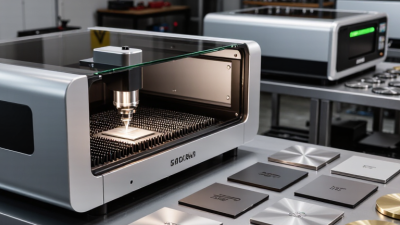
Choosing a laser engraver for metal is rarely as simple as comparing wattage and price. The right machine must match your materials, production volume, design detail, and available workspace. Stainless steel, aluminum, brass, and coated metals react differently under laser energy. A setting that produces a clean black mark on stainless steel may create weak contrast on aluminum. Small details matter.
A reliable buying decision begins with verified specifications. Check the laser source, wavelength, pulse settings, marking speed, work area, cooling method, and software compatibility. Fiber lasers are often preferred for bare metal because they deliver focused energy and consistent results. However, a lower-cost system may still suit occasional marking on coated surfaces. Do not trust every impressive sample photograph. Ask how it was produced.
Safety also deserves careful attention. Confirm that the machine includes suitable guarding, emergency controls, ventilation guidance, and clear operating instructions. Local workplace requirements may apply, so review official guidance before installation. Test materials with small samples before committing valuable parts. Keep records of settings, because repeatability is more important than one perfect result.
There is no perfect machine.
These seven practical tips will help compare equipment with greater confidence. They focus on real operating needs, long-term reliability, maintenance, and total ownership cost. Some recommendations may challenge common assumptions, especially when a cheaper engraver appears attractive. I may not choose the same model for every workshop. That is the point: the best laser engraver for metal is the one that performs safely, consistently, and economically for your specific work.
Identify Metal Types and Match Them to 1064 nm Fiber Laser Compatibility
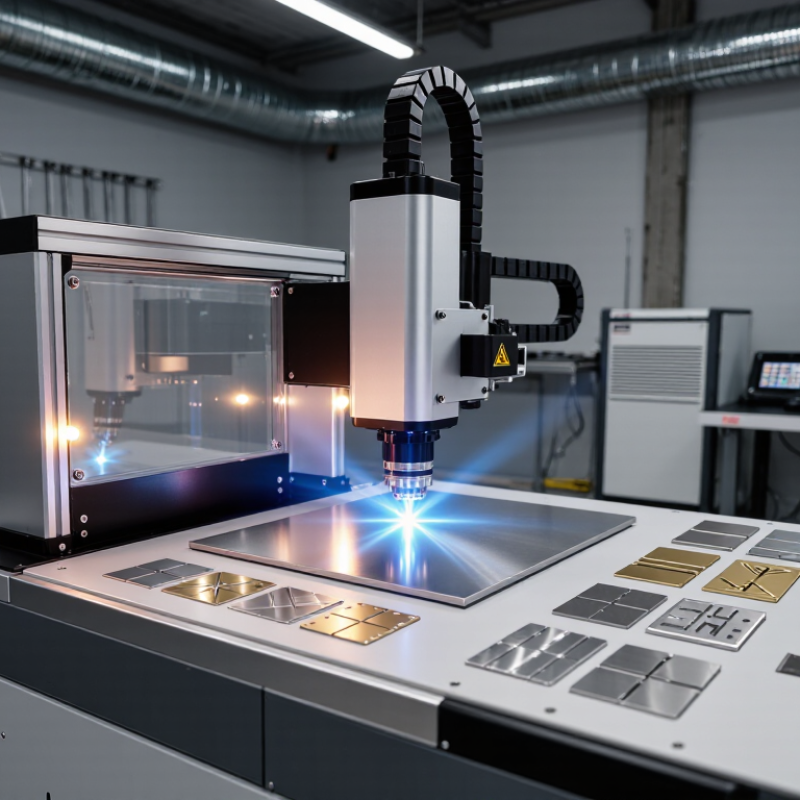
When choosing a metal engraver, identify the substrate before comparing speed, wattage, or software. A 1064 nm fiber laser couples efficiently with carbon steel, stainless steel, aluminum, brass, and copper. Not equal. Steel usually produces predictable dark marks and deeper relief. Aluminum may need higher pulse energy or surface treatment. Brass and copper reflect more infrared energy, increasing back-reflection concerns.
Grand View Research estimated the global laser marking market at about USD 3.1 billion in 2023, showing strong industrial adoption. That figure does not prove every machine suits every alloy. During practical trials, I would test a small coupon from the exact production batch. Mill finish, oxide layers, and alloy chemistry can change contrast dramatically. Use hatch spacing, pulse frequency, and speed as controlled variables. Do not judge from one attractive sample. Measure line width, depth, contrast, and heat tint.
The 2024 MarketsandMarkets Fiber Laser Market report forecasts a market value near USD 10 billion by 2028. Wider adoption makes accurate material matching more important. For copper, begin with low power, slower scans, and verified reflection protection. Thin sheets can warp or discolor under excessive energy. Engraving depth depends on power density, not wattage alone. That distinction is easy to miss. Recheck settings after every material change.
7 Tips for Choosing a Laser Engraver for Metal – Identify Metal Types and Match Them to 1064 nm Fiber Laser Compatibility
| Tip |
Metal Type |
Typical Characteristics |
1064 nm Fiber Laser Compatibility |
Best Marking Result |
Selection and Operating Guidance |
| 1 |
Stainless Steel |
Iron-based alloy containing at least approximately 10.5% chromium; available in many grades and finishes. |
Excellent for direct marking with a 1064 nm fiber laser. |
Dark, white, or annealed marks; deep engraving is possible with multiple passes. |
A strong general-purpose choice. Use lower heat input for corrosion-sensitive or thin parts, and test on the exact grade and surface finish. |
| 2 |
Carbon Steel |
Iron-carbon alloy that may develop an oxide layer or surface scale. |
Excellent for surface marking and engraving. |
High-contrast dark marks, oxide removal, and permanent engraved text or codes. |
Clean oil, rust, paint, and scale before marking. For deep engraving, choose a machine with adequate power, cooling, and multiple-pass capability. |
| 3 |
Aluminum |
Lightweight, highly reflective metal with a naturally thin oxide layer; anodized surfaces behave differently from bare aluminum. |
Very good on anodized and coated aluminum; bare aluminum may require optimized parameters. |
High-contrast removal of anodizing or coating; direct bare-metal marks are generally lighter and more parameter-sensitive. |
Confirm whether the part is bare, anodized, painted, or coated. Use a suitable lens and conservative test grid because reflectivity can increase back-reflection risk. |
| 4 |
Brass |
Copper-zinc alloy with relatively high visible and near-infrared reflectivity. |
Good with precautions; results depend strongly on alloy, finish, and laser parameters. |
Surface marking, dark contrast, and shallow engraving after parameter optimization. |
Use a laser designed and optically protected for reflective metals. Start with a test matrix and avoid unstable reflections from polished surfaces. |
| 5 |
Copper |
Highly conductive and highly reflective, especially when polished; thermal conductivity can spread heat quickly. |
Possible but demanding for standard 1064 nm fiber systems. |
Surface marking or shallow engraving; consistent results require careful parameter development. |
Verify that the engraver is rated for copper and reflective work. A clean, matte, or treated surface is generally easier to process than a mirror-polished one. |
| 6 |
Titanium |
Strong, lightweight metal with a stable oxide layer and relatively low thermal conductivity compared with copper and aluminum. |
Excellent for marking, annealing, and controlled engraving. |
Dark contrast, color-toned oxide marks, and durable identification marks. |
Use controlled heat input for medical, aerospace, or thin components. Confirm that the desired mark does not alter required surface properties. |
| 7 |
Precious Metals
Gold, Silver, Platinum |
Composition, karat or purity, polish, and plating have a major effect on absorption and heat behavior. |
Generally compatible, but highly reflective or plated surfaces require careful testing. |
Fine surface marks, contrast marks, and shallow engraving with suitable spot size and settings. |
Choose precise beam control and galvo scanning. Test on the same alloy and finish, particularly for plated jewelry where excessive heat can expose the base metal. |
Important selection note: A 1064 nm fiber laser is commonly used for bare metals, coated metals, and anodized aluminum, but compatibility alone does not guarantee a specific mark. Final results depend on laser power, pulse width, repetition rate, scan speed, focus, hatch spacing, surface finish, alloy composition, and the required mark depth. Always run a controlled test grid and follow the equipment manufacturer’s laser-safety requirements, especially when processing copper, brass, aluminum, or polished precious metals.
Compare 20–50 W Power Ratings with Required Engraving Depth and Speed
Power ratings are only a starting point when choosing a metal laser engraver. A 20 W fiber source can produce sharp markings on stainless steel, aluminum, and coated metals. However, deeper engraving usually requires slower passes, more repetitions, or both. A 50 W source generally removes material faster and handles larger designs better. It does not automatically create twice the depth.
Material changes everything. Stainless steel absorbs energy differently from anodized aluminum, brass, or titanium. Surface finish matters too. My first comparison was too optimistic; I judged speed without measuring edge quality. A better test uses the same font, hatch spacing, lens, and focal position. Record depth with a digital gauge after each pass. Small details matter.
Industry data supports this practical approach. Grand View Research valued the global industrial laser market at approximately 7.7 billion dollars in 2023 and forecasts continued growth through 2030. MarketsandMarkets also identifies power efficiency and processing speed as major adoption factors in its 2024 industrial laser report. These reports describe market direction, not guaranteed engraving results. For purchasing, compare 20 W, 30 W, and 50 W samples on your actual metal. A 20 W machine may suit shallow identification marks. A 50 W model becomes more practical for repeated deep engraving, tighter production schedules, and larger filled areas. Test ventilation and beam safety controls against ANSI Z136.1 guidance. Speed is useful. Consistency is better.
Evaluate 20–50 µm Spot Size for Precision, Contrast, and Detail
Choosing a metal laser engraver starts with its spot size. A 20–50 µm spot can influence line sharpness, contrast, heat spread, and tiny text readability. Under equal pulse energy, a 20 µm diameter spot concentrates about 6.25 times more energy per area than a 50 µm spot. That difference can create cleaner marks, but it may also discolor thin metal or leave uneven depth.
ISO 11146-1:2021 recommends measuring beam quality and propagation characteristics, rather than trusting catalog specifications alone. Ask for the measured spot diameter, beam quality value, and focal position. A practical test should include stainless steel, anodized aluminum, and coated brass.
Use a 20 µm setting for serial numbers, QR modules, and fine geometric patterns. Choose 30–50 µm when contrast matters more than microscopic detail. The larger spot often produces a more forgiving mark.
Published laser-processing studies from Fraunhofer ILT consistently link smaller focused spots with higher resolution and narrower heat-affected zones. However, the smallest spot is not automatically the best choice. Lens contamination, vibration, surface curvature, and poor focus can erase its advantage.
I would test at least three powers and speeds, then inspect the mark under magnification. Real workshops are rarely as clean as laboratory trials. Even experienced operators sometimes overvalue resolution and overlook cycle time. Record the settings, metal grade, surface finish, and measured contrast before making a final purchase.
Check 7,000 mm/s Marking Speed Against Production Volume Requirements
A 7,000 mm/s marking speed looks impressive, but it is only a scanner’s peak motion rate. Real output depends on line length, hatch spacing, laser power, focus, and material reflectivity. A 100 mm mark theoretically takes about 0.014 seconds at that speed. Galvanometer acceleration, jumps, loading, inspection, and cooling still add time. Speed alone misleads.
Compare the specification with your production volume. If a line needs 1,000 parts per hour, each part has only 3.6 seconds for the complete cycle. A machine marking for 0.5 seconds may still fail if loading takes two seconds and inspection takes another two.
The 2024 International Federation of Robotics World Robotics report recorded 541,302 industrial robot installations worldwide in 2023, showing how strongly manufacturers are investing in automated throughput. Yet automation does not remove bottlenecks; it can expose them.
Request a timed sample using your actual metal, artwork, serial-number length, and marking depth. Measure parts per minute, not just scan speed. The Laser Institute of America recommends evaluating process parameters and verification quality rather than treating laser output as a single performance figure. Ask for repeatable results across a full production shift.
Be cautious here.
A laboratory sample can look perfect, while production dust, fixture movement, or heat buildup changes the mark.
Calculate capacity with this practical formula: hourly output equals 3,600 divided by total seconds per part. Then leave room for rejects, maintenance, and operator handling.
Verify Class 4 Laser Safety, Enclosure Standards, and Fume Extraction Needs
Choosing a laser engraver for metal starts with hazard verification, not engraving speed. Class 4 systems can cause immediate eye and skin injuries, even through hazardous reflections. OSHA’s Technical Manual also warns that these lasers may ignite combustible materials. Ask for the laser classification, measured output, and a documented risk assessment. Do not accept vague claims such as “industrial safe.”
The enclosure should prevent beam escape during normal operation. Check its viewing window rating against the laser wavelength. Confirm that door interlocks stop emission, remain fail-safe, and cannot be easily bypassed. IEC 60825-1 provides the main laser classification framework, while ANSI Z136.1 outlines control measures, training, and controlled-area practices. These documents matter more than attractive product photographs. A small gap can become a serious weakness.
Fume extraction needs equal attention. Metal marking can release fine particles, vapors, and residues from coatings, oils, or plated surfaces. OSHA recommends evaluating airborne contaminants and maintaining effective local exhaust ventilation. Select extraction based on airflow, filter efficiency, capture position, and the material’s safety data sheet. Recirculating air without suitable filtration is not automatically safe. It may simply move contamination around the room. A practical mistake is testing only clean steel. Coated aluminum, painted parts, and oily components can behave differently. Review filter replacement records, alarm functions, and discharge arrangements before purchase. Safety decisions deserve measured evidence, not assumptions.
7 Tips for Choosing a Laser Engraver for Metal
Use this pre-purchase checklist to verify Class 4 laser safety, enclosure standards, and fume-extraction requirements before selecting a metal engraving system.
How to read the chart: Each bar represents the number of practical verification checks in that category. Confirm the laser classification under IEC 60825-1, inspect enclosure access controls and interlocks, and match fume extraction and filtration to the metal, coating, and marking compound safety data sheets. An enclosed Class 1 product may reduce accessible-beam exposure, but the actual classification and safeguards must be verified from the equipment documentation.