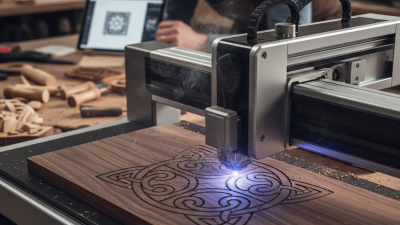
hero image

Top 10 Handheld Laser Engravers for Global Buyers

Choosing a handheld laser engraver means balancing portability with dependable results. A compact body is useful at a craft fair, repair bench, or small studio, but weight alone does not tell the whole story. Buyers also need to compare engraving area, compatible materials, focusing method, controls, and power options. This guide introduces ten models for readers with different budgets and working habits. It focuses on practical distinctions rather than treating one specification as proof of quality.

For a fair comparison, check manufacturer documentation and confirm what each device can actually process. Wood, coated metals, leather, and acrylic can behave differently, even when product listings use similar language. Look for clear setup instructions, sensible safety features, replacement-part access, and responsive support. That matters. Global buyers should also verify plug type, shipping availability, warranty terms, and local product requirements before ordering; these details vary by market and seller. A higher advertised power rating does not automatically mean cleaner engraving or easier operation. Small details count. The recommendations should be treated as a starting point, not a promise that every model suits every project. Some specifications are difficult to compare across brands, and that limitation deserves attention. The sections ahead help readers weigh real workshop needs against portability, operating costs, and long-term support before making a purchase.
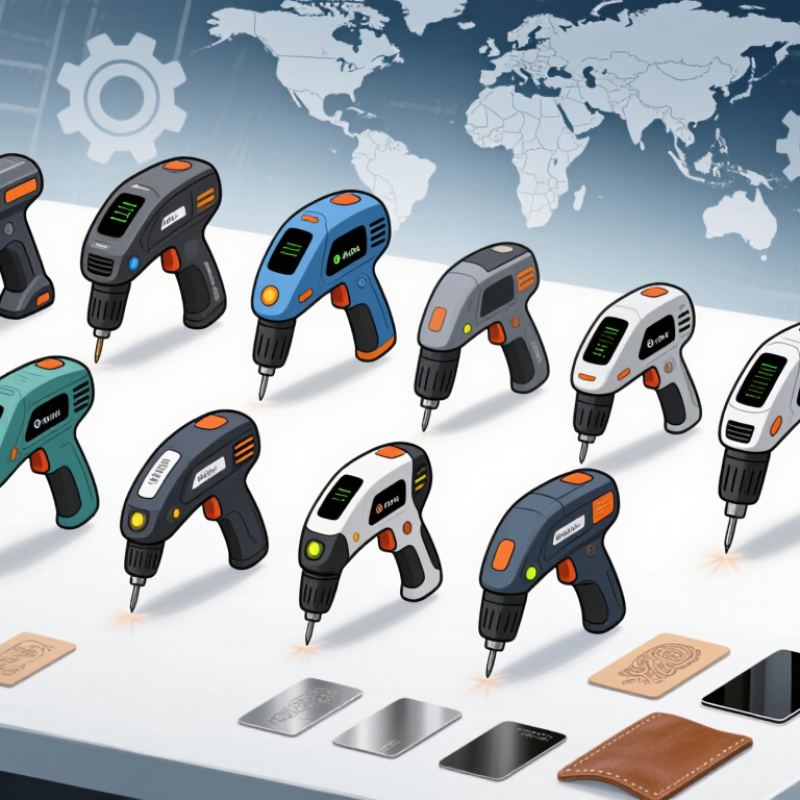
Top 10 Handheld Laser Engravers for Global Buyers

What Defines a Handheld Laser Engraver

A handheld laser engraver is a portable tool whose engraving head is guided by the user rather than fixed to a large gantry. Its defining feature is mobility, not simply a small size. The operator positions the head over a surface and controls its movement, often using a guide, screen, or connected device. Steady hands matter. A slight shift can turn a crisp line into a doubled mark, especially on a curved metal cup or a small wooden tag.

The tool’s practical value depends on more than portability. Buyers should check its supported materials, adjustable power, focusing method, and working area. A clear focus procedure helps keep marks consistent; an uneven surface can make the same setting produce noticeably different results. Built-in guards, an emergency stop, and suitable fume extraction also affect everyday usability. Always follow the manufacturer’s material and operating guidance, and test an inconspicuous area first. “Handheld” sounds simple, but managing movement, focus, and workpiece stability takes practice. That distinction is easy to overlook.
How the Top 10 Engravers Are Evaluated

How the Top 10 Engravers Are Evaluated

A useful comparison starts with real operating conditions, not headline specifications. Each handheld engraver is assessed for weight, grip comfort, setup time, and control stability during a small test pattern. A tool may feel light in a catalog photo but tiring after several minutes. Numbers can mislead.

Engraving performance is checked on suitable sample materials, using consistent settings where possible. Reviewers look at line clarity, edge consistency, marking depth, and repeatability across multiple passes. Laser power alone does not predict a clean result; focus, material, and motion control matter too. Results can vary. That deserves a caveat.

The evaluation also considers practical ownership: clear instructions, software usability, maintenance needs, and access to dependable support. Safety features, including protective eyewear guidance and sensible operating safeguards, are reviewed alongside portability. For global buyers, voltage requirements, plug options, shipping availability, and service coverage can affect the experience. These details are easy to overlook. No single test captures every workshop, and sample materials cannot represent every user’s needs. The rankings therefore balance measurable performance with hands-on observations, while noting where evidence is limited.

Profiles of Ten Handheld Laser Engravers

A compact diode handheld engraver suits small wood tags and coated surfaces, where a steady wrist matters. A higher-power diode model can mark larger areas, but heat and uneven passes may darken edges. An infrared unit is designed for certain plastics and coated metals; test a hidden corner first. A portable fiber engraver is a stronger candidate for bare-metal markings. A pulsed fiber model offers fine control on small text. A continuous-duty fiber unit may fit longer shop sessions, though its weight can tire the operator.

An air-cooled model reduces setup demands, while a water-cooled configuration may suit sustained work but adds maintenance. A battery-supported engraver improves mobility; check runtime under actual workload, not just idle claims. A cable-powered model avoids battery limits but restricts movement. An adjustable-focus handheld head helps accommodate different work distances, yet focus errors still blur fine details. These are practical profiles, not a universal ranking.

Grand View Research valued the global laser processing market at US$20.16 billion in 2023 and projected 8.3% annual growth through 2030. That broad market figure does not measure handheld engravers alone. Compare spot size, working distance, supported materials, and service access before buying. Keep the workpiece stable, use suitable eye protection, and provide ventilation for fumes. Small details matter. Real-world results can disappoint when surface coatings vary, so record settings and inspect sample marks before production.

Top 10 Handheld Laser Engravers for Global Buyers — Profiles of Ten Handheld Laser Engravers
Profile Laser Type Typical Optical Output Common Wavelength Typical Marking Area Suitable Materials Best-Fit Applications Buyer Considerations
1. Compact diode model Blue diode 2–5 W About 450 nm Approximately 100 × 100 mm Wood, paper, leather, and some dark or coated surfaces Small crafts, labels, and light-duty personalization Check material compatibility; bare metals generally require a suitable coating or a different laser type.
2. General-purpose diode model Blue diode 5–10 W About 450 nm Approximately 100 × 100 to 150 × 150 mm Wood, leather, paper, cardboard, and selected plastics Workshop projects and small-batch customized goods Confirm whether the stated power is optical output or electrical input, and review the required protective enclosure.
3. Higher-output diode model Blue diode 10–20 W About 450 nm Approximately 100 × 100 to 200 × 200 mm Wood, leather, paper, and certain coated materials Deeper engraving on compatible non-metal materials Actual depth and speed depend on material, focus, settings, and the machine’s motion system.
4. Portable fiber marking model Pulsed fiber 20 W About 1064 nm Often around 100 × 100 mm Stainless steel, aluminum, brass, and other suitable metals Serial numbers, logos, and small metal components Verify the marking-head setup, pulse parameters, and compatibility with the specific metal or finish.
5. Standard fiber marking model Pulsed fiber 30 W About 1064 nm Often around 100 × 100 mm; larger lenses may expand the field Many metals and some engineered plastics General industrial part identification and batch marking Ask for the lens field size and sample marks on the intended material before purchase.
6. Higher-power fiber model Pulsed fiber 50 W About 1064 nm Commonly around 100 × 100 to 200 × 200 mm, depending on optics Metals and selected engineering plastics Higher-throughput marking and deeper marking on suitable materials Power alone does not determine marking quality; pulse settings, beam quality, and workpiece finish also matter.
7. MOPA fiber model MOPA pulsed fiber 20–60 W, depending on configuration About 1064 nm Often around 100 × 100 mm Metals, including some applications on anodized aluminum and stainless steel Color effects on selected metals and adaptable industrial marking Color results are material- and setting-dependent; request tested samples rather than relying on a single demonstration.
8. Handheld UV marking model UV solid-state Typically 3–5 W About 355 nm Often around 100 × 100 mm Selected plastics, glass, ceramics, and coated materials Fine marking where heat-sensitive substrates are involved Check substrate testing, consumable or maintenance requirements, and the supplier’s safety documentation.
9. Handheld green marking model Green solid-state Typically 5–10 W About 532 nm Often around 100 × 100 mm Selected plastics, coated metals, and certain reflective materials Specialized marking on materials that respond poorly to other wavelengths Availability and supported materials vary; confirm wavelength, output, and sample performance for the exact model.
10. Integrated portable fiber system Pulsed fiber, with handheld marking head 20–50 W About 1064 nm Lens-dependent; commonly around 100 × 100 mm Metal parts, tools, equipment, and suitable coated components On-site asset marking and workpieces that are difficult to move Compare total system weight, cable reach, power requirements, cooling method, and available safety accessories.
Note: These are representative technology and specification profiles, not ten named products. Values are indicative market ranges and vary by configuration, optics, and manufacturer. Always verify the exact optical output, marking field, material compatibility, electrical requirements, and applicable laser-safety controls before purchase or use.

Comparing Power, Materials, Portability, and Safety

Top 10 Handheld Laser Engravers for Global Buyers

Comparing Power, Materials, Portability, and Safety

A useful comparison starts with optical output, not headline wattage alone. Higher output can mark faster, but it may also deepen burns and increase fire risk. Check the stated wavelength and test results on your actual material. Fiber systems suit many metals; diode systems are commonly used on wood, leather, and some coated surfaces. Compatibility varies.

Grand View Research estimated the global laser-marking market at about US$3.4 billion in 2023, with an 8.3% forecast compound annual growth rate from 2024 to 2030. That figure signals industrial demand, not proof that every handheld unit performs well. Compare marking speed, spot size, repeatability, and supported materials. Weigh the tool, too. Battery runtime, cable reach, cooling, and a stable work surface affect real portability. Small is not simple.

Safety belongs in the comparison, not the footnotes. Check the documented laser class and wavelength against IEC 60825-1 guidance. Use wavelength-rated eye protection, keep the beam away from reflective surfaces, and provide suitable fume extraction. Avoid materials with unknown coatings. A tidy workbench helps, but it is not a shield. One detail is easy to overlook: marketing claims rarely describe performance after extended use, so independent testing still matters.

Choosing a Model for Your Region and Projects

A handheld engraver should match the workbench, power supply, and materials—not just a headline wattage. For occasional labels on coated metal, portability may matter most. For repeated designs on wood or acrylic, compare working speed, focal adjustment, and repeatability. Ask sellers for sample results on your exact material; surface finish can change the outcome.

MarketsandMarkets estimated the broader laser-processing market at about USD 6.9 billion in 2023, with growth projected through 2028. This is not a handheld-device sales figure, but it signals wider adoption across manufacturing. Treat it as context, not proof that every compact model suits production. One comparison is easy to miss: advertised power alone does not show how evenly a unit engraves across a larger surface.

Regional fit is practical. Check supported input voltage and frequency, plug type, replacement-part availability, and local service before ordering. Confirm the manual specifies compatible materials, ventilation needs, and protective equipment. A unit that runs well in a bright showroom may behave differently on a small, dusty workshop bench. Test a short sample first. That saves material. I would still leave room for doubt: supplier demonstrations rarely reproduce every real project.