China Best Dot Peen Marking Machine Supplier?
Choosing the China best dot peen marking machine supplier requires more than comparing online prices. Buyers should examine marking depth, character quality, service response, and long-term equipment stability. A reliable supplier must connect technical claims with testable evidence.
The industrial background is significant. According to the International Federation of Robotics’ World Robotics 2024 report, China installed 276,288 industrial robots in 2023, representing more than half of global installations. This figure reflects strong manufacturing automation demand. It also suggests that suppliers increasingly understand factory integration, traceability, and production efficiency. However, robot adoption does not automatically prove marking expertise.
Small details matter. A suitable dot peen marking machine should produce clear marks on steel, aluminum, and coated surfaces. Buyers should request sample markings using their actual logos, serial numbers, and Data Matrix codes. They should also check pneumatic performance, pin durability, controller usability, and software compatibility. Reports from MarketsandMarkets on industrial automation further indicate continued investment in connected manufacturing and smart production systems. That trend makes communication interfaces and data traceability more important.
Still, supplier selection is rarely perfect. Product pages may simplify difficult engineering limits. A low price is not proof of value. The best evaluation combines factory experience, documented quality procedures, export records, and responsive technical support. ISO 9001 certification can support process reliability, but it cannot replace independent testing. Before choosing a Chinese supplier, compare samples, warranties, spare-part availability, and realistic delivery terms. The strongest decision comes from verified performance, not attractive promises.
Dot Peen Marking Technology: 0.01–0.5 mm Depth and 2–5 Characters/Second
China Best Dot Peen Marking Machine Supplier?
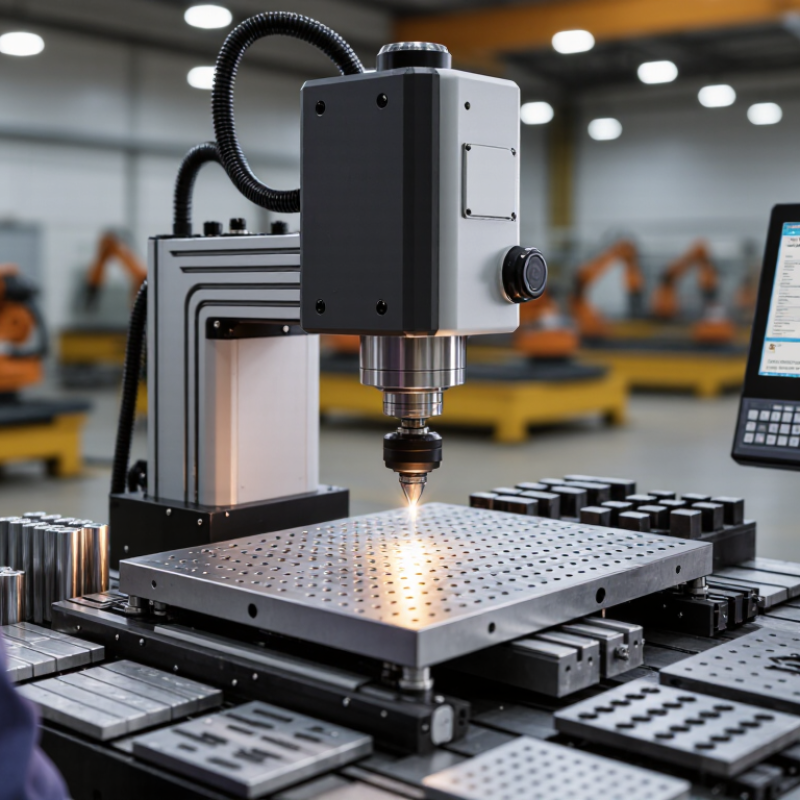
Dot peen marking creates permanent impressions by striking a carbide or diamond stylus against a surface. Typical marking depth ranges from 0.01–0.5 mm. Production speed commonly reaches 2–5 characters per second, depending on character size, material hardness, and marking force.
It is a practical choice for steel parts, aluminum housings, tools, and identification plates. Deep marks improve readability after painting or mild abrasion. However, deeper is not always better. Excessive force may distort thin parts or create stress around the mark. In my experience, stable fixtures often improve consistency more than higher speed. ISO 9001-based quality systems also encourage traceable process records, including depth checks and sample inspection. MarketsandMarkets’ 2024 industrial marking report identifies automation and product traceability as important market drivers, with the sector forecast to grow from about USD 3.4 billion in 2023 to USD 4.8 billion by 2028.
Tips: Test three depths on the actual material before production. Measure impressions with a microscope or depth gauge. Keep the workpiece firmly supported. Check five sample parts after tool replacement. A 2–5 character-per-second setting may look efficient, but it can reduce clarity on small symbols. Font spacing matters. Surface oil can also weaken contrast, an easy detail to overlook.
Key Supplier Standards: ISO 9001, CE Compliance, and IP54 Protection
China Best Dot Peen Marking Machine Supplier?
Choosing a dot peen marking machine requires more than comparing prices. A reliable supplier should provide clear ISO 9001 evidence for quality management. Ask how inspections cover pins, controllers, cables, and software updates. These details affect marking depth and repeatability on metal parts. Request production samples using your actual materials and character sizes. Real testing reveals problems that catalogs often hide.
CE compliance also deserves careful checking. The supplier should provide a valid Declaration of Conformity and relevant technical documents. Do not accept a CE logo alone. Confirm that electrical safety, electromagnetic compatibility, and user instructions match the delivered machine. IP54 protection offers useful resistance against dust and water splashes. It does not mean the equipment can survive coolant flooding or pressure washing. That distinction matters on busy factory floors.
Look closely at service reliability. Can technicians explain needle replacement, fixture alignment, and fault diagnosis? Response time should be written into the agreement. Spare parts should have defined specifications, not vague descriptions. A strong supplier can discuss limitations openly. That is reassuring.
There is room for caution. A machine may pass a factory test yet perform differently after months of vibration. Ask for maintenance records and long-term application references. Check sample markings under normal lighting and after handling. The best decision combines certificates, practical trials, transparent communication, and evidence from real production conditions.
China Supplier Evaluation: Marking Force, Pin Life, Controller Accuracy, and Support
China Best Dot Peen Marking Machine Supplier?
Evaluating a Chinese dot peen marking machine requires more than checking a sample plate. Marking force should remain stable across aluminum, steel, and coated surfaces. Ask for test results using your actual material and character height. A clear, deep mark is useful, but excessive force may deform thin parts. We learned that attractive samples can hide inconsistent settings.
Pin life deserves practical evidence. Request records showing expected cycles, replacement intervals, and wear inspection methods. A supplier should explain how pin material, spring tension, and operating pressure affect service life. Test several hundred marks when possible. Short trials can mislead.
Controller accuracy also matters. Check character spacing, rotation, date coding, and repeat positioning over multiple jobs. A small drift may become obvious after a long production shift. Review the interface, data backup process, and error messages. Support should include setup guidance, spare-part access, response targets, and remote troubleshooting. Language clarity matters. A technically strong supplier may still disappoint if support replies are slow or vague. One weakness remains easy to miss: factory claims may not match field conditions. Use acceptance criteria, keep test records, and ask for an honest limitation list.
Total Cost Comparison: Machine Price, Consumables, Warranty, and Service Response
China Best Dot Peen Marking Machine Supplier?
The lowest machine price rarely means the lowest ownership cost. A practical comparison includes equipment, installation, fixtures, marking pins, software updates, training, warranty coverage, and service response. For example, a machine priced at USD 2,500 may need a USD 600 fixture and replacement stylus every 12 to 24 months. These figures vary by material and production volume. Do not trust a simple quotation.
Deloitte’s 2024 Smart Manufacturing and Operations Survey found that 92% of manufacturers view smart manufacturing as a major competitiveness driver within three years. That pressure makes downtime expensive. Ask suppliers for a written response-time target, spare-parts availability, remote diagnosis, and on-site support terms. A 48-hour delay can cost more than the original price difference. Warranty length also needs careful reading. Some warranties exclude the marking head, controller, or accidental damage. That feels small until production stops. My estimate may be conservative.
Tips: Request a three-year total-cost sheet. Include machine price, freight, installation, training, consumables, energy, software, and repairs. Ask for test samples using your actual steel, aluminum, or coated parts. Record cycle time and character depth. A supplier that avoids these tests deserves caution. Service quality is difficult to measure before purchase, so require named contacts and documented escalation procedures. Industry reports can guide decisions, but your factory data should carry more weight.
China Best Dot Peen Marking Machine Supplier? - Total Cost Comparison: Machine Price, Consumables, Warranty, and Service Response
Indicative market comparison for new pneumatic or electromagnetic dot peen marking systems. Prices are typical ranges in USD and may vary by configuration, marking area, controller, tooling, shipping, and import duties.
| Supplier Category |
Typical Application |
Machine Price
(USD) |
Annual Consumables
(USD) |
3-Year Estimated
Total Cost (USD) |
Standard Warranty |
Typical Service Response |
Key Cost Factors |
| Entry-Level Benchtop System |
Small workshops, nameplates, tools, and occasional part marking |
$1,200–$2,500 |
$180–$360 |
$1,740–$3,580 |
12 months for machine and controller |
1–3 business days by email or online support |
Lower purchase price; limited fixtures, smaller marking area, and fewer automation options |
| Standard Industrial Benchtop System |
General manufacturing, serial numbers, VIN plates, and medium-volume production |
$2,500–$5,000 |
$250–$600 |
$3,250–$6,800 |
12–24 months, depending on the contract |
Within 1–2 business days; remote troubleshooting commonly available |
Higher rigidity, improved marking depth control, stronger controller, and better fixture compatibility |
| Production-Grade Pneumatic System |
Automotive, machinery, steel components, and continuous factory use |
$5,000–$9,000 |
$450–$1,000 |
$6,350–$12,000 |
12–24 months; consumable wear parts are usually excluded |
Same business day to 2 business days for priority accounts |
Higher-duty mechanics, larger marking windows, custom fixtures, and integration support |
| Integrated Automated Cell |
High-volume lines requiring PLC communication, guarding, and automatic loading |
$9,000–$25,000+ |
$700–$1,800 |
$11,100–$30,400+ |
12 months standard; extended coverage may be purchased |
Same day for remote support; on-site response commonly 2–10 business days |
Custom engineering, safety guarding, robot or conveyor integration, commissioning, and training |
Cost assumptions: The three-year estimate includes the initial machine price plus three years of marking pins or carbide styluses, protective sleeves, filters, and other routine wear items. It excludes freight, import duties, installation travel, electricity, operator labor, replacement controllers, major repairs, and production downtime. Consumable life depends on material hardness, marking depth, character height, cycle volume, and maintenance quality.