Why Choose Zinc Die Casting for Your Products?
Why Choose Zinc Die Casting for Your Products?
Zinc Die Casting can turn a detailed design into a strong, repeatable component. Picture a small housing with crisp ribs, clean edges, and mounting features formed in one cycle. That precision can reduce machining and simplify assembly. For product teams, those details matter.
Casting metallurgist John Campbell’s published work offers a useful foundation for thinking about process control. In paraphrase, not as a verbatim quotation: “Good castings start with sound design and controlled metal flow.” That principle applies when evaluating zinc alloys, tooling, and production conditions. Zinc’s fluidity supports thin walls and fine features, while its strength can suit handles, connectors, enclosures, and hardware. It is not a universal answer. Part size, operating environment, finish requirements, and expected production volume all influence the choice.
A practical review should compare the full process, not just the unit price. Ask about tolerances, draft angles, tooling life, and secondary operations. Request sample parts, and inspect them under real assembly conditions. A bright surface can still hide a poor fit. Small details count. With experienced engineering support, Zinc Die Casting can offer a reliable route from prototype decisions to consistent production. The trade-off deserves attention: tooling requires investment, and design changes may become costly after production begins. A careful review early on can prevent avoidable surprises.
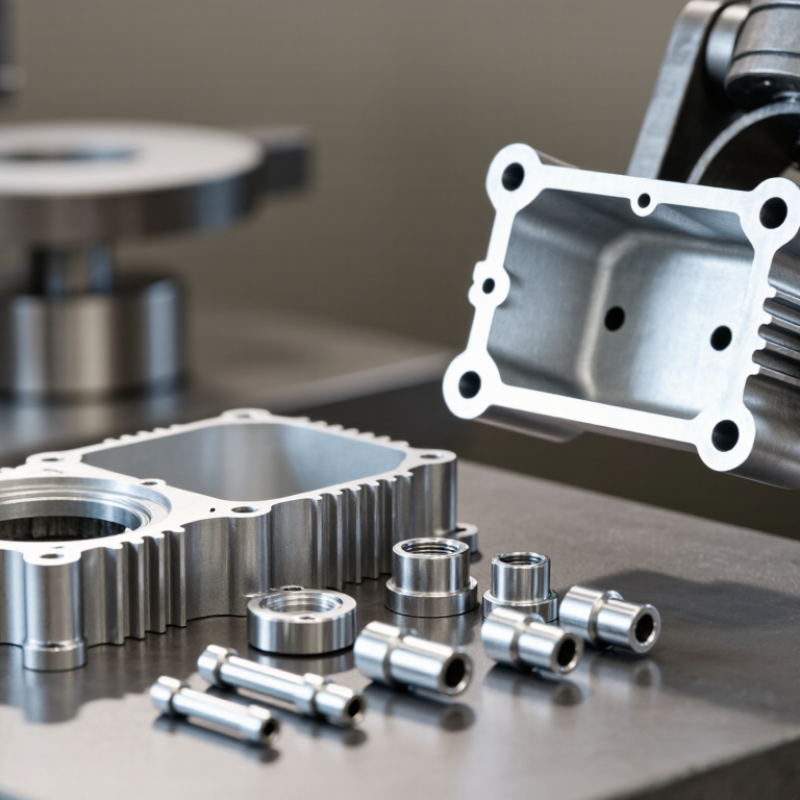
What Zinc Die Casting Is and How It Works
Zinc die casting forms metal parts by forcing molten zinc alloy into a reusable steel mold, called a die. The die contains a cavity shaped like the intended part. Because zinc melts at a relatively low temperature, it can be processed quickly and is often suited to hot-chamber machines. The metal is held in a heated chamber connected to the machine.
When the die closes, a plunger pushes molten alloy through a passage and into the cavity under pressure. The metal fills the fine features, then cools and solidifies inside the steel mold. It cools quickly. Once solid, ejector pins push the casting out. Workers or machines remove excess material, such as thin flash along the parting line. The die then closes for another cycle.
The result can include details such as narrow ribs, small holes, and textured surfaces, though the mold and part design must allow metal to flow and the casting to release cleanly. Small details matter. Wall thickness, draft angles, and gate placement all affect filling and finish. Zinc alloys can provide good dimensional consistency, but results still depend on tooling, process settings, and inspection. A design that looks simple on screen may need adjustment after a trial run; that part is easy to underestimate.
Key Properties of Zinc Alloys Used in Casting
Zinc alloys combine high strength with a relatively low melting temperature, making them useful for detailed, thin-walled components. The International Zinc Association’s technical guidance places common die-casting alloys’ melting range near 380–390°C. This is far below aluminum’s melting point, reducing the heat needed during production. It also helps alloys fill narrow ribs and small lettering before they solidify. That matters in compact housings, latches, and connector parts.
Mechanical properties vary by alloy and casting conditions. NADCA’s Product Specification Standards for Die Castings report a typical tensile strength of about 283 MPa for Zamak 3; actual results depend on specimen and process. Zamak 5 adds copper, generally increasing strength and hardness, though ductility can decrease. Zinc alloys also offer useful impact resistance and can accept plating or coating for appearance and wear protection. Their density is around 6.6 g/cm³, so they are not a lightweight choice. Small detail. In practice, a design should be checked against load, wall thickness, and finishing requirements; choosing an alloy from strength figures alone can be misleading.
Why Choose Zinc Die Casting for Your Products? – Key Properties of Zinc Alloys Used in Casting
| Property | Zamak 3 | Zamak 5 | ZA-8 |
| Typical aluminum content | About 4% | About 4% | About 8.4% |
| Typical copper content | Very low (maximum typically 0.03%) | About 1% | About 1% |
| Density | About 6.6 g/cm³ | About 6.7 g/cm³ | About 6.3 g/cm³ |
| Typical tensile strength | About 280 MPa | About 330 MPa | About 370 MPa |
| Typical elongation at fracture | About 10% | About 7% | About 7% |
| Typical Brinell hardness | About 82 HB | About 91 HB | About 100 HB |
| Approximate melting range | 381–387°C | 380–386°C | 375–404°C |
| Notable casting advantage | Good fluidity and dimensional consistency; a versatile general-purpose choice | Higher strength and hardness than Zamak 3 | Higher strength and hardness; can be used in hot-chamber die casting equipment designed for the alloy |
| Common product considerations | Suitable for intricate parts, thin sections, and detailed surfaces | Often selected when added strength or wear resistance is useful | Useful where a stronger zinc alloy is needed; check tooling and process compatibility |
Note: Values are representative typical figures, not guaranteed specifications. Actual properties depend on alloy specification, casting process, part geometry, and test method; confirm design-critical values with the applicable material standard and supplier data.
Advantages for Product Design and Manufacturing
Zinc die casting can help product teams combine fine detail with compact, durable parts. The International Zinc Association’s zinc die-casting design guidance notes that walls around 0.5 mm may be achievable, depending on geometry and production conditions. That is useful. It can support slim housings, small ribs, and crisp lettering without assembling several separate pieces. Designers should still check flow paths and wall transitions with a casting engineer; thin sections are not guaranteed in every shape.
Zinc alloys also melt at relatively low temperatures. The International Zinc Association places common die-casting alloy melting ranges near 380–390°C. Lower process temperatures can reduce thermal stress on tooling compared with higher-temperature casting, supporting longer die life and consistent output. NADCA’s Product Specification Standards for Die Castings also emphasize that tolerances depend on part size, alloy, and process—not one universal figure. Ask for tolerances against the actual drawing. Small details matter.
For manufacturing, zinc’s fluidity can help fill intricate cavities and form features such as bosses, threads, and snap-fit details. This may reduce machining and fastener count. But added complexity is not automatically better. A deep, thin feature may complicate filling or ejection, and tooling requires upfront investment. Prototype the critical geometry, inspect samples, and review wear points before committing to volume.
Common Applications Across Industries
Zinc die casting serves industries that need compact, detailed components made consistently at scale. In automotive interiors, it can produce door-handle parts, seat-belt hardware, and small housings with crisp edges. Thin walls and integrated features may reduce assembly steps, but designs still need suitable draft angles and practical wall thicknesses.
Consumer electronics use zinc alloy frames, connector shells, and heat-spreading components where dimensional consistency matters. Appliance makers often specify cast knobs, hinges, and latch parts that must withstand frequent handling. In building hardware, lock bodies, window fittings, and faucet controls can benefit from a dense surface and a solid feel. Small parts matter.
Medical equipment and industrial instruments may use zinc castings for knobs, brackets, or protective housings. The right material depends on load, corrosion exposure, finish, and production volume. Zinc is not always the lightest or best choice. Tooling can be costly, and a poorly placed gate may leave marks or complicate finishing. A sample casting can reveal issues early, though this step is easy to overlook. Designers should compare casting with machining or other forming methods before fixing the part geometry.
Factors to Consider When Choosing Zinc Die Casting
Why Choose Zinc Die Casting for Your Products?
Factors to Consider When Choosing Zinc Die Casting
Start with the part itself. Zinc die casting can produce thin walls, fine details, and repeatable dimensions, but the design must suit the process. Review wall thickness, draft angles, ribs, and undercuts with a casting engineer. Small changes can improve metal flow and reduce defects. Details matter.
Check the required tolerances against the part’s function. A mating feature may need tighter control than a cosmetic surface, and tighter tolerances can add cost. Also consider production volume: tooling requires an upfront investment, so the process tends to make more sense when parts are produced in steady quantities. A low-volume project may not justify the tool, even when the finished part looks ideal on paper.
Think about where the component will be used. Zinc alloys offer useful strength and can support plating or other finishes, yet the right alloy and finish depend on heat, moisture, wear, and appearance requirements. Ask for test data relevant to those conditions. Do not assume a coating will solve every corrosion concern. It may not. Compare zinc with other processes using total cost, including tooling, finishing, inspection, and expected service life. Prototype parts can expose awkward details early; skipping that review is tempting, but sometimes expensive.
Why Choose Zinc Die Casting? Key Factor: Melting Range
Zamak 3 melts at a substantially lower temperature than A380 aluminum. This can support lower processing temperatures and reduced thermal stress on dies, making zinc a strong option for intricate, high-volume components. Actual results depend on alloy specifications and casting conditions.