
1101 W. Sanilac Rd. Caro, MI 48723
989.673.6690
Why Choose an Oilless Air Compressor for Your Business? The question deserves more than a simple “cleaner air” answer. In a food plant, pharmaceutical room, or electronics line, one oil carryover event can contaminate products, damage filters, and interrupt production. The U.S. Department of Energy’s Improving Compressed Air System Performance sourcebook reports that system leaks can waste 20% to 30% of compressor output. That makes compressor selection only one part of the decision. Still, it is an important part.
Ron Marshall, a compressed-air systems specialist and former Manitoba Hydro engineer, offers a practical warning: “Compressed air is one of the most expensive utilities in a plant.” An Oilless Air Compressor can reduce contamination risks and support ISO 8573-1 Class 0 applications when correctly specified. However, Class 0 does not mean maintenance-free. Air dryers, filters, cooling systems, and operating conditions still matter. MarketsandMarkets’ recent compressed-air research identifies oil-free technology as a growing segment, driven by stricter quality requirements in healthcare, food processing, and electronics. The report points toward growth, but growth alone proves nothing for every factory. A small workshop may find the purchase price difficult, while a sterile production line may view contamination control as essential insurance.
Look closely.
The right choice depends on pressure, duty cycle, air quality, energy consumption, and service support. Oilless designs can deliver cleaner air, but some models may create more heat or require specialized maintenance. A careful audit should come before the purchase. That step is easy to skip. It should not be.
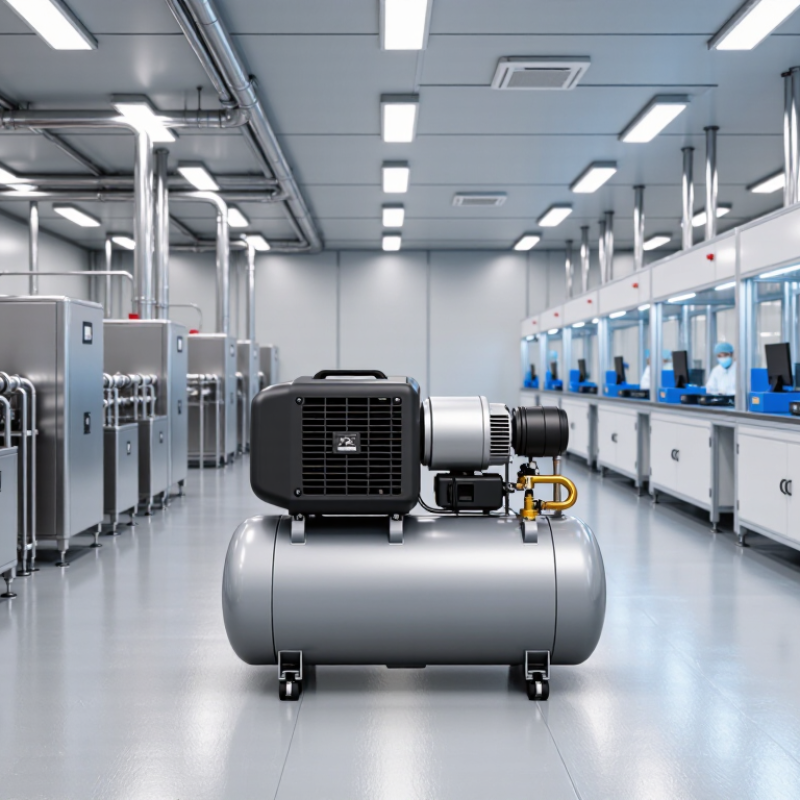
Why Choose an Oilless Air Compressor for Your Business?
An oilless air compressor produces compressed air without oil inside the compression chamber. Instead, it uses materials such as PTFE, carbon, or engineered coatings to reduce friction. Some models use water for cooling and sealing. Others rely on air cooling and carefully designed components. The main benefit is reduced oil carryover in the air stream. This matters in dental rooms, food packaging, laboratories, and electronics assembly. However, oilless does not mean automatically sterile or moisture-free. Air quality still depends on filtration, drying, cleaning, and proper maintenance.
Tips: Check the required pressure, flow rate, duty cycle, and noise level before purchasing. Inspect intake filters regularly. Drain receivers and dryers according to the service schedule. A compressed-air specialist should verify air purity against your process requirements. Small oversights can damage sensitive equipment.
In daily operation, an oilless compressor can simplify housekeeping around the machine. There is no crankcase oil to replace or accidentally spill. It may also reduce the risk of oil contamination in finished products. The trade-off can include higher operating temperatures, more noise, or shorter component life in demanding conditions. Actual performance varies by design and workload. A quiet test run is not enough evidence. Measure pressure stability, energy use, and air quality during real production. Selecting only by purchase price often creates a costly mistake.
An oilless air compressor avoids introducing lubricant into the compression chamber, making it a strong choice for applications that require clean compressed air. The chart shows the maximum total oil concentration permitted by ISO 8573-1 oil purity Classes 1–4. Lower values indicate cleaner air; achieving Class 0 requires a user-defined limit stricter than Class 1.
Why Choose an Oilless Air Compressor for Your Business?
An oilless air compressor keeps lubricant out of the compression chamber. Instead, engineered materials reduce friction between moving parts. A motor turns a crankshaft, which drives pistons or rotating elements. During intake, atmospheric air enters through an inlet valve. The moving element then reduces the chamber’s volume. Pressure rises, and a discharge valve sends compressed air into the receiver. No oil enters the airflow. That difference benefits food processing, medical equipment, laboratories, and clean manufacturing.
The compression chamber may use self-lubricating piston rings, specialized coatings, or precision clearances. These components must tolerate heat and repeated movement. Cooling fins, fans, and controlled operating cycles help manage temperature. Many systems also include air filters and moisture separators. However, these parts do different jobs. A filter removes particles, while a separator reduces water in the air.
In daily use, technicians should check air temperature, vibration, pressure, and unusual noise. These signs often reveal restricted airflow or worn components. Oilless does not mean maintenance-free. That assumption can become expensive. Dry-running parts may wear faster under heavy loads or poor ventilation. The compressor also needs a suitable duty cycle. A smaller unit running continuously may overheat, even when its pressure rating looks adequate. Service records and measured operating conditions provide a more reliable choice than specifications alone.
| Business Consideration | How an Oilless Air Compressor Works | Typical Benefit or Data Point | Best-Fit Applications |
|---|---|---|---|
| Operating principle | The air chamber is designed to compress air without oil being introduced into the compression space. Low-friction materials, coatings, or permanently lubricated bearings may be used in different designs. | No compressor oil is intentionally mixed with the compressed air stream. | Processes where air cleanliness is important. |
| Air purity | Because oil is not used in the compression chamber, the compressor does not create oil carryover from a conventional oil-lubricated compression stage. | Can help reduce the risk of oil contamination; final air quality still depends on intake conditions, filtration, dryers, and system maintenance. | Food and beverage contact processes, pharmaceutical production, laboratories, electronics, and medical air systems. |
| Pressure capability | Air pressure is generated by reducing the volume available to the trapped air, commonly through reciprocating pistons, scroll elements, screws, or other compressor mechanisms. | Small and medium oilless units commonly serve low- to medium-pressure duties; exact pressure depends on compressor design and model specification. | Workshops, pneumatic controls, dental equipment, packaging, and light industrial tools. |
| Maintenance requirements | The operator does not need to drain, replace, or top up compressor oil in the compression chamber. | Fewer oil-related service tasks, although air filters, valves, seals, coolers, condensate drains, and drive components still require inspection. | Sites seeking simpler routine servicing and cleaner work areas. |
| Risk of product contamination | The compression process avoids intentional oil injection, removing one potential source of hydrocarbon contamination. | May lower contamination-related quality risks, but incoming ambient air and downstream equipment must also be controlled. | Sensitive manufacturing and applications in which oil contamination can cause rejection or rework. |
| Noise and operating environment | Sound levels are determined mainly by compressor speed, enclosure design, cooling airflow, and the compression technology—not only by whether the unit is oilless. | Some compact oilless technologies are suitable for noise-sensitive areas; check the stated sound-pressure level in dB(A). | Dental clinics, offices, laboratories, classrooms, and indoor workshops. |
| Energy efficiency | The motor drives the compression elements directly or through a transmission system. Efficiency varies with load, pressure, duty cycle, cooling, and control method. | An oilless design is not automatically more energy-efficient; compare specific power, usually expressed as kW per m³/min or kW per CFM, at the required pressure. | Facilities that evaluate total operating cost using measured demand profiles. |
| Condensate management | Compressed air naturally produces water when moisture in ambient air condenses during compression and cooling. | Oilless operation can avoid oil-contaminated condensate, but water separators, drains, and dryers may still be required. | Clean production areas and facilities with strict wastewater-handling procedures. |
| Temperature management | Oil-lubricated compressors use oil to lubricate and help remove heat. Oilless designs rely on air cooling, water cooling, special materials, coatings, or other thermal-management methods. | Correct ventilation and cooling are essential, especially during continuous or high-duty operation. | Installations with clearly defined duty cycles and adequate room ventilation. |
| Lifecycle cost | Total cost includes purchase price, electricity, maintenance, consumables, downtime, air treatment, and equipment life. | Potential savings from reduced oil handling must be weighed against purchase price, replacement parts, service intervals, and energy consumption. | Businesses comparing equipment through a total-cost-of-ownership analysis. |
Why Choose an Oilless Air Compressor for Your Business?
Different workplaces need different kinds of compressed air. An oilless air compressor removes oil from the compression chamber. This helps protect products, instruments, and sensitive processes from unwanted contamination. In food packaging, clean air can reduce the risk of product contact issues. Dental clinics and laboratories also benefit from cleaner air around patients and testing equipment. Electronics assembly may require stable air without oil vapors settling on delicate components.
The benefits change with each application. Workshops often value simpler maintenance and fewer oil changes. Paint operations may see cleaner surfaces and fewer finishing defects. Small medical facilities can appreciate compact systems with predictable servicing needs. However, oilless does not mean maintenance-free. Noise, heat, moisture, and replacement parts still deserve attention. I have seen businesses choose the wrong capacity, then run the compressor continuously. That mistake increases wear and electricity costs.
Tips: Match the compressor’s airflow and pressure to real demand, not the largest tool. Check air-quality requirements, including applicable ISO 8573-1 classes and local rules. Install suitable dryers and filters when humidity threatens equipment or product quality. Keep a service log. It reveals patterns that memory misses. A practical review should also consider duty cycle, room ventilation, operating noise, and future expansion. The quietest option may not be the most efficient, and the cheapest purchase can become expensive when production grows.
Why Choose an Oilless Air Compressor for Your Business?
Oilless vs. Oil-Lubricated Air Compressors
The choice depends on air purity, operating hours, and maintenance access. Oil-lubricated compressors usually offer efficient sealing and lower purchase costs. However, they require oil changes, separator servicing, and careful condensate management. Oil carryover can also threaten sensitive production processes.
Oilless compressors avoid lubricant entering the compression chamber. This matters in food processing, pharmaceuticals, electronics, and laboratory applications. ISO 8573-1 defines compressed-air purity classes, including oil concentration limits. Class 0 demands oil contamination specified by the user, not simply “zero oil.” That distinction matters.
Purity is not automatic.
The U.S. Department of Energy reports that compressed air can consume about 10% of industrial electricity. Its compressed-air sourcebook also notes that leaks may waste 20–30% of compressor output. Therefore, selecting an oilless unit will not fix poor system design. Pressure settings, pipe sizing, filtration, and leak inspections still determine real performance.
An oilless model may require more frequent wear-part attention, especially in dusty or hot rooms. Some buyers overlook this. That can become an expensive mistake. A lifecycle comparison should include electricity, service intervals, downtime, air treatment, and disposal costs. DOE guidance recommends measuring demand before equipment selection. Actual load data is more reliable than a catalog rating.
Choosing the right oilless air compressor starts with understanding your air requirements. If your process involves food, medicine, electronics, or clean packaging, oil contamination can create serious quality risks. However, oilless does not mean maintenance-free. Compression chambers still require inspection, cooling, filtration, and replacement of wear parts. In production assessments, I check pressure and airflow under real working conditions, rather than trusting catalogue figures alone. An 8-bar compressor may deliver less at the tool after filters, dryers, and long hoses reduce pressure.
Match the compressor to its duty cycle. A piston model may suit intermittent workshop use, while scroll or screw technology can better support continuous production. Confirm the required free air delivery, pressure range, receiver size, and starting frequency. Noise also matters in small workshops, especially when operators work nearby.
Check the electrical supply before purchase. An efficient machine is not useful if the site cannot support its starting current. For sensitive applications, review the complete air treatment system and verify the requested ISO 8573-1 air quality class through documented testing.
Reliable selection also includes service access and operating costs. Ask how often filters, valves, seals, and cooling components need attention. Review spare-part availability and technician response times. I would not choose solely by purchase price; energy can dominate the compressor’s lifetime cost.
My own evaluations have sometimes underestimated demand because weekend usage was ignored. That mistake can cause pressure drops and unnecessary cycling. Record actual consumption for several days, including future production plans, before fixing the final specification.