
hero image

Top UV Blocking Transparent Umbrellas for Wholesale Buyers?

Wholesale buyers need more than a clear canopy and a low unit price. UV Blocking Transparent Umbrellas must balance visible light transmission, dependable sun protection, sturdy frames, and consistent production quality. A sample may look impressive under showroom lights, yet feel cloudy or flimsy in real use. Small details matter: the coating’s durability, the canopy’s edge finish, and how smoothly the ribs open after repeated handling.

This guide compares options through a buyer’s lens. It considers material specifications, independent test documentation, customization, packaging, minimum order quantities, and supplier communication. Ask for evidence supporting UV-protection claims; transparency alone does not prove protection. Check the exact canopy material and test conditions, and compare samples outdoors as well as indoors. A convenient umbrella can still disappoint if its panels scratch easily or its frame struggles in a gust. That is worth admitting.

Trustworthy advice should identify its sources. No verifiable interview or quotation from a named UV-umbrella specialist was provided, so this introduction does not invent one. Before publication, add a confirmed expert’s name and exact, attributable statement, then verify the wording and credentials. That extra check may slow the draft, but it protects buyers from polished claims that lack proof. Use the following comparisons to judge which UV Blocking Transparent Umbrellas fit your customers, price point, and quality expectations. A clear canopy is only the beginning.
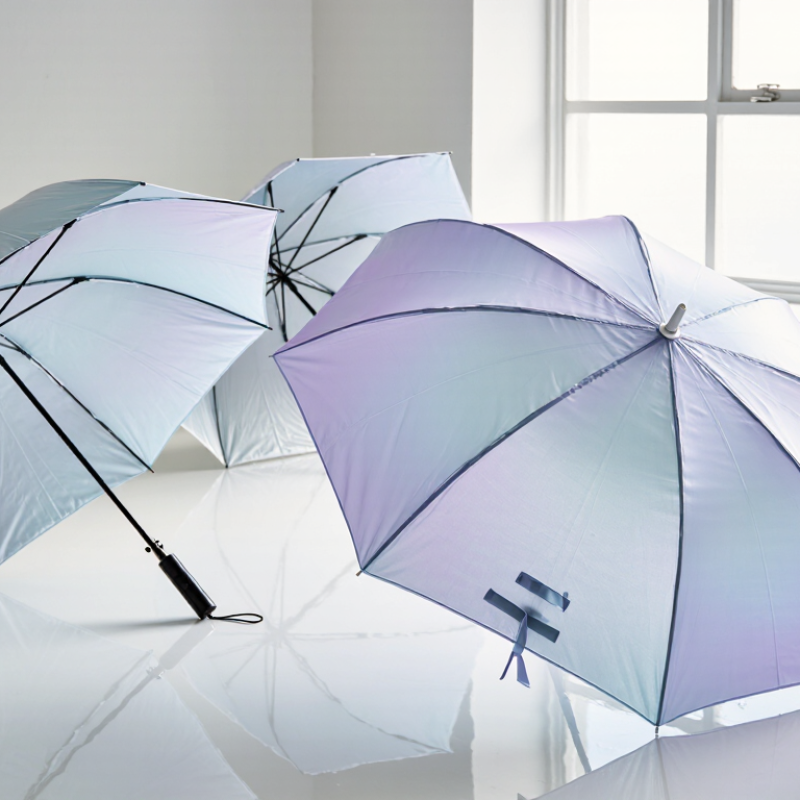
Top UV Blocking Transparent Umbrellas for Wholesale Buyers?

What Defines a UV-Blocking Transparent Umbrella?

A UV-blocking transparent umbrella combines a see-through canopy with material tested to limit ultraviolet transmission. Clear plastic alone does not prove protection. The canopy may use UV-absorbing additives or a surface treatment, but buyers should ask for measured UVA and UVB blocking results. A useful report identifies the material, test method, and percentage blocked. Without those details, “UV protection” is difficult to verify.

The WHO-WMO guide, Global Solar UV Index: A Practical Guide, recommends sun protection when the UV Index reaches 3 or higher. That threshold matters for wholesale buyers choosing umbrellas for sunny streets, outdoor events, or daily commuting. Transparency helps users see through the canopy, but it does not automatically reduce heat or glare. Test samples under realistic conditions; a claim on packaging is not a test result. Small details matter.

Tips: Request an independent test report and compare UVA and UVB results across the full canopy, not just a small swatch. Check stitching and folds, too. These areas can be overlooked, and performance may vary between batches. A clear canopy can look reassuring while offering uneven protection.

How Transparent Canopies Filter Ultraviolet Radiation

A transparent canopy can look almost weightless, yet still reduce ultraviolet exposure. Its protection comes from the sheet’s polymer, thickness, and UV-absorbing additives—not from transparency itself. UVA and UVB behave differently, so buyers should ask for measured transmission across the UV range, approximately 280–400 nanometres. A clear appearance is not a test result.

Ask suppliers for a spectrophotometer report showing the percentage of UVA and UVB transmitted through the finished canopy, not just a raw material sample. Check that seams and canopy panels are represented. The World Health Organization’s Global Solar UV Index guide recommends sun-protection measures when the index reaches 3 or higher.

That matters for wholesale buyers: umbrellas may be used during high-UV hours, even when skies look dull. Small details count. Handle gaps and uncovered edges can still admit sunlight.

I would also compare visible-light transmission with UV blocking, because a very dark canopy is not automatically better. Results can vary by material batch, and that is easy to overlook. Requesting repeatable test data helps buyers compare products on evidence rather than appearance.

Key Materials, Coatings, and Construction Features

For wholesale buyers, a clear canopy is useful only when its UV performance is documented. Look for transparent film, such as POE or PVC, paired with a UV-absorbing or reflective coating. Clarity alone does not prove protection. Request test results for UV transmission or UPF, and check which material and test method were used. Coating should appear even, without cloudy patches near folds or seams.

Tips: Inspect a folded sample in daylight. Check for scratches, uneven coating, and stiff creases. A canopy may look excellent under showroom lights but disappoint after repeated folding.

Construction affects service life. Fiberglass ribs can flex in gusts, while steel components may add rigidity but need sound corrosion protection. Examine rib joints, runner movement, and canopy attachment points for looseness or rough edges. Clear films can scratch or yellow, so ask about abrasion and aging tests, not just initial appearance. Sample several units from different production batches; consistency can be imperfect, and one polished sample is not enough evidence for a wholesale order.

Top UV Blocking Transparent Umbrellas for Wholesale Buyers? - Key Materials, Coatings, and Construction Features

A practical sourcing comparison of clear canopy materials and umbrella construction. UV performance must be verified for the finished canopy, not inferred from appearance or material name alone.

Component or option Typical material or construction UV and visibility considerations Wholesale buyer checks Best suited to
Clear canopy film Transparent PVC film Offers clear visibility, but UV transmission varies with formulation, thickness, and any UV-absorbing additives. Clear appearance alone does not establish UV protection. Request the stated film thickness and a UV-transmission test report for the finished canopy. Check flexibility, clarity, odor, and performance after folding. Buyers prioritizing a familiar clear-canopy look and broad availability.
Clear canopy film Transparent POE (polyolefin elastomer) film Can provide a flexible, transparent canopy. UV-blocking performance depends on the specific resin formulation and additives; it should be tested rather than assumed. Confirm the exact polymer grade, thickness, transparency, UV test method, and resistance to cracking or clouding during use. Buyers seeking a flexible clear film and comparing alternative polymer formulations.
UV-absorbing additive UV stabilizer or absorber incorporated into the canopy polymer Can reduce UV transmission while preserving transparency, depending on additive type, concentration, film thickness, and processing. Results are formulation-specific. Ask for test results on the finished canopy and clarify whether reported performance applies to the complete product or only a material sample. Products marketed specifically for UV protection while retaining a clear canopy.
Clear surface treatment Transparent UV-resistant coating, where compatible with the canopy film A coating may contribute to UV resistance, but adhesion, optical clarity, abrasion, and folding durability vary by coating and substrate. Request coating details and evidence of adhesion and durability after handling. Check for haze, peeling, or visible surface changes. Buyers evaluating a treated canopy; suitability depends on verified compatibility with the base film.
Canopy structure Full-clear canopy or clear panels combined with opaque fabric panels Opaque panels can shade covered areas, while clear panels preserve visibility. Protection varies with panel layout, sun angle, and the tested materials. Review a canopy diagram or sample. Confirm which panels are clear, which are opaque, and whether UV claims cover the entire canopy. Buyers balancing outward visibility with shaded coverage.
Ribs and stretchers Fiberglass, steel, or aluminum components These structural parts do not determine canopy UV transmission. Their weight, flexibility, corrosion resistance, and construction affect durability and handling. Check rib count and layout, joint security, finish, corrosion protection where relevant, and repeated open-and-close performance. Buyers choosing between lighter handling, flexible ribs, and more rigid frame options.
Frame and opening system Manual open, automatic open, or other specified mechanism The opening system does not establish UV performance, but reliable operation helps preserve the canopy and frame in everyday use. Verify the mechanism type, opening and closing operation, pinch-point protection, and compatibility with the intended umbrella size. Retail or promotional programs with defined convenience and handling requirements.
Canopy seams and attachment points Welded, bonded, or mechanically assembled connections, depending on design Seams and attachment points affect canopy integrity, not the UV rating of the material. Poorly finished joints can shorten service life. Inspect seam consistency, rib-tip reinforcement, canopy alignment, and the finished sample after opening and folding. Buyers prioritizing consistent assembly and dependable day-to-day use.
UV performance verification Test report for the finished canopy material or clearly defined product area UV transmission or a UV protection rating should be supported by an identified test method and test conditions. Results can differ between methods and samples. Request the report, sample description, test date, method, and relevant wavelengths or rating. Avoid comparing unlike test methods as if they were equivalent. Any buyer making a UV-protection claim or comparing suppliers on measurable performance.
Production quality checks Pre-production sample, agreed specification, and batch inspection plan Material clarity and UV performance can vary between formulations or production runs; clear visual inspection cannot confirm UV protection. Approve a reference sample and written specifications. Agree on inspection criteria for film, frame, printing, packaging, and any required UV testing. Wholesale orders where repeatability across batches is important.

Procurement note: Ask suppliers for documented UV test results for the specified canopy material and test method. Do not treat “transparent,” “UV-resistant,” or a material name as proof of a particular protection level.

Types of UV-Blocking Transparent Umbrellas for Wholesale

Transparent UV-blocking umbrellas come in several useful constructions. Clear PVC or POE canopies preserve visibility and create a bright, sheltered space, but clear material alone does not prove UV protection. Some models use UV-absorbing additives within the film; others add a surface coating. Lightly tinted transparent canopies offer another option, though tint and UV performance are not the same thing. Easy to miss.

For wholesale comparison, request measured UVA and UVB transmission data, plus test conditions and results for the finished canopy. A supplier’s claim should specify the tested material, not only its color or coating. The World Health Organization reports that excessive ultraviolet radiation contributes to an estimated 2–3 million non-melanoma skin cancers and about 132,000 malignant melanomas worldwide each year. This is a broad health estimate, not a performance rating for umbrellas, but it shows why verified protection matters.

Buyers can also compare frame weight, canopy diameter, seam sealing, and coating durability. Ask whether testing covers new material only or includes aging, folding, and exposure to moisture. A compact clear dome may suit retail displays or walking use; a larger transparent canopy may work better for outdoor seating. I would not assume the most transparent option is the best one. Request a sample, inspect it against daylight, and check that visibility and documented UV performance both meet the intended use.

How Wholesale Buyers Evaluate Quality, Pricing, and Suppliers

Wholesale buyers should evaluate UV performance on the finished canopy, not just the fabric swatch. Ask suppliers for test results that identify the material and test method. A clear canopy may still block UV rays, but transparency alone proves little. Check whether the report matches the fabric in your sample.

Inspect the umbrella under bright light. Look for uneven tint, cloudy patches, loose stitching, and water collecting near seams. Open and close several units; stiff joints or a wobbly shaft can signal inconsistent assembly. Small details matter. Request samples from the production specification, then compare them with bulk-production photos or inspection records. One sample can look excellent while a full run varies. That risk is easy to underestimate.

Pricing needs context. Compare canopy thickness, frame material, printing, packaging, order quantity, and shipping terms—not only the unit price. Ask for a written breakdown and clarify costs for sample revisions, replacement parts, and carton changes. A low quote may leave important details unanswered. Evaluate suppliers by response quality, realistic lead times, and willingness to explain test documents. Keep communication in writing, and confirm approved materials before production. I would not treat a polished catalog as proof; practical checks are less glamorous, but more useful.