2026 Best Toasted Garlic Suppliers for Global Buyers
Choosing the best Toasted Garlic supplier in 2026 requires more than comparing prices or attractive product photos. Global buyers need consistent flavor, safe processing, dependable documentation, and practical export experience. A reliable supplier should explain the garlic variety, roasting temperature, moisture level, particle size, packaging method, and expected shelf life. These details affect everything from aroma in a seasoning blend to texture in ready-to-eat food.
This guide examines suppliers through a buyer’s daily realities. A sample should show an even golden-brown color, a clean roasted aroma, and no burnt aftertaste. Packaging should protect the product from humidity, light, and contamination during long-distance transport. Buyers should also review certificates, batch records, allergen statements, traceability systems, and laboratory test results. Food safety compliance must match the destination market and the product’s intended use.
Appearance can mislead.
A polished website proves little by itself. Supplier visits, retained samples, trial orders, and clear quality agreements often reveal more. Some companies may offer excellent flavor but inconsistent granulation. Others may provide strong documentation while lacking flexible production capacity. That difference matters. This overview therefore considers both strengths and weaknesses, rather than presenting any supplier as perfect. It is also worth remembering that “best” depends on volume, application, budget, delivery requirements, and risk tolerance. The following supplier overview helps global buyers compare evidence, ask sharper questions, and make more confident sourcing decisions in 2026.
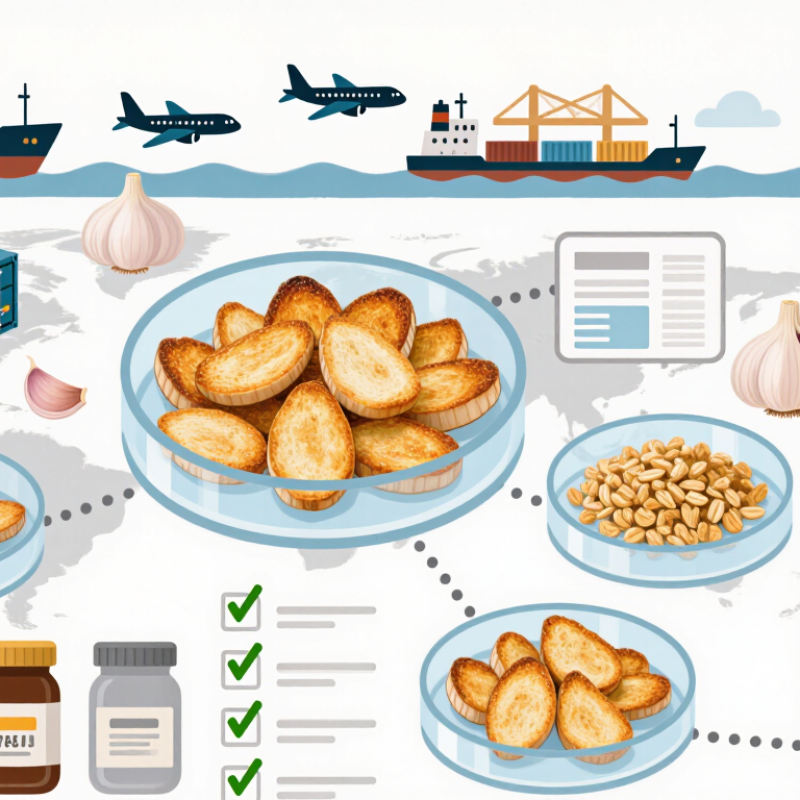
What Toasted Garlic Is and How It Is Made
What Toasted Garlic Is and How It Is Made
Toasted garlic is garlic heated until its moisture falls and its flavor becomes deeper, sweeter, and slightly nutty. It may appear as flakes, granules, chips, or powder. FAOSTAT’s 2022 crop data places global garlic production above 28 million tonnes, creating a broad raw-material base for international processing. Yet, “toasted” is not a universal grade. Buyers should request clear limits for moisture, particle size, color, and foreign matter.
Manufacturers usually clean, peel, slice, and dry the cloves before controlled toasting. Heat triggers browning reactions, especially when surface moisture decreases. Excessive heat can create bitter edges and uneven color. The final product is cooled quickly, screened, and packed in moisture-resistant materials. USDA FoodData Central lists raw garlic at about 149 calories per 100 grams, but toasted garlic can show more concentrated values after water loss. The label should therefore identify whether figures refer to the raw or finished product.
Quality depends on more than appearance. A reliable supplier should provide batch testing for moisture, microbiological safety, pesticide residues, and allergen-control procedures. Codex food hygiene guidance supports documented sanitation and hazard controls throughout processing. In practice, I would test a sample in hot oil and soup, not only inspect it dry. Aroma can change dramatically. That is the weak point. A visually attractive batch may still taste flat, burn quickly, or absorb moisture during shipping. Supplier audits, retention samples, and realistic transport trials make purchasing decisions more defensible.
Quality Standards for Global Toasted Garlic Buyers
Global buyers should evaluate toasted garlic beyond color and price. A reliable supplier should provide lot-level traceability, including growing region, processing date, and production batch. Ask for moisture, microbiological, pesticide-residue, and foreign-material test results. Documents should match the shipped lot, not a convenient previous sample. That detail matters.
Quality begins with sound garlic cloves and controlled roasting. Slices should look evenly toasted, crisp, and free from blackened pieces. A bitter smell can indicate overheating or poor raw material. Buyers should confirm an agreed moisture range, particle size, and acceptable color variation before purchasing. Packaging also needs attention. Food-grade inner bags, sealed cartons, and dry storage help prevent moisture absorption during long shipments. Keep it simple.
Experienced purchasers usually request pre-shipment samples and retain sealed reference samples. They may also inspect cleaning lines, roasting equipment, metal detection, and warehouse conditions. A certificate alone is not enough. Some defects appear only after several weeks in transit. Color can mislead, too. A bright sample may hide uneven roasting inside the carton. Suppliers should disclose deviations instead of promising perfect uniformity. Buyers should record complaints with photos, lot numbers, and temperature or humidity data when available. The process is not flawless, and specifications may need revision after the first shipment. That honest review often improves future consistency.
How to Evaluate and Compare Toasted Garlic Suppliers
Choosing a toasted garlic supplier requires more than comparing prices. Begin with product specifications: garlic variety, slice size, roasting temperature, moisture level, and acceptable color range. Dark edges may indicate over-roasting, while soft pieces can suggest poor drying. Request recent samples from several production batches, not only one carefully selected pack.
A reliable supplier should provide batch codes, certificates of analysis, allergen statements, and clear traceability records. Check microbiological results, foreign-material controls, and packaging integrity. Ask how the facility manages humidity during storage. Toasted garlic can lose its crisp texture quickly when exposed to moisture.
Compare suppliers using the same checklist. Review minimum order quantities, lead times, carton weight, inner packaging, and shipping conditions. Confirm whether samples match the final production grade. A low quote may hide weaker packaging or inconsistent sizing. I would not ignore it. I would investigate it.
Supplier communication also reveals practical expertise: strong teams answer technical questions directly and admit limitations. Still, documents alone are not enough. An independent laboratory test can expose differences in moisture, microbial quality, or flavor strength.
My comparison process is not perfect; logistics disruptions and seasonal raw-garlic changes can affect results. Recheck critical data before signing a long-term agreement.
Leading Supplier Regions and Export Capabilities in 2026
In 2026, toasted garlic sourcing is becoming more regional and specification-driven. China remains a major supply base, supported by large garlic-processing centers, roasting lines, and container access. India offers strong raw garlic availability and flexible production for foodservice volumes. Spain and Egypt serve buyers seeking Mediterranean profiles, while Turkey is developing more export-focused processing capacity. No region is perfect.
Export capability now depends on more than production volume. Experienced suppliers should control slicing, roasting temperature, moisture, color, and foreign-material risks. A reliable exporter can provide batch records, laboratory reports, allergen statements, and clear origin documents. Vacuum bags, lined cartons, and moisture barriers help protect the crisp texture during long sea transport. Small details matter.
European and Middle Eastern ports can support shorter delivery routes for nearby buyers, while Asian exporters often provide broader container scheduling. Buyers should inspect facility photos, request recent samples, and compare roasted flavor after storage. Some suppliers still describe garlic as dry
without giving measurable moisture data. That is a warning sign. Others offer certificates but weak traceability between farms, processors, and shipping cartons. A practical 2026 evaluation should examine production consistency, port experience, packaging strength, and response speed together. The cheapest quotation may not remain economical after breakage, delays, or rejected batches.
Sourcing, Compliance, Packaging, and Logistics Considerations
2026 Best Toasted Garlic Suppliers for Global Buyers
Global sourcing starts with raw-material consistency. FAOSTAT recorded more than 28 million tonnes of garlic production worldwide in 2022. Yet volume does not guarantee stable flavor or safe processing. Buyers should request harvest origin, drying records, pesticide-residue results, allergen statements, and batch traceability. Codex food hygiene principles support HACCP-based controls, especially for roasting, cooling, and foreign-material detection. Water activity matters more than moisture alone. Many buyers specify values below 0.60, but this limit must match the product and validation study. A polished certificate can still hide weak sampling. Check the laboratory method and test date.
Packaging protects quality after processing. Choose food-grade, high-barrier pouches with reliable heat seals and suitable oxygen protection. Nitrogen flushing can reduce oxidation, although poor sealing makes it pointless. Ask for seal-strength tests, migration declarations, carton specifications, and readable lot codes. Toasted garlic can lose crispness quickly in humid storage. Desiccants may help, but they cannot repair wet product. Packaging should also survive pallet compression and repeated handling.
Logistics planning needs measurable controls. UNCTAD reports that maritime transport carries over 80% of global merchandise trade by volume, making port delays commercially significant. Confirm container cleanliness, humidity protection, loading photos, and temperature records where needed. Include buffer stock for route disruption. The World Bank’s 2023 Logistics Performance Index highlights customs, infrastructure, and shipment reliability as major performance factors. A low quoted price may become expensive after demurrage, relabeling, or rejected cartons. Supplier audits should include a small pilot shipment, not only documents.