
1101 W. Sanilac Rd. Caro, MI 48723
989.673.6690
Choosing a reliable spdt micro switch manufacturer requires more than comparing prices or browsing attractive product pages. These compact components control circuits in appliances, industrial equipment, control panels, and safety mechanisms. A dependable supplier must demonstrate consistent contact performance, accurate switching force, stable insulation, and repeatable production quality.
This guide examines ten leading spdt micro switch manufacturers for global buyers. The comparison considers engineering capability, product range, customization support, testing procedures, certifications, production scale, and after-sales communication. Practical details matter. A switch may look suitable in a catalog, yet fail under vibration, dust, frequent cycling, or fluctuating temperatures. Small differences can affect an entire assembly.
Real-world fit matters most.
The selected manufacturers serve different purchasing needs. Some specialize in high-volume standard switches, while others provide sealed designs, miniature housings, or application-specific terminals. Their strengths are not identical, and no supplier is perfect for every project. That limitation deserves attention. Buyer requirements vary by operating environment, expected service life, installation space, and regional compliance needs.
Technical data should be verified directly with each manufacturer. Samples, lifecycle testing, drawings, and traceability records can reveal more than marketing claims. We also recommend checking response times, minimum order quantities, tooling policies, and replacement support before signing a supply agreement. This overview offers a practical starting point, not a substitute for engineering validation.
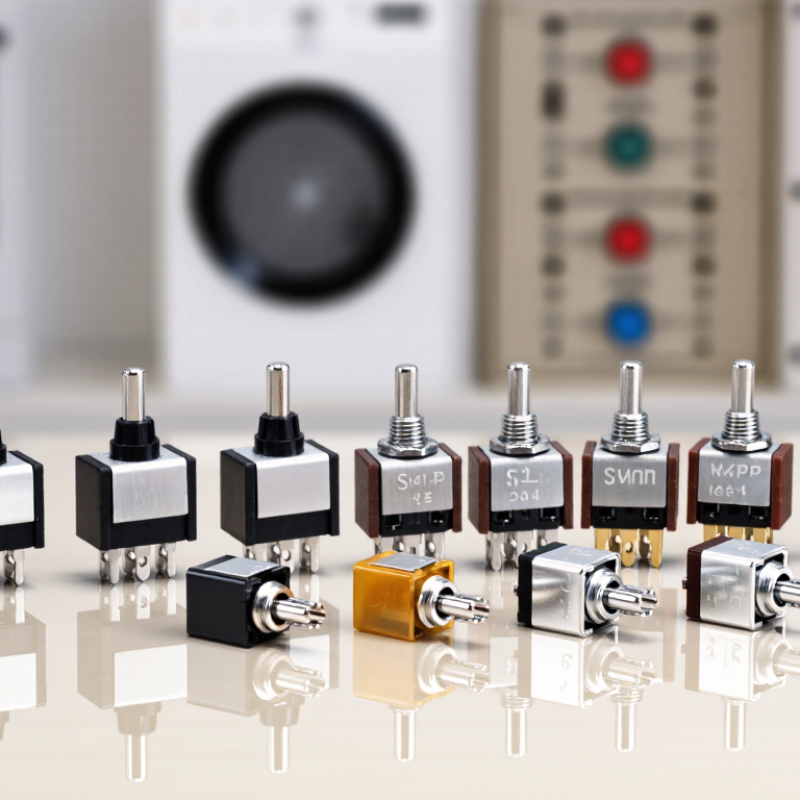
What Is an SPDT Micro Switch and How Does It Work?
An SPDT micro switch is a compact electromechanical device with one common terminal and two selectable outputs. SPDT means single-pole, double-throw. The common contact changes between normally closed and normally open terminals. A small actuator, such as a roller or plunger, triggers this movement. You can hear the click.
In practical equipment, the switch changes circuit status at a defined travel point. Before actuation, COM usually connects with NC. After the actuator moves far enough, COM connects with NO. Spring force then returns the mechanism when pressure disappears. This design suits position sensing, door detection, control panels, and industrial machinery. Contact bounce remains a real issue. Engineers may need filtering or software delay in sensitive systems.
A 2024 market analysis from Grand View Research identifies automotive and industrial automation as important micro switch demand areas. The report also links growth with compact control systems and higher equipment automation. That trend does not make every switch interchangeable. Buyers should verify current rating, voltage, operating force, travel, terminal style, and mechanical life. IEC 61058-1 and IEC 60947-5-1 can help frame safety and switching requirements, depending on the application. One detail is often missed: electrical ratings can change with load type. A motor load is not the same as a resistive lamp load. Datasheets deserve closer reading than product photos.
When comparing SPDT micro switch manufacturers, start with electrical specifications, not catalog appearance. Confirm the common, normally open, and normally closed contact ratings. Check voltage, current, load type, and switching frequency under real operating conditions. A manufacturer should state these limits clearly. Ask for evidence. Contact resistance, insulation resistance, and dielectric strength also reveal production quality. Vague numbers deserve careful review.
Mechanical performance affects service life. Examine operating force, release force, pretravel, overtravel, and differential travel. These values determine how the switch behaves beneath a button, lever, or safety mechanism. A switch that feels precise in testing may respond differently after repeated cycling. Cycle-life data should identify the load, speed, and test method. Test conditions matter. Request samples from several production lots, then compare force and continuity readings.
Environmental specifications are equally important for global buyers. Confirm the operating temperature range, humidity resistance, sealing level, and terminal material. Reliable manufacturers provide inspection records, material declarations, and traceability codes. They should also explain tolerance control and corrective actions after failures. Do not accept attractive promises without test reports. In practical sourcing, small inconsistencies often appear between samples and mass production. A perfect datasheet is not enough. Ask how the factory detects that gap.
Top 10 SPDT Micro Switch Manufacturers for Global Buyers
Global buyers need more than a supplier list. They need measurable evidence. A 2024 MarketsandMarkets analysis reported continued growth in the global switch market, driven by automotive electronics, appliances, and industrial controls. SPDT micro switches benefit from these sectors because they provide compact changeover control, tactile feedback, and dependable circuit isolation.
The strongest manufacturers should show verified cycle-life results, stable contact resistance, and consistent operating force. Request samples from all ten shortlisted suppliers. Test them under vibration, dust, humidity, and repeated switching. Samples expose gaps. A switch rated for one million operations may perform differently under a side-load mechanism. Buyers should also check IEC 61058-1 alignment, factory inspection records, traceability, and production consistency. IP ratings matter when equipment faces oil spray or airborne particles.
A 2023 report from Grand View Research identified miniaturization and automation as important drivers for micro switch demand. That trend raises pressure on manufacturers to reduce size without weakening terminals or actuator alignment. Check drawings carefully. A 0.2-millimeter mismatch can cause unreliable activation. Packaging quality also deserves attention during long-distance shipping. A ranking can still mislead. Low prices often hide tooling limits, slow engineering replies, or weak corrective-action systems. Experienced buyers should compare total ownership cost, not only unit price. Supplier audits, pilot batches, and failure analysis create more reliable decisions than online ratings.
Selecting among the top 10 SPDT micro switch manufacturers requires more than comparing unit prices. A 2024 Grand View Research assessment valued the global micro switch market at over USD 1 billion, with steady growth expected through 2030. That growth increases supplier choices, but not necessarily quality. Request test reports for contact resistance, operating force, electrical endurance, and temperature cycling. A switch should feel consistent, not gritty, during repeated actuation.
Certifications reveal manufacturing discipline. Check conformity with IEC 61058-1 or applicable national safety standards, depending on the end product. Verify RoHS and REACH declarations with revision dates, not copied certificates. ISO 9001 supports process control, but it does not prove that every switch performs well. Ask for lot traceability, calibration records, and samples from normal production. Small details matter.
Customization can include actuator length, terminal shape, contact material, sealing level, and mounting dimensions. For dusty equipment, an IP-rated housing may matter more than a polished datasheet. Ask whether the supplier can provide first-article inspection reports, tolerance drawings, and change-control notices. MarketsandMarkets projects continued expansion in the broader switches market, increasing pressure on lead times and capacity. Still, a faster quote is not always a better solution. I would test at least three production lots before approval, because one sample can hide variation. unerquicklich
| Rank | Anonymous Manufacturer Profile | Typical SPDT Configuration | Typical Electrical Rating | Ingress Protection | Mechanical Life | Quality Evidence to Request | Common Certifications | Customization Capability | Best-Fit Applications |
|---|---|---|---|---|---|---|---|---|---|
| 1 | Profile A — High-reliability sealed switch specialist | SPDT, momentary, roller or plunger actuator | Up to 5 A at 250 VAC; low-level switching options | IP67 or higher on selected series | Up to 1,000,000 operations | Life-cycle test data, contact-resistance records, sealing test reports | UL, CSA, ENEC, RoHS, REACH | High: terminals, actuators, seals, cable assemblies | Automotive controls, industrial sensors, outdoor equipment |
| 2 | Profile B — Precision subminiature manufacturer | SPDT, short travel, low operating force | 0.1–3 A, depending on contact system | IP40–IP67 by construction | 100,000–500,000 operations | Dimensional inspection, force-displacement curves, bounce-time data | UL, ENEC, RoHS, REACH | High: mounting dimensions and operating force | Consumer electronics, appliance controls, compact instruments |
| 3 | Profile C — Appliance-grade high-volume supplier | SPDT, snap-action, panel or PCB mounting | 3–16 A at 125/250 VAC on selected models | Usually IP40–IP54 | 50,000–300,000 operations | Production capability audit, AQL records, thermal-rise testing | UL, CSA, VDE or ENEC, RoHS | Medium to high: terminals, brackets, wire lengths | White goods, HVAC controls, power equipment |
| 4 | Profile D — Automotive-qualified switch producer | SPDT, sealed, vibration-resistant actuator options | Signal-level to 10 A, application dependent | IP67–IP69K on selected automotive designs | 100,000–1,000,000 operations | IATF 16949 evidence, vibration, thermal-cycle and salt-spray testing | IATF 16949, AEC-related validation, RoHS, REACH | High: connectors, harnesses, seals, actuation geometry | Vehicle body systems, seat controls, safety-related mechanisms |
| 5 | Profile E — Industrial limit-switch supplier | SPDT, hinge-lever, roller-lever or adjustable plunger | 5–15 A at 125/250 VAC | IP54–IP67 | 100,000–500,000 operations | Overtravel data, actuator alignment limits, dielectric-strength reports | UL, CSA, CE, RoHS, REACH | Medium: actuator style and mounting hardware | Conveyors, machine tools, access doors, automation equipment |
| 6 | Profile F — Low-level signal-switch specialist | SPDT, gold-plated or bifurcated contact options | Millivolt/milliamp signal switching to approximately 1 A | IP40–IP67 | Up to 1,000,000 operations under specified loads | Micro-ohm contact testing, signal integrity and bounce testing | UL, ENEC, RoHS, REACH | High: contact materials and actuator force | Test instruments, communication devices, control panels |
| 7 | Profile G — Cost-focused OEM supplier | Standard SPDT, plunger or lever actuator | 1–5 A at 125/250 VAC | Typically IP40–IP54 | 30,000–100,000 operations | Incoming inspection plan, batch traceability, sample life testing | CE, RoHS; UL where applicable | Medium: packaging, wires and basic actuator options | General appliances, consumer products, entry-level controls |
| 8 | Profile H — Harsh-environment switch supplier | SPDT, sealed housing, reinforced actuator | Up to 10 A at 250 VAC on selected models | IP67–IP69K by model | 100,000–500,000 operations | Waterproofing, dust, corrosion, vibration and temperature testing | UL, ENEC, CE, RoHS, REACH | High: sealing systems, cables, terminals and housings | Agricultural machinery, marine equipment, outdoor controls |
| 9 | Profile I — PCB and SMT integration supplier | SPDT, PCB terminals, right-angle or surface-mount formats | 0.1–3 A, dependent on terminal and contact design | Usually IP40–IP54 | 50,000–300,000 operations | Solderability, reflow compatibility, board-retention and dimensional reports | UL, CE, RoHS, REACH | High: footprint, terminal plating and actuator height | Smart devices, control boards, measurement equipment |
| 10 | Profile J — Custom engineering and private-label supplier | SPDT designs tailored to mechanical and electrical requirements | From signal-level loads to approximately 15 A | IP40–IP69K, depending on design | 30,000–1,000,000 operations by specification | Design-FMEA, PPAP or control plan, pilot-run reports, full traceability | UL, CE, RoHS, REACH; sector-specific approvals | Very high: tooling, geometry, wiring, labeling and packaging | Specialized OEM equipment, medical devices, industrial assemblies |
Choosing among the top 10 SPDT micro switch manufacturers requires more than comparing prices. Match the switch to your application’s voltage, current, operating force, and switching frequency. A compact switch may fit perfectly yet fail under vibration or repeated impact. Check actuator style, terminal design, contact material, and expected electrical life. Request test data, not only catalog claims.
A reliable manufacturer should provide traceable inspection records, stable production controls, and clear tolerance information. Ask whether samples come from normal production lines. This detail matters. Review quality certifications, environmental testing, and failure-analysis procedures. Also confirm tooling ownership, minimum order quantities, lead times, and engineering support. In practical sourcing, communication often reveals more than a polished website. Slow replies can become costly during qualification. A supplier may look perfect on paper, but sample testing can expose inconsistent actuation force or contact bounce.
Tips: Build a simple comparison sheet for every candidate. Record ratings, test results, sample dates, and quoted lead times. Test switches in the real enclosure, not only on a laboratory bench. Include dust, moisture, temperature changes, and side-load conditions when relevant. Ask for a small pilot order before full production. Do not select the cheapest option automatically. Long service life and dependable support may reduce replacement costs. I have learned that one overlooked dimension can delay an entire assembly, so verify drawings twice.
For global buyers, manufacturer selection should focus on application fit rather than brand visibility. The chart presents a practical evaluation framework based on the main technical and supply-chain factors used when sourcing SPDT micro switches. Electrical load, actuator compatibility, environmental protection, quality compliance, and supply capability should be verified against the manufacturer’s datasheets, test reports, and production documentation.