

Choosing the right light bar can change a night drive from stressful to controlled. A quality Sae Led Lightbar should provide useful reach, stable output, and dependable weather resistance. Trucks and off-road vehicles face dust, rain, vibration, and sudden changes in terrain. Their lighting equipment must handle these conditions without becoming a weak point.
This guide examines top SAE LED light bars for trucks and off-road use. It considers beam pattern, brightness, housing strength, mounting options, wiring, and heat management. A focused spot beam can reveal distant trail obstacles. A wide flood beam helps expose ditches, branches, and uneven ground nearby. Combination beams offer balance, but they may not suit every driving position.
Real-world performance matters more than impressive packaging. In field testing, a light bar can appear bright on a workbench yet perform poorly through dust or rain. That detail is easy to miss. Mounting height also changes glare, shadowing, and usable visibility. A roof-mounted bar may reach farther, while a bumper-mounted bar can illuminate closer terrain.
Buyers should review test data, warranty terms, ingress protection ratings, and installation instructions. SAE references require careful checking because marketing language can sound more official than it is. Certification claims should come from reliable documentation, not a product title alone. Local road-use requirements also differ, so responsible installation matters.
No single light bar wins every situation. The best choice depends on terrain, vehicle design, driving habits, and practical budget. Even experienced users can overlook wiring protection or connector quality. This guide aims to make those decisions clearer, with honest comparisons and realistic expectations.
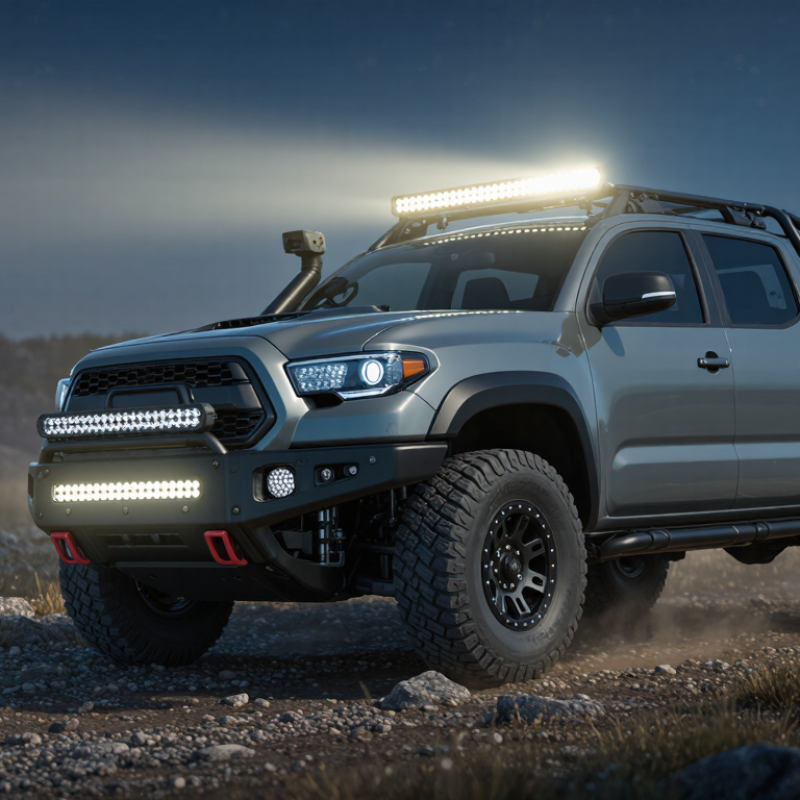
For truck and off-road buyers, “SAE” is more than a marketing label. It refers to performance standards developed by SAE International, including J581 for auxiliary high-beam lamps and J595 for warning lamps. These standards address light output, beam direction, durability, and test conditions. SAE J575 also covers environmental tests, including vibration, moisture, dust, and temperature exposure.
A key detail is often missed. SAE does not automatically certify every LED light bar carrying an SAE claim. Manufacturers may state that a product meets a standard, but buyers should request test records, photometric results, and the exact SAE specification. A credible report should identify the tested model, beam pattern, laboratory method, and test date. “SAE compliant” without evidence is weak.
Lighting performance matters because visibility supports safer decisions on dark trails and rural roads. The National Highway Traffic Safety Administration reported 42,514 U.S. traffic deaths in 2022, showing how demanding nighttime driving can be. That figure does not prove a light bar prevents crashes. It does show why controlled beam patterns matter. Excessive glare can reduce another driver’s vision. I have also seen bright bars perform poorly after water intrusion or loose mounting. More lumens are not always better. Before installation, compare SAE markings with the intended use, vehicle wiring capacity, mounting stability, and local road-use requirements. Some product claims still deserve skepticism.
| Light Bar Type | Typical Use | Beam Pattern | Relevant SAE Reference | What the SAE Reference Indicates | Road-Use Considerations |
|---|---|---|---|---|---|
| Auxiliary driving light bar | Supplemental forward lighting for dark rural roads or off-road routes. | Narrow or focused beam designed to project light farther ahead. | SAE J581 | Applies to auxiliary upper-beam driving lamps. A marking or manufacturer declaration should identify the applicable standard and intended lamp function; it is not a universal rating for every light bar. | Use and installation must comply with local rules, including requirements for mounting, aiming, switching, and operation with other vehicle lights. |
| Fog light bar | Low-speed driving in fog, heavy rain, snow, or other conditions where near-road visibility is important. | Wide, low beam intended to illuminate the road close to the vehicle while limiting upward light. | SAE J583 | Sets requirements for front fog lamps. The reference concerns a defined lamp function and performance, not simply brightness or the number of LEDs. | Mounting height, aim, color, and permitted use can be regulated. A wide beam alone does not establish that a lamp meets fog-lamp requirements. |
| Combination spot-and-flood bar | Off-road use where both distance illumination and broad nearby coverage are useful. | Combines a concentrated center beam with wider peripheral light. | No single SAE reference applies to every combination bar | Check the declared function and any specific standard marking. A combination beam or high lumen figure does not, by itself, demonstrate SAE conformity. | Many off-road auxiliary bars are not intended for use on public roads. Cover or switch them off where required by local law. |
| Off-road flood bar | Work areas, trails, campsites, and close-range vehicle surroundings. | Broad, dispersed beam that spreads light over a wide area. | No single SAE reference applies to every off-road flood bar | SAE does not provide one general-purpose certification covering all off-road LED light bars. Verify any standard claimed for the specific lamp and its intended use. | Wide-area output can cause glare for other road users. Treat as work or off-road lighting unless the lamp is specifically approved and installed for road use. |
| Flashing warning light bar | Warning or signaling applications on vehicles authorized to use such equipment. | Flashing or other warning-light output; not intended as a driving beam. | SAE J595 or SAE J845, depending on device type and application | These references address specified warning-light performance. They are distinct from standards for forward driving or fog lamps. | Warning colors and flashing lights are restricted in many jurisdictions and may be limited to authorized vehicles or specific uses. |
| Testing and verification | Assessing lighting equipment against the applicable performance and durability requirements. | Not a beam category; applies to test methods and equipment evaluation. | SAE J575 | Provides test methods for certain automotive lighting devices. It is not, by itself, a general product approval or a guarantee of road legality. | Confirm the applicable standard, edition, product documentation, and vehicle regulations rather than relying on the word “SAE” alone. |
| Important: “SAE certified” is not a single, universal certification for all LED light bars. SAE standards are specific to lamp functions and performance requirements, and SAE publishes standards rather than granting blanket approval to every product that cites them. Lumens, beam pattern, standard conformity, and legal road use are separate considerations. In the United States, vehicle lighting requirements may also involve federal rules such as FMVSS No. 108 and applicable state or local laws. | |||||


