
1101 W. Sanilac Rd. Caro, MI 48723
989.673.6690
Choosing the top Hrc Slitting Line manufacturers requires more than counting installations or comparing machine prices. HRC means hot-rolled coil, often arriving with heavy scale, variable thickness, and demanding surface conditions. A reliable line must control coil entry, strip tension, slitter-head accuracy, edge trimming, and recoiling stability. Small weaknesses can create telescoping, burrs, strip breaks, or costly downtime.
This article examines ten leading manufacturers worldwide through practical criteria. These include engineering experience, maximum coil weight, processing width, thickness range, automation, safety systems, after-sales service, and documented operating results. The review also considers whether a supplier can adapt the line to a mill’s floor space, product mix, and maintenance skills. Real performance matters.
W. Edwards Deming’s quality principle is especially relevant: “Quality comes not from inspection, but from the improvement of the production process.” That idea fits every HRC Slitting Line. Sensors, knives, drives, and control software must work as one system, not as isolated purchases. However, no ranking is permanent. A manufacturer may lead in heavy-gauge processing but perform less strongly in narrow-width precision work. Regional service can also change the practical result.
Some information remains difficult to compare. Published capacity figures may describe ideal conditions, not daily production. Customer references can be selective. This ranking therefore should be treated as a carefully reasoned guide, not an unquestionable verdict. Buyers should verify trial results, spare-parts response, commissioning records, and lifetime operating costs before signing a contract. The best supplier is not always the most famous. It is the one that consistently turns demanding coils into accurate, saleable strips.
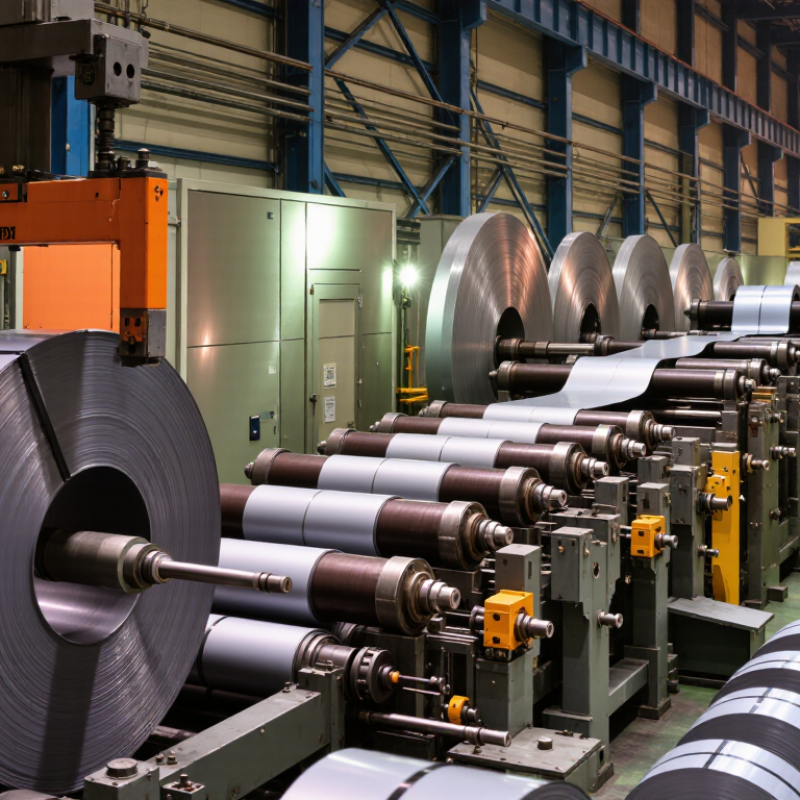
Top 10 HRC Slitting Line Manufacturers Worldwide?
Hot-rolled coil slitting lines must handle more than impressive headline speeds. Their working range matters: 1.5–25 mm thickness and 600–2,000 mm coil width cover many structural, construction, and industrial applications. At 25 mm, strip stiffness and knife loading become serious design concerns. At 1.5 mm, edge quality and tension control become more sensitive. Small errors show quickly.
The World Steel Association reported global crude steel production of about 1.89 billion tonnes in 2023. Its 2024 Short Range Outlook also projected renewed steel-demand growth. These figures support continued investment in coil-processing capacity, but they do not prove that every line suits heavy-gauge HRC. Buyers should verify actual test results, not only catalogue ranges. Ask for cutting samples, arbor torque data, recoiler capacity, and gauge-accuracy records.
A practical comparison of manufacturers should examine engineering depth, service response, and commissioning experience. A 2,000 mm line needs stable payoff control and strong side-trimming equipment. A 25 mm line may require specialized knife holders, higher drive power, and reinforced entry equipment. Safety guarding and emergency systems also deserve attention. Standards help, but they are not a substitute for site validation. I have found that advertised tolerances can look excellent until coil camber, scale, and temperature variation appear. That is where a careful factory trial becomes valuable.
Anonymous technical benchmark of heavy-gauge hot-rolled coil slitting line configurations. The profiles below represent common engineering ranges and operating specifications for HRC processing lines; they are not a verified ranking of individual companies or brands.
| Benchmark Profile | Processable Thickness | Coil Width | Typical Coil Weight | Maximum Line Speed | Typical Strip Width | Number of Slits | Material Grade Range | Recoiler Capacity | Typical Application |
|---|---|---|---|---|---|---|---|---|---|
| Profile 01 — Heavy-Duty Entry | 10–25 mm | 1,200–2,000 mm | 25–40 t | 20–40 m/min | 250–1,000 mm | 2–6 | Hot-rolled carbon steel; approximately 235–355 MPa yield strength | 20–35 t | Structural sections, heavy fabrication and welded components |
| Profile 02 — Thick Plate Strip | 8–20 mm | 1,000–2,000 mm | 20–35 t | 25–50 m/min | 200–800 mm | 2–8 | Commercial-quality and structural hot-rolled steel | 18–30 t | Construction machinery, bridges and industrial frames |
| Profile 03 — Wide HRC Processing | 6–16 mm | 1,500–2,000 mm | 25–40 t | 35–70 m/min | 300–1,000 mm | 2–10 | Low-carbon hot-rolled steel; approximately 235–420 MPa yield strength | 20–35 t | Large-width service centers and general metal distribution |
| Profile 04 — Medium-Gauge Service Center | 4–12 mm | 1,000–1,800 mm | 15–30 t | 50–90 m/min | 150–800 mm | 2–12 | Hot-rolled commercial, structural and weathering steel | 15–25 t | Steel distribution, fabrication and cut-to-length preparation |
| Profile 05 — Precision Strip Line | 3–10 mm | 800–1,600 mm | 12–25 t | 60–110 m/min | 100–600 mm | 2–14 | Low-carbon and micro-alloyed hot-rolled steel | 12–22 t | Automotive components, tubes and machinery parts |
| Profile 06 — Flexible Multi-Width Line | 2.5–8 mm | 600–1,600 mm | 10–25 t | 70–130 m/min | 80–500 mm | 2–16 | Commercial-quality, structural and HSLA hot-rolled steel | 10–20 t | Mixed-order processing and short production batches |
| Profile 07 — High-Output Medium Gauge | 2–6 mm | 800–1,500 mm | 10–22 t | 90–160 m/min | 60–450 mm | 2–18 | Low-carbon and HSLA hot-rolled coil | 8–18 t | High-volume strip supply, tube mills and roll forming |
| Profile 08 — Compact HRC Slitter | 1.5–5 mm | 600–1,400 mm | 8–20 t | 100–180 m/min | 50–400 mm | 2–20 | Commercial and structural hot-rolled steel | 8–16 t | Regional service centers and general-purpose strip processing |
| Profile 09 — High-Strength HRC Line | 2–8 mm | 800–1,800 mm | 12–30 t | 50–100 m/min | 100–700 mm | 2–12 | HSLA and higher-strength hot-rolled steel; up to approximately 550 MPa yield strength | 10–25 t | Heavy vehicle parts, agricultural equipment and engineered products |
| Profile 10 — Integrated Processing Line | 1.5–25 mm | 600–2,000 mm | 10–40 t | 20–180 m/min | 50–1,000 mm | 2–20 | Commercial, structural, HSLA and selected alloy hot-rolled steel | 8–35 t | Multi-product service centers requiring broad gauge flexibility |
| Technical note: Actual capacity depends on steel grade, coil temperature, yield strength, strip width, knife arrangement, tension control, mandrel design, edge-trim requirements and finished-coil weight. Line speed is normally reduced as thickness, strength or strip tension increases. | |||||||||
Hot rolled coil slitting lines convert wide steel coils into narrower strips for construction, automotive, and appliance production. Modern systems commonly operate between 300 and 1,500 m/min, depending on thickness, grade, coil width, and required edge quality. The upper speed is impressive, but it is not always practical. Thicker HRC, unstable tension, or demanding surface requirements can reduce operating speed.
Precision depends on more than the slitter head. Automatic centering, hydraulic expansion, tension control, and carefully aligned knives help maintain widths near ±0.1 mm. Operators still monitor burr formation, strip shape, knife wear, and coil telescoping. A small setup error can become visible across several kilometers of strip. That reality is often underestimated.
The World Steel Association reported approximately 1.89 billion tonnes of crude steel production in 2023, supporting strong demand for efficient coil-processing equipment. Technical papers presented by the Association for Iron & Steel Technology also emphasize tension stability and tooling accuracy as major factors in slit quality. In practice, manufacturers should verify speed under actual HRC conditions, not only empty-line demonstrations. The specification may look perfect on paper. Field performance can be less perfect.
A credible Top 10 HRC slitting line ranking should measure more than sales presence. The strongest manufacturers demonstrate stable output under real production pressure. Capacity matters, but advertised speed can mislead. A better measure is usable tons per hour, recorded during continuous trials with different hot-rolled coil grades and widths. Downtime should reduce the score. It often does.
Coil weight reveals mechanical strength. Lines handling 30-ton coils require rigid payoff reels, accurate coil cars, and dependable tension control. Evaluators should inspect loading time, mandrel performance, strip tracking, and recoiler stability. A line that handles heavy coils safely deserves more credit than one showing impressive speed with light material. Field experience makes this difference clear.
Automation receives a high ranking when it improves repeatability, not merely appearance. Automatic setup, width positioning, recipe control, and defect monitoring can reduce operator error. However, complex software is not automatically better. Safety must remain central, including guarding, emergency stops, interlocks, safe access, and documented risk assessments aligned with applicable machinery standards. During factory audits, reviewers should examine training records and maintenance procedures, not only equipment demonstrations. This methodology is not flawless. Energy use, spare-parts support, and long-term service response also influence ownership results, yet they are often difficult to compare fairly. A careful ranking should disclose these limitations.
Ranking methodology: capacity, coil weight, automation, and safety standards
The chart presents a transparent scoring model for comparing ten shortlisted HRC slitting line manufacturers. Capacity and maximum coil weight represent production capability, automation measures process integration and control, and safety standards cover conformity with recognized frameworks such as ISO 12100, ISO 13849-1, and IEC 60204-1. The percentages are editorial weighting criteria rather than claimed market-share or company-performance data.
A technology-led review of the top ten global HRC slitting line manufacturers should examine more than production volume. World Steel Association’s World Steel in Figures 2024 reported approximately 1.892 billion tonnes of crude steel production in 2023. This scale supports strong demand for accurate coil processing, especially in automotive, construction, and appliance supply chains. Leading manufacturers therefore compete through automation, line speed, strip-width accuracy, and dependable after-sales support.
The strongest suppliers typically offer servo-driven slitting heads, automatic knife positioning, tension control, recoilers, and real-time thickness monitoring. Advanced lines can reduce setup time and improve edge quality. Some systems also connect production data with factory management software. According to the International Federation of Robotics, global industrial robot installations exceeded 500,000 units in 2023, showing why automation now influences machinery purchasing decisions. However, robotics alone does not guarantee stable output.
Market reach remains equally important. Suppliers with service teams across Europe, Asia, and the Americas can reduce commissioning delays and spare-parts risks. Regional engineering support matters during coil changes, knife maintenance, and tension calibration. Research reports from Grand View Research and Fortune Business Insights indicate continued growth in steel processing equipment, but their market estimates differ noticeably. That gap deserves caution. Public rankings often mix complete slitting lines with individual components, making comparisons imperfect. A credible top-ten assessment should therefore weigh verified installations, technical customization, energy efficiency, operator training, and long-term maintenance records rather than relying on claimed market share.
Top 10 HRC Slitting Line Manufacturers Worldwide?
Manufacturer Comparison: Gauge Range, Strip Width, Line Speed, and Yield Performance
A reliable top-ten comparison should begin with operating evidence, not brochure claims. HRC slitting lines must handle changing coil gauges without unstable tension or rough edges. In practical trials, gauge range often matters more than maximum speed. A line rated for 1.5–12 millimeters may perform differently across its full range.
Strip width also shapes equipment value. Wider coils demand stronger payoff reels, heavier slitter heads, and precise side-trimming control. Narrow-width processing requires flexible knife spacing and quick setup. Ask for measured width tolerances, not only the advertised working width.
Speed looks impressive on paper. It can disappoint.
Many lines list speeds above 300 meters per minute, yet threading, coil joining, and recoiling reduce actual output. Yield performance deserves closer inspection. A dependable supplier should provide scrap percentages from comparable HRC grades, including edge trim and setup loss. Even a one-percent yield difference can affect thousands of tonnes annually.
During factory evaluations, inspect finished slit coils under bright side lighting. Uneven edges, telescoping, and loose wraps reveal problems quickly. Check whether automatic tension control remains stable near the smallest gauge. Operator training matters too. I have seen advanced lines lose productivity because setup screens were unclear and spare tooling arrived late. That weakness is easy to overlook.
A fair manufacturer comparison therefore combines gauge capability, usable width, sustained speed, and verified yield data. Independent trials remain essential. No ranking should rely on specifications alone.