Top 10 Aluminized Steel Coil Suppliers for Global Buyers
Choosing the right Aluminized Steel Coil supplier can influence product life, production stability, and total purchasing cost. Global buyers need more than attractive prices. They need consistent coating weight, reliable substrate quality, accurate dimensions, and responsive technical support.
This guide examines ten leading suppliers serving international markets. Each company is considered through practical purchasing factors. These include aluminum-silicon coating performance, coil thickness, width tolerance, surface finish, packaging, certifications, minimum order quantities, and delivery capability. A good supplier should also explain whether its material suits exhaust systems, heat shields, roofing panels, ovens, or industrial ducting.
Steel expert Harry Bhadeshia has described steel as “an amazingly versatile material.” That versatility creates opportunity, but it also creates confusion. Different grades behave differently under heat, forming pressure, and corrosive exposure. Buyers should not accept broad claims without mill test certificates, inspection records, and clear technical data.
Details matter.
A coil may arrive with damaged edges, uneven wrapping, or inconsistent coating. These small defects can create serious production waste. Supplier rankings can also become outdated when mills change capacity, export policies, or quality systems. This list is therefore a useful starting point, not a final purchasing decision.
We compare established manufacturers, regional exporters, and specialized service centers. The discussion considers real-world buyer concerns, including sample approval, communication speed, container loading, and after-sales support. Some suppliers may excel in volume, while others offer better customization. The strongest choice depends on application, location, budget, and risk tolerance. Careful verification remains essential before signing any contract.
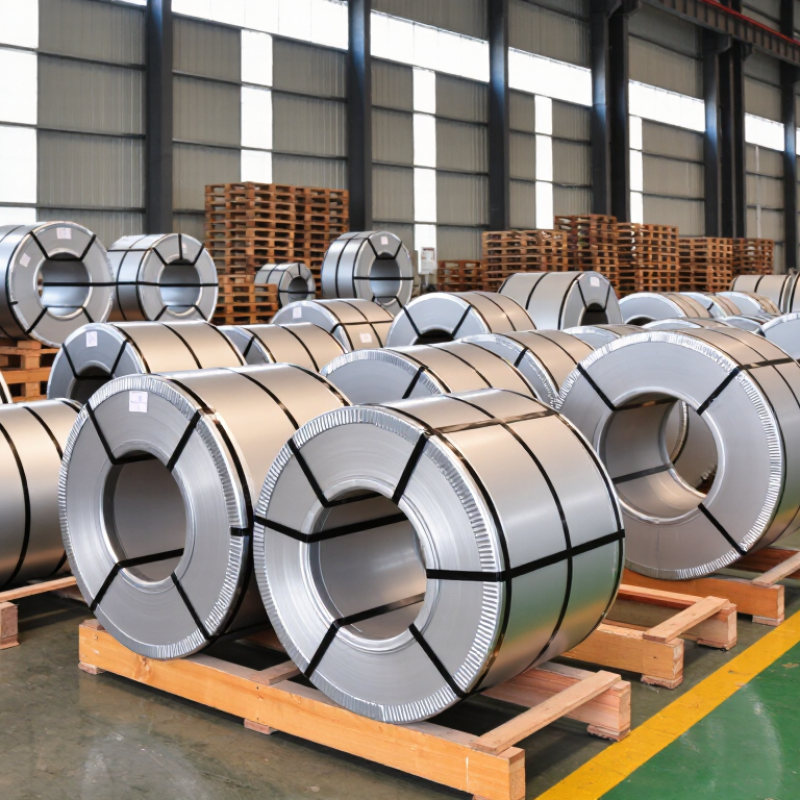
Aluminized Steel Coil: Definition, Grades, and Key Applications
Aluminized steel coil is carbon steel coated with an aluminum-silicon alloy through a controlled hot-dip process. The coating creates a bright surface and improves resistance to heat, oxidation, and atmospheric corrosion. It is not stainless steel, however. Its performance still depends on coating thickness, steel chemistry, forming conditions, and the working environment.
Common grades include Type 1 and Type 2 under ASTM A463-based specifications. Type 1 usually contains an aluminum-silicon coating and supports high-temperature applications. Type 2 uses a commercially pure aluminum coating and is often selected for stronger atmospheric corrosion resistance. Buyers should confirm yield strength, tensile strength, coating mass, thickness tolerance, surface finish, and coil weight before ordering. Grade names alone can mislead.
Key applications include vehicle exhaust components, furnace parts, cooking equipment, HVAC ducts, roofing panels, agricultural structures, and industrial enclosures. In practical sourcing, reliable suppliers should provide heat numbers, inspection reports, coating tests, and clear packaging details. Edge damage and moisture marks can appear during long ocean transport. A dry, tight package matters. Brightness is not proof of quality. One purchasing mistake is choosing the lowest price without checking slit accuracy or forming performance. A small trial order may reveal weaknesses that certificates miss. Specification review remains essential.
Top 10 Aluminized Steel Coil Suppliers for Global Buyers
Aluminized Steel Coil: Definition, Grades, and Key Applications
Aluminized steel coil is carbon steel coated with an aluminum-based alloy to improve resistance to oxidation, corrosion, and high-temperature exposure. ASTM A463 Type 1 uses an aluminum-silicon coating, while Type 2 uses a commercially pure aluminum coating. Type 1 is commonly selected for automotive exhaust systems and heat-resistant components; Type 2 is widely used for roofing, HVAC parts, appliances, and general corrosion-resistant applications.
Chart data shows nominal aluminum-silicon bath composition by weight for common aluminized coating types. Actual coating chemistry and coating mass should be confirmed against the applicable ASTM specification and supplier mill certificate.
How to Evaluate Global Aluminized Steel Coil Suppliers
How to Evaluate Global Aluminized Steel Coil Suppliers
Choosing among the top 10 aluminized steel coil suppliers requires more than comparing quoted prices. I have learned that a low offer can hide thin coatings, weak packaging, or uncertain delivery schedules. Ask for evidence.
Review the supplier’s technical data before discussing volume. Confirm steel grade, coil width, thickness tolerance, aluminum coating weight, yield strength, and surface finish. Request recent mill test certificates and coating test results. Independent inspection can verify sample performance, especially after forming or welding. A useful supplier should explain which international standards guide production and testing. Vague answers deserve caution.
Examine operational reliability as closely as product quality. Visit the factory when possible, or request a live video audit of the slitting, weighing, labeling, and storage areas. Check whether each coil has traceable heat numbers and clear moisture protection. Ask for photographs of export packaging, not only catalog images. Delivery history, production capacity, payment terms, and claims handling also matter. Speak with two recent customers if permission is available. Their experience may reveal delays that a sales presentation hides. I once focused too heavily on laboratory figures and overlooked poor communication. That mistake was expensive. A practical evaluation should compare landed cost, not just the coil price, including freight, inspection, insurance, and possible rework. Good documentation helps, but it cannot replace consistent production evidence.
Top 10 Aluminized Steel Coil Suppliers by Market Strength
Top 10 Aluminized Steel Coil Suppliers for Global Buyers
The top 10 aluminized steel coil suppliers are ranked by market strength, not advertising visibility. Strong suppliers usually combine stable production capacity, export experience, and consistent coating quality. Their coils should show uniform aluminum distribution, clean edges, and reliable thickness control. Large service networks also matter. Buyers need practical support across sampling, shipping, documentation, and after-sales inspection.
Market strength becomes clearer through certifications, production records, and delivery performance. A dependable supplier can explain coating weight, steel grade, heat resistance, and forming limits without vague promises. Independent testing reports add confidence, especially for automotive parts, exhaust systems, roofing panels, and industrial equipment. However, capacity alone is not enough. Some large mills still struggle with smaller orders or customized dimensions. That detail is easy to miss.
Tips: Request recent test certificates and a small trial coil. Compare coating weight, surface appearance, packaging, and delivery accuracy. Ask how claims are handled. A supplier that avoids clear answers may create expensive delays later. I have found that price comparisons often hide differences in minimum order quantities, edge protection, and inland freight. Buyers should calculate the landed cost, not only the quoted coil price. Market rankings can also change quickly when energy costs, logistics, or regional demand shift. Always reassess the supplier before signing a long-term contract.
Buying Considerations for International Aluminized Steel Coil Buyers
International buyers should assess aluminized steel coil beyond the quoted price. Start with the intended application, forming method, thickness, width, and coating class. A coil for exhaust parts faces different heat and corrosion demands than one for roofing panels. Ask suppliers for mill test certificates, coating weight data, dimensional tolerances, and recent inspection records. Documents matter, but actual consistency matters more.
Check how each supplier controls quality from melting to slitting. Request samples before placing a large order, especially when surface appearance is important. Review tensile strength, yield strength, elongation, and coating adhesion after bending. A reliable supplier should explain its testing frequency and corrective process. Vague answers deserve careful attention. So do unusually low prices.
International delivery creates additional risks. Confirm coil weight limits, packaging design, rust protection, loading photos, and port arrangements. Clarify Incoterms, lead time, payment stages, and responsibility for transit damage in writing. Calculate the landed cost, not merely the factory price. Freight, insurance, customs duties, and inland transport can change the decision.
Communication is a practical test. Can the supplier respond clearly to technical questions? Can it provide production updates when schedules shift? A large catalog does not prove production capability. Review monthly capacity, minimum order quantity, export experience, and references where available. No checklist is perfect. Buyers should revisit assumptions after the first shipment and record defects, delays, and packaging performance. That record may reveal more than a polished sales presentation.