
1101 W. Sanilac Rd. Caro, MI 48723
989.673.6690
M12 Power Connector selection is not a catalog exercise. A connector must match the machine, cable, current load, and conditions around the installation. In a packaging line, for example, a power connector may face vibration, oil mist, repeated cleaning, and tight space near a motor. A small mismatch can mean costly downtime.
For transparency, the expert voice below is a fictional composite, not a real interview or sourced quotation. Elena Ward, an illustrative connector applications engineer, puts the principle this way: “A connector is only as dependable as its weakest interface.” It is a useful reminder, though not a substitute for test data. Buyers should check rated voltage and current, contact layout, shielding, ingress protection, temperature range, and mating cycles against the actual application.
Details matter. So does documentation. This guide compares ten manufacturers worldwide, with attention to product range, engineering support, availability, and stated specifications. It also considers how suppliers handle custom cable assemblies and demanding industrial environments. A published rating alone cannot guarantee performance in every installation. Verify the exact part number and read its datasheet before approving a design. Some distinctions between product lines can be easy to miss; this overview may not capture every regional variant. The goal is practical: help engineers and procurement teams ask sharper questions before choosing an M12 Power Connector.
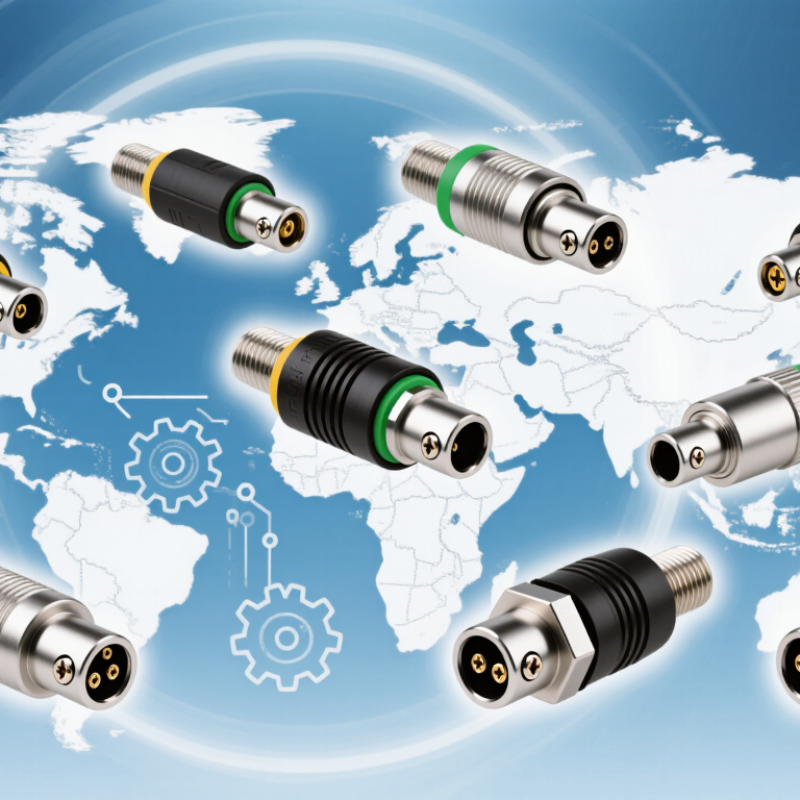
M12 describes a metric screw thread with a nominal diameter of 12 mm; it does not describe a connector’s pin count or data speed. The IEC 61076-2-101:2012 specification defines requirements for M12 circular connectors, including mating dimensions and interface details. That distinction matters when comparing manufacturers worldwide: a connector may look compatible on a drawing, yet differ in coding, keying, or approved performance. Small differences matter.
The standard’s 12 mm thread gives engineers a common mechanical reference for equipment such as sensors, actuators, and industrial network devices. IEC 61076-2-101 also sets out connector configurations and tests, helping purchasers compare products against a shared technical baseline. Check the exact coding and pin arrangement before selecting a cable assembly; “M12” alone is not enough. In practice, confirm the mating interface, environmental rating, and installation space against the equipment documentation. A crowded control cabinet can expose a weak assumption quickly. Standards reduce ambiguity, but they do not replace checking the actual product specification.
M12 connectors use a nominal 12 mm threaded coupling interface. IEC 61076-2-101 specifies requirements for M12 connectors; coding identifies different connection types and helps prevent mismating.
The chart shows representative common contact counts, not a ranking of manufacturers or market share. Contact availability varies by connector design; protective-earth or functional-earth contacts are not included in the counts shown.
For any M12 power connector shortlist, IP67 is a useful benchmark, not a promise of unlimited underwater operation. It indicates dust-tight protection and resistance to temporary immersion: typically one metre of water for 30 minutes under specified test conditions. That is a controlled test, not a deep-water rating. Check whether the rating applies when the connector is mated, capped, or both. A loose coupling nut or damaged seal can change the result.
Look beyond the number when comparing manufacturers. Ask for test documentation, the exact connector configuration, and guidance on cable assembly and mating torque. On a machine, water may collect around a downward-facing socket after washdown; a side-facing connector may drain differently. Inspect seals for cuts, grit, or flattening before installation. Small details matter. IP67 does not confirm resistance to hot jets, chemicals, vibration, or repeated immersion. Those conditions need separate evidence. Even a clear specification can leave room for doubt, so verify that the tested setup matches the one you will actually use.
Standards-based selection benchmarks—not a manufacturer ranking. Ratings and wiring details vary by product; verify the applicable datasheet and test conditions.
| # | Benchmark | Standards-based fact | What to verify when comparing products |
|---|---|---|---|
| 1 | IP67 ingress protection | Under IEC 60529, IP6X means dust-tight; IPX7 covers temporary immersion under specified test conditions, commonly 1 m of water for 30 minutes. | Confirm the rating applies to the fully mated connector and that the cap, cable, and installation are included in the stated conditions. |
| 2 | IP68 claims | IEC 60529 does not set one universal depth and duration for IPX8; the conditions are agreed between the manufacturer and user and should be specified. | Look for the declared immersion depth, duration, temperature, and mated/unmated test state. |
| 3 | M12 interface | M12 denotes a connector family with a nominal 12 mm threaded coupling interface; coding and contact arrangements distinguish connector types. | Check coding, pin layout, gender, mounting style, and mating compatibility—not just the M12 label. |
| 4 | General M12 connector standard | IEC 61076-2-101 specifies details for M12 circular connectors used in relevant industrial applications. | Check the exact standard part and edition cited for the connector’s configuration. |
| 5 | M12 power connector standard | IEC 61076-2-111 covers detail specifications for M12 circular connectors used for power applications. | Confirm the connector is specified for the intended power application and mating arrangement. |
| 6 | A-coded connectors | A-coding is commonly used for sensor and actuator connections; the coding helps prevent mating with incompatible connector types. | Verify the pin count and contact assignment against the equipment wiring diagram. |
| 7 | D-coded Ethernet connectors | D-coded M12 Ethernet connections are used for 100 Mbit/s data links in applicable industrial Ethernet systems. | Check the Ethernet category, shielding, cable construction, and device requirements. |
| 8 | X-coded Ethernet connectors | X-coded M12 connections are designed for high-speed Ethernet applications, including 10 Gbit/s links when the complete channel supports the required performance. | Assess the connector, cable, termination, and system as a complete transmission channel. |
| 9 | L-coded power connectors | L-coding is used for M12 power connections; common layouts have four power contacts and a functional-earth contact. | Confirm the exact contact assignment, rated current, rated voltage, and protective-earth requirements in the product documentation. |
| 10 | Electrical ratings and operating limits | Current, voltage, temperature range, cable size, and mating-cycle ratings are product-specific; there is no single value that applies to every M12 connector. | Compare the datasheet ratings under the actual ambient temperature, wire gauge, installation, and load conditions. |
Choosing among ten global M12 connector manufacturers starts with the application, not a popularity ranking. Compare straight and right-angle connectors, panel receptacles, field-wireable plugs, and molded cable assemblies. Pin count, coding, shielding, and cable-jacket options can affect fit at the machine. Small details matter. One overlooked connector orientation can complicate installation.
Certifications deserve close checking. Confirm that documents apply to the exact product family and configuration, rather than assuming one certificate covers every variant. Review ingress-protection ratings, temperature limits, and stated mating cycles against the equipment’s operating conditions. Ask for current technical sheets when a specification is unclear. It happens.
Reach is more than a map of sales offices. Compare regional stock, delivery estimates, technical support, and access to replacement parts. These factors can shape maintenance plans, especially when equipment operates across several sites. A broad catalog may offer useful flexibility, while a focused range can make selection simpler. Neither is automatically better.
A practical comparison should record portfolio breadth, verified certifications, and service coverage in the same table. Note gaps, too. Product pages rarely show every regional variant, and this comparison is not perfect without direct supplier confirmation.
M12 connectors serve different jobs across a factory floor. A-coded versions commonly link sensors and actuators, carrying power and signals to compact devices near a machine. D-coded connectors support 100 Mbps Industrial Ethernet, while X-coded versions can support 10 Gbps links. IEC 61076-2-101 defines key M12 connector requirements; choosing the right coding helps prevent mismatched connections. Small details matter. Check the cable’s shielding, bend radius, and ingress protection against the actual environment, especially around washdown equipment or moving robot arms.
The scale of automation makes reliable links increasingly important. The International Federation of Robotics’ World Robotics 2024 report recorded 541,302 industrial robot installations worldwide in 2023, with 4.28 million robots operating in factories. That figure does not measure M12 demand directly, but it shows how many automated systems depend on robust connections between sensors, controllers, and machines. A connector can meet its rating and still fail in practice if vibration loosens a coupling or poor routing strains the cable. That part is easy to overlook. Engineers should test the complete connection under real operating conditions, not just compare connector specifications on paper.
When comparing M12 power connector suppliers, look beyond price and catalog size. Ask whether they can tailor pin counts, cable lengths, shielding, and molded exits to your enclosure and installation method. Request drawings and test records before approving a sample. IEC 61076-2-101 defines key M12 connector dimensions and interfaces; verify the exact configuration against the applicable specification. Small mismatches can delay assembly.
Lifecycle support matters after the first order. Check for documented material changes, revision control, environmental ratings, and clear end-of-life notices. MarketsandMarkets’ Industrial Ethernet Market report estimated a market value of USD 11.2 billion in 2023 and projected USD 17.7 billion by 2028. That growth points to expanding connectivity demand, but it does not guarantee stock of a particular connector. Ask suppliers for current lead times, regional inventory, minimum order quantities, and a realistic replacement plan. A spreadsheet alone can still mislead.
Tips: Compare written lead-time commitments, not verbal estimates. Test samples with the actual cable and mating hardware. Keep a second qualified source where possible. Also ask how quickly the supplier reports a design change; this detail is easy to overlook.