
1101 W. Sanilac Rd. Caro, MI 48723
989.673.6690
Choosing reliable Cnc Parts manufacturers is rarely as simple as comparing prices on a spreadsheet. Global buyers must examine machining capability, material control, dimensional accuracy, communication, and delivery performance. A supplier producing aluminum brackets may not handle hardened steel shafts equally well. The difference appears in tolerance reports, surface finishes, inspection records, and rejected batches.
This guide introduces ten manufacturers serving international customers and explains why each deserves attention. The evaluation considers CNC milling, CNC turning, five-axis machining, prototyping, production volume, certifications, and export experience. It also considers practical details, such as whether a supplier can provide material certificates, first-article inspection reports, and protective packaging for long-distance shipping.
Taiichi Ohno, a pioneer of the Toyota Production System, stated, “Without standards, there can be no improvement.” That principle remains highly relevant to Cnc Parts sourcing. Clear drawings, agreed tolerances, stable processes, and traceable inspections create a stronger purchasing decision.
No ranking is perfect. Public information can be incomplete, factory capacities may change, and customer requirements differ widely. A manufacturer suitable for medical housings may be unsuitable for agricultural equipment. Buyers should still request recent samples, verify certifications, review quality records, and discuss corrective-action procedures before placing an order. Small oversights matter. A missing thread gauge or unclear delivery term can become an expensive delay.
The manufacturers below are presented as practical options, not universal winners. Their real value depends on fit, evidence, and consistent performance. That requires careful questions.
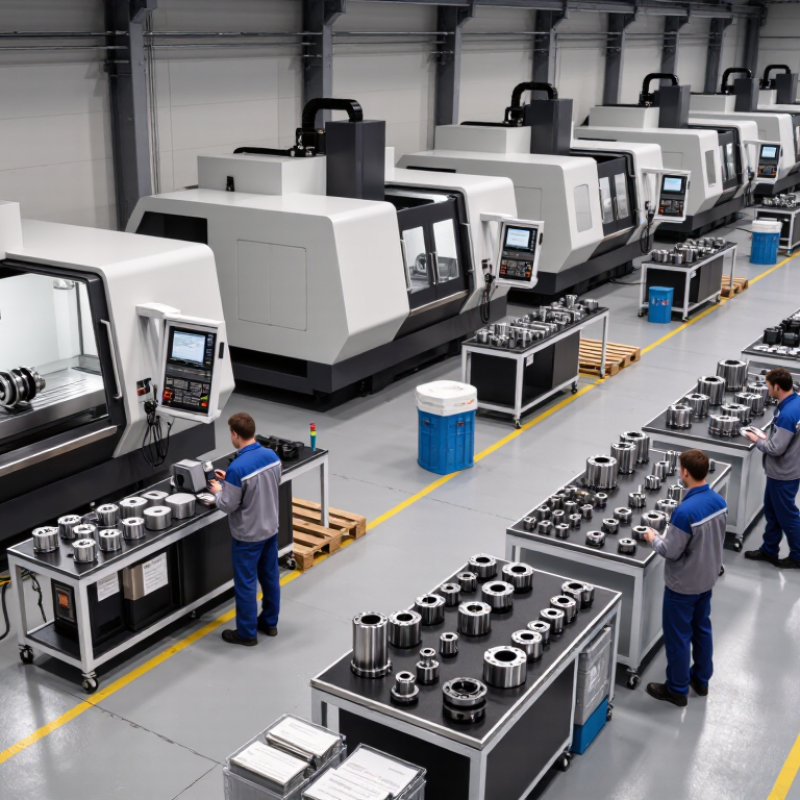
CNC parts manufacturers produce precision components through computer-controlled machining. They convert digital CAD files into machine instructions, then cut materials such as aluminum, steel, brass, or engineering plastics. Common processes include milling, turning, drilling, and surface finishing. A small bracket may require several setups, while a sealed housing may need tight dimensional control across multiple faces.
Global buyers need these manufacturers because local production is not always practical. A reliable supplier can support prototypes, small batches, and repeat orders without requiring expensive tooling. This flexibility helps product teams test a design before committing to larger production. It also supports industries that need traceable components, including automation, medical equipment, energy systems, and transportation.
Details matter. Buyers should request material certificates, inspection reports, tolerance records, and clear drawings before production begins. A capable manufacturer explains what can be machined, not merely what can be quoted. In real projects, communication delays often cause more trouble than cutting errors. Time zones, packaging, customs documents, and shipping damage all deserve attention. Even experienced suppliers can miss a threaded hole or misunderstand a surface-finish note. That is why sample approval and first-article inspection remain valuable. Not perfect. More dependable.
CNC parts manufacturers are suppliers that use computer-controlled machining processes to produce precise components from metals, plastics, and engineered materials. The chart compares typical achievable dimensional tolerance ranges for widely used CNC and related precision processes. Lower values indicate tighter tolerances and are generally associated with more demanding parts, higher inspection requirements, and greater production cost. Actual capability depends on machine condition, material, geometry, part size, tooling, and inspection methods.
When evaluating CNC parts manufacturers, quality starts with measurable process control, not attractive sample parts. Ask for inspection plans, material certificates, calibration records, and traceability from raw stock to shipment. ISO’s latest Survey reports more than 1.2 million ISO 9001 certificates worldwide. Certification helps, but it does not guarantee tight tolerances on every batch.
Request actual capability data. Look for Cpk results, first article inspection records, surface-finish readings, and nonconformance reports. A capable supplier should explain how it controls tool wear, thermal drift, burrs, and dimensional variation. Deloitte’s 2024 manufacturing study found that 86% of industry leaders consider smart manufacturing important for future competitiveness. Digital inspection systems can improve evidence, yet software cannot replace skilled operators.
Cost needs a wider lens. Compare quoted price, setup fees, inspection charges, packaging, freight, and likely rework. A cheaper unit price may hide unstable processes. Ask for lead-time performance across recent orders, not only the promised schedule. I also prefer a small pilot batch before a large release. It reveals communication gaps quickly.
Be practical. No supplier is flawless. During one evaluation, unclear revision control mattered more than a minor price difference. That mistake changed my checklist. Reliable manufacturers welcome technical questions, document corrective actions, and explain bad results without defensiveness. Their response under pressure often reveals more than a polished sales presentation.
Global buyers often compare ten leading CNC parts manufacturers by more than price. They examine machining accuracy, material control, communication, and delivery consistency. The strongest suppliers support aluminum housings, stainless steel shafts, brass fittings, plastic prototypes, and complex five-axis components. Some specialize in high-volume production. Others perform better with urgent prototypes or low-volume assemblies. This difference matters.
Reliable manufacturers provide inspection reports, material certificates, and clear tolerance reviews. They should explain how they manage ±0.01 mm features, surface finishes, threads, and difficult internal cavities. Experienced teams also identify design risks before cutting metal. That practical feedback can reduce rework. However, no supplier performs perfectly on every project. A manufacturer may offer excellent milling but limited turning capacity. Another may communicate well but struggle with sudden volume changes. Buyers should test claims with a small order.
Tips: Request a first-article inspection and a detailed production timeline. Confirm approved materials, packaging methods, export documents, and replacement policies. Ask for photographs of finished parts, not only factory equipment. Compare sample measurements against your drawings. Keep conversations in writing. Small details often expose larger process weaknesses. It is also wise to review capacity during local holidays, because delivery estimates can become optimistic. A capable CNC partner should answer technical questions directly, admit limitations, and suggest workable alternatives without hiding extra costs.
Global buyers comparing CNC parts manufacturers should examine evidence, not polished capacity claims. In supplier audits, I check material certificates, lot traceability, and inspection records before reviewing price. A capable shop should identify aluminum, stainless steel, titanium, engineering plastics, and their exact grades. It should also explain machining limits, not simply promise tight tolerances. Ask for proof.
Process selection matters. Three-axis milling suits simpler geometry, while five-axis machining reduces setups and alignment risk. Turning, Swiss machining, wire EDM, and grinding serve different feature requirements. Review sample inspection reports for dimensional results, surface roughness, and burr control. Deloitte’s 2024 Global Smart Manufacturing Survey found that 86% of manufacturing leaders consider smart manufacturing essential for competitiveness. Digital records can support this claim, but software alone proves little. I would verify measurement equipment calibration and data ownership.
Certifications need careful reading. The 2023 ISO Survey reported more than one million ISO 9001 certificates worldwide. That scale shows quality systems are common, not automatically effective. Confirm the certificate scope, covered facility, expiry date, and certification body. ISO 9001 supports general quality management, while AS9100 or ISO 13485 may fit aerospace or medical requirements. Environmental concerns may require ISO 14001.
One weak habit is treating a certificate as a substitute for technical review. It is not. Compare first-article inspection capability, corrective-action response, and realistic lead times. My own comparison sheets sometimes overweight equipment lists, which deserves correction. A reliable decision combines records, samples, process knowledge, and independent verification.
Choosing the right CNC parts manufacturer requires more than comparing the lowest quotation. Begin by defining the part clearly. Include the 3D model, material grade, tolerances, surface finish, quantity, and delivery target. Ambiguity creates expensive revisions later.
Ask each manufacturer about relevant production experience. A supplier machining aluminum brackets may not handle tight-tolerance stainless steel housings well. Review sample parts, inspection reports, equipment lists, and quality procedures. Confirm whether measurements use calibrated tools, such as coordinate measuring machines. Request material certificates and a clear process for handling nonconforming parts. Communication matters too. Slow or vague answers often become bigger problems during production.
Tips: Compare at least three qualified manufacturers, not just ten random listings. Request a detailed quotation with tooling, finishing, packaging, and shipping separated. Check prototype capability before approving mass production. My early mistake was trusting a polished quote without examining inspection records. The price looked attractive. The rework was not. Also, allow time for a technical review call; engineers may identify weak walls, sharp internal corners, or unrealistic tolerances. No supplier is perfect. A thoughtful manufacturer explains limitations instead of promising everything. Record each supplier’s response, lead time, corrective-action process, and willingness to share evidence. That record supports a more reliable decision.
| Rank | Anonymous Manufacturer Profile | Primary Production Model | Typical Order Volume | Common Materials | Typical Tolerance | Typical Lead Time | Quality Evidence to Request | Best Fit for Global Buyers | Selection Score |
|---|---|---|---|---|---|---|---|---|---|
| 1 | Profile A — High-Precision Production Partner | 5-axis CNC milling and CNC turning | 10–10,000 pieces | Aluminum, stainless steel, titanium, engineering plastics | Down to ±0.01 mm, project-dependent | 2–6 weeks after approval | ISO 9001 certificate, inspection report, material traceability, first-article report | Aerospace, medical, robotics and demanding industrial parts | 9.6/10 |
| 2 | Profile B — Export-Oriented Batch Supplier | 3-axis and 4-axis milling with turning | 50–50,000 pieces | Aluminum, carbon steel, stainless steel, brass | Typically ±0.02 mm | 3–8 weeks after approval | ISO 9001, dimensional inspection report, export packaging specification | Automotive, industrial equipment and repeat production | 9.3/10 |
| 3 | Profile C — Rapid Prototyping Specialist | CNC milling, turning and prototype finishing | 1–500 pieces | Aluminum, plastics, brass, mild steel | Typically ±0.05 mm | 3–15 working days | Sample approval, critical-dimension report, surface-finish confirmation | Product development, testing and low-volume launches | 9.1/10 |
| 4 | Profile D — Certified Medical-Component Supplier | Precision milling and turning | 20–20,000 pieces | 316L stainless steel, titanium, PEEK, acetal | Typically ±0.01–0.03 mm | 4–10 weeks after approval | ISO 13485 where applicable, lot traceability, cleaning record, CMM report | Medical devices and controlled-component applications | 9.0/10 |
| 5 | Profile E — Cost-Efficient Aluminum Parts Supplier | 3-axis milling and CNC turning | 100–100,000 pieces | 6061-T6, 7075-T6, 5052 aluminum, brass | Typically ±0.05 mm | 3–7 weeks after approval | Material certificate, coating specification, sampling plan, inspection report | Enclosures, brackets, consumer electronics and general hardware | 8.8/10 |
| 6 | Profile F — Complex Geometry Specialist | Simultaneous 5-axis machining | 5–2,000 pieces | Titanium, Inconel, stainless steel, aluminum | Typically ±0.02 mm | 5–12 weeks after approval | CMM inspection, tool-offset records, material traceability, process validation | Turbomachinery, aerospace structures and complex molds | 8.7/10 |
| 7 | Profile G — CNC Turning and Shaft Specialist | CNC turning with live tooling | 50–50,000 pieces | Steel, stainless steel, brass, bronze, plastics | Typically ±0.02–0.05 mm | 3–8 weeks after approval | Roundness report, hardness test, thread-gauge record, material certificate | Shafts, pins, fittings, connectors and hydraulic components | 8.5/10 |
| 8 | Profile H — Surface-Finishing Integration Partner | CNC machining with coordinated finishing | 20–30,000 pieces | Aluminum, stainless steel, steel, zinc alloys | Typically ±0.03–0.08 mm | 4–9 weeks after approval | Coating thickness report, color sample, adhesion test, final inspection report | Visible housings, consumer products and corrosion-resistant parts | 8.3/10 |
| 9 | Profile I — Small-Batch Industrial Supplier | 3-axis milling and conventional turning support | 1–5,000 pieces | Aluminum, steel, stainless steel, acetal | Typically ±0.05–0.10 mm | 2–6 weeks after approval | Dimensional report, material declaration, packaging photos, corrective-action process | Maintenance parts, fixtures, machinery and replacement components | 8.1/10 |
| 10 | Profile J — Prototype-to-Production Supplier | CNC prototyping, tooling and scaled production | 1–20,000 pieces | Aluminum, plastics, stainless steel, copper alloys | Typically ±0.03–0.08 mm | 3–10 weeks after approval | Design-for-manufacturing review, pilot-run report, process-control plan | Startups, new-product development and staged production programs | 7.9/10 |
Capability ranges are common international CNC-industry benchmarks and should be confirmed against the supplier’s current quotation, drawings, quality system and inspection documentation before purchase.