


Global cement contractors need more than a thick, flexible tube. They need predictable discharge, abrasion resistance, and stable performance under demanding site conditions. This is where a reliable Cement Rubber Hose becomes essential. It must handle cement slurry, concrete mixtures, pressure changes, bending, and repeated movement without premature failure.
Rubber technologist Dr. John R. Wagner Jr. offers a useful engineering principle: “Performance begins with the right formulation, then depends on processing and service conditions.” This idea applies directly to hose selection. A manufacturer may advertise excellent tensile strength, but that figure alone proves little. Buyers should also examine reinforcement layers, inner-tube compound, cover quality, coupling design, working pressure, and temperature range. Small details matter.
This guide reviews ten Cement Rubber Hose manufacturers serving global buyers. It considers manufacturing experience, product consistency, testing practices, customization, delivery capability, and technical support. Some companies excel in heavy-duty abrasion resistance. Others provide stronger fittings or more flexible designs. Not every supplier fits every project.
A difficult truth remains. Product data can look impressive while field performance disappoints. Therefore, buyers should request test reports, samples, traceable specifications, and references from comparable applications. Factory visits may also reveal more than polished brochures. Yet even this approach has limits. Site conditions vary, and selection is never completely risk-free.
The manufacturers below offer useful starting points for comparison. Careful evaluation remains necessary before purchase.
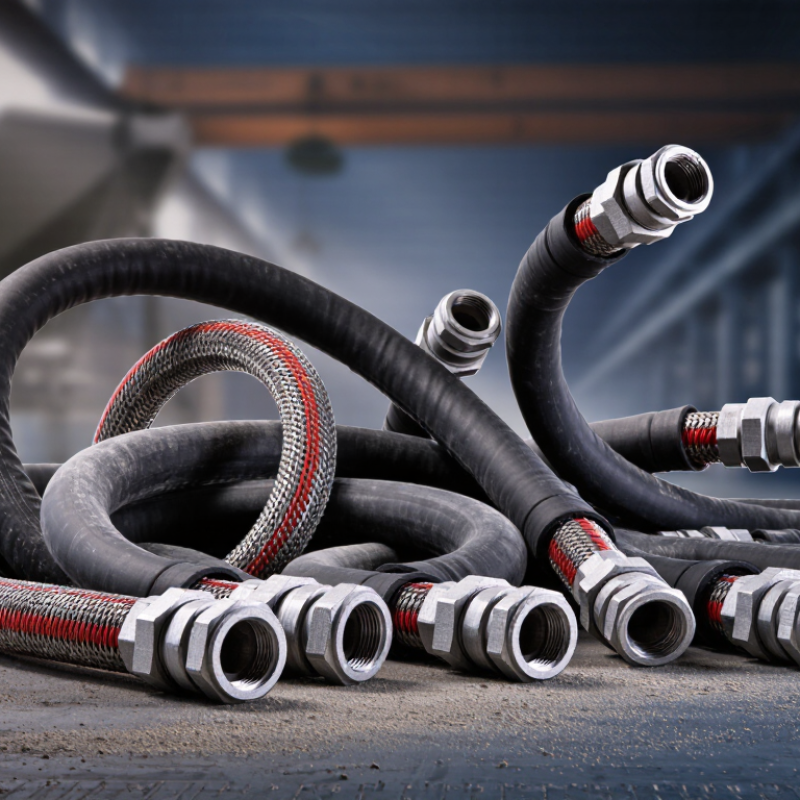
When global buyers compare cement rubber hose manufacturers, pressure rating should come before price. Cement slurry is dense, abrasive, and unforgiving at bends. USGS Mineral Commodity Summaries 2024 estimates global cement production reached about 4.1 billion metric tons in 2023. That volume explains the demand for reliable transfer equipment. A 10–40 bar working-pressure range covers many pumping and discharge applications, but it is not universal. Buyers must confirm pump pressure, surge loads, temperature, and hose length. I would not treat 40 bar as a default rating.
A 4–8 mm outer cover helps resist abrasion, impact, weathering, and contact with rough steel supports. Thicker is not always better. It can increase weight and reduce flexibility. The reinforcement should match the intended pressure, while the inner tube needs compatibility with cement slurry and additives. Check bend radius, coupling retention, and vacuum resistance before purchase. ISO 1307 provides a useful framework for hose dimensions and tolerances, while ISO 4649 abrasion testing can support cover-performance comparisons. In field inspections, look for exposed reinforcement, bulges, surface cuts, and hardened sections near couplings. Small defects grow quickly. Pressure testing should follow the supplier’s documented procedure, not an improvised site method. Reports often present clean specifications; real jobs contain heat, vibration, and uneven handling. That gap deserves attention.
Anonymized technical comparison of common cement, concrete, mortar and abrasive-slurry hose configurations for international procurement.
| Rank | Anonymized Manufacturer Profile | Typical Hose Construction | Working Pressure | Cover Thickness | Common Inside Diameters | Reinforcement | Temperature Range | Primary Application | Key Buyer Check |
|---|---|---|---|---|---|---|---|---|---|
| 1 | Profile 01 — Heavy-Duty Cement Hose Specialist | Synthetic rubber tube with abrasion-resistant outer cover | 40 bar | 8 mm | 51–102 mm | High-tensile textile plies with embedded helix | -30°C to +80°C | High-pressure concrete pumping and cement transfer | Confirm pressure rating at the selected bore and assembly length |
| 2 | Profile 02 — Abrasion-Resistant Slurry Hose Producer | Wear-resistant natural or synthetic rubber tube | 30 bar | 6–8 mm | 38–76 mm | Multiple textile reinforcement layers | -30°C to +80°C | Concrete slurry, grout and cement-mortar conveying | Request an abrasion test result for the actual compound |
| 3 | Profile 03 — Flexible Concrete Delivery Hose Supplier | Flexible rubber tube designed for repeated bending | 20 bar | 5–6 mm | 51–89 mm | Textile braid or spiral textile reinforcement | -30°C to +80°C | Concrete boom-end and placement lines | Check minimum bend radius and kink resistance |
| 4 | Profile 04 — Industrial Cement Transfer Hose Maker | Oil-resistant synthetic rubber tube and cover | 16 bar | 4–6 mm | Textile reinforcement with optional steel helix | -30°C to +80°C | Dry cement powder and low-to-medium pressure transfer | Specify whether the conveying medium is dry, wet or mixed | |
| 5 | Profile 05 — High-Wear Mortar Hose Manufacturer | Thick, smooth-bore rubber tube for reduced material retention | 25 bar | 6–8 mm | Two or more high-strength textile plies | -30°C to +80°C | Mortar spraying and plastering equipment | Verify compatibility with aggregate size and pumping method | |
| 6 | Profile 06 — Cement Silo Discharge Hose Supplier | Static-dissipative rubber tube with reinforced cover | 10 bar | 4–5 mm | Textile reinforcement; conductive option available | -30°C to +80°C | Silo discharge, pneumatic cement and powder handling | Measure electrical continuity when combustible dust control is required | |
| 7 | Profile 07 — Large-Bore Concrete Pipeline Hose Producer | Heavy-wall rubber tube with reinforced end sections | 40 bar | 8 mm | Multi-layer textile reinforcement with safety factor design | -30°C to +80°C | Large-volume concrete pumping and stationary pipelines | Match coupling type, end reinforcement and surge pressure | |
| 8 | Profile 08 — Compact Equipment Hose Manufacturer | Lightweight synthetic rubber hose for mobile equipment | 15 bar | 4–5 mm | Single or double textile braid | -30°C to +80°C | Small concrete pumps, grout pumps and maintenance lines | Check weight, flexibility and fitting retention under vibration | |
| 9 | Profile 09 — Marine and Offshore Cement Hose Supplier | Weather-resistant rubber tube and ozone-resistant cover | 20 bar | 6 mm | Textile reinforcement with optional helix wire | -30°C to +80°C | Offshore cementing, marine transfer and exposed installations | Request salt-spray, ozone and cover-weathering documentation | |
| 10 | Profile 10 — General-Purpose Cement Hose Manufacturer | Standard abrasion-resistant rubber tube and cover | 10–16 bar | 4–6 mm | Textile plies suitable for routine service | -30°C to +80°C | General cement, concrete and grout handling | Confirm actual working pressure, test pressure and coupling standard |
Technical values are commonly specified industry ranges rather than claims about any individual supplier. Final selection should be based on the hose assembly’s working pressure, surge pressure, inside diameter, bend radius, temperature, abrasion conditions, coupling design and applicable regional standards. Cover thickness commonly falls within 4–8 mm, while working pressure is frequently selected within the 10–40 bar range.


