1101 W. Sanilac Rd. Caro, MI 48723
989.673.6690
Choosing a glass etching machine is not merely a matter of comparing prices or motor power. It affects production quality, operator safety, maintenance costs, and customer trust. A machine that etches a clean logo on a flat panel may struggle with curved glass, mirrors, or delicate wine bottles. Small differences matter.
Industry reports show why this decision deserves careful attention. Grand View Research estimated the global glass market at approximately USD 142.8 billion in 2023, with continued growth expected through the decade. Fortune Business Insights also forecasts expansion in the glass industry, although its market estimates and growth rates differ. Forecasts are not identical. That difference deserves reflection. Still, both reports indicate rising demand for customized, decorative, and functional glass products.
A reliable glass etching machine should match your materials, daily workload, design complexity, and available workspace. The International Organization for Standardization highlights risk assessment and safeguarding through ISO 12100. These principles make enclosure design, emergency controls, ventilation, and training practical buying criteria. They are not decorative specifications.
Look closely.
Technical experience also matters. Ask whether the supplier provides sample testing, replacement parts, software support, and clear maintenance instructions. Examine the etched surface under angled light. Check for uneven depth, cloudy edges, or heat-related marks. A machine may appear efficient during a showroom demonstration but perform differently after eight hours of production. The following seven tips focus on those real-world details, helping buyers evaluate performance, safety, operating costs, and long-term reliability with greater confidence.
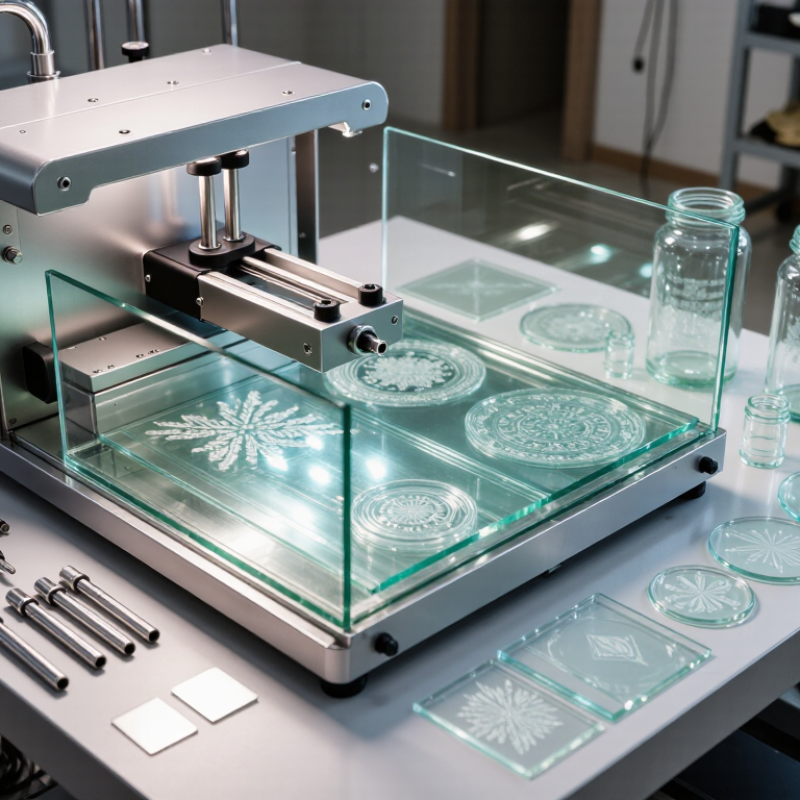
Before comparing a glass etching machine, define the mark you actually need. A frosted logo, deep groove, and grayscale image require different power, speed, and motion control. In workshop trials, record glass thickness, coating type, artwork size, daily volume, and acceptable edge roughness. That list feels slow. It prevents expensive guessing. Grand View Research valued the global laser technology market at approximately USD 19.8 billion in 2023. Its report also forecasts continued growth through 2030. Growth does not mean every machine suits your project.
Specify material variation before requesting quotations. Soda-lime glass, borosilicate glass, mirrors, and coated panels can react differently under heat. Request test pieces using your actual artwork, not a polished sales sample. Measure line width, edge chipping, haze, cleaning time, and rejects per 100 pieces.
The ISO 11553-1 standard covers safety requirements for laser processing machines. Therefore, ventilation, guarding, interlocks, and operator training belong in your requirement sheet. Keep compliance practical.
Project economics need equal attention. Smithers’ Future of Global Glass report identifies packaging and specialty glass as continuing demand areas. Demand alone cannot define your purchase. Calculate minutes per piece, fixture loading time, maintenance intervals, and energy use. I once focused too heavily on maximum resolution. It looked impressive. Production exposed the mistake: slow setup and fragile fixtures reduced output. Leave room for uncertainty. A pilot run of 50 to 100 pieces may reveal problems that specifications miss. Choose around repeatability, service access, and your real workflow.
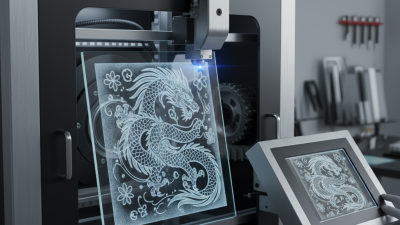
Choosing a glass etching machine starts with the method, not the price. Abrasive blasting creates a frosted, tactile finish and suits thick soda-lime glass, mirrors, and signage. Laser etching offers cleaner digital control for names, codes, and fine patterns. Chemical etching can produce smooth matte surfaces, but it demands strict ventilation and waste controls. The Occupational Safety and Health Administration identifies respirable crystalline silica as a serious workplace hazard, so blasting systems need effective dust extraction and operator protection.
Machine type changes production speed. CNC etching tables handle repeatable designs on flat sheets, while laser systems reduce setup time for variable artwork. According to Grand View Research, the global glass market was valued at about 166 billion dollars in 2023. That scale supports automation, but volume alone should not decide your purchase. A slower machine may deliver better edge quality on fragile pieces. I learned this the hard way.
Check compatible materials before testing artwork. Soda-lime glass usually responds predictably, while borosilicate glass may require different power, speed, or abrasive settings. Tempered glass deserves caution because surface stress can cause unexpected breakage. The International Energy Agency reports that glass production remains energy-intensive, making scrap reduction an important operational goal. Ask for sample testing with your actual thickness, coating, and curvature. Small details matter. A machine that marks one bottle beautifully may struggle with a coated panel. Personally, I would treat advertised material lists as starting points, not guarantees.
7 Tips for Choosing a Glass Etching Machine
Precision should be your first test. Ask for repeatability data, not only attractive sample panels. ISO 230-2 provides a useful framework for checking positioning accuracy and repeatability. Measure a fine geometric pattern twice. Small offsets can become visible on glass edges. I once trusted a showroom sample too quickly. That was a useful mistake.
Power must match the glass thickness, coating, and etching method. Excess power can create heat marks, microcracks, or uneven frosting. Insufficient power wastes production time. Request energy settings in measurable units, then test them on your own glass. Speed claims also need context. Check whether the stated speed includes focusing, loading, cleaning, and repositioning. A slower machine may produce fewer rejected pieces. Rejection costs are often ignored.
Operation should feel clear after brief training. The 2024 World Robotics report recorded 541,302 industrial robot installations worldwide in 2023, highlighting the value of easier automation. Look for visual controls, recipe storage, alarms, and quick maintenance access. Safety interlocks should be obvious and documented. Review ventilation requirements before installation. Compare noise, power consumption, and service intervals, not just purchase price. A practical trial reveals more than a brochure. Leave room for doubt; no machine performs equally well on every glass type.
| Tip | Evaluation Dimension | Practical Target or Reference Range | Why It Matters | What to Check Before Buying |
|---|---|---|---|---|
| 1 | Machine Precision | Positioning accuracy of approximately ±0.01–0.05 mm for detailed lettering and repeatable patterns. | Higher precision helps maintain clean edges, consistent line placement, and accurate registration between multiple passes. | Request a test engraving with small text, narrow lines, circles, and repeated artwork. Inspect edge quality under magnification. |
| 2 | Power and Process Compatibility | For laser systems, approximately 20–60 W may suit many surface-marking jobs; abrasive or chemical systems require different power and material controls. | Power affects marking depth, processing time, suitable glass thickness, and the risk of chipping or thermal damage. | Match the process to the glass type, coating, thickness, required finish, ventilation needs, and allowable heat exposure. |
| 3 | Operating Speed | A practical working speed of roughly 100–500 mm/s, depending on material, resolution, power, and design complexity. | Speed influences production capacity, surface consistency, and the time required for one-off or batch orders. | Compare complete cycle time rather than the advertised maximum speed, including focusing, loading, positioning, and cleaning. |
| 4 | Work Area and Glass Size | Common desktop work areas range from about 300 × 300 mm to 600 × 400 mm; larger systems are available for panels and signage. | A properly sized work area reduces repositioning, improves alignment, and prevents oversized pieces from becoming bottlenecks. | Measure the largest workpiece, fixture clearance, curved-surface requirements, door opening, and available installation space. |
| 5 | Ease of Operation | Look for a guided workflow with automatic focusing, preview positioning, adjustable presets, and commonly used file support such as SVG, DXF, or PNG. | Simple controls reduce setup errors, shorten training time, and make repeat production more consistent. | Ask for a live demonstration from artwork import through finished etching. Confirm software language, user permissions, and backup options. |
| 6 | Safety and Environmental Control | Prefer enclosed operation, interlocked access panels, effective fume extraction, emergency-stop controls, and suitable eye or skin protection where applicable. | Glass dust, process fumes, sharp fragments, and reflected energy can create significant workplace hazards. | Review applicable local regulations, extraction requirements, electrical specifications, waste handling procedures, and operator training materials. |
| 7 | Maintenance and Total Cost | Evaluate routine cleaning intervals, consumable replacement, calibration needs, energy use, installation, training, and expected service life. | A lower purchase price may result in higher operating costs if downtime, consumables, or maintenance requirements are substantial. | Obtain a written maintenance schedule, spare-parts list, warranty terms, response times, and an estimated five-year ownership cost. |
Note: The numerical ranges are general selection references. Actual performance depends on the etching method, glass composition, surface coating, artwork resolution, fixture stability, and operator settings.
7 Tips for Choosing a Glass Etching Machine
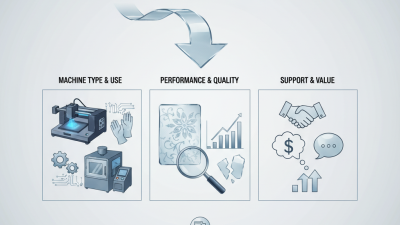
Check Software Features, Safety Systems, Maintenance, and Support
Choosing a glass etching machine starts with more than engraving speed. In daily workshop use, software often decides whether a clean design becomes a costly remake. Check file compatibility, vector editing, preview tools, and adjustable power and speed. A useful interface should show active settings clearly. Test a sample file before purchase. Small menus can cause big errors. Look for job history and user permissions when several operators share one machine. Cloud features may help, but offline control is safer when connectivity fails. I would not trust attractive software claims without a live demonstration.
Safety systems deserve equal attention. Confirm that the enclosure blocks direct exposure to the beam and stops operation when opened. Check emergency-stop access, warning indicators, ventilation requirements, and interlocks. The manual should explain compatible glass, cleaning procedures, and limits. Ask how faults are reported. A quiet machine is not automatically a safe machine. Operators still need training, eye protection when required, and a clear inspection routine. I have seen buyers focus on output speed and overlook fumes, dust, or sharp fragments. That shortcut is hard to defend.
Maintenance affects consistency after the first few jobs. Review lens-cleaning steps, cooling needs, replacement intervals, and access to common parts. A maintenance log can reveal gradual quality loss before customers notice it. Support should include technical documentation, response times, training, and repair procedures. Ask whether help is available during your working hours. Request a sample service exchange. Vague promises are a warning. Every machine needs calibration. No support desk can replace careful operator checks. Choose a system that fits your actual workspace. An idealized specification will not repair a neglected machine.
Inspect build quality closely. A rigid frame, stable rails, and accurate motion reduce uneven etching on curved or flat glass.
Check control precision. Small calibration errors can turn fine lettering into blurred edges.
Ask for sample results using your glass thickness, coating, and design style. Marketing images are not enough. Test the details.
Match capacity with real demand. A machine for occasional orders may waste money in a large workshop, while a small system can create delays during seasonal peaks.
Measure loading time, engraving speed, and changeover effort. Production capacity is more than the advertised working area. I once underestimated setup time, and the machine looked faster than it felt.
Confirm maintenance requirements, replacement parts, training, and energy use before purchasing.
Calculate total cost over several years. Include software, ventilation, cleaning supplies, repairs, operator time, and rejected glass. A cheaper machine may become expensive after frequent recalibration. Ask for written service terms and realistic delivery estimates. Record test results, not just sales claims. One overlooked cost can disturb the entire budget. Also, leave room for future designs and moderate growth, but avoid paying for capacity you may never use.