
hero image

7 Tips for Choosing a Cold Foil Printing Machine

Choosing a Cold Foil Printing Machine involves more than comparing quoted speeds or maximum sheet sizes. The machine must suit your products, production volume, operators, and existing press setup. A model that performs well on a supplier’s demonstration stock may behave differently with your own paper, inks, or artwork. Real samples matter.

This guide presents seven practical points to review before you buy. They include foil transfer quality, registration accuracy, usable running speed, substrate compatibility, setup time, maintenance access, and after-sales support. Ask suppliers to test representative jobs, including fine lines, solid areas, and small text. Check the finished sheets under consistent lighting, and inspect them for missed areas, uneven coverage, or unwanted foil on non-image zones. Small flaws show.

Also consider what happens during routine production. Can operators change rolls safely and efficiently? Are common parts easy to inspect? Does the machine integrate with your current workflow without adding avoidable handling steps? Request clear specifications, service details, and a realistic demonstration rather than relying on headline claims alone. These checks do not guarantee a perfect purchase. They do make trade-offs easier to see.

No machine fits every shop. A slower, stable system may suit short runs, while a higher-output model may make sense for repeat work. The best choice depends on measured needs, not assumptions. One detail may be overlooked: leave room in the evaluation for operator feedback. People running the machine every day often notice practical limits that brochures omit.
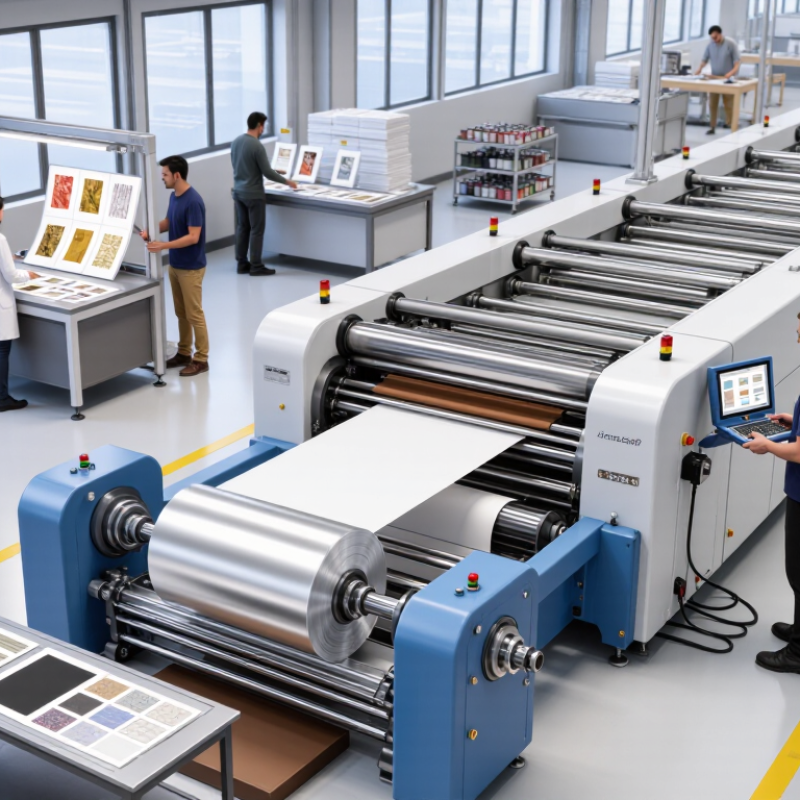
7 Tips for Choosing a Cold Foil Printing Machine

Assess Production Needs and Foil Applications

Assess actual workloads before comparing cold foil machines. Smithers’ report, The Future of Global Printing to 2027, valued the global print market at about US$818 billion in 2022 and projected US$846 billion by 2027. That broad figure signals a large industry, not guaranteed demand for foil jobs. Use your own order history: record weekly sheet volume, typical run length, substrate, and peak-season pressure. A spreadsheet beats a guess.

Tip: List the applications you expect to run, such as labels, folding cartons, or promotional pieces. Note foil coverage, line detail, registration tolerance, and whether each job needs inline coating or a separate finishing pass. Then ask suppliers for trials using your actual stock and artwork. Check fine text, solid areas, foil release, and waste during setup. A glossy sample can hide problems.

Match the machine to the work, not just its maximum speed. Ask about usable sheet width, changeover time, feeder capacity, and supported materials. For short runs, setup losses may matter more than top speed; for repeat jobs, stable registration and reduced stoppages may carry greater weight. I’d leave room for uncertainty: new applications often look easier on a sample than on a full production shift. Record trial results before committing.

7 Tips for Choosing a Cold Foil Printing Machine

Assess Production Needs and Foil Applications

Example planning scenarios, not industry benchmarks. Compare your typical and peak job lengths with a machine’s rated throughput, then confirm that its foil width and registration capabilities suit your artwork and coverage requirements.

Check Compatibility With Presses, Substrates, and Foil Types

Before selecting a cold foil unit, confirm how it integrates with your press. Check web width, operating speed, roll direction, mounting space, and tension controls. Ask whether the system works with your feeder, curing setup, and register sensors. A machine may fit on paper yet leave awkward access around a splice or wash-up area. Leave room for threading and maintenance.

Substrate compatibility needs a press test, not just a catalog promise. Compare coated and uncoated stocks, film, and board at the thicknesses you actually run. Surface energy, porosity, and coatings can affect adhesive transfer and foil release. Inspect fine type, solid panels, and small reverse details at normal production speed. Look for skips, mottling, edge lift, or stray foil. Keep samples.

Foil types differ in carrier, release behavior, and adhesive pairing. Check the machine’s temperature range, pressure adjustment, and supported roll dimensions against each foil’s technical sheet. Run short trials using your intended adhesive and curing conditions. Change one variable at a time. This makes defects easier to trace. One clean sheet can mislead. Record settings, material lots, and results, then repeat after a roll change. Real production is less tidy; compatibility shows across repeat runs.

Compare Printing Speed, Registration, and Control Features

When comparing cold foil machine printing speed, look beyond the headline rate. Ask whether the figure applies to a real job with foil, substrate, and curing conditions, not an empty press. A machine may run quickly but slow down during setup or when operators adjust tension. Request a timed demonstration using a sample close to your own stock. Watch the edges. Check foil waste during acceleration, stopping, and restart; those moments often reveal more than a steady production run. Check restart behavior. Record changeover time too, especially if jobs vary in width or artwork.

Registration determines whether fine details stay aligned with the printed image. Inspect small text, thin borders, and repeated patterns across several sheets, not just one perfect sample. Ask how the system detects marks and corrects drift, and whether operators can spot errors before a full batch is spoiled. Controls matter just as much. A clear screen should show speed, web tension, and registration status without hiding key settings in nested menus. Test alarms and job storage with an operator who will use them daily. If adjustments require repeated trial and error, the interface may be a weak point, even when specifications look impressive. Real production is less tidy than a demonstration, and that is worth remembering.

7 Tips for Choosing a Cold Foil Printing Machine — Compare Printing Speed, Registration, and Control Features

Tip What to Compare Practical Evaluation Why It Matters
1. Compare sustained printing speed Maximum rated speed and achievable production speed on your intended press, substrate, and job type. Run a production-style trial and record stable output, stoppages, waste, and foil-transfer quality. Compare machines using the same job conditions rather than rated speed alone. Actual throughput can be affected by substrate handling, adhesive curing requirements, job complexity, and the press configuration.
2. Check registration performance Foil-to-print registration accuracy, repeatability, and the available registration adjustment range. Ask for measured registration results across a sustained run using your artwork and substrate. Set the acceptable tolerance according to the job’s design requirements. There is no single registration tolerance suitable for every application; small misalignments are more visible on fine text, borders, and detailed graphics.
3. Review tension and web-control features Unwind and rewind tension control, web guiding, and stability across the machine’s supported material range. Test representative materials and check for wrinkles, lateral drift, stretching, or breaks during acceleration, steady running, and stopping. Stable web handling supports consistent foil placement and can reduce defects, particularly on thin or stretch-sensitive substrates.
4. Assess operator controls Control-panel clarity, recipe storage, access to key settings, alarms, and the visibility of operating status. Have operators perform a setup, make a controlled adjustment, respond to an alarm, and recall a saved job during a demonstration. Clear controls and repeatable job settings can simplify changeovers and help reduce setup variation between operators.
5. Verify foil and adhesive compatibility Supported foil types, adhesive systems, substrates, and any process-specific requirements. Test the actual foil, adhesive, ink or coating, and substrate combination. Inspect transfer coverage, adhesion, and appearance after the agreed finishing or handling steps. Cold-foil results depend on the complete material and process combination, not just the machine. Compatibility should be confirmed before purchase.
6. Compare changeover and waste Time and material required for foil changes, job setup, cleaning, and return to acceptable production quality. Time a changeover between representative jobs and record setup waste, adjustment steps, and the number of trial runs needed. Shorter, more predictable changeovers can improve productive time, especially when jobs are frequent or involve multiple foil designs.
7. Evaluate inspection and support Inspection options, fault and stop reporting, maintenance access, training, spare parts, and service response arrangements. Confirm which defects or machine conditions can be monitored, what records are available, and how maintenance and technical support are provided. Useful monitoring and dependable support can help identify process issues and maintain consistent operation over time.

Evaluate Setup, Maintenance, Safety, and Training Requirements

Before comparing prices, check what installation actually requires: floor space, electrical supply, compressed air, extraction, and access for roll changes. Ask for a live trial with your substrate and artwork. Watch foil tracking at speed, registration during stops, and how long changeovers take. Small delays matter. A machine that fits the pressroom may still disrupt its workflow.

Build maintenance into the evaluation. Inspect how operators reach adhesive-metering parts, rollers, and the impression cylinder for cleaning. Request a written schedule, recommended spare parts, and realistic service times. Check guarding around nip points, emergency stops, and safe roll-loading access. OSHA estimates effective lockout/tagout could prevent about 120 deaths and 50,000 injuries annually across industries. Those figures are not cold-foil-specific, but they show why maintenance isolation deserves scrutiny.

Training needs equal attention. Ask who teaches operators, how many shifts receive instruction, and whether the supplier provides troubleshooting guides. A 2021 Deloitte–Manufacturing Institute report projected that 2.1 million U.S. manufacturing jobs could go unfilled by 2030. That broad workforce forecast is relevant: complex setup can magnify skills gaps. A checklist helps, but it cannot replace supervised practice. Honestly, training time is easy to underestimate.

Review Total Cost, Supplier Support, and Upgrade Options

A cold foil printing machine’s purchase price is only one part of its cost. Compare installation, operator training, tooling, energy use, and routine maintenance. Ask for a written estimate covering the first three years, not just delivery day. Include likely consumables and replacement parts, such as rollers or foil guides. Small costs add up.

Supplier support matters when a line stops mid-run. Ask how quickly technicians typically respond and whether remote troubleshooting is available. Confirm that spare parts are stocked locally or have realistic delivery times. A helpful sales call is not the same as dependable service after installation. Request references from print shops using similar materials and production volumes. Details matter.

Upgrade options can protect your investment, but only when they fit your work. Check whether the machine can accept future controls, inspection equipment, or feeding upgrades without major rebuilding. Ask what an upgrade would cost and whether it requires extended downtime. It is easy to pay for capacity you may never use; that deserves a second look. Match each option to a real bottleneck, such as slow changeovers or inconsistent foil placement. A modest machine with clear support and a practical upgrade path may serve better than a feature-heavy model.