
1101 W. Sanilac Rd. Caro, MI 48723
989.673.6690
A Microbiology Cabinet is a controlled workspace designed for handling microorganisms, cultures, and potentially infectious materials. It uses carefully directed airflow to reduce contamination and limit exposure. In a typical Class II biological safety cabinet, room air enters through the front opening. The air passes through a HEPA filter before moving across the work zone. A second filtered stream helps protect the surrounding room.
The cabinet does more than circulate clean air. Its fan, pressure balance, front grille, and alarms work together continuously. HEPA filters capture particles, but they do not neutralize every chemical vapor or hazardous gas. That detail is often misunderstood. A biological safety cabinet is not automatically a chemical fume hood or a simple clean bench.
When operating correctly, the cabinet protects the worker, the sample, and the environment. Its actual performance depends on certification, airflow testing, filter condition, and disciplined use. Professional guidance from organizations such as the CDC, WHO, and NSF emphasizes routine inspection and trained operation. The sash should remain at the marked height. Materials should be arranged without blocking the grilles. Small habits matter.
No cabinet is perfect. Poor placement, crowded surfaces, or delayed maintenance can weaken protection. This is where practical experience becomes important. Technicians must understand the cabinet’s class, limitations, and warning signals before relying on it. The following discussion explains how a Microbiology Cabinet works, what its internal airflow accomplishes, and why correct selection matters. Some details vary by model, so manufacturer instructions and local safety requirements should always guide final decisions.
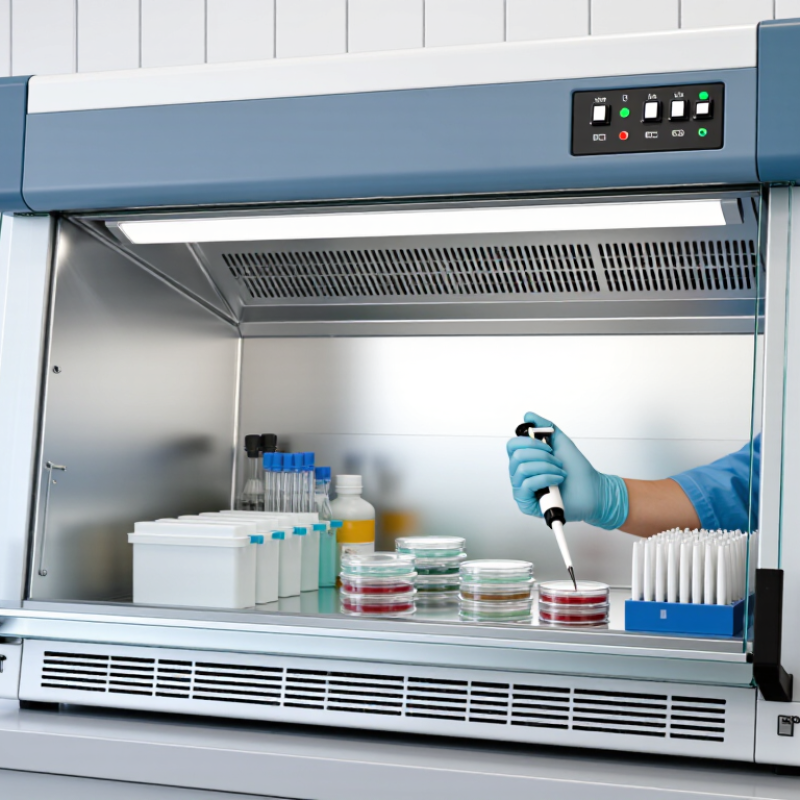
A microbiology cabinet is an enclosed, ventilated workspace for handling biological samples safely. It helps reduce exposure to microorganisms, aerosols, and accidental splashes during laboratory procedures. Many cabinets use high-efficiency particulate air filtration to clean incoming or outgoing air. Their exact protection depends on the cabinet type and airflow design.
Inside, controlled airflow moves across the work area and passes through specialized filters. Some models protect the worker and surrounding room. Others mainly protect the sample from contamination. These purposes are different. A clean bench, for example, may protect the sample but not the operator. Confusing these functions can create serious safety gaps.
A practical observation is that airflow is not magic. Open flames, blocked grilles, crowded surfaces, or rapid hand movements can disrupt protection. The cabinet also cannot replace gloves, protective clothing, training, or proper waste procedures. This part is sometimes underestimated.
Tips: Keep the workspace uncluttered. Disinfect surfaces before and after use. Place materials carefully, with clean items separated from used ones. Avoid working directly over open containers. Check airflow indicators before starting. Cabinets should receive professional certification at scheduled intervals, especially after relocation or maintenance. Local laboratory rules should guide setup and operation.
What Is a Microbiology Cabinet and How Does It Work?
A microbiology cabinet is an enclosed workstation designed to control airborne contamination during laboratory procedures. Its main components work together, rather than independently. The work surface supports samples and equipment, while the front opening allows careful handling. An internal blower moves air through high-efficiency filters. These filters capture many airborne particles before air reaches the work area or leaves the cabinet.
The airflow system is the cabinet’s working core. Some models direct filtered air across the workspace, while others also protect the operator and surrounding room. Intake grilles collect air near the front, and exhaust pathways manage the outgoing flow. A transparent sash or shield helps maintain the air pattern. Control panels display airflow status, filter conditions, and alarm signals. Lighting improves visibility. UV lamps may be included, but they should never replace proper cleaning and disinfection. That assumption needs rethinking.
Tips: Keep grilles clear. Avoid rapid arm movements. Place clean items away from used materials. Check alarms before work begins. Disinfect the surface with a method suitable for the materials handled. Do not rely on appearance alone; a clean-looking cabinet may still have blocked airflow or overdue certification. Trained technicians should verify performance at scheduled intervals, because filters, seals, and fans can weaken gradually. Small habits matter.
| Component or Feature | Primary Function | Typical Design or Operating Data | Why It Matters in Microbiology |
|---|---|---|---|
| Airflow and Containment System | |||
| Front Inlet Grille | Draws room air into the cabinet and helps maintain the protective air barrier across the front opening. | Located at the front edge of the work zone; must remain unobstructed during operation. | Reduces the chance that aerosols generated inside the cabinet escape into the laboratory. |
| Blower or Fan | Moves air through the cabinet, filters, and internal air pathways. | Designed for continuous airflow and controlled pressure loss as filters load with particles. | Stable airflow is essential for both personnel protection and product protection. |
| Supply HEPA Filter | Cleans air directed downward into the work area. | A high-efficiency particulate air filter typically removes at least 99.97% of particles measuring 0.3 micrometres under the applicable test method. | Provides a clean, low-particle work zone and helps protect cultures, samples, and sterile materials. |
| Exhaust HEPA Filter | Filters air before it is recirculated into the room or discharged through an exhaust connection, depending on cabinet design. | The filter rating is generally equivalent to the supply HEPA filter; performance must be verified by certification testing. | Helps prevent biological aerosols from being released into the laboratory or exhaust system. |
| Vertical Downflow Air Stream | Directs filtered air downward across the work surface and toward the front and rear grilles. | The airflow is designed to be uniform and non-turbulent; exact velocity depends on the cabinet class and manufacturer specification. | Supports aseptic handling while carrying airborne contaminants away from the work area. |
| Airflow Plenum | Distributes and collects air between the blower, work zone, and filters. | Usually located above, behind, or beneath the work chamber and designed to maintain balanced airflow. | Improves airflow uniformity and helps prevent dead zones where contaminants could accumulate. |
| Work Area and Physical Protection | |||
| Work Surface | Provides a cleanable area for manipulating microbiological materials. | Typically made from corrosion-resistant stainless steel or another smooth, non-porous material; often removable for cleaning. | Supports effective disinfection and minimizes areas where microorganisms can remain hidden. |
| Front Sash or Viewing Window | Provides operator access and a transparent barrier between the user and the work zone. | The sash must be positioned at the marked operating height or opening specified for the cabinet. | Correct sash position is necessary to preserve the designed air barrier and containment performance. |
| Side and Rear Walls | Enclose the work chamber and guide airflow through the intended path. | Constructed with smooth, sealed interior surfaces and minimal crevices. | Makes the cabinet easier to decontaminate and limits uncontrolled air movement. |
| Electrical Outlets and Service Ports | Supply power or provide access for approved equipment and services inside the cabinet. | Must be positioned so that cords, tubing, and equipment do not block front or rear grilles. | Improperly placed items can disrupt airflow and create contamination or containment risks. |
| Monitoring, Controls, and Safety Features | |||
| Airflow Monitor | Measures or indicates whether airflow remains within the acceptable operating range. | May use a pressure sensor, airflow sensor, or electronic display; the alarm set point is cabinet-specific. | Warns users when reduced airflow may compromise containment or clean-air protection. |
| Audible and Visual Alarms | Alert the operator to unsafe sash position, insufficient airflow, filter loading, or other faults. | Alarm functions vary by cabinet design and should be checked during routine certification. | Provides immediate warning so work can be paused and the problem investigated. |
| Control Panel | Controls the blower, lighting, alarms, and other installed functions. | Should display operating status clearly and prevent accidental changes during work. | Allows consistent startup, operation, and shutdown procedures. |
| Fluorescent or LED Task Lighting | Illuminates the work surface without significantly affecting the airflow pattern. | Lighting is integrated into the cabinet canopy and is separate from the primary containment system. | Improves visibility during precise handling, labeling, and inspection of specimens. |
| Ultraviolet Lamp, If Installed | May provide supplementary surface treatment when the cabinet is empty and the lamp is used under controlled procedures. | UV light is not a replacement for chemical disinfection, cleaning, or HEPA filtration; exposure can damage skin and eyes. | Requires strict safety controls and should never be operated while personnel are exposed. |
| How the Cabinet Works | |||
| Personnel Protection | Uses inward airflow at the front opening and HEPA-filtered exhaust to limit exposure to biological aerosols. | Most commonly associated with Class II biological safety cabinets used for microbiological work. | Protects laboratory personnel when appropriate procedures, cabinet selection, and certification are maintained. |
| Product Protection | Uses HEPA-filtered downflow air to reduce contamination entering open samples or cultures. | Requires correct work practices, suitable materials, and avoidance of rapid movements or blocked grilles. | Helps preserve sample integrity and supports aseptic technique. |
| Environmental Protection | Filters contaminated air before recirculation or exhaust, depending on the cabinet configuration. | Protection level depends on cabinet class, installation, use, and successful certification testing. | Reduces the release of potentially hazardous biological material into the surrounding laboratory. |
| Certification and Maintenance | Verifies airflow, filter integrity, alarms, sash position, and other performance requirements. | Certification is required after installation, relocation, major repair, or filter replacement, and at scheduled intervals required by applicable rules or institutional procedures. | A cabinet should not be assumed to be protective solely because its blower and lights are operating. |
A microbiology cabinet is a ventilated enclosure designed to control biological aerosols. Its airflow protects samples, laboratory workers, and the surrounding environment.
In a typical Class II Type A2 cabinet, air moves inward through the front opening. This creates a protective air curtain. Internal air then passes through high-efficiency particulate air filters.
NSF/ANSI 49 design data commonly describe approximately 70% recirculation and 30% exhaust. Properly rated HEPA filters can remove at least 99.97% of particles at 0.3 micrometres, the most penetrating particle size used for testing.
These figures sound reassuring. They are not a substitute for maintenance.
The work zone receives downward filtered airflow, which reduces contamination around open cultures. The front inflow helps protect the user. The exhaust filtration limits release into the room.
The CDC and NIH BMBL, 6th edition, recommends certified biological safety cabinets for procedures that may generate infectious aerosols.
However, airflow can be disturbed by rapid arm movements, crowded equipment, open doors, or blocked grilles. A cabinet may look clean while performing poorly. That detail deserves more attention.
Tips:
Keep the front and rear grilles clear. Work from clean materials toward contaminated ones. Avoid flames, because heat disrupts airflow. Check the certification label and airflow readings before use. If alarms appear, stop work and contact qualified service personnel. Regular certification should follow institutional procedures and NSF/ANSI 49 requirements.
A microbiology cabinet, commonly a Class II biological safety cabinet, protects personnel, samples, and the laboratory environment. It uses inward airflow and filtered exhaust.
The CDC/NIH BMBL, 6th edition, recommends certification at least annually and after relocation, repair, or major maintenance. That interval is a control point, not a substitute for daily checks.
Step-by-step operation begins with a documented risk assessment.
Check the certification label, airflow indicator, sash position, alarm status, and work surface. Remove unnecessary items. Start the blower and allow the cabinet to purge according to the facility procedure.
Disinfect the interior with a validated agent, keeping wet contact time visible on the label. Place materials from clean to potentially contaminated areas. Keep the front and rear grilles open.
Work slowly, about 10–15 centimetres inside the opening, and avoid sudden arm movements. Do not use open flames unless formally approved, because heat can disturb airflow.
After work, seal waste, disinfect equipment, and wipe the surface again. Keep the blower running for the required purge period. Then lower the sash and record the activity.
The process looks simple. Rushing still happens.
Tips: Keep a small checklist beside the cabinet. Photographing the airflow display can improve records, but it cannot replace certification. WHO’s Laboratory Biosafety Manual, 4th edition, stresses risk assessment and competency-based training. In practice, a quiet cabinet may still have poor airflow. Verify it.
A microbiology cabinet is a controlled workspace for handling biological materials. It reduces exposure risks through filtered airflow and physical containment. Cabinet types differ in protection.
Class I cabinets protect personnel and the room, but not the sample. Class II models protect the worker, sample, and surrounding environment. Class III cabinets provide the strongest containment through a sealed design and glove ports. A clean bench is different. It protects the sample, not the operator.
Safety features may include HEPA filters, inward airflow, airflow alarms, sealed work surfaces, and a transparent sash. Some cabinets also support safe decontamination procedures. However, no cabinet replaces training, suitable protective clothing, or careful risk assessment.
A quiet fan does not prove safe performance. Airflow certification and regular maintenance matter. Small mistakes can matter too.
Tips:
Keep the sash at its marked operating height. Disinfect surfaces before and after work, using a method suitable for the material. Place clean items away from waste and contaminated items. Avoid blocking front or rear grilles. Move your hands slowly, because rapid movements can disturb airflow. Do not use open flames unless the cabinet’s instructions specifically permit them. Check alarms before starting. If airflow seems abnormal, stop work and report the problem. I have found that a simple layout plan prevents many avoidable interruptions, although it cannot replace experienced supervision.