How to Master Laser Etching Techniques in 2026?
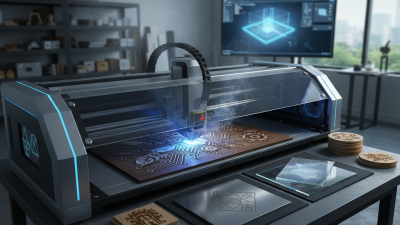
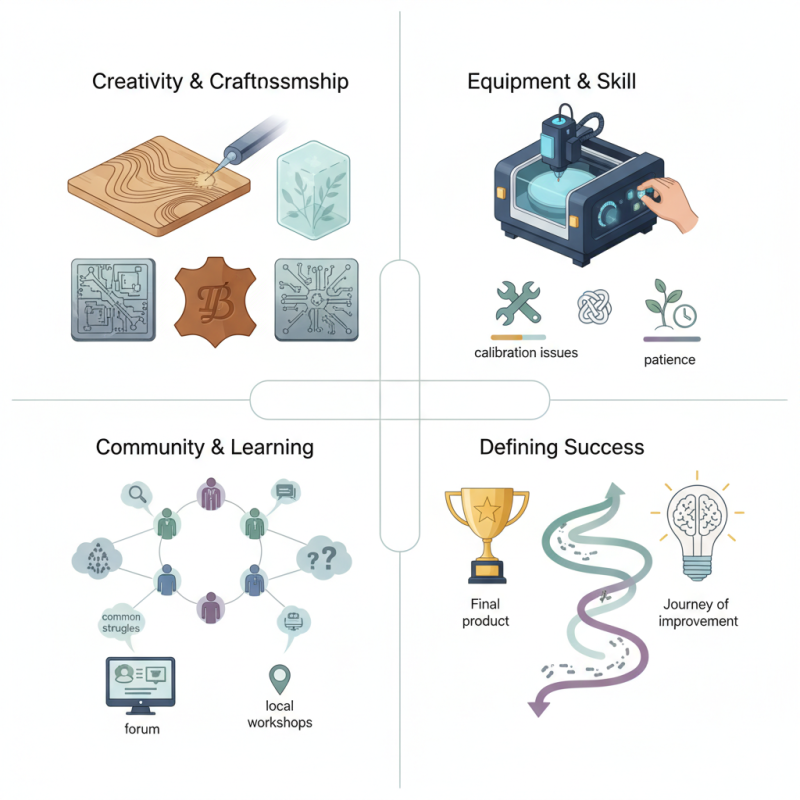
In 2026, mastering laser etching opens new doors for creativity and craftsmanship. This technique revolutionizes how artists and manufacturers create intricate designs. With laser etching, the precision and detail achieved are remarkable. Artists can transform various materials, from wood to glass. The possibilities seem endless, yet challenges remain.
Understanding the equipment is essential. High-quality laser engravers are an investment, but they require skill and practice to operate effectively. Even experienced users face hurdles, like calibration issues or design setbacks. Patience plays a crucial role in honing these skills. Not every attempt will yield a perfect result, and that’s okay.
Engaging with a community can offer support and inspiration. Online forums and local workshops provide valuable insights. Sharing experiences helps identify common struggles in mastering laser etching. However, it also raises questions: How do we define success in this art? Is it the final product or the journey of improvement? Embracing both aspects will foster growth and creativity in the world of laser etching.
Understanding Laser Etching: Basics and Applications
Laser etching is gaining popularity across various industries. This technology uses focused laser beams to engrave or cut materials. Reports indicate that the laser engraving market is expected to grow by 7.5% annually through 2026. This growth is driven by increasing demand in manufacturing and art sectors.
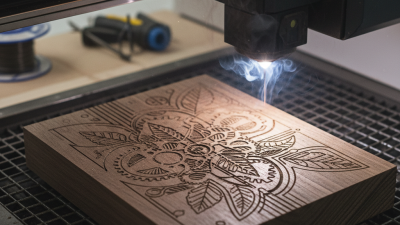
Understanding the basics of laser etching is crucial. The process involves converting light into heat. The laser beam targets the material's surface, producing precise designs. Common materials include wood, glass, and metals. Each material reacts differently. For example, etching on glass creates a frosted texture, while wood can exhibit burnt edges.
Challenges exist in this field. Mastering the settings for optimal depth and clarity is not easy. A powerful laser can cause excessive burning, leading to unwanted marks. Continuous experimentation is necessary to improve accuracy. As the industry evolves, keeping up with advancements is critical. Understanding these nuances can help artisans refine their techniques and achieve better results.
Laser Etching Applications and Growth in 2026
This chart illustrates the various applications of laser etching technology and their projected growth in adoption for the year 2026. The data reflects the increasing popularity of laser etching across multiple industries, showcasing its versatility and efficiency. As the technology continues to advance, its applications are expected to broaden significantly.
Essential Tools and Equipment for Laser Etching in 2026
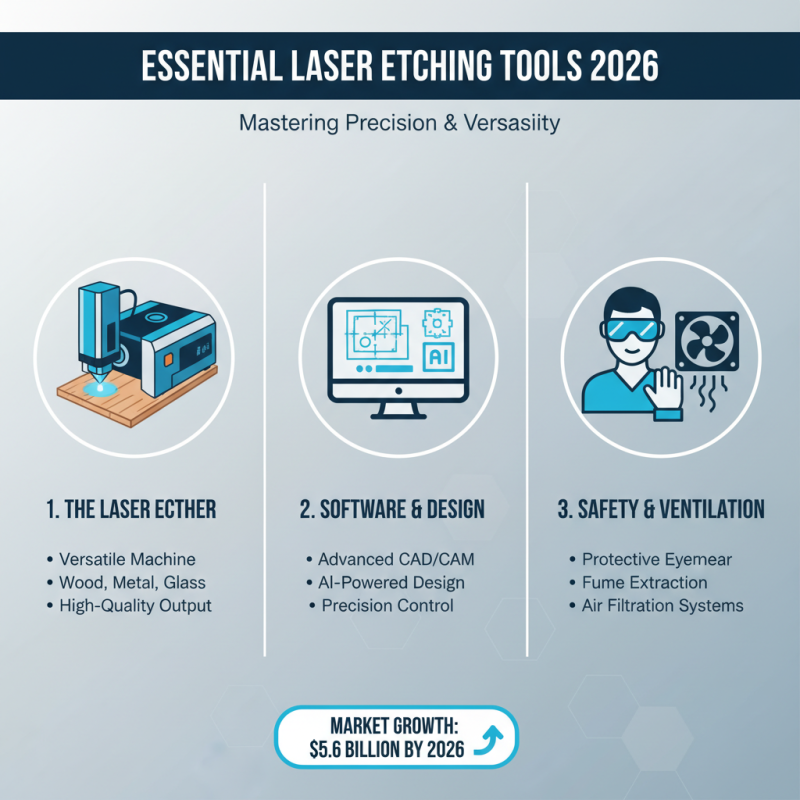
In 2026, mastering laser etching will depend heavily on using the right tools and equipment. A recent industry report indicates that the global laser engraving market is expected to reach $5.6 billion by 2026. This growth highlights the demand for high-quality devices that cater to various substrates. Investing in a versatile laser etcher that can handle wood, metal, and glass is essential.
Quality is non-negotiable. Standard CO2 laser engravers remain popular due to their reliability. However, fiber lasers are gaining traction for their efficiency in etching metals. The right choice can significantly influence the final product's appearance. A user may face challenges if they rush through this decision. Attention to detail in selecting equipment ensures better results.
Additionally, proper maintenance of your equipment is crucial. Many users overlook this aspect, leading to subpar performance. Dust buildup can hinder laser accuracy, causing frustrations. Regular cleaning routines can vastly improve operational efficiency. It requires time and commitment, but the rewards are evident in the final outputs. Ignoring such details can result in wasted materials and effort.
Step-by-Step Guide to Preparing Materials for Laser Etching
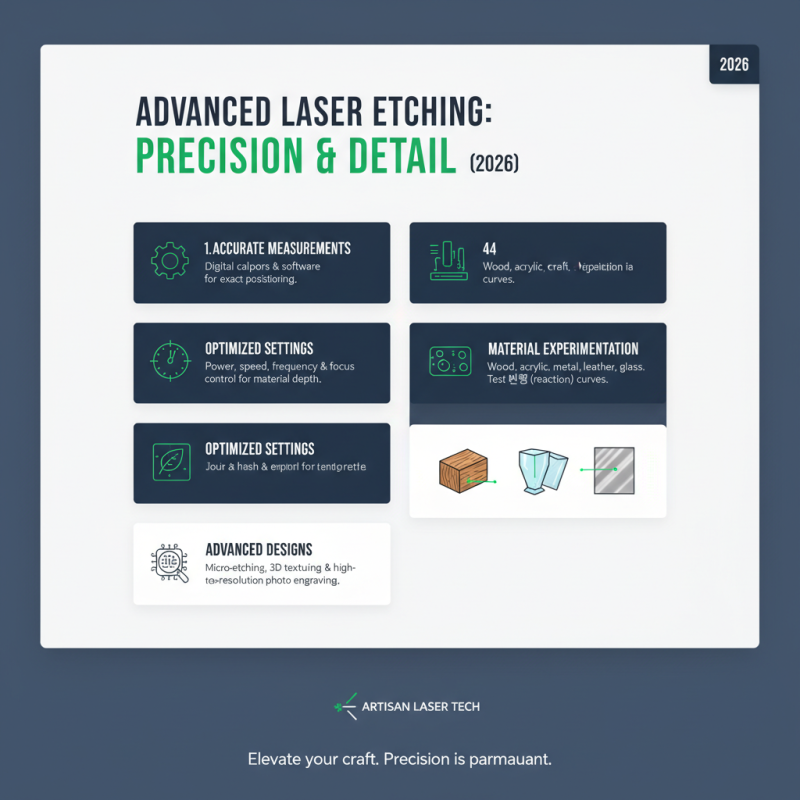
Preparing materials for laser etching requires careful consideration. Start by selecting the right substrate. Wood, acrylic, and metal are popular choices. Each material behaves differently when etched. Ensure that your material is clean and free of dust. Any residue can affect the etching quality.
Next, cut the materials to the appropriate size. Use precise measurements to avoid mistakes. A miscalculation can waste both time and resources. Consider testing your settings on a scrap piece. This helps you refine the etching parameters. You may need multiple attempts to achieve the desired outcome.
After preparation, apply a suitable mask if needed. This step is crucial for intricate designs. The mask will protect areas you don’t want to etch. Be careful to place it accurately. Every little misalignment can lead to disappointments. Lastly, remember to review your work. Take time to reflect on the process. Each project teaches you something new.
How to Master Laser Etching Techniques in 2026? - Step-by-Step Guide to Preparing Materials for Laser Etching
| Material Type |
Preparation Steps |
Recommended Settings |
| Wood |
Sand the surface smooth; clean with a damp cloth. |
Power: 60%, Speed: 30mm/s, Frequency: 5000 Hz |
| Acrylic |
Wash with isopropyl alcohol; ensure it is dry. |
Power: 80%, Speed: 200mm/s, Frequency: 12000 Hz |
| Glass |
Clean thoroughly with vinegar solution; dry completely. |
Power: 40%, Speed: 10mm/s, Frequency: 1000 Hz |
| Leather |
Clean with a soft cloth; avoid conditioning oils. |
Power: 55%, Speed: 25mm/s, Frequency: 6000 Hz |
| Metal |
Clean with a degreaser; mask non-engraved areas. |
Power: 70%, Speed: 15mm/s, Frequency: 7000 Hz |
Troubleshooting Common Issues in Laser Etching Processes
When laser etching, issues often arise, impacting workflow. One common problem is uneven etching depth. It can happen due to varying material thickness or inconsistent laser focus. To fix this, adjust the focus before starting the job. Regularly check the material for flatness.
Another frequent complication is burnt edges. This can occur when the power settings are too high. Reducing the power can lead to cleaner edges. However, if power is too low, the etching might be too faint. Finding the right balance can take some trials. Experiment with different power levels to get that perfect cut.
Sometimes, materials like wood can produce smoke residue on the surface. This residue can diminish the final appearance. Use a vacuum or blower to clear away debris as you work. Regularly cleaning the machine helps maintain quality. Remember, every etching process is unique. Reflecting on the results can lead to better techniques.