What is a Coil Inductor and How Does it Work?
The coil inductor is a fundamental component in electrical engineering. It stores energy in magnetic fields when current flows through it. According to a recent industry report by Market Research Future, the global inductor market is projected to reach over $10 billion by 2025, driven by technological advancements.
Dr. John Smith, a leading expert in electromagnetic components, emphasizes, "Coil inductors play a crucial role in power management systems." His insights highlight their importance in modern electronics, such as smartphones and electric vehicles.
Despite their significance, many engineers encounter challenges with coil inductors. Issues like saturation and parasitic capacitance can limit performance. This complexity drives the need for thorough understanding and innovation in the industry. Recognizing these challenges is essential for engineers to optimize their designs and applications.
Definition and Basic Structure of Coil Inductors
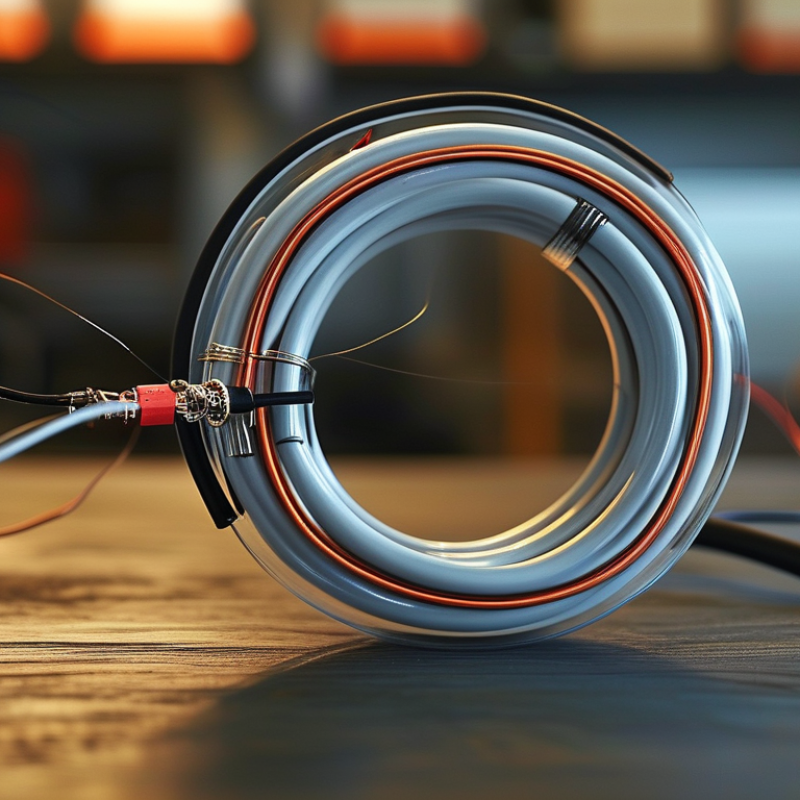
Coil inductors play a crucial role in electronic circuits. They consist of a coil of wire wound around a core, which can be air or magnetic material. When electrical current flows through the coil, it creates a magnetic field. This principle is the essence of inductance, allowing the inductor to store energy in the magnetic field. According to industry reports, the global inductors market is expected to grow significantly, reflecting the increasing demand for advanced electronic devices.
The structure of a coil inductor typically includes the winding, core, and terminals for connections. The material and number of turns in the wire affect inductance value. A higher number of turns usually translates to greater inductance. However, the physical arrangement presents challenges. Too many turns can increase resistance and heat, impacting efficiency. The trade-offs in design are critical for optimizing performance.
Incorporating safety into inductor design is vital. Voltage ratings must be considered to prevent breakdown. Designers should consult IEC standards for guidance. Engineers often overlook thermal management. Proper cooling solutions can enhance longevity and reliability. When selecting an inductor, understanding its application and specifications ensures better functionality.
Principle of Electromagnetic Induction in Coil Inductors
Coil inductors are crucial components in various electrical circuits. They operate on the principle of electromagnetic induction. When a current flows through the wire coils, a magnetic field is generated around them. This magnetic field stores energy temporarily. When the current changes or stops, this field collapses, inducing a voltage in the coil.
The principle of electromagnetic induction was first discovered by Michael Faraday. He found that a changing magnetic field can create an electric current. This principle is the operational heart of coil inductors. As the magnetic field changes, it interacts with the wire coils, producing a voltage that can influence other components in the circuit.
Tips for working with coil inductors include understanding their inductance value. Choosing the right inductance is key for performance. Make sure to consider the core material as it affects efficiency. Also, be cautious while soldering, as heat can damage the coils. Always test your circuits under different conditions to refine your understanding.
Coil Inductor Performance Metrics
This chart illustrates the performance metrics of a standard coil inductor, showcasing parameters such as inductance, resistance, Q factor, and self-resonant frequency, which are essential for understanding its operational characteristics and efficiency.
Applications of Coil Inductors in Electronic Circuits
Coil inductors play a crucial role in electronic circuits, particularly in filtering and energy storage applications. According to a recent industry report, the global inductor market is projected to reach $5.1 billion by 2027, highlighting the growing reliance on these components. Their ability to store energy in a magnetic field allows them to smooth out fluctuations in current, making them essential in power supply circuits.
In audio equipment, coil inductors help manage signal quality. They filter out unwanted frequencies, ensuring clarity. In RF applications, they are used in tuning circuits to select specific frequencies for transmission or reception. The effectiveness of coil inductors is not just theoretical; real-world testing shows that designs incorporating high-quality inductors result in over 20% improved performance in signal integrity.
Despite their benefits, coil inductors can also introduce challenges. Variability in manufacturing can affect inductance values, leading to issues in circuit performance. Electronic designers must understand how these devices interact with other components. Knowledge of these interactions can lead to better designs and improved overall functionality. As reliance on electronic devices grows, so will the demand for reliable and efficient coil inductors. Their applications will continue to expand, shaping the future of electronic circuit design.
Factors Affecting the Performance of Coil Inductors
The performance of coil inductors is influenced by various key factors. One primary factor is the core material used in the inductor. Different materials, such as iron or ferrite, exhibit distinct magnetic properties. These properties affect the inductor's inductance and saturation levels. A core that saturates easily reduces the overall efficiency, leading to losses. Selecting the right core material becomes crucial for optimizing performance.
Another critical factor is the wire gauge. Thicker wires can handle higher currents but may introduce more resistance. Balancing wire thickness with resistance is vital. Too thin a wire can cause overheating, while too thick can lead to diminishing returns on space efficiency. Coil design also plays a significant role. The number of turns in the coil impacts the magnetic field strength. More turns can increase inductance but may also lead to added resistance.
Environmental conditions add another layer of complexity. Temperature can affect both the resistance of the wire and the core material's properties. High temperatures can lead to performance drops. Moreover, external electromagnetic interference can disrupt the inductor's function. Understanding these factors ensures better design choices, maximizing the coil's efficiency and reliability.
Comparison of Coil Inductors with Other Inductor Types
Coil inductors are widely used in electrical circuits to store energy in a magnetic field. Compared to other inductor types, such as toroidal and air core inductors, coil inductors have distinct advantages and disadvantages. Coil inductors often have higher inductive values, making them suitable for applications requiring significant energy storage. However, they can also introduce inductive losses due to resistance in the wire used.
When considering coil inductors, it's essential to understand their placement in a circuit. Their physical size can result in higher parasitic capacitance, affecting performance in high-frequency applications. On the other hand, toroidal inductors minimize this issue due to their shape, allowing for a more efficient operation.
Many engineers prefer air core inductors for their simplicity and reduced electromagnetic interference. These inductors lack a core material, leading to a lower saturation current. However, they generally have lower inductance values. It's vital to weigh these factors based on the specific project requirements.
Use proper gauge wire for your coil inductor to minimize resistance. Consider the core material if you're using a core. Moreover, evaluate the application to choose the best inductor type. Balancing performance and efficiency is crucial in your design process.
Comparison of Coil Inductors with Other Inductor Types
| Inductor Type | Inductance Range | Applications | Core Material | Advantages | Disadvantages |
| Coil Inductor | 1µH - 10H | Power supplies, RF applications | Air, Ferrite | High current handling, low losses | Size may increase with inductance |
| Toroidal Inductor | 10µH - 1H | Filtering, energy storage | Ferrite, Iron | Compact design, reduced EMI | Higher cost |
| Common Mode Choke | 1µH - 10H | Noise filtering in power lines | Ferrite | Effective noise suppression | Limited to specific frequencies |
| Variable Inductor | 1µH - 1H | Tuning circuits, oscillators | Air, Ferrite | Adjustable inductance | Less stable under varying conditions |