
1101 W. Sanilac Rd. Caro, MI 48723
989.673.6690
Choosing US Overseas Warehouse DDP Delivery requires more than comparing freight prices. The decision affects customs clearance, import duties, taxes, inventory control, delivery speed, and customer trust. John W. H. Denton, former Secretary General of the International Chamber of Commerce, stated, “Incoterms rules are essential for the smooth functioning of international trade.” His point matters here: DDP responsibilities must be written clearly, not assumed.
A reliable provider should explain who acts as the importer of record, who pays duties, and how customs documents are prepared. Ask where your goods are stored, how orders are scanned, and when tracking becomes active. A practical test is simple. Request a sample cost sheet for a 2-kilogram parcel shipped from the warehouse to California or New York. It should show handling, domestic delivery, taxes, duties, and possible surcharges. Check the return address, inventory accuracy, insurance terms, and delivery performance by postal zone.
Do not choose only by the lowest quote. It may exclude destination fees or tax obligations. A warehouse can promise fast dispatch but still struggle during holiday peaks. That weakness is easy to miss. Businesses should also confirm product compliance, restricted-item procedures, and customer-service response times. These details are not exciting, but they protect the delivery experience. DDP can simplify international selling, yet it is not automatically the best option for every product or market. A careful comparison, supported by written service terms and verified shipment records, creates a safer foundation for selecting US Overseas Warehouse DDP Delivery.
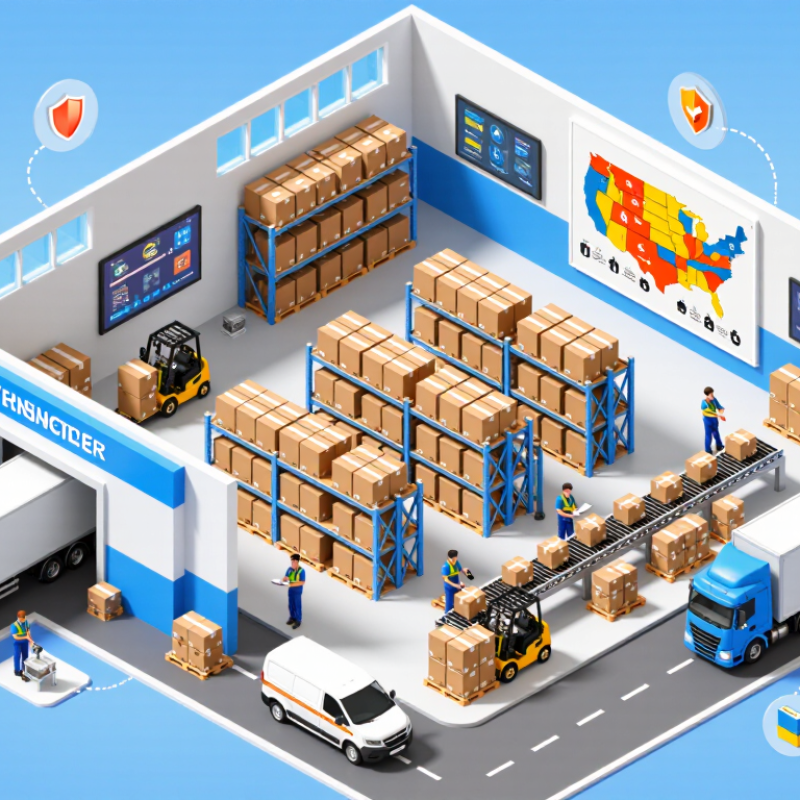
DDP delivery from a US overseas warehouse means the seller manages delivery to the buyer’s address, including import duties, taxes, and customs procedures. The buyer usually receives one delivered price without paying unexpected charges at the door. However, DDP does not mean every warehouse performs every task itself. Some warehouses store inventory, while a separate logistics provider handles transportation and customs clearance.
When choosing a US warehouse, ask how DDP charges are calculated. Request a written breakdown for storage, picking, packing, domestic delivery, customs service, duties, and taxes. Confirm whether the quoted price covers residential addresses, remote areas, oversized cartons, and delivery appointments. A practical test is useful: send one small shipment and inspect the tracking updates, invoice, packaging, and final delivery time. Details matter.
Reliable operators should explain their customs process clearly and provide accurate commercial invoices, product descriptions, values, and origin information. Check how they handle damaged parcels, address corrections, refused deliveries, and returns. These policies can affect your profit more than the shipping quote. Keep records of every shipment. Regulations and tax rules can change, and warehouse staff may interpret them differently. No checklist is perfect. I would review recent delivery data every month, because a low DDP rate can hide slow handling, unclear fees, or weak after-sales support.
DDP delivery can simplify shipping from a US overseas warehouse, but only when the details match. Start with the product. Confirm its material, function, dimensions, weight, and packaging. A product containing batteries, liquids, food-contact parts, or electronic components may need extra checks. The correct customs classification matters too. A wrong HTS code can cause delays, unexpected duties, or document corrections. Small details matter.
Tips: Prepare a clear commercial invoice, packing list, product description, and country-of-origin statement. Ask the warehouse whether its DDP quote includes customs clearance, duties, taxes, final-mile delivery, and remote-area surcharges. Do not accept “all-inclusive” without written scope. That wording can be too vague.
Review the destination carefully. A residential address may require appointment delivery, liftgate service, or additional fees. State tax rules can also differ, even when the shipment enters through the same port. Check whether the seller or logistics provider acts as the importer of record. Confirm who handles customs questions and keeps compliance records.
In practice, delivery estimates are often less reliable during peak seasons. I have seen plans fail because the product description was too general. Rechecking documents before dispatch may feel repetitive, but it prevents expensive corrections. Ask for tracking milestones from warehouse release to final delivery.
How to Choose US Overseas Warehouse DDP Delivery?
Warehouse location directly affects delivery speed and inland transportation costs. A facility near Los Angeles may serve western states quickly, while a central warehouse can reduce delivery distance to the Midwest. East Coast storage often suits customers near New York or Atlanta. Check inventory demand by state, not just the lowest warehouse rent. A cheap location can become expensive when parcels cross the country.
Shipping routes also matter. Ocean freight usually costs less, but port congestion may delay replenishment. Air freight is faster, yet its cost can change sharply with package size and fuel rates. A practical DDP plan should compare port access, trucking capacity, customs clearance experience, and final-mile coverage. Ask for route-level transit records, not broad promises. Delivery estimates should include warehouse handling, carrier pickup, and possible weather delays.
Delivery time needs a realistic range. For example, West Coast orders may arrive in two to five business days after dispatch, while remote areas may require longer. DDP normally includes import duties and clearance, but responsibilities still depend on the shipment terms and local requirements. Confirm who handles returns, address corrections, and damaged parcels. These details are easy to overlook. I have seen fast routes fail because inventory was stored too far from actual buyers. The best choice may not look perfect on paper. Recheck it with recent order data.
Comparison of warehouse locations, shipping routes, and typical delivery times within the United States.
The figures represent typical business-day delivery estimates for standard parcel shipments after inventory is available at the US warehouse. West Coast warehouses generally provide the fastest access to western states, while Central and East Coast locations offer shorter delivery times to Midwest and eastern destinations. Actual DDP delivery times may vary due to order processing, carrier capacity, weather, and remote-area surcharges.
Choosing DDP delivery from a US overseas warehouse requires more than comparing freight quotes. The seller usually arranges transport, customs clearance, import duties, and applicable taxes until delivery. Request an itemized estimate before approving shipment. It should include picking, packing, warehouse handling, international freight, brokerage, duties, taxes, and delivery surcharges. Small print matters.
Duties depend on product classification, declared value, origin, and destination rules. A wrong tariff code can cause reassessment, delays, or storage charges. Ask who verifies the code and who pays if customs rejects the calculation. Tax treatment also varies by jurisdiction. Confirm whether the quote includes sales tax, import VAT, or local charges. A low DDP price may exclude residential delivery, remote-area fees, oversized-carton charges, or address corrections.
Service fees deserve equal attention. Compare per-order costs with monthly storage, receiving, returns processing, inspection, and relabeling fees. Ask for a sample invoice using one real order. This can reveal hidden charges. No estimate is perfect. Seasonal storage and return handling are often underestimated. Review the quote quarterly, especially when packaging, sales regions, or order volume changes. Reliable providers explain assumptions, retain customs documents, and update estimates when regulations change.
Selecting a reliable warehouse and DDP delivery provider requires more than comparing shipping prices. Start with warehouse accuracy, customs knowledge, and clear responsibility for duties and taxes. Ask for inventory records, cycle-count results, order cut-off times, and proof of successful delivery scans. A warehouse should also explain its importer-of-record arrangement in writing.
Service speed affects customer trust. The Pitney Bowes Parcel Shipping Index reported about 21.2 billion parcels in the United States during 2023. That volume makes weak tracking and delayed handovers easy to hide. Request sample tracking events from receiving through final delivery. DHL’s 2024 E-Commerce Trends Report found that 81% of shoppers may abandon checkout when their preferred delivery option is unavailable. Delivery choice matters.
Inspect the physical process, not only the dashboard. Look for labeled shelves, barcode scanning, photo records, and a separate returns area. Confirm insurance limits, damage procedures, and response times before signing. A DDP quote should state whether duties, brokerage, storage, and residential surcharges are included. It should also describe restricted product screening and compliant customs documentation. One practical lesson is uncomfortable: the cheapest quote can create the highest landed cost. No system is perfect. Leave room for audits, service credits, and periodic reviews.
| Evaluation Dimension | Practical Benchmark | What to Verify Before Signing | Common Risk or Warning Sign |
|---|---|---|---|
| Warehouse Location | Select a location that provides efficient coverage for the main customer regions. A two- or three-region network can improve delivery speed but may increase inventory complexity. | Request the exact warehouse city, receiving address, service area map, cutoff times, and the percentage of orders shipped from each location. | Medium Risk Vague location information or promises of nationwide coverage without shipment-level delivery data. |
| Inbound Receiving | A reliable operation should define receiving appointments, carton or pallet handling, SKU identification, quantity checks, and discrepancy reporting. | Confirm receiving fees, standard processing time, barcode requirements, photo evidence, damage procedures, and the process for inventory discrepancies. | Medium Risk Unclear receiving rules can cause inventory delays, unexpected labor charges, and inaccurate stock records. |
| Inventory Accuracy | Use a system that provides real-time stock visibility and regular cycle counts. A written inventory adjustment procedure is essential. | Ask for sample inventory reports, adjustment logs, cycle-count frequency, lot or serial-number support, and liability limits for warehouse errors. | High Risk Manual spreadsheets, unexplained stock adjustments, or no audit trail can lead to overselling and fulfillment disputes. |
| Order Processing Cutoff | Same-day processing is generally expected for orders received before the provider's published cutoff, subject to inventory availability and order volume. | Check the cutoff time and time zone, weekend and holiday schedules, peak-season capacity, exception handling, and the definition of an order-processing day. | Medium Risk “Same-day fulfillment” may refer only to label creation rather than carrier handover. |
| Domestic Delivery Speed | Typical ground delivery within the contiguous United States often takes approximately 2–5 business days, depending on origin, destination, carrier, and service level. | Request lane-level delivery performance for major destination zones, including average transit time, on-time percentage, and delivery exception rate. | Medium Risk Quoting one nationwide transit time hides differences between urban, rural, remote, and residential destinations. |
| DDP Tax and Duty Handling | Under DDP terms, the seller normally arranges import clearance and pays applicable duties, taxes, and delivery charges instead of charging the recipient on delivery. | Confirm importer-of-record responsibilities, product classification, customs documentation, tax calculation, payment timing, and treatment of customs examinations. | High Risk “DDP” used only as a marketing label without a clear written allocation of customs, tax, penalty, and return responsibilities. |
| Product Compliance | The importer must verify that products meet applicable US requirements. Certain categories may require additional documentation, labeling, testing, or agency review. | Identify the product's tariff classification, country of origin, labeling requirements, restricted-material rules, and any applicable federal or state obligations. | High Risk Guaranteeing customs clearance without reviewing the product category, materials, value, and documentation. |
| Shipping Cost Structure | A transparent quote should separate storage, receiving, pick-and-pack, packaging, domestic postage, return handling, and DDP-related charges. | Obtain a sample invoice and rate card showing dimensional-weight rules, residential surcharges, fuel adjustments, minimum monthly fees, and peak-season charges. | High Risk Very low headline rates followed by undisclosed handling, account, address-correction, or customs administration fees. |
| Technology Integration | The system should support order import, inventory synchronization, tracking updates, shipment cancellation rules, and exception notifications. | Test the API, file or platform integration, SKU mapping, split-order handling, tracking-event frequency, access permissions, and data-export capability. | Medium Risk Delayed inventory synchronization or missing tracking events can increase customer-service workload and overselling risk. |
| Returns and Reverse Logistics | A defined returns process should cover authorization, inspection, restocking, refurbishment, disposal, customer refunds, and return-to-sender shipments. | Confirm return-address ownership, per-return fees, inspection time, condition grading, photo records, disposition approval, and international return options. | Medium Risk Low fulfillment prices may be offset by high return-processing charges or long inspection delays. |
| Service-Level Agreement | The agreement should define measurable targets for receiving, inventory accuracy, order processing, tracking upload, claims response, and loss or damage handling. | Review reporting frequency, service credits, liability caps, insurance coverage, claim deadlines, business-continuity measures, and termination procedures. | High Risk Informal promises without performance definitions, remedies, or a documented claims process. |
| Scalability and Peak Capacity | The provider should demonstrate how it handles demand spikes, promotional campaigns, holidays, product launches, and sudden inbound container volumes. | Ask for peak-season forecasts, temporary labor plans, maximum daily order capacity, reserved storage options, and historical performance during high-volume periods. | Medium Risk A warehouse may perform well at normal volume but fail during sales campaigns or holiday periods. |
| Business Continuity and Insurance | The operation should maintain documented procedures for fire, weather events, power outages, system failures, carrier disruptions, and facility access restrictions. | Confirm cargo and warehouse-liability insurance, backup systems, emergency contacts, recovery targets, alternate fulfillment options, and inventory evacuation procedures. | High Risk No documented disaster plan or insurance evidence creates significant exposure for inventory and delivery commitments. |