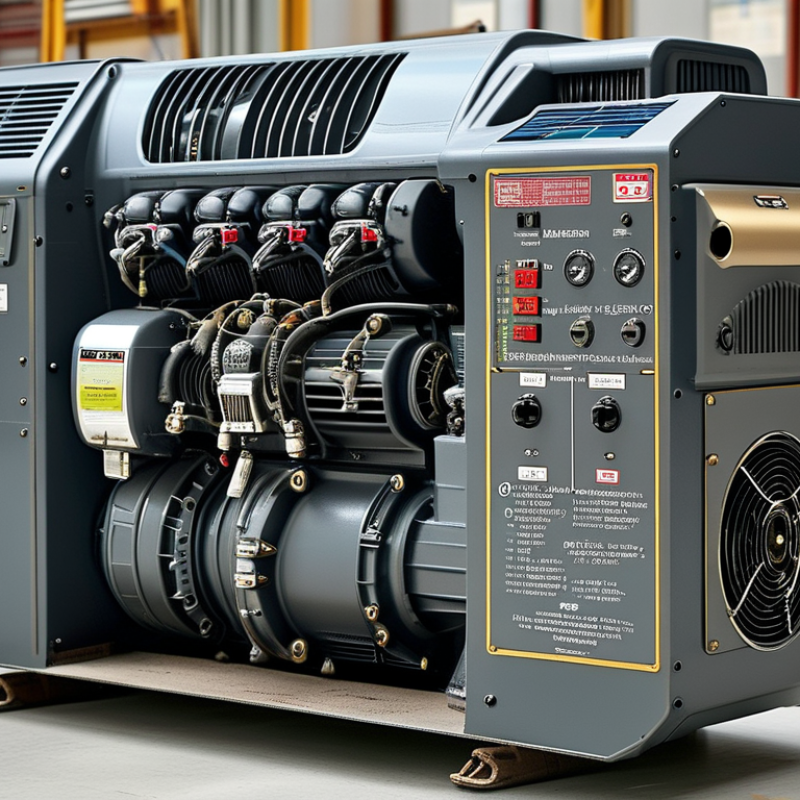
hero image

China Top Backup Generator Suppliers How to Choose?

Choosing among China’s top Backup Generator suppliers requires more than comparing prices and engine power. A dependable Backup Generator must match your site’s load, operating hours, fuel access, noise limits, and maintenance capacity. A small clinic may need stable power for refrigeration and medical equipment. A construction site may prioritize dust protection, mobility, and rapid refueling. These needs lead to different specifications.

Experienced buyers usually examine the complete supply chain. They review engine and alternator brands, control-panel functions, enclosure quality, factory testing, and spare-parts availability. Ask suppliers for load-bank test records, product certifications, warranty terms, and clear technical drawings. A credible manufacturer should explain fuel consumption at different loads, not only advertise maximum output. It should also provide practical guidance for installation, ventilation, grounding, and routine servicing.

Look closely at communication.

Supplier evaluation should include factory audits, video inspections, sample testing, and references from comparable projects. Response speed matters, but technical accuracy matters more. A polished catalog does not guarantee reliable production. This is where many purchasing plans become weak. They focus on the lowest quotation and overlook delivery consistency, after-sales support, and technician training. That mistake can become expensive during a power outage.

The best choice is not always the largest supplier or the cheapest offer. It is the supplier that documents performance, admits limitations, and supports the generator after delivery. Compare total ownership costs over several years, including fuel, filters, batteries, servicing, and downtime risks. With careful verification and realistic site requirements, buyers can select a China-based partner with stronger reliability and fewer unpleasant surprises.

China Top Backup Generator Suppliers How to Choose?

What Makes China a Leading Source of Backup Generators?

China has become a leading source of backup generators because its manufacturing network is unusually complete. Engine parts, alternators, control panels, steel frames, and fuel systems can often be sourced within one industrial region. This shortens production cycles and supports practical customization. Buyers can request different voltage outputs, enclosure types, fuel tanks, and control interfaces without rebuilding the entire design. The difference is visible.

In supplier evaluations, I look beyond catalog prices. A capable factory should explain rated power, standby power, fuel consumption, noise levels, and cooling limits clearly. It should also provide load-bank testing records, inspection photos, traceable component information, and service procedures. These details help prevent disappointing performance after installation. Applicable safety, emissions, and electrical requirements must be checked for the destination market.

China’s export experience also supports flexible packaging, spare-parts planning, and technical documentation. However, the process is not flawless. Some suppliers present attractive specifications but provide limited evidence under real load conditions. I once found a small difference between advertised fuel use and test results. It mattered during long outages. Ask for witnessed testing, written warranty terms, maintenance intervals, and response times before signing. Details matter.

How to Choose a China Backup Generator Supplier?

This buyer-evaluation framework assigns practical importance to the main factors used when comparing backup generator suppliers. Reliability and total cost of ownership receive the highest weighting, while parts availability, lead time, customization, and compliance help explain why China is considered a competitive sourcing base for standby power equipment. The percentages represent a transparent procurement model rather than data from any individual company or brand.

How to Define Your Backup Generator Requirements

Before comparing China’s top backup generator suppliers, define exactly what your site needs. List essential loads, such as pumps, refrigeration units, servers, lighting, and safety equipment. Record each device’s running watts and starting watts. Motors may need two to seven times more power during startup. A small workshop can fail quickly if this surge is ignored. Do not rely only on the total rated wattage.

Check your required voltage, frequency, phase, and connection method with a qualified electrician. Decide how long the generator must operate without refueling. A rural clinic may need 24 hours of autonomy, while a small office may need only six. Consider fuel storage, outdoor temperature, altitude, noise limits, installation space, and automatic transfer requirements. Specifications can look perfect on paper, yet poor ventilation may cause overheating. I have seen planning errors caused by measuring only the machine footprint, not the service clearance.

Tips: Create a simple load table before requesting quotations. Include appliance name, running watts, starting watts, operating hours, and priority. Ask suppliers for test records, warranty terms, spare-parts availability, and maintenance intervals. Request a site-specific recommendation, not a generic catalog model. Leave reasonable capacity for future equipment, but avoid excessive oversizing because light loading can waste fuel. Recheck every figure with an independent technician. Small mistakes remain expensive.

China Top Backup Generator Suppliers How to Choose? - How to Define Your Backup Generator Requirements
Requirement Dimension Information to Define Practical Reference Data Selection Guidance
Purpose and Load Priority Identify whether the generator will support life-safety systems, business continuity, residential equipment, industrial processes, or the entire facility. Emergency load Standby load Optional load
Typical priority loads include fire pumps, emergency lighting, elevators, communication systems, refrigeration, servers, pumps, and medical equipment.
Separate essential and non-essential circuits before calculating the generator rating. Do not size the unit only from the total connected load.
Connected and Running Load Record the rated power, operating voltage, phase, power factor, and expected operating condition of every load. Generator output is commonly stated in kVA. The basic relationship is: kW = kVA × power factor.
A power factor of 0.8 is often used for conventional generator ratings, but the actual site load should be confirmed.
Add the running kW or kVA of the selected loads, then verify that the generator can maintain voltage and frequency under the combined load.
Motor Starting Requirements List motors, compressors, pumps, fans, air conditioners, and other equipment with high starting current. Across-the-line motor starting can create a short-duration inrush current several times higher than the running current. Soft starters and variable-frequency drives can reduce starting demand. Check the largest motor start, the sequence of starting, and the acceptable voltage dip. A larger alternator or staged starting may be required even when the running load is moderate.
Required Generator Capacity Define the minimum continuous load, maximum anticipated load, motor-starting demand, and future expansion allowance. A planning margin of approximately 10% to 20% is commonly considered for future growth and measurement uncertainty, subject to the project engineer’s calculation. Avoid prolonged operation below the manufacturer’s minimum recommended loading and avoid selecting a unit that is permanently operated at its maximum rating.
Standby or Prime Rating Define how often the generator will operate and whether it will be used only during utility outages or as a regular power source. Standby rating: generally intended for emergency operation during utility interruptions.
Prime rating: intended for variable-load operation where the generator is used as the main or regular power source, subject to applicable rating rules.
Use the rating category that matches the operating profile. Do not treat standby and prime ratings as interchangeable without checking the duty cycle and manufacturer documentation.
Voltage, Phase, and Frequency Confirm the facility voltage, single-phase or three-phase system, frequency, neutral arrangement, and compatibility with connected equipment. Common low-voltage systems include 220–240 V single-phase and 380–415 V three-phase at 50 Hz in many markets. Other regions commonly use 60 Hz systems. Match the generator and automatic transfer equipment to the site electrical system. Frequency and phase cannot normally be changed by selecting a different cable size.
Automatic Transfer and Start Time Define whether the system requires automatic detection of utility failure, automatic start, automatic transfer, and automatic retransfer after utility restoration. Many emergency systems are designed for automatic start and transfer within a specified project time, often from several seconds to tens of seconds, depending on the system and local code. Specify the required transfer time, bypass/isolation functions, manual controls, remote monitoring, and compatibility between the generator controller and transfer switch.
Required Runtime and Fuel Storage State the required operating hours at a defined load, fuel type, refueling access, and fuel storage limitations. Runtime depends on tank capacity, engine size, load percentage, ambient temperature, and fuel consumption. A runtime target such as 8, 12, 24, or 48 hours should be tied to a specific load condition. Compare fuel consumption in L/h at 25%, 50%, 75%, and 100% load rather than relying only on the tank volume. Include fuel quality, spill containment, and local storage requirements.
Installation Location Define indoor or outdoor installation, available footprint, access route, foundation, ventilation, exhaust routing, and distance from occupied areas. Outdoor units generally require weather protection. Indoor installations require adequate combustion air, cooling-air discharge, exhaust treatment, fire protection, and safe access for maintenance. Confirm equipment dimensions, service clearances, lifting points, cable routes, exhaust back pressure limits, and foundation loads before placing the order.
Ambient Conditions and Altitude Provide minimum and maximum temperature, humidity, altitude, dust, salt exposure, and any corrosive or hazardous environmental conditions. High altitude and high ambient temperature reduce air density and cooling performance, which can require derating or upgraded cooling equipment. Exact correction factors vary by engine and alternator. Request a site-specific derating calculation. A unit sized for sea-level conditions may not deliver the same output at high elevation or in a hot, enclosed room.
Noise and Vibration Define the maximum permitted sound level, measurement distance, operating hours, nearby buildings, and vibration-sensitive equipment. Acoustic performance depends on engine speed, enclosure design, exhaust silencing, installation surface, and measurement method. Sound values should always state the distance and test conditions. Consider a sound-attenuated enclosure, resilient mounts, flexible connectors, vibration isolation, and an acoustic survey where the generator is near residences, offices, or hospitals.
Emissions and Compliance Identify the installation country, local air-quality rules, fuel requirements, noise limits, electrical codes, and inspection requirements. Applicable requirements may cover engine emissions, exhaust height, fuel storage, grounding, electrical protection, fire safety, and workplace noise. Requirements vary by location and generator size. Ask for current compliance documentation, test certificates, technical drawings, and installation requirements applicable to the project location.
Maintenance and Service Support Define expected annual operating hours, service intervals, spare-parts availability, technician response time, warranty scope, and training needs. Routine service commonly includes engine oil, oil filters, fuel filters, air filters, coolant, batteries, belts, hoses, control-system checks, and periodic load testing. Intervals depend on the engine and duty cycle. Evaluate total ownership cost, not only purchase price. Require a maintenance schedule, recommended spare-parts list, warranty terms, and a documented commissioning procedure.
Testing and Commissioning Define factory testing, site acceptance testing, load-bank testing, black-start testing, automatic transfer testing, and emergency shutdown checks. Testing should verify voltage, frequency, phase sequence, load response, alarm functions, protection settings, fuel autonomy, transfer operation, and performance under the specified site conditions. Include test procedures and acceptance criteria in the purchase specification. Record measured results and retain commissioning documents for future maintenance.
Supplier Documentation Require a complete technical package before final approval. Useful documents include datasheets, dimensional drawings, wiring diagrams, fuel-consumption curves, noise data, derating charts, installation manuals, maintenance schedules, certificates, and spare-parts lists. Compare suppliers using the same technical data points and load conditions. Reject quotations that provide only a nominal kVA figure without operating limits or site assumptions.

How to Evaluate China’s Top Backup Generator Suppliers

How to Evaluate China’s Top Backup Generator Suppliers

China’s backup generator sector offers wide technical and manufacturing choices. Yet supplier evaluation should begin with evidence, not catalog claims. The International Energy Agency’s Electricity 2024 report expects global electricity demand to grow by about 4% in 2024 and 2025. More demand increases the value of dependable emergency power.

Request factory records, not only product brochures. Check engine and alternator origins, production capacity, quality-control procedures, and export experience. Ask for ISO 9001 certification and test results under ISO 8528 requirements. A serious supplier should provide load-bank testing, voltage stability data, fuel-consumption figures, and transient-response performance. Insist on a witnessed factory acceptance test. Small details matter.

Uptime Institute’s Global Data Center Survey repeatedly identifies power problems as a major cause of serious outages. Therefore, evaluate more than rated kilowatts. Review automatic transfer compatibility, cooling performance, enclosure protection, noise levels, and emissions documentation for the destination market. Spare-parts availability deserves equal attention. Ask for delivery times, technician coverage, warranty exclusions, and remote troubleshooting procedures.

A factory visit can reveal useful facts. Look for organized wiring, calibrated instruments, traceable components, and technicians who explain failures clearly. I have learned that a clean showroom proves very little. Sometimes, a supplier with fewer promises offers better evidence. My judgment may still be imperfect. Independent inspection and third-party testing remain worthwhile, especially for hospitals, factories, and data centers.

Which Technical and Quality Standards Should You Check?

China Top Backup Generator Suppliers: How to Choose?

A reliable supplier should explain which standards govern its generator sets. ISO 8528 is a useful reference for performance, ratings, and testing. Check whether the stated power is prime, standby, or continuous. These ratings are not interchangeable. For the alternator, review applicable IEC 60034 requirements. Ask for insulation class, temperature-rise data, and voltage regulation results. The control panel and automatic transfer equipment also need suitable electrical safety standards, such as IEC 60947-6-1 where applicable.

Do not accept certificates as decoration. Request the certificate number, issuing body, scope, and expiry date. An ISO 9001 certificate supports process control, but it does not prove generator performance. Ask for factory test reports showing load-bank testing, frequency stability, transient response, fuel consumption, and noise levels. A serious supplier should provide serial-number traceability for the engine, alternator, controller, and major protective devices. Watch the test.

During a supplier audit, inspect the test area and calibration records. A meter with an overdue calibration sticker weakens otherwise impressive paperwork. Review welding quality, cable routing, enclosure sealing, grounding points, and emergency-stop function. For projects in Europe, confirm relevant CE documentation; other markets may require different approvals or emissions rules. The correct standard depends on the installation country and application. This is where buyers often rush. A written compliance matrix, matched to the purchase specification, prevents expensive misunderstandings.

How to Compare Prices, Services, Warranties, and Delivery Terms

When comparing China’s backup generator suppliers, avoid judging price alone. Request the same output rating, fuel tank size, controller, noise level, and testing scope. Calculate total ownership cost, including fuel consumption, maintenance kits, shipping, installation, and replacement parts. A low quotation can become expensive after customs and commissioning.

Service quality needs measurable terms. Ask for remote support hours, local technician coverage, spare-parts availability, and emergency response times.

The Uptime Institute’s 2022 Annual Outage Analysis reported that 60% of respondents experienced outages costing over $100,000.

Therefore, a supplier’s response plan deserves the same attention as its engine specification. Factory acceptance testing, load-bank results, and signed inspection records provide stronger evidence than sales promises.

Warranty comparison requires careful reading. Check coverage duration, operating-hour limits, excluded consumables, and who pays for transport.

Delivery terms should state the Incoterm, production lead time, port, packaging standard, and delay responsibility. The World Bank’s 2023 Logistics Performance Index highlights continuing differences in shipment reliability and timeliness across markets.

Ask for milestone updates and a backup shipping plan. A common mistake is accepting a delivery date without defining “ready for dispatch.”

I would also request two customer references, although references can be selective. No comparison is perfect. Verify the details.