How to Choose the Right Laser Welder for Your Needs?
In the rapidly evolving landscape of industrial manufacturing, selecting the right laser welder significantly impacts product quality and efficiency. According to a recent report by Grand View Research, the global laser welding market is expected to reach $5.22 billion by 2027. This growth reflects the increasing reliance on precision welding technology across various sectors. However, with many options available, making the right choice can be challenging.
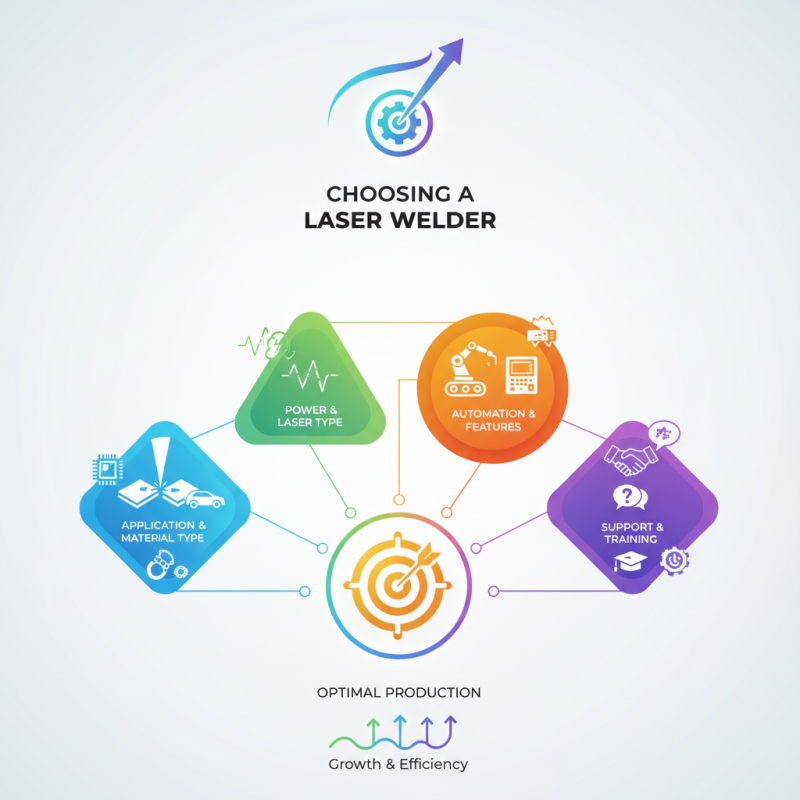
Industry expert Dr. Helen Zhang emphasizes, “The right laser welder can elevate your production to new heights.” Her insights remind us that laser welders are not just tools; they are pivotal in enhancing operational effectiveness. A welder should match both the application type and material characteristics to maximize performance. The diversity in power levels, laser types, and automation features can confuse buyers. Yet, understanding specific needs is crucial for optimal results.
Many users overlook the importance of post-purchase support and training. A welder with advanced features may fail without proper machine handling. Therefore, practical insights and thorough research are vital before investing in a laser welder. Ultimately, finding the perfect fit for production demands requires careful consideration and reflection on one’s operational goals.
Understanding Different Types of Laser Welders Available in the Market
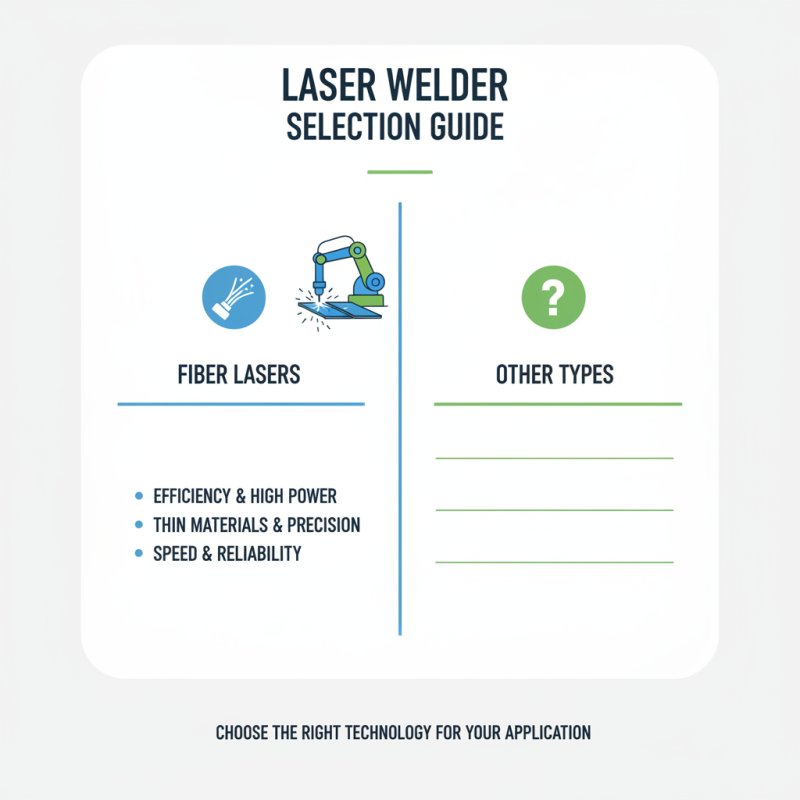
When selecting a laser welder, it's crucial to understand the types available. Different technologies serve various applications. Fiber lasers are known for their efficiency and high output power. They excel in welding thin materials and can produce precise, high-quality welds. Many industries favor fiber lasers for their speed and reliability.
CO2 lasers, on the other hand, are versatile. They can handle a wider range of materials, including thicker metals. However, they typically require more maintenance compared to fiber lasers. Their high initial cost can deter some buyers. Users must weigh these factors carefully.
Another option is solid-state lasers. These are known for their stability and durability. They work well in automated settings. Yet, they may not be suitable for all types of welding tasks. Understanding these key differences can help you make an informed choice. Remember that each type has its pros and cons, and not every solution fits every need.
Identifying Your Specific Welding Requirements and Applications
Choosing the right laser welder revolves around understanding specific welding requirements and applications. Different industries have unique demands. For instance, the automotive sector often needs precise welds for thin materials, while aerospace requires robust joint integrity. According to industry reports, approximately 38% of dental laboratories utilize laser welding for intricate jobs, highlighting its adaptability and precision in specialized applications.
It’s crucial to reflect on the nature of your materials. Laser welders can handle various metals, but not all machines excel in every area. Aluminum, for example, has different properties than stainless steel. A study by the Welding Institute indicates that weld integrity is critical, with 25% of defects arising from improper equipment selection. Ignoring this can lead to costly mistakes and subpar results.
Applications also vary significantly. Medical devices demand high standards in surface finish. A survey shows that 60% of medical entity failures are linked to poor welding quality. Identifying the exact specifications for your project helps in selecting the right tool. Thus, before even looking at models, an honest assessment of your needs will lead to better choices.
How to Choose the Right Laser Welder for Your Needs?
| Welding Application |
Recommended Power (Watts) |
Material Thickness (mm) |
Laser Type |
Cooling Method |
| Metal Fabrication |
1000 - 3000 |
1 - 10 |
Fiber |
Air Cooled |
| Jewelry Making |
20 - 200 |
0.2 - 2 |
CO2 |
Water Cooled |
| Automotive Repair |
500 - 1500 |
0.5 - 5 |
Fiber |
Air Cooled |
| Electronics |
100 - 500 |
0.1 - 3 |
Fiber |
Air Cooled |
| Thick Steel Welding |
3000 - 6000 |
10 - 20 |
Fiber |
Water Cooled |
Evaluating Key Features and Specifications of Laser Welders
Choosing the right laser welder involves careful evaluation of its features and specifications. One crucial aspect is the laser type. Fiber lasers and CO2 lasers serve different purposes. Fiber lasers are generally better for metals. CO2 lasers can work on non-metal materials. Understand your main applications before selecting a type.
Power output is another critical specification. Higher wattage enables faster welding but can risk overheating. It's essential to balance speed and control. Adjustable settings add versatility, allowing for different thicknesses. Users sometimes overlook the importance of cooling systems. Effective cooling prevents damage during long sessions.
Consider the welding head design. A good design enhances accessibility in tight spaces. Some welders are cumbersome. They may need more space than expected. Weight and portability also matter. A heavier welder may stay put, but you might want mobility for different jobs. Reflect on your workspace and job requirements before making a choice.
Choosing the Right Laser Welder: Key Features Comparison
Assessing Budget Considerations for Laser Welder Purchases
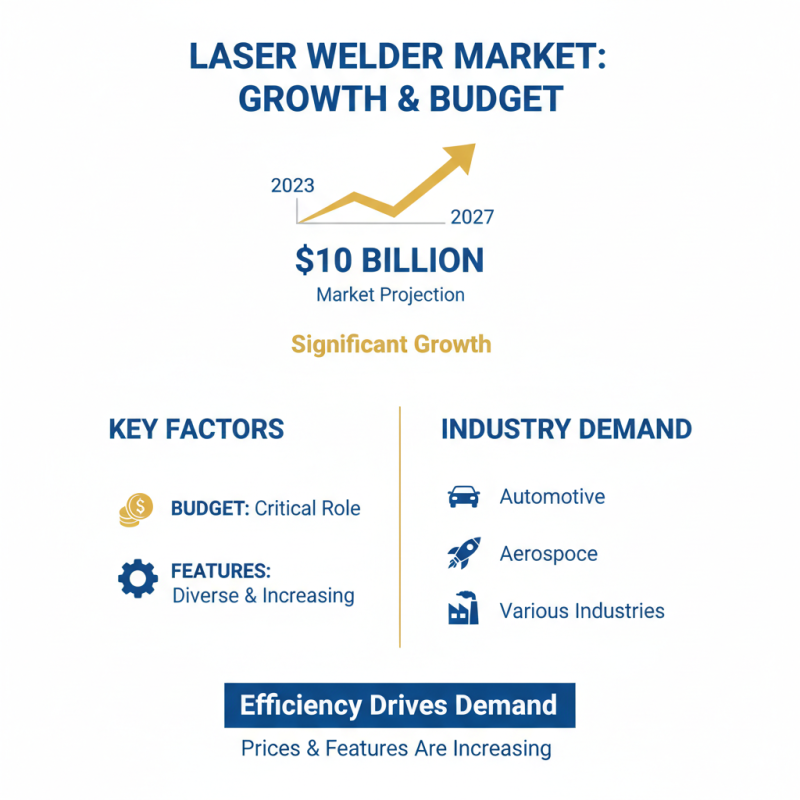
When considering a laser welder, budget plays a critical role. The market for laser welding is projected to reach $10 billion by 2027, showing a significant growth trajectory. This surge indicates a robust demand for efficient welding solutions across various industries, from automotive to aerospace. However, with such growth comes an increase in price ranges and features.
The cost of laser welders can vary widely. Entry-level models may start around $5,000, while advanced systems can exceed $100,000. It's essential to evaluate what features are necessary for your specific tasks. Investing in a higher-end system for increased efficiency could save costs in the long run. Yet, there’s a risk of over-investing in features you might not use. Take time to assess actual needs versus perceived benefits.
Understanding maintenance costs is also vital. Industry reports suggest that laser welders require around 15% of their purchase price annually for upkeep. Be mindful of these hidden costs when assessing your budget. This consideration often goes overlooked. A well-planned budget should include not just the initial purchase but also training, maintenance, and future upgrades.
Researching Manufacturer Reputation and Customer Support Options
When selecting a laser welder, evaluating the manufacturer's reputation is crucial. A reliable manufacturer often has reviews and ratings available. Look up forums and user testimonials. This research will give you insights into their products. It’s vital to see how long they have been in the industry. Experience often translates to expertise.
Customer support options also play an essential role in your choice. Check if the company offers training and technical assistance. Fast response times can be a lifesaver. Consider contacting support with a question to gauge their efficiency. Many manufacturers have live chat options. This can reveal a lot about their service quality.
Remember to read the fine print. Some companies may promote support but lack accountability when issues arise. Peer reviews can uncover these nuances. Keep an open mind about all aspects of the manufacturer. Sometimes, a smaller company can outperform larger ones in terms of personalized service. The right choice involves careful consideration of both reputation and support.