How to Choose the Best Rubber Air Hose for Your Needs?
Choosing the right rubber air hose can be challenging. With numerous options available, it's easy to feel overwhelmed. The right hose can significantly improve your air tool performance and efficiency.
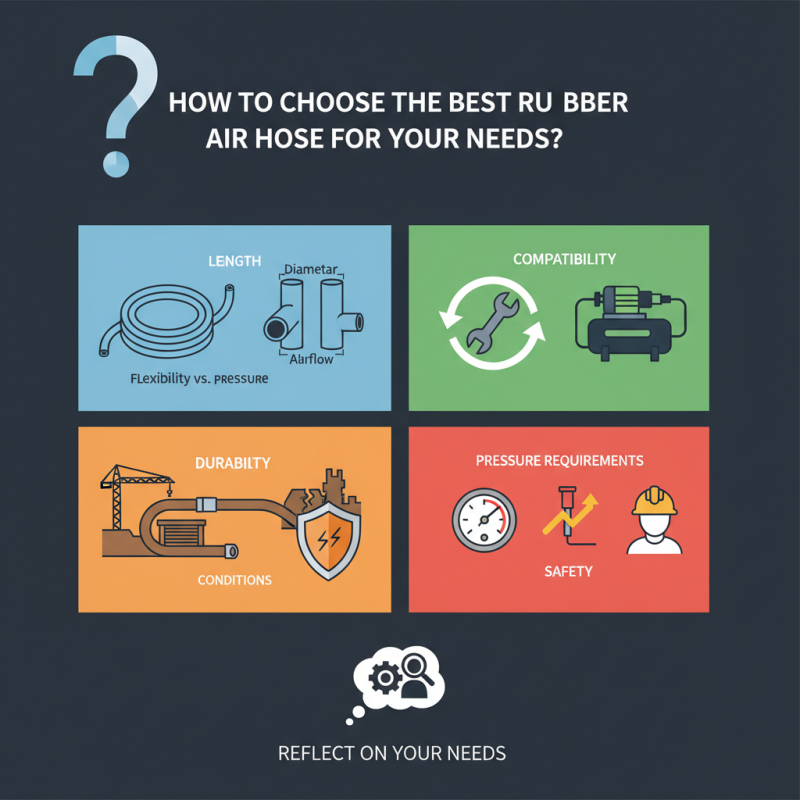
Consider the length and diameter of the rubber air hose. A longer hose provides flexibility, but may reduce air pressure. The diameter impacts airflow and tool operation. Think about the compatibility with your existing equipment.
Moreover, pay attention to durability. Rubber air hoses are designed for various conditions. Evaluate how often and where you'll use it. Some hoses may crack or wear under specific conditions. Also, consider safety features. Ensure it can handle the pressure requirements of your tools. Reflect on your needs carefully before making a decision.
Factors to Consider When Choosing a Rubber Air Hose
When selecting a rubber air hose, several factors deserve attention. Consider the hose length you need. Shorter hoses can limit your movement but are easier to store. Longer hoses provide flexibility but may weigh down equipment. The diameter of the hose is also crucial. A larger diameter allows for increased airflow, which can enhance performance for heavy-duty tasks.
The temperature and pressure ratings matter too. Ensure the hose can handle the maximum pressure you might require. Check its resistance to various elements. Some hoses are more durable against oil, sunlight, and ozone. This can significantly affect longevity. Additionally, think about the hose’s flexibility. A stiff hose can be challenging to maneuver, while a more flexible one can adapt to tight spaces easily.
Lastly, pay attention to the coupling style. Some hoses have fixed fittings, while others allow for interchangeable ends. Consider how often you need to change attachments. Sometimes, you may find your chosen hose doesn't meet all requirements. It’s essential to reflect on your specific tasks. Mismatched specifications can lead to inefficiencies. Taking the time to evaluate these aspects can make a significant difference in your choice.
Different Types of Rubber Air Hoses and Their Uses
When choosing a rubber air hose, understanding the types available is essential. There are several varieties, each tailored for specific applications. For instance, heavy-duty rubber hoses withstand extreme temperatures and pressure. They are perfect for industrial settings. Lightweight hoses, on the other hand, are easier to maneuver and ideal for home projects.
Some air hoses feature reinforced layers. This design enhances durability and prevents leaks. Consider what environments you will use the hose in. Will you work indoors, outdoors, or both? Different hoses suit different conditions.
Tips: Always check the hose's flexibility. Stiff hoses can be frustrating. Look for a model that unwinds easily. Additionally, observe the connections. They should fit snugly to prevent air loss. Few things are more annoying than a compromised seal. Take your time when choosing. The right hose can make your tasks smoother.
How to Choose the Best Rubber Air Hose for Your Needs?
| Type of Rubber Air Hose | Diameter (Inches) | Maximum Pressure (PSI) | Typical Uses |
| Standard Rubber Air Hose | 1/4 | 300 | General purpose, home air compressors |
| Heavy-Duty Rubber Air Hose | 3/8 | 400 | Construction sites, pneumatic tools |
| Reinforced Rubber Air Hose | 1/2 | 500 | Industrial applications, high-pressure needs |
| Oil-Resistant Rubber Air Hose | 3/8 | 300 | Oil transfer, machinery operation |
| Flexible Rubber Air Hose | 1/4 | 250 | Tight spaces, automotive use |
Understanding Hose Length and Diameter for Optimal Performance
Choosing the right hose length and diameter is critical for optimal performance. A longer hose can be convenient, but it may lead to pressure loss. This is especially true if the diameter is not appropriate. A narrow hose increases resistance, reducing airflow. You need to balance length and diameter for efficiency.
Consider your workspace. If it’s small, a shorter hose works well. It avoids tangles and allows for better control. However, in larger spaces, longer hoses are practical. They give you the reach you need without moving your equipment constantly.
Diameter matters too. A wider hose allows for more air flow. This is essential for heavy-duty tools. Yet, using a too-wide hose with smaller tools can be inefficient. It’s about finding the right match. Reflection on your needs will guide you. Don't rush into a decision. Take time to evaluate how length and diameter affect your tasks.
Rubber Air Hose Length and Diameter Comparison
Evaluating Temperature and Pressure Ratings of Rubber Air Hoses
When selecting a rubber air hose, temperature and pressure ratings are crucial. Rubber hoses have different capabilities depending on their construction. High temperatures can cause degradation, while low temperatures may make hoses brittle. Consider the environment where the hose will be used. For instance, hoses intended for outdoor work may need to withstand extreme weather conditions.
Pressure ratings are equally important. Each hose has a maximum pressure limit. Exceeding this limit can result in bursts, leading to safety hazards. It’s vital to match the hose’s rating with the compressor's output. If you often work with varying pressures, look for hoses rated for higher limits to avoid accidents.
Remember that not all applications are the same. Some activities might demand flexibility and others strength. Reflect on where you’ll use the hose most frequently. You might find that a hose that works perfectly for one task fails under different conditions. Always check specifications and don't hesitate to reach out for expert advice. Choosing the right rubber air hose can save time, money, and potential injuries.
Tips for Maintenance and Care of Rubber Air Hoses
Proper maintenance of rubber air hoses can significantly extend their lifespan and ensure optimal performance. According to industry studies, well-maintained hoses can last up to 50% longer than neglected ones. Regularly check for cracks, fraying, and other signs of wear. A simple visual inspection can often reveal hidden issues before they develop into serious problems. Pay attention to the coupling areas; they are common weak spots that can lead to leaks.
Cleaning your air hose is equally important. Use mild soap and water, and avoid harsh chemicals that could degrade the rubber material. After cleaning, always dry the hose completely to prevent mold and mildew growth. Storing the hose properly can also make a big difference. A coiled, dry, and shaded environment protects it from harmful UV rays, which can cause rubber to deteriorate.
Don’t overlook the importance of regular usage checks. Even if your hose is in good condition, prolonged inactivity can lead to issues. Air hoses should be used periodically to keep them flexible. Neglecting this step might lead to stiffness, which can cause failure during use. Regular maintenance ensures that your rubber air hose remains reliable and ready for any task.