
1101 W. Sanilac Rd. Caro, MI 48723
989.673.6690
Choosing the right Electric Generator begins with understanding your real power needs, not the largest model on the showroom floor. A quiet home office requires different support than a construction site, medical facility, or remote workshop. List every appliance, motor, tool, and safety system that may operate during an outage. Record its running watts and starting watts. Refrigerators, pumps, and compressors can demand a sharp surge when their motors start.
Electrical engineer Lord Kelvin offered a useful principle: “To measure is to know.” His words remain practical today. Measure your connected load, starting demand, fuel use, and available installation space before comparing products. A generator rated only for continuous output may struggle when several motors start together. An oversized unit can also waste fuel, create unnecessary noise, and cost more to maintain. Bigger is not automatically safer.
Fuel choice deserves careful thought. Gasoline is widely available, while diesel often suits heavy-duty operation and long runtimes. Natural gas may offer convenient home backup, but supply interruptions still deserve consideration. Inverter models can provide cleaner power for sensitive electronics, although their pricing may be higher. Check transfer-switch compatibility, ventilation requirements, weather protection, service access, and warranty coverage. Local electrical codes and a qualified installer should guide permanent connections.
I have seen buyers focus on price first. That approach often creates expensive compromises later. Runtime, noise, maintenance intervals, and spare-part availability matter every month. There is no perfect generator. The right decision balances load, fuel, environment, budget, and human expectations. Recheck your calculations before purchase. Small assumptions can become large failures during a blackout.
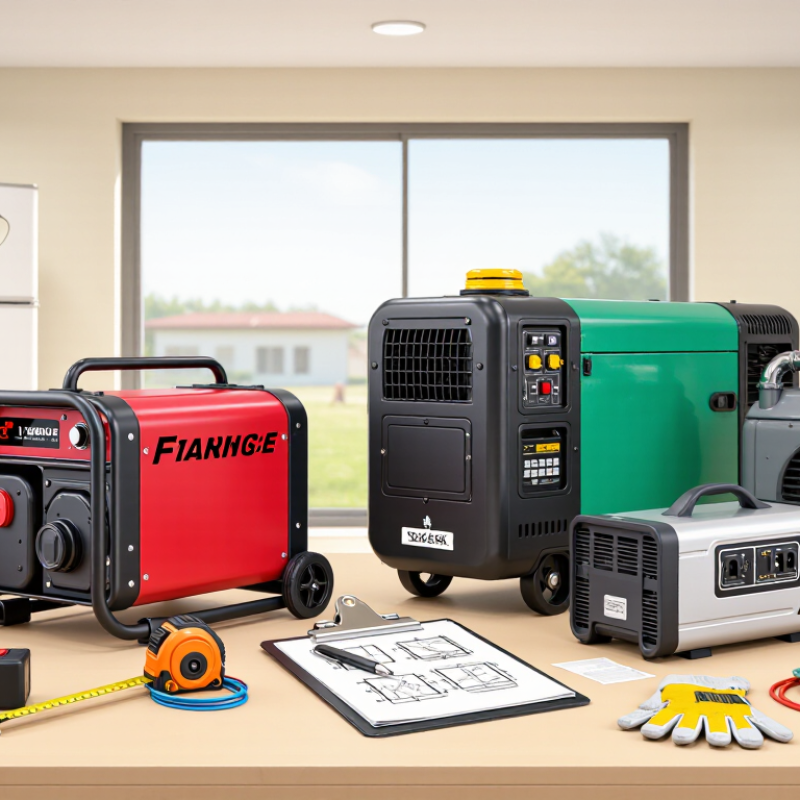
Choosing the right electric generator starts with your actual electricity needs, not the largest model available. List every appliance, tool, and system you may run. Record its running watts and starting watts. Refrigerators, pumps, compressors, and air conditioners often need extra power during startup. Add those peak demands carefully, then include a safety margin of about 20 percent. My first estimate once ignored a pump’s startup surge. The generator struggled, even though the total running load looked acceptable.
Tips
Measure real demand with a plug-in power meter when possible. Separate essential loads from convenient ones. For a home, essentials may include lights, refrigeration, medical equipment, and a heating system. For construction work, consider saws, chargers, welders, and dust extraction. Never assume two heavy tools can operate together without checking their combined load. A written load schedule prevents expensive guessing.
The generator’s application also determines its design. Emergency backup requires dependable starting, safe connection procedures, and enough fuel autonomy. Outdoor work may require weather protection, transport wheels, and lower noise. Sensitive electronics benefit from stable voltage and frequency control. Check the site’s ventilation, distance from occupied areas, and maintenance access. Fuel storage, carbon monoxide protection, and professional electrical installation deserve serious attention. Specifications can be misleading when conditions change. A cold morning, long extension cable, or neglected filter may reduce performance. Reliability comes from matching the machine to the task and maintaining it consistently.
| Application | Typical Connected Loads | Estimated Running Load | Estimated Starting Load | Suggested Generator Capacity | Recommended Output Type | Main Selection Considerations |
|---|---|---|---|---|---|---|
| Emergency Essentials | Refrigerator, lighting, router, phone chargers, and a small fan | 800–1,200 W | 1,800–2,800 W | 3,000–3,500 W | Pure sine wave preferred for sensitive electronics | Prioritize low noise, easy starting, fuel efficiency, and sufficient surge capacity. |
| Small Home Backup | Refrigerator, freezer, lighting, internet equipment, television, and microwave used separately | 1,800–2,500 W | 4,000–5,500 W | 5,000–6,500 W | Inverter or conventional generator with voltage regulation | Avoid starting several motor-driven appliances at the same time. |
| Essential Home Circuits | Refrigerator, sump pump, lighting, selected outlets, furnace blower, and garage door opener | 2,500–3,500 W | 5,500–8,000 W | 7,000–9,000 W | Portable generator with transfer-switch compatibility | Check motor starting current, circuit ratings, grounding, and legal connection requirements. |
| Well Pump and Water System | Submersible well pump, pressure tank controls, refrigerator, and basic lighting | 2,000–3,000 W | 5,000–8,000 W | 7,000–10,000 W | Generator with strong motor-starting capability | Use the pump nameplate data; voltage, horsepower, and starting current vary considerably. |
| Construction and Workshop | Circular saw, drill, work lights, air compressor, and battery chargers | 3,000–4,500 W | 6,000–10,000 W | 8,000–12,000 W | Heavy-duty generator with high surge performance | Do not operate multiple high-starting-current tools simultaneously. |
| RV and Outdoor Recreation | Air conditioner, refrigerator, lighting, television, and small kitchen appliances | 1,500–3,000 W | 3,500–6,500 W | 3,500–7,000 W | Quiet inverter generator for stable power | Match the generator to the air-conditioner starting watts and the RV electrical system. |
| Food Truck or Mobile Worksite | Refrigeration, exhaust fan, lighting, point-of-sale equipment, and selected cooking equipment | 4,000–7,000 W | 7,000–12,000 W | 10,000–15,000 W | Commercial-grade generator with appropriate receptacles | Confirm continuous load, peak load, ventilation, fuel storage, and local operating regulations. |
| Whole-Home Backup | Heating or cooling system, refrigerator, freezer, lighting, kitchen circuits, pumps, and selected appliances | 6,000–12,000 W | 12,000–25,000 W | 14,000–25,000 W | Standby generator with automatic transfer switch | A qualified electrician should calculate the load and verify service-panel compatibility. |
Choosing an electric generator starts with the load, not the advertised wattage. List every appliance, then separate running watts from starting watts. A refrigerator may need only 700 running watts but over 2,000 watts briefly when its compressor starts. Add a 20% reserve for cold weather, motor surges, and measurement errors. I have seen undersized units trip repeatedly. That shortcut becomes expensive.
Generator type changes both performance and practical use. Conventional generators suit tools and large temporary loads, while inverter models usually provide cleaner power for computers and medical electronics. Standby systems respond automatically, but installation requires suitable ventilation, transfer equipment, and professional inspection. Battery systems operate quietly and produce no local exhaust, although long outages can expose their limited duration. Fuel matters too. Gasoline is portable but stores poorly. Diesel supports heavy duty cycles. Propane and natural gas can simplify storage, but supply interruptions remain possible.
The U.S. Energy Information Administration reported that natural gas produced about 43% of U.S. utility-scale electricity in 2023. Availability may therefore look reassuring, yet local infrastructure decides reliability. The IEA’s Electricity 2024 report projects renewables will provide about 35% of global electricity in 2025. Solar-assisted battery systems are becoming more practical, but cloudy weather changes the calculation.
Select the fuel you can safely store and obtain. Then compare rated output, noise, runtime, emissions, and service intervals. My own preference is not always the best answer. Load testing before an emergency is still easy to overlook.
Choosing a generator starts with two numbers: rated wattage and starting wattage. Rated wattage is the power required during normal operation. Starting wattage covers the brief surge from motors in refrigerators, pumps, and compressors. The U.S. Department of Energy advises checking each appliance’s nameplate, not relying on rough household averages. The U.S. Energy Information Administration reported average residential electricity use of about 886 kWh per month in its 2020 Residential Energy Consumption Survey. That figure describes energy use, not generator size.
Write down every appliance you may run together. Add their running watts for the required rated output. Then identify the largest starting surge. For example, a refrigerator may use 180 running watts and 1,200 starting watts. A sump pump may need 800 running watts and 2,400 starting watts. Add 300 watts for lighting. The continuous load becomes 1,280 watts. If both motors start together, the temporary demand can approach 3,900 watts. A generator rated near 1,300 watts would be undersized, even if its peak rating looks higher.
Read the label carefully. Some manufacturers publish starting-current tables, while others provide only estimated values. Electrical safety guidance under NFPA 70 also reinforces correct circuit loading and connection practices. I still recheck the calculation after installation. Loads change, and an old motor may draw more current than its original specification. Leave practical headroom, but avoid automatically doubling the result. That wastes fuel and can make smaller loads run inefficiently.
Runtime should match the situation, not just the generator’s advertised maximum. Estimate the wattage of essential appliances, including startup surges from refrigerators or pumps. A unit running at half load may last longer than one operating near capacity. Check fuel capacity, expected runtime, and refueling requirements together. I once focused too much on tank size and overlooked overnight noise. That was a practical mistake.
Safety features deserve careful attention. Look for overload protection, low-oil shutdown, stable voltage control, and carbon monoxide detection where appropriate. Never operate a fuel-powered generator inside a home, garage, or enclosed porch. Keep it outdoors, away from windows and doors, with exhaust directed from occupied spaces. Use heavy-duty cables rated for the load, and inspect them for damage. A qualified electrician should install a transfer switch or approved interlock to prevent dangerous backfeeding.
Installation options depend on power needs and property layout. A portable generator offers flexibility but requires manual placement, cable setup, and refueling. A fixed standby system can start automatically, yet it needs proper ventilation, fuel planning, weather protection, and professional electrical work. Local electrical codes matter. So do the manufacturer’s instructions. I would also test the system under realistic loads before an emergency, although many owners postpone this step. That delay can expose weak connections, unexpected noise, or insufficient runtime when dependable power matters most.
How to Choose the Right Electric Generator?
Select a Generator Based on Cost, Maintenance, and Reliability
A generator’s purchase price is only the beginning of its real cost. Start with the power demand of your essential equipment. Add starting watts for motors, pumps, and compressors. Fuel use also affects monthly expenses. An inexpensive unit can become costly when it runs loudly and consumes fuel quickly. For a small workshop, measure actual loads instead of guessing from appliance labels. That simple step prevents an oversized purchase. My first estimate once ignored motor startup demand, and the generator struggled badly.
Maintenance deserves equal attention. Check the oil-change interval, filter access, battery condition, and spare-part availability. A service panel should open without special tools. Keep a written maintenance log with dates, operating hours, and unusual noises. Short service intervals may protect the engine, but they also increase labor costs. Some owners postpone servicing because the generator still starts. That decision often creates larger repair bills later.
Reliability depends on more than engine strength. Look for stable voltage, effective overload protection, clear fault indicators, and a suitable enclosure for the installation area. Test the generator under a realistic load, not only at idle. Ask a qualified electrician to review connections and transfer equipment. Weather, dust, poor ventilation, and long storage can reduce performance. No selection is perfect; a quieter, easier-to-service model may be more dependable than a stronger one that receives little maintenance.
Select a generator based on cost, maintenance, and reliability
This comparison uses representative planning benchmarks for generators in the approximately 10 kW output class. Purchase and ten-year maintenance costs are shown in U.S. dollars, while reliability represents expected availability under scheduled maintenance and adequate fuel supply. Portable gasoline units have the lowest initial cost, while diesel and natural-gas standby generators generally provide higher long-term reliability.