
1101 W. Sanilac Rd. Caro, MI 48723
989.673.6690
Choosing the right Box Manufacturing Machine is less about buying the fastest model and more about matching equipment to the boxes your plant actually makes. A line producing long runs of one carton needs different capabilities from a shop handling frequent size changes, short orders, and varied board grades. Consider daily volume, box dimensions, print requirements, changeover time, operator skills, available floor space, and service access. A machine’s headline speed can look impressive. Yet it may not reflect your real production mix.
Industry data offers useful context, but it needs careful interpretation. PMMI’s 2023 State of the Industry report put U.S. packaging machinery shipments at $10.9 billion in 2022; that figure covers packaging machinery broadly, not box-making equipment alone. It signals investment across the sector, not a guarantee that any particular machine will pay off. Quality-management expert W. Edwards Deming observed, “A bad system will beat a good person every time.” For buyers, the lesson is practical: assess the complete production system, including feeding, printing, converting, maintenance, and downstream handling. Ask suppliers to demonstrate your own board grades and box designs, then compare usable output, waste, changeover time, and support terms. Bring real job data. Not just a brochure. One uncomfortable question matters: are today’s delays caused by the machine, or by planning and workflow? That distinction deserves a second look before signing.
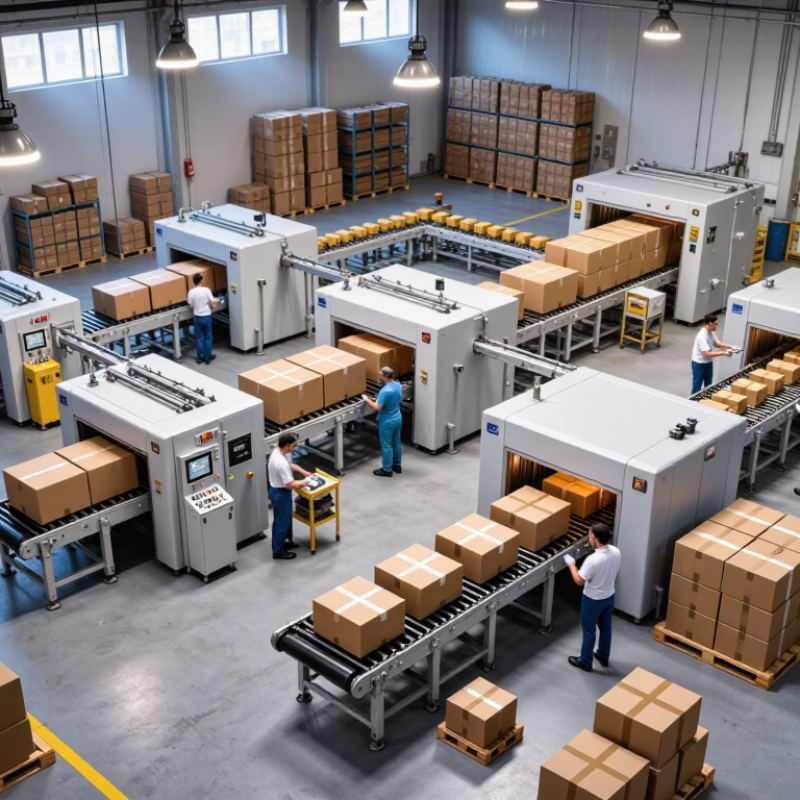
Choose the machine only after defining your box mix. List box styles, dimensions, weekly volumes, and peak-shift targets. A line built for standard slotted cartons may struggle with frequent die-cut changes. Record board grades, flute profiles, and print needs; single-wall and double-wall sheets can feed differently. Fibre Box Association guidance highlights matching box construction to protection and converting needs, not just machine speed.
Material recovery matters, but recycled content is not a simple machine setting. The U.S. EPA’s 2018 Advancing Sustainable Materials Management report estimated that 96.5% of corrugated boxes were recycled. That figure describes recovery, not how consistently each recycled linerboard grade will run. Ask suppliers to test your actual sheets, including warped samples. This step is easy to skip. It shouldn’t be.
Tips: Bring three representative box designs and your least predictable board to a machine trial. Measure good boxes per minute, changeover time, waste, and operator adjustments—not advertised maximum speed. If demand forecasts are uncertain, modular options may help, though they can add cost and complexity. A perfect forecast is unlikely; leave room to reconsider.
Box-making machines differ less by their names than by the work they combine. Flexo folder-gluers print, slot, fold, and glue corrugated sheets in one line, making them suited to repeat orders and high throughput. Rotary die-cutters handle complex outlines, hand holes, and display features. Flatbed die-cutters offer controlled cutting for intricate designs and smaller batches, though their cycles are often slower. On-demand box makers cut and crease variable-size boxes without conventional dies. Useful for short runs. FEFCO’s European Database Report 2022 records 52.5 billion square metres of corrugated production in Europe, a scale that makes throughput important—but not the only selection criterion.
Compare each machine’s usable speed, changeover time, size range, waste rate, and staffing needs against actual orders. A line rated at high speed may slow sharply when operators switch board grades or print setups. Check a sample run using your own board, artwork, and box dimensions. Watch whether creases stay crisp and glued seams hold after folding. For changing order sizes, flexible setup may matter more than peak output. For steady, standardized work, automation can reduce handling between operations. I would still question any decision based on brochure speed alone; real performance depends on material, maintenance, and operator experience. A small trial can expose those gaps.
| Machine Type | Primary Function | Core Capabilities | Best Suited For | Key Advantages | Main Considerations | Useful Selection Checks |
|---|---|---|---|---|---|---|
| Corrugator Line | Produces corrugated board by bonding fluted paper between liner sheets. | Forms single-, double-, or heavier multiwall board, depending on the line configuration; can control board width, flute combination, and cut-off length. | Plants that make corrugated board in-house or need substantial control over board supply and specifications. | Provides direct control over board construction and can supply downstream converting equipment. | Requires significant floor space, material handling, utilities, setup, and coordination between paper supply and converting operations. | Check working width, flute combinations, heating and bonding system, cut-off range, changeover needs, and compatibility with planned paper grades. |
| Flexo Printer-Slotter | Prints designs on corrugated sheets and forms slots and scores for box folding. | Combines flexographic printing with slotting and creasing; some configurations include sheet feeding, die cutting, or folding and gluing. | Regular slotted cartons and other corrugated boxes with repeatable graphics and straightforward shapes. | Combines several converting steps in one production flow and suits repeat work with consistent layouts. | Print quality, registration, and changeover time depend on machine configuration, print units, board condition, and job complexity. | Assess sheet-size range, number of print units, print registration, slotting and scoring adjustment, wash-up requirements, and setup time. |
| Rotary Die-Cutter | Cuts and creases corrugated sheets using a cylindrical die. | Produces shaped blanks, hand holes, ventilation openings, and other features that are difficult to make with standard slotting. | High-volume production of repeat die-cut designs, including display packaging and specialty corrugated boxes. | Supports continuous processing and is suited to repeat jobs requiring a custom cut pattern. | Requires a suitable rotary die for each design; tooling cost, design changes, and achievable detail depend on the application and board. | Check sheet dimensions, die availability and cost, required cutting detail, waste removal, and the time needed to change jobs. |
| Flatbed Die-Cutter | Cuts and creases sheet material with a flat cutting die and platen action. | Handles custom outlines, complex cut-and-crease patterns, and features such as windows or locking tabs, subject to machine and board limits. | Short runs, varied designs, and jobs where precise or intricate blank shapes are important. | Offers flexibility for changing designs and can accommodate layouts that are not practical on a standard slotter. | Production speed and setup needs vary by machine and job; each design generally requires its own cutting die. | Confirm maximum sheet and cutting area, material thickness range, die setup method, stripping options, and expected job mix. |
| Folder-Gluer | Folds prepared box blanks and bonds the manufacturer's joint with adhesive. | Automates folding and joint gluing for compatible box styles; some machines also support counting, stacking, or bundling. | Repeat production of corrugated or folding-carton blanks designed for machine folding and gluing. | Reduces manual folding and joining and can provide consistent output when blanks are properly prepared. | Not every box style is machine-foldable; blank quality, crease accuracy, adhesive choice, and setup affect performance. | Check supported box styles, blank-size range, board or carton compatibility, adhesive system, changeover process, and operator access. |
| Box Stitcher | Joins corrugated box flaps with metal staples. | Closes box joints using stitching heads; machine formats may support manual feeding or more automated operation. | Large, heavy-duty, or industrial corrugated boxes where a stitched joint is appropriate. | Provides a mechanical joint and can suit applications requiring stronger closure than a simple glued manufacturer's joint. | Staples add material and may not be suitable for every product, packaging specification, or recycling requirement. | Review box dimensions, board thickness, stitch pattern, staple specifications, safety features, and customer or industry requirements. |
Note: Actual output, material limits, and finished-box quality depend on the specific machine configuration, tooling, board or carton grade, operator skill, and job design. Confirm requirements with a machine specification sheet and representative production samples.
Choose a box machine around your real production pattern, not just the highest number in a sales quote. Record average and peak output, common box sizes, and how often orders change. A line rated for 3,000 boxes per hour may struggle if frequent setups keep it idle. Peak figures mislead. Leave room for growth, but avoid paying for capacity that sits unused.
Automation should solve a specific bottleneck. Automatic feeding and gluing can reduce repetitive handling, while faster changeovers may matter more than maximum speed for short runs. Check how operators load board, adjust guides, clear jams, and stack finished cartons. Ask for cycle times using your own board grade and box design. Watch a full run, not only a short demonstration. Small pauses add up.
Product flexibility depends on the formats you actually sell. Compare the machine’s supported dimensions, board thicknesses, crease accuracy, and changeover steps. If you make several styles, test the smallest and largest boxes, plus one awkward design. There is no perfect fit; forecasts change, and flexibility can cost speed or add setup work. Inspect sample boxes for square corners, clean folds, and secure glue joints. A machine that handles today’s common orders reliably may be more useful than one with impressive specifications.
Before choosing a box manufacturing machine, measure the full working area, not just the machine footprint. Include room for flat blanks, finished cartons, pallet movement, and safe access to service panels. A narrow aisle can turn a fast line into a daily bottleneck. Check ceiling height, floor loading, power connections, and dust extraction needs with your facilities team. Leave space for maintenance. It is easy to underestimate.
Maintenance demands should match the skills and time available on each shift. Ask how often blades, belts, and feed rollers need inspection, and whether routine adjustments require specialist support. Request a maintenance schedule and spare-parts list before purchase. Safety deserves equal attention: guarding, emergency stops, clear lockout points, and noise levels should be checked during a live demonstration. The U.S. Bureau of Labor Statistics reported a 2.8 total recordable injury and illness rate per 100 full-time workers in manufacturing for 2023. That figure, from its Employer-Reported Workplace Injuries and Illnesses report, is a reminder to assess hazards at the actual workstation, not only on paper.
Operator needs can be overlooked when teams focus on output speed. Have the intended operators test loading, adjustments, touchscreen controls, and jam clearing. Watch how often they reach across the feed area or bend to change a setting. Small details matter. I would not assume training alone will fix awkward access; machine layout may need another look.
Choosing a box manufacturing machine starts with the full cost, not just the purchase price. Include installation, operator training, tooling, energy use, maintenance, and likely downtime in your estimate. Ask suppliers for a written breakdown and clarify what the warranty excludes. A low quote can become expensive when spare parts take weeks to arrive. Small details matter.
Tips: Compare service response times, parts availability, and training options. Ask for references from facilities producing similar box sizes and volumes. Request a demonstration using your actual board grades, if possible.
Supplier support affects daily output. Check whether technicians can diagnose faults remotely and how quickly they can visit your site. Confirm which wear parts you should keep on hand. Then compare expected output with your real order mix; a fast machine may still be a poor fit for frequent size changes. Not always. Long-term value depends on usable capacity, consistent quality, and manageable maintenance—not the highest speed listed in a brochure. Review these assumptions with your production team. Estimates can be wrong, especially when demand shifts. Keep a modest allowance for learning time and unplanned service, rather than treating every forecast as certain.