
hero image

China Best Aluminium Heat Dissipation Manufacturers?

Choosing the China Best Aluminium Heat Dissipation Manufacturers requires more than comparing catalog prices. Buyers should examine alloy selection, extrusion accuracy, fin density, surface treatment, and thermal test data. These details directly influence how quickly heat leaves an LED housing, battery pack, inverter, or industrial controller.

Professor Avram Bar-Cohen, a respected thermal-management authority, has emphasized: “Thermal management must be designed into a system, not added afterward.” This principle explains why Aluminium Heat Dissipation should be evaluated during product development. A supplier may offer attractive profiles, yet poor contact flatness can create a thin air gap. That small gap may raise operating temperatures.

Real manufacturing evidence matters. Ask for extrusion samples, dimensional reports, thermal-resistance results, and production photographs. Check whether the factory controls alloy composition and aging treatment. Review its machining capability, anodizing consistency, packaging, and inspection process. Independent laboratory testing adds credibility, especially for high-power applications.

No supplier is perfect. A manufacturer with advanced equipment may still communicate slowly. Another may provide excellent prototypes but struggle with large-volume delivery. This is where experience becomes valuable. Visit the facility when possible, or request a live video inspection. Compare response quality, not only quoted cost.

The best choice depends on your heat load, installation space, target temperature, and annual volume. China has many capable manufacturers, but the ranking is never final. Careful validation remains essential. Good Aluminium Heat Dissipation is measured in stable performance, repeatable production, and fewer surprises after installation.
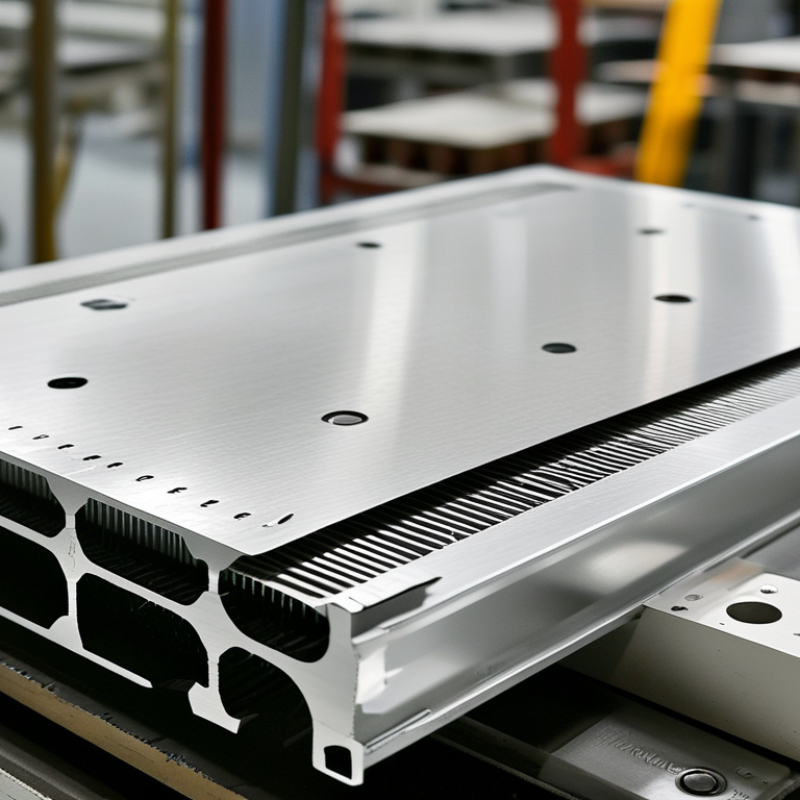
China Best Aluminium Heat Dissipation Manufacturers?

Aluminium Heat Dissipation Basics: Conductivity from 167–237 W/m·K

Choosing the best aluminium heat dissipation manufacturer requires more than comparing product prices. Conductivity often ranges from 167 to 237 W/m·K, depending on alloy, temper, and purity. High-purity aluminium can approach 237 W/m·K, while stronger commercial alloys may perform near 167 W/m·K. This difference affects heat flow through fins, housings, and thermal plates. It is not a small detail.

In practical projects, experienced manufacturers confirm alloy data with laboratory testing and production records. They also control extrusion quality, wall thickness, surface flatness, and machining accuracy. A well-designed heat sink still needs reliable contact with the heat source. Tiny air gaps can reduce performance. Surface treatment may improve corrosion resistance, but some finishes add thermal resistance. This point is often overlooked. I have seen designs focus on conductivity while ignoring mounting pressure and interface materials.

Tips: Ask for measured conductivity values, not general claims. Check thermal testing conditions and sample dimensions. Compare the complete thermal path, including interfaces and airflow. Request dimensional reports for critical fins. A beautiful profile can still cool poorly. Also, allow room for mistakes during early testing; real assemblies rarely match simulations perfectly.

China Best Aluminium Heat Dissipation Manufacturers? — Aluminium Heat Dissipation Basics: Conductivity from 167–237 W/m·K

Thermal conductivity indicates how efficiently aluminium transfers heat. The representative values shown range from approximately 167 to 237 W/m·K. Pure aluminium has the highest conductivity, while commonly used engineering alloys may provide lower conductivity because alloying elements and temper conditions affect heat transfer performance.

China’s Main Manufacturing Routes: Extrusion, Die Casting, CNC, and Skiving

China Best Aluminium Heat Dissipation Manufacturers?

China’s aluminium heat dissipation manufacturers commonly use extrusion, die casting, CNC machining, and skiving. Each route suits a different thermal design. Extrusion works well for long heatsinks with repeated fins. It offers stable profiles, efficient material use, and manageable tooling costs. Designers should check fin thickness, straightness, alloy selection, and cutting accuracy. Small details matter.

Die casting supports complex housings, mounting bosses, and integrated channels. It can reduce assembly work, but trapped porosity may weaken thermal performance. A reliable supplier should explain gate design, vacuum control, and leakage testing. CNC machining provides precise surfaces and custom features after extrusion or casting. It is useful for prototypes, flat contact areas, and tight mounting tolerances. However, excessive machining can increase waste and production costs. Not always.

Skiving cuts fins directly from an aluminium block, creating thin, continuous fins with strong heat flow. This route suits compact, high-density cooling components. It may require careful control of tool wear, fin spacing, and base thickness. In practical sourcing, the best manufacturer is not simply the one offering the lowest quotation. Request material certificates, dimensional inspection records, thermal test conditions, and sample reports. Compare thermal resistance under the same airflow and power load. A polished sample can still hide process inconsistency. That deserves attention. Production audits, traceable inspection steps, and honest communication about limitations provide stronger evidence than marketing claims.

China Best Aluminium Heat Dissipation Manufacturers? - China’s Main Manufacturing Routes: Extrusion, Die Casting, CNC, and Skiving

Manufacturing Route Typical Aluminium Alloys Typical Thermal Conductivity Typical Dimensional Capability Production Profile Heat-Dissipation Features Common Applications
Aluminium Extrusion 6063-T5/T6; 6061-T6; 6005A-T6 Approximately 160–235 W/m·K, depending on alloy and temper Typical profile dimensional tolerance: around ±0.15–0.50 mm, depending on size and specification Highly suitable for long lengths, repeat production, and moderate-to-high volumes; tooling cost is generally lower than die-casting tooling Allows continuous fins, complex channels, and high fin-to-base ratios; fins can be cut to required lengths after extrusion LED luminaires, inverter housings, power supplies, telecom equipment, industrial control cabinets, and general electronic heat sinks
Aluminium Die Casting ADC12; A380; AlSi9Cu3 and similar Al-Si alloys Approximately 90–160 W/m·K, depending on alloy, porosity, and casting quality Typical as-cast tolerance: approximately ±0.10–0.30 mm for selected dimensions; tighter features may require machining Efficient for high-volume, near-net-shape parts with integrated ribs, bosses, mounting points, and housings Supports integrated cooling fins and mechanical features; internal porosity and wall thickness must be controlled for thermal performance Automotive electronics, motor controllers, LED bodies, communication equipment housings, and power-management enclosures
CNC Machining 6061-T6; 6082-T6; 7075-T6 for strength-focused components Approximately 130–175 W/m·K for common 6000-series aluminium alloys Common production capability: approximately ±0.05–0.10 mm; tighter tolerances require controlled process planning and inspection Well suited to prototypes, low-to-medium volumes, complex geometries, and secondary finishing of extruded or cast parts Provides precise contact surfaces, flatness, threaded holes, grooves, and customized cooling channels; material removal can increase cost Prototype heat sinks, precision cold plates, aerospace electronics, laboratory equipment, and custom thermal assemblies
Skived-Fin Heat Sink Usually 1060, 1070, or 6063 aluminium, selected for thermal conductivity and formability Approximately 180–235 W/m·K for commonly used high-conductivity aluminium grades Fin thickness and pitch are application-dependent; typical fin thickness may be about 0.2–1.0 mm Suitable for low-to-medium volumes, customized fin layouts, and applications requiring high fin density without brazing or soldering Fins are cut and formed from a solid aluminium base, creating low thermal resistance between the base and fins High-power LEDs, CPUs, GPUs, laser modules, telecom systems, and compact forced-air cooling assemblies
Selection guidance: Thermal conductivity values are approximate room-temperature ranges for commonly used aluminium grades. Actual heat-sink performance also depends on fin geometry, base thickness, surface treatment, airflow, contact resistance, flatness, and operating conditions.

6063-T5 or 6061-T6: Comparing Thermal Performance and Mechanical Strength

China Best Aluminium Heat Dissipation Manufacturers?

6063-T5 and 6061-T6 are common choices for aluminium heat dissipation parts. Their performance differs beyond the alloy label. In extrusion projects I have reviewed, 6063-T5 usually offers better thermal conductivity, often near 200 W/m·K. 6061-T6 commonly measures closer to 167 W/m·K, depending on chemistry and testing conditions. The difference can reduce temperature around LED housings, inverter cases, or compact power modules.

Thermal conductivity is only one factor. Fin spacing, wall thickness, airflow, surface contact, and machining quality can change the final result. A well-designed 6061-T6 heat sink may outperform a poorly designed 6063-T5 profile. Small details matter. For natural convection, wider fins and open channels often help more than a minor alloy advantage. Forced airflow changes the calculation again.

Mechanical strength favors 6061-T6. Its tensile strength often reaches about 290 MPa, while 6063-T5 commonly remains near 185 MPa. Exact values vary with section size, supplier controls, and applicable standards. Use 6061-T6 when the housing carries vibration, clamps, or structural loads. Choose 6063-T5 when complex extrusion shapes and thermal efficiency matter most. The comparison is not perfectly tidy. Real components should undergo thermal cycling, dimensional inspection, and load testing before production approval. A datasheet alone can mislead.

How to Evaluate Suppliers: ISO 9001, IATF 16949, RoHS, and Test Reports

Choosing China’s best aluminium heat dissipation manufacturers requires more than comparing prices. Start with an ISO 9001 certificate and verify its issuing body, validity, and covered production site. The certificate should match the factory address and business scope. A copied PDF proves little. Ask how engineers control extrusion tolerances, surface treatment, and packaging damage.

For automotive projects, IATF 16949 deserves closer attention. Confirm that it covers the relevant manufacturing location, not only a separate office. Request process flow charts, control plans, inspection records, and corrective-action reports. During supplier audits, I check whether operators actually follow these documents. Sometimes the paperwork looks excellent, while a caliper beside the production line tells another story.

RoHS compliance should include material declarations and recent laboratory test reports. Check the tested alloy, coating, solder, and sample identification. Reports should show test methods, dates, laboratory details, and traceable sample numbers. For heat sinks, request thermal resistance data under defined airflow, power, mounting pressure, and ambient conditions. A bare value is not enough. I have seen reports omit fan speed, which makes comparison unreliable. Independent testing adds confidence, but supplier data still needs practical verification through pilot samples, dimensional checks, and repeated thermal tests. Mistakes happen, even in capable factories. A transparent supplier explains them clearly.

Ranking China’s Best Manufacturers by Thermal Resistance, Tolerance, and Capacity

China Best Aluminium Heat Dissipation Manufacturers

Ranking China’s best aluminium heat dissipation manufacturers requires more than comparing quotations. Thermal resistance should lead the evaluation. Top-tier producers commonly provide extruded or machined profiles with tested resistance below 0.5°C/W in suitable assemblies. Their reports should show alloy grade, surface treatment, airflow conditions, and measurement methods. Without these details, impressive numbers mean little.

Dimensional tolerance separates reliable suppliers from average ones. Leading factories often control critical fin spacing and base thickness within ±0.05 millimeters for precision projects. Inspectors should verify samples with calibrated gauges, not visual checks alone. A strong manufacturer also tracks warpage, burrs, coating thickness, and flatness after production. Small defects can increase contact resistance.

Capacity matters when orders grow. High-ranking manufacturers usually maintain stable monthly output, multiple extrusion lines, and documented backup processes. They can support pilot batches before full production. Still, large capacity does not guarantee better cooling. Not perfectly linear. A smaller facility may deliver tighter tolerances and faster engineering changes. Buyers should compare rejection rates, laboratory records, production experience, and response quality. I would also question any supplier claiming zero defects; real manufacturing always needs inspection, correction, and honest reporting.