
1101 W. Sanilac Rd. Caro, MI 48723
989.673.6690
Choosing the right China manufacturer for a Pcr Cosmetic Tube requires more than comparing prices or printed samples. Global buyers now examine recycled content, product safety, traceability, and delivery performance. The OECD Global Plastics Outlook reports that only 9% of plastic waste was recycled globally in 2019. That figure exposes the industry’s challenge.
Packaging decisions matter.
Grand View Research identifies sustainable and recyclable packaging as a major direction in the cosmetics packaging market. However, “eco-friendly” should not remain a vague sales phrase. A qualified Pcr Cosmetic Tube manufacturer should provide documented post-consumer recycled content, material specifications, batch records, and relevant testing. ISO 14021 offers useful guidance for environmental claims, while ISCC PLUS may support traceability for certain recycled materials.
The best supplier is not always the largest factory. It is the manufacturer that can explain how resin enters the tube, how decoration affects recycling, and how quality is checked before shipment. Buyers should inspect wall thickness, cap fit, leakage resistance, color consistency, and printing adhesion. A tube may look perfect under showroom lighting, yet fail after repeated compression or hot filling. That risk deserves honest testing.
China offers extensive cosmetic packaging capacity, including extrusion, injection molding, offset printing, and custom tooling. Still, capability varies widely between suppliers. Factory audits, pilot orders, third-party testing, and clear contracts can reduce uncertainty. No supplier is flawless. The real question is whether the manufacturer responds openly when a sample fails, a color shifts, or recycled resin changes performance. For global buyers, reliability is built through evidence, not confident promises.
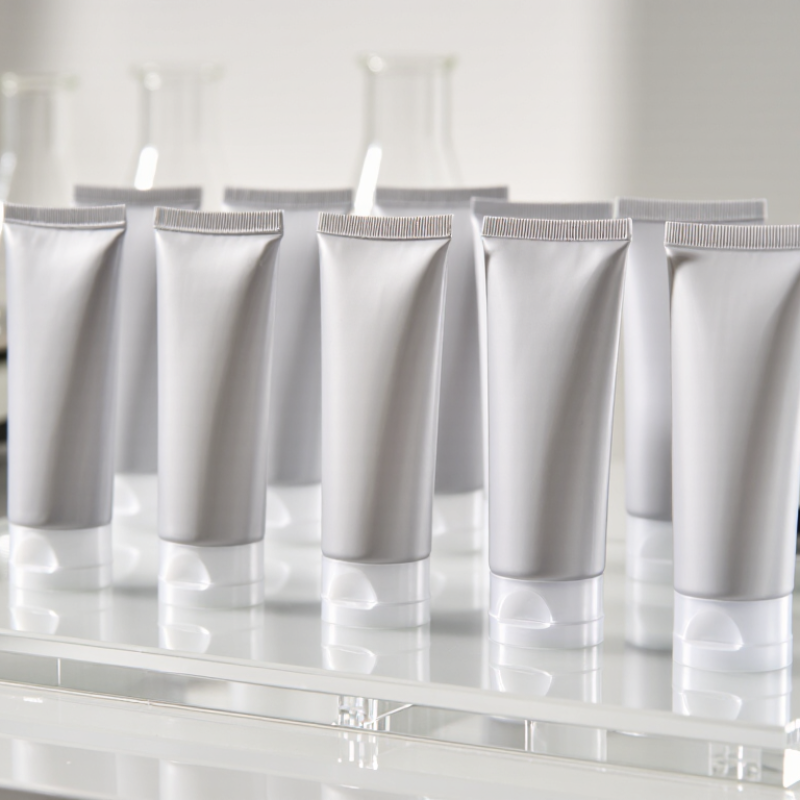
PCR cosmetic tubes use post-consumer recycled plastic collected from discarded household packaging. The material is cleaned, sorted, reprocessed, and blended into new tube structures. For global buyers, “PCR content” must be defined clearly. It may describe the tube body only, or the complete package, including shoulder and cap.
PCR grades commonly range from 30% to 100%. A 30% PCR tube often provides stable appearance and easier printing. At 50% or 70%, buyers gain stronger recycled content claims, but color variation may increase. A 100% PCR tube sounds ideal. It can still require careful testing for sealing, odor, stiffness, and product compatibility. The percentage should be verified by technical documents, not assumed from a green appearance.
Real purchasing work begins with samples. Fill the tube with the actual formula, then observe leakage, deformation, color change, and decoration adhesion. Test storage at different temperatures when possible. Some formulas interact poorly with recycled polymers. This is easy to overlook. A reliable manufacturer should provide material declarations, batch traceability, inspection records, and clear PCR calculations. Buyers should also ask whether caps, shoulders, and inner layers contain PCR. Sometimes “100% PCR” refers only to one component. That wording needs reflection. Tube weight, barrier performance, and recycling goals may conflict, so the best grade depends on the formula, filling process, shelf life, and required appearance.
For global buyers, a PCR cosmetic tube manufacturer must prove more than attractive sustainability claims. ISO 9001 supports controlled processes, documented inspections, and corrective actions. It also helps teams trace resin batches, printing records, and finished tube samples. Ask for current certificates, audit scope, and production-site details. A certificate alone is not enough.
GMP practices add discipline to cosmetic packaging production. Workers should follow hygiene procedures, material handling rules, and line-clearance checks. In a controlled room, filtered air, pressure differences, temperature, and humidity require regular monitoring. Operators may wear gloves, hair covers, and clean garments. Surfaces need scheduled cleaning, with records available for review. Small details matter, especially around open tube bodies and closures.
Cleanroom controls can reduce dust and foreign-particle risks, but they cannot remove every production problem. The manufacturer should explain its particle limits, sampling points, and response process. PCR resin also needs careful incoming inspection because color, odor, and flow can vary between batches. This is where practical experience matters. A strong supplier shares test data, retention samples, and deviation reports without hiding uncomfortable results. Some systems still need improvement. That honesty is often more reliable than perfect-looking paperwork.
ISO 9001 supports quality management, GMP controls production and hygiene, and ISO 14644 classifies cleanroom air cleanliness.
The chart presents the maximum concentration of airborne particles at least 0.5 micrometres in size permitted by ISO 14644-1 for selected cleanroom classes. Lower particle limits indicate stricter air-cleanliness control. These standards are reference requirements for evaluating controlled manufacturing environments and do not represent data from any specific company or brand.
When global buyers evaluate a PCR cosmetic tube manufacturer, material evidence should guide the decision. A smooth surface is not enough. PCR resin can vary by batch, affecting stiffness, color, odor, and barrier performance. That variation matters. Practical suppliers should provide resin traceability, batch records, and test reports from qualified laboratories.
Barrier testing should match the formula and packaging structure. Oxygen transmission and water vapor transmission tests help assess protection during storage. For sensitive creams, small permeability changes may affect texture or scent. Wall thickness also deserves attention. A tube can look strong but perform unevenly near the shoulder or tail seal. Testing should cover those weak points.
Seal strength is equally important during filling, shipping, and daily use. Samples should be tested after sealing, temperature cycling, and simulated handling. A reliable specification includes minimum seal strength, failure mode, and sampling frequency. The seal should fail predictably, not split randomly. I have seen attractive samples lose strength after repeated compression.
A 24-month stability program should combine real-time storage with accelerated aging. Check appearance, odor, weight loss, torque, leakage, and compatibility with the formula. PCR content may influence long-term consistency, so retain samples from different production batches. No test removes every risk. A stronger process records exceptions, investigates drift, and adjusts specifications when evidence demands it.
EU packaging policy is pushing recycled plastic higher by 2030. The often-mentioned 30% target matters to global cosmetic buyers, but it is not a universal rule for every tube. Requirements can differ by packaging type, material, and product contact. A reliable Chinese manufacturer should explain these differences clearly. Vague promises are risky.
PCR means post-consumer recycled plastic. Its quality can vary between production batches. Experienced tube manufacturers should control color, odor, viscosity, sealing strength, and print adhesion. Buyers should request PCR source information, recycled-content evidence, migration testing, and batch traceability. A small sample can reveal unexpected gray tones or weak shoulder welding. That detail matters.
Compliance begins before mass production. Confirm the intended EU market, tube structure, cap material, barrier layer, and decoration process. Ask whether recycled content applies to the whole package or only selected components. Keep technical files, test reports, supplier declarations, and change records together. This supports audits and future regulatory checks.
Not every PCR tube performs perfectly. Some formulations need more testing. Some sustainable designs still use too much virgin plastic. That deserves honest review. Manufacturers with practical experience should suggest lighter structures, mono-material options, or controlled PCR percentages without overstating environmental benefits. Global buyers need evidence, not attractive wording.
China Best PCR Cosmetic Tube Manufacturer for Global Buyers?
Selecting a PCR cosmetic tube supplier requires more than comparing unit prices. Confirm the MOQ for each diameter, color, cap, and decoration method. A supplier may quote 10,000 pieces, but custom printing can raise the real minimum. Ask whether unused components are included in the MOQ. This detail often changes the project budget.
A 15–30-day lead time sounds practical, but define the starting point. Does production begin after artwork approval, deposit receipt, or sample confirmation? Request a written schedule with milestones for material preparation, molding, printing, inspection, and shipment. Reliable suppliers should also explain delays openly. In my experience, vague timelines create more risk than slightly longer ones. I still question every “fast delivery” promise.
Tips: Request batch-level traceability records. These should identify the PCR resin source, recycled content percentage, production date, machine line, and inspection results. Ask for resin certificates, color records, dimensional checks, and retained samples. A QR code can help, but it is not proof by itself. Match each record to the shipped lot. Review one real sample before approval, and test the tube under filling, sealing, squeezing, and transport conditions. Small gaps matter.