10 Best Seamless Carbon Steel Pipe Suppliers Worldwide
Choosing among the 10 Best Seamless Carbon Steel Pipe Suppliers Worldwide requires more than comparing prices or catalog sizes. Global steel demand remains substantial. The World Steel Association’s October 2024 Short Range Outlook projects worldwide finished steel demand at about 1.75 billion tonnes in 2024. This scale supports strong infrastructure activity, yet it also increases sourcing complexity.
Quality is not negotiable.
A reliable Seamless Carbon Steel Pipe Supplier should demonstrate traceable production, consistent chemistry, and controlled mechanical properties. Buyers should review mill test certificates, heat numbers, ultrasonic inspection records, hydrostatic testing, and dimensional reports. ASTM A106, ASTM A53, API 5L, ASME, and ISO requirements may apply, depending on the service environment. The OECD’s Steel Outlook highlights continuing pressure on producers to improve efficiency, resilience, and environmental performance. These factors now influence supplier evaluation, not only product cost.
This guide considers manufacturing capability, export experience, certification, delivery performance, and technical support. It also examines practical details, such as whether pipe markings remain readable after transport and whether protective caps prevent damaged threads. Market studies from Grand View Research and other industrial analysts indicate continued demand for seamless pipes in oil and gas, power generation, construction, and process industries. Still, published rankings are never perfect. Supplier performance can vary by factory, project size, and destination country. A polished website proves little. Direct audits and verified references matter more. The following suppliers deserve careful review, but every buyer should confirm current certificates, capacity, lead times, and applicable standards before placing an order.
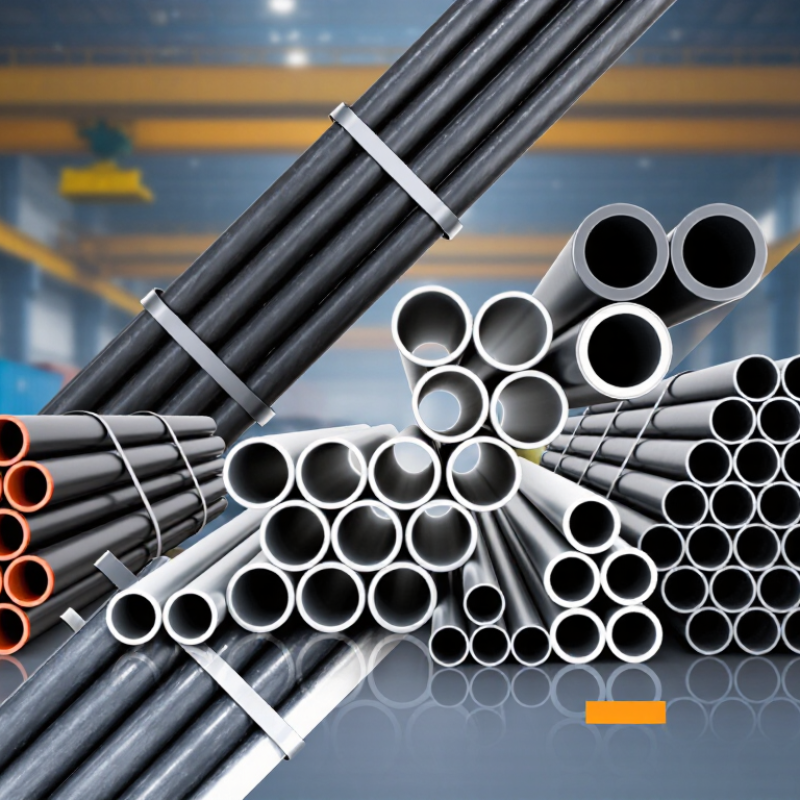
What Seamless Carbon Steel Pipes Are and Why They Matter
Seamless carbon steel pipes are formed from solid steel billets, then pierced and rolled into hollow sections. They have no longitudinal weld seam. This structure can reduce weak points under pressure, especially when fluids move through hot, vibrating systems. Carbon steel relies mainly on iron and carbon, not extensive alloying additions. It offers strength, machinability, and practical cost control.
The World Steel Association reported about 1.89 billion tonnes of crude steel production in 2023. That scale supports a deep supply chain for energy, construction, water, and process industries. Yet more steel does not automatically mean better pipe quality. Wall thickness, ovality, chemical composition, heat treatment, and traceability still require careful verification. A pipe may look flawless outside.
For buyers assessing the 10 best seamless carbon steel pipe suppliers worldwide, technical evidence matters more than polished claims. Request mill test certificates, dimensional inspection records, hydrostatic test results, and applicable standards such as ASTM, ASME, or API specifications. The International Energy Agency continues to identify oil and gas infrastructure as a major industrial investment area, where pressure failure can create severe operational and safety costs. Still, seamless pipe is not universally superior. It may cost more, and corrosion protection remains essential. That detail is easy to overlook.
Key Standards for Evaluating Global Pipe Suppliers
A reliable seamless carbon steel pipe supplier should be judged by standards, not polished websites. The World Steel Association reported 1.89 billion tonnes of crude steel production in 2023. This scale shows market capacity, but it does not prove pipe quality.
Check whether the supplier matches the required specification. Common references include ASTM A106 for high-temperature service, ASTM A53 for general applications, and API 5L or ISO 3183 for line pipe. EN 10216 may apply to pressure purposes in European projects. Ask for heat numbers, chemical analysis, tensile results, and hydrostatic test records. Inspectors should compare markings with mill certificates and measured wall thickness. Small mismatches matter.
Quality systems need deeper review. ISO 9001 certification supports process control, but it does not replace product testing. The ISO Survey 2023 recorded more than one million ISO 9001 certificates worldwide, showing broad adoption and limited differentiation. This is easy to overlook. Request recent non-destructive testing records, calibration dates, and traceability from billet to bundle. Third-party inspection can verify ultrasonic testing and dimensional tolerances before shipment. Certificates alone can still create false confidence. A supplier may meet ASTM chemistry while missing project-specific impact, coating, or sour-service requirements. Check the purchase standard, destination rules, and inspection plan line by line.
Key Standards for Evaluating Global Carbon Steel Pipe Suppliers
Minimum yield strength of representative carbon steel pipe grades specified by widely used international standards
Higher minimum yield strength can indicate greater resistance to permanent deformation, but it should not be used alone to select a supplier. Buyers should also verify the applicable standard edition, chemical composition, dimensional tolerances, impact-test requirements, inspection documentation, and traceability. Values shown are representative minimum yield strengths for the listed grades at standard reference conditions.
Reference standards: ASTM A106/A106M Grade B, ASTM A53/A53M Grade B, API Specification 5L Grade B PSL 1, EN 10216-2 P235GH, JIS G3454 STPG 370, and ASTM A333/A333M Grade 6.
Top Seamless Carbon Steel Pipe Suppliers Worldwide
Choosing among the top seamless carbon steel pipe suppliers worldwide requires more than comparing prices. World Steel Association data shows that global crude steel production reached about 1.89 billion tonnes in 2023. This scale supports broad supply, but it also makes quality screening essential. Reliable suppliers should provide mill certificates, heat numbers, chemical analysis, and mechanical test results for every production batch.
The best suppliers usually maintain stable access to certified steelmaking facilities and modern piercing, heat-treatment, and testing equipment. Buyers should verify compliance with standards such as API 5L, ASTM A106, ASTM A53, or EN 10216, depending on the application. Wall thickness matters. So does ovality. Third-party inspection can identify defects that a sales document may hide. Small details count.
OECD steel market reports continue to highlight global overcapacity and uneven demand conditions. That pressure can encourage aggressive pricing, but the cheapest quotation is rarely the lowest total cost. Check delivery records, export experience, dimensional consistency, and response speed during technical disputes. A supplier may appear excellent on paper.
Experience still needs evidence. Ask for recent project references, traceable inspection records, and realistic production schedules. I would also review packaging: capped pipe ends, dry storage, and corrosion protection often reveal operational discipline. No ranking remains perfect. Market conditions change, and even a qualified supplier can fail without continuous monitoring.
How Suppliers Compare by Quality, Capacity, and Service
The best seamless carbon steel pipe suppliers differ in more than price. Quality begins with controlled steelmaking, accurate wall thickness, and consistent outside diameter. Experienced buyers should review mill certificates, heat numbers, test results, and traceability records. A reliable supplier can explain how ultrasonic testing, hydrostatic testing, and dimensional checks are managed. Inspecting sample pipes also helps reveal surface marks, uneven ends, or poor packaging.
Capacity matters when projects require thousands of metres within a fixed schedule. Compare monthly production, available sizes, stock levels, and realistic lead times. A large factory is not always the fastest option. Some suppliers overstate capacity during busy periods. That deserves scrutiny. Service should include responsive engineering support, clear quotations, export documentation, and practical after-sales communication. Small details matter when a shipment arrives at a crowded job site.
Tips: Ask for recent inspection records, not generic certificates. Confirm tolerances before ordering. Check how damaged pipes are handled. Request a production schedule with inspection points. Speak with the technical team, not only sales staff. One useful question is simple: “What happens if testing fails?” The answer often exposes the supplier’s real reliability. No supplier performs perfectly, and even strong evaluations can miss communication delays or changing raw-material conditions. Reassess performance after delivery, then record what should improve.
Choosing the Right Supplier for Your Project Needs
Choosing a seamless carbon steel pipe supplier requires more than comparing price per tonne. The World Steel Association reported 1.89 billion tonnes of crude steel production in 2023. That scale creates choice, but it does not guarantee consistent pipe quality. Ask for heat numbers, chemical composition, tensile results, and hydrostatic test records. Match the supplier’s manufacturing route to your project’s pressure, temperature, diameter, and wall-thickness requirements. Small mismatches can become expensive field problems.
Audit the supplier’s quality system before signing. Check current ISO 9001 certification, third-party inspection access, calibration records, and non-destructive testing procedures. ASTM and API requirements may apply, depending on service conditions and jurisdiction. Request recent mill test certificates from comparable grades, not generic samples. The International Energy Agency’s World Energy Outlook 2024 continues to show major investment in energy infrastructure, increasing demand for traceable, durable pipe. Delivery capacity matters too. Confirm production slots, packaging, storage protection, and transport routes.
Experience helps, but it can also create blind spots. I would inspect one actual batch before approving a large order. A polished certificate is not enough. Visit the mill when possible, and compare inspection results independently. Suppliers should explain deviations without defensiveness. That conversation is revealing. Consider lifecycle cost, not only purchase price, because premature replacement, welding delays, and corrosion control can outweigh an initial discount. One assumption may still be wrong, so keep acceptance criteria measurable and written.