
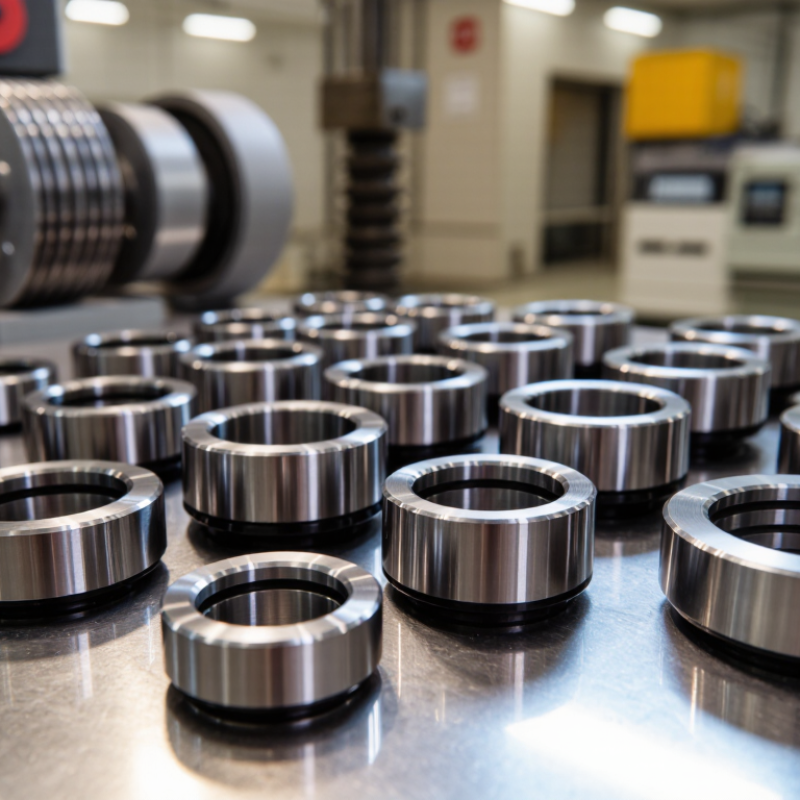
hero image

What Is the Best Carbide Ring Supplier in China?

Choosing the best carbide ring supplier in China requires more than comparing prices. A polished website cannot prove stable material quality. The real evidence appears in test reports, production records, and finished parts.

Dr. Chen Wei, a carbide materials specialist with experience in precision wear components, states, “A reliable supplier is measured by repeatability, not by the lowest quotation.” This principle deserves attention. A dependable manufacturer should explain its carbide grade, cobalt content, density, hardness, and transverse rupture strength. It should also control ring dimensions within documented tolerances. Small errors can create vibration, leakage, or premature wear.

Look closely at the factory process. Ask whether the supplier uses consistent powder preparation, controlled sintering, diamond grinding, and final inspection. Request sample rings before placing a large order. Measure the inner diameter, outer diameter, roundness, surface finish, and edge condition. A serious supplier should provide batch traceability and clear inspection records. It should also communicate realistic lead times and packaging methods.

Not every supplier will meet every application. This is where the evaluation becomes less comfortable. A low-cost ring may look attractive, yet its performance can change between batches. Even an experienced buyer can miss hidden differences in carbide composition. Therefore, the best carbide ring supplier is not simply the largest factory. It is the partner that combines technical knowledge, transparent communication, stable production, and verifiable results. The final decision should follow testing, not promises.

What Is the Best Carbide Ring Supplier in China?

What Is a Carbide Ring? WC–Co Composition and 1,400–2,000 HV Hardness

What Is the Best Carbide Ring Supplier in China?

A carbide ring is a precision component made from tungsten carbide particles bonded with cobalt. This WC–Co structure combines high hardness with useful fracture resistance. Typical grades reach about 1,400–2,000 HV, depending on cobalt content, WC grain size, and sintering quality. Hardness alone can mislead.

ISO 3878 provides a recognized method for Vickers hardness testing cemented carbides. A reliable supplier should report the test load, measured value, density, porosity, transverse rupture strength, and batch number. These details make comparisons practical. Ask for inspection records.

The USGS Mineral Commodity Summaries 2024 estimated global tungsten mine production at roughly 81,000 metric tons in 2023. China supplied about four-fifths of that output, supporting a large domestic carbide manufacturing base. Still, material availability does not prove process control. A capable Chinese supplier should explain powder preparation, pressing, vacuum sintering, grinding tolerance, and final inspection.

Look closely at the ring surface. It should show consistent grinding marks, clean edges, and no visible cracks or chipped corners. Dimensional reports should match the drawing, especially bore diameter and roundness. I would also request a sample before approving volume production. Supplier claims sometimes sound stronger than the evidence. That is where careful verification matters.

Which Quality Standards Apply? ISO 9001, ASTM B777, and Dimensional Tolerances

A reliable carbide ring supplier in China should prove quality through controlled processes, not attractive product photos. ISO’s 2022 Survey recorded more than 1.26 million ISO 9001 certificates worldwide. That figure shows broad adoption, but certification alone does not guarantee accurate rings. Check the certificate scope, audit date, calibration records, and nonconformance handling. Ask whether the supplier controls powder composition, pressing pressure, sintering temperature, grinding, and final inspection.

ASTM B777 deserves careful interpretation. It covers tungsten-base, high-density metal products, not every cemented-carbide ring. A supplier should explain whether the ring’s material matches this specification or requires another carbide standard. This distinction matters. USGS Mineral Commodity Summaries 2024 reported about 84,000 metric tons of global tungsten mine production in 2023, with China contributing approximately 67,000 tons. Raw-material availability is strong, yet consistency still depends on powder traceability and batch testing.

Dimensional tolerances must follow the engineering drawing, not a vague “standard tolerance.” For a small ring, measure outside diameter, inside diameter, thickness, roundness, and surface finish separately. Request inspection reports using calibrated CMMs, micrometers, or optical systems. Define tolerances in microns where necessary.

Small errors become expensive.

I would also review sample data from several batches. One perfect sample proves little. A weakness remains: many supplier reports show averages without process capability or measurement uncertainty. Ask for both. Evaluate Cpk carefully, because capability claims can change with the chosen tolerance range.

What Is the Best Carbide Ring Supplier in China?

Which Quality Standards Apply? ISO 9001, ASTM B777, and Dimensional Tolerances

ASTM B777 classifies tungsten-base heavy metal products by minimum density. The chart shows the minimum density levels associated with Classes 1–4.

ISO 9001 evaluates the supplier’s quality-management system and does not define a specific carbide-ring tolerance. Dimensional tolerances should therefore be confirmed against the buyer’s engineering drawing, inspection plan, and measurement method. ASTM B777 applies to tungsten heavy metal products, not automatically to every tungsten-carbide ring.

How Do Chinese Suppliers Compare on Density, Strength, and Wear Resistance?

What Is the Best Carbide Ring Supplier in China?

Chinese carbide ring suppliers can differ greatly in density, strength, and wear resistance. A reliable comparison starts with material composition, not sales claims. Tungsten carbide density commonly reflects the carbide percentage and binder content. Higher density may improve wear resistance, but it does not guarantee better performance in every application.

Binder selection also matters. Cobalt-based grades can provide useful toughness under impact, while lower binder levels often support greater hardness. The best choice depends on load, speed, temperature, and contact conditions. Test the lot. Ask suppliers for density results, hardness values, transverse rupture strength, and metallographic reports. Independent laboratory verification is even better.

Manufacturing control separates dependable suppliers from inconsistent ones. Check grinding tolerances, surface finish, edge integrity, and batch traceability. A ring with excellent laboratory hardness may still fail if its edge chips during installation. In practical sourcing, sample testing should include actual operating conditions, not only polished showroom samples. Look beyond price. Some suppliers provide complete documentation, yet their production records may reveal uneven results between batches. That detail deserves attention. My own evaluation would remain cautious when a supplier avoids failure data or gives only average figures. Wear resistance is measurable, but field life also depends on alignment, lubrication, and installation quality. A careful Chinese supplier should explain these limits clearly and support claims with repeatable evidence.

Which Manufacturing Processes Matter? HIP Sintering and ±0.01 mm Precision

What Is the Best Carbide Ring Supplier in China?

When evaluating a carbide ring supplier in China, manufacturing control matters more than polished sales language. HIP sintering applies high pressure and heat evenly around the compact. This process reduces internal porosity and supports more stable density. For carbide rings, that can improve wear resistance and reduce unexpected cracking during service. Ask for HIP records, furnace controls, and batch traceability. Vague answers deserve caution.

Precision is equally important. A ±0.01 mm tolerance may be realistic for selected dimensions, but it is not automatic. Ring diameter, thickness, flatness, and concentricity require different methods. Grinding after sintering often achieves tighter results than pressing alone. Coordinate measuring machines, calibrated gauges, and inspection reports should confirm the actual parts. Numbers without measurement conditions are incomplete.

I have seen drawings with ±0.01 mm tolerances applied everywhere. That approach can increase cost without improving performance. A better supplier reviews the drawing and identifies critical surfaces. It should explain where material variation, grinding allowance, or thermal distortion may affect accuracy. Small samples help reveal these issues early. They also expose mistakes.

Look closely at the inspection process. Are measurements taken at controlled temperatures? Are several rings checked from each batch? Does the supplier retain samples and corrective-action records? A dependable manufacturer will discuss limitations openly. Perfect promises sound attractive, but honest engineering is usually more valuable.

How Can Buyers Select the Best Supplier? Testing, Traceability, MOQ, and Lead Time

Choosing the best carbide ring supplier in China requires evidence, not polished catalogs. The USGS Mineral Commodity Summaries 2024 reported about 67,000 metric tons of Chinese tungsten production in 2023, from roughly 81,000 tons worldwide. That concentration makes material traceability essential. Ask for batch numbers, powder origin, carbide grade, binder percentage, and furnace records. A reliable supplier should connect each ring to inspection results and production dates.

Testing must match the ring’s real service conditions. Request hardness, density, transverse rupture strength, dimensional tolerance, surface finish, and coating adhesion data. ISO 2859-1 sampling can support incoming inspection, but it does not replace process control. Review calibration certificates and ask for independent laboratory verification on the first order. Small details matter. A missing test method weakens the report.

MOQ and lead time reveal operational maturity. Compare standard sizes with custom profiles, because tooling can change both cost and schedule. Request separate timelines for drawing approval, tooling, pilot samples, mass production, and final inspection. The World Bank’s Logistics Performance Index 2023 placed China 19th globally, yet transport performance still varies by region and season. Get a written shipping window, not “about two weeks.” I would also ask how delayed materials are reported. No supplier handles every order perfectly, and buyers should challenge optimistic promises before committing.

What Is the Best Carbide Ring Supplier in China? How Can Buyers Select the Best Supplier?
Supplier Profile Typical Carbide Ring Grades Testing Capability Material Traceability Standard MOQ Sample Lead Time Mass-Production Lead Time Quality Documentation Export Experience Overall Score
Profile A WC-Co grades for wear rings, sealing rings, and industrial tooling; approximately 6%–15% cobalt. Hardness, density, magnetic saturation, coercivity, dimensional inspection, and visual inspection available in-house. High 50–100 pieces for standard sizes; custom sizes quoted separately. 7–12 working days 25–35 working days Inspection report, material certificate, dimensional report, and batch packing record. Regular shipments to multiple overseas markets. 92
Profile B Common wear-resistant WC-Co grades, including medium-cobalt formulations for general industrial use. Basic hardness, density, dimensional, and appearance checks; selected tests outsourced. Medium 100–300 pieces for standard products. 10–15 working days 30–45 working days Certificate of conformity and final inspection report; batch-level records available on request. Moderate international sales experience. 81
Profile C Standard carbide grades for general wear applications; limited options for high-corrosion environments. Hardness and dimensional inspection available; density and metallographic testing normally outsourced. Medium 300–500 pieces, with lower quantities subject to setup charges. 15–20 working days 40–55 working days Basic inspection sheet; raw-material records may be available for selected orders. Some export experience through trading channels. 72
Profile D Custom WC-Co compositions for high-wear applications, including fine-grain and corrosion-resistant options. Hardness, density, coercivity, magnetic saturation, metallographic analysis, dimensional CMM inspection, and sample testing. High 25–50 pieces for prototypes; 100 pieces for repeat production. 5–10 working days 20–30 working days Full quality plan, raw-material certificate, process records, inspection report, and retained samples. Strong direct-export capability and established logistics processes. 95
Profile E Economical standard grades for low-to-medium duty wear components. Visual, dimensional, and hardness checks; advanced material testing handled by an external laboratory. Basic 500–1,000 pieces for most custom orders. 18–25 working days 45–60 working days Final inspection report provided; detailed process traceability is limited. Limited direct-export experience. 64
Profile F Fine-grain carbide grades for precision rings and components requiring tighter dimensional control. Hardness, density, magnetic properties, grain-structure review, roundness, surface roughness, and dimensional inspection. High 50–100 pieces for qualified standard designs. 8–14 working days 30–40 working days Material certificate, first-article inspection, control plan, and lot traceability documentation. Regular export orders with documented shipping procedures. 89
Buyer verification checklist: request a pre-production sample, confirm the carbide grade and cobalt content, review batch-level traceability, verify testing methods against the purchase specification, clarify MOQ and tooling charges, and obtain a written lead-time commitment before placing the order.

Article Source: