
1101 W. Sanilac Rd. Caro, MI 48723
989.673.6690
Choosing the right Dynamic Seal manufacturer can affect equipment uptime, maintenance costs, and production safety. A seal may look simple, yet its performance depends on pressure, speed, temperature, media, and installation quality. A reliable supplier should understand these details before recommending a material or design.
This guide introduces seven manufacturers serving global buyers across industrial, automotive, hydraulic, pneumatic, and energy applications. Each company is considered through practical factors, including product range, engineering support, quality systems, material traceability, customization, and international delivery experience. Look for evidence, not impressive claims. Test reports matter.
Small details matter.
A manufacturer may offer advanced compounds, but can it maintain consistent tolerances across repeated orders? Can its technical team explain leakage risks in plain language? Buyers should also review certifications, sampling procedures, packaging protection, warranty terms, and communication during urgent replacements. These points often reveal more than a polished website.
The selection is not absolute. Different industries require different priorities, and pricing alone can create expensive failures. A food-processing plant may need compliant materials and clean production controls. An offshore system may prioritize pressure resistance, saltwater durability, and dependable lead times. Even experienced buyers can overlook installation conditions.
Use this overview as a practical starting point, not a final purchasing decision. Request current documentation, verify test conditions, and compare samples under real operating requirements. Supplier performance can change over time, so ongoing evaluation remains necessary.
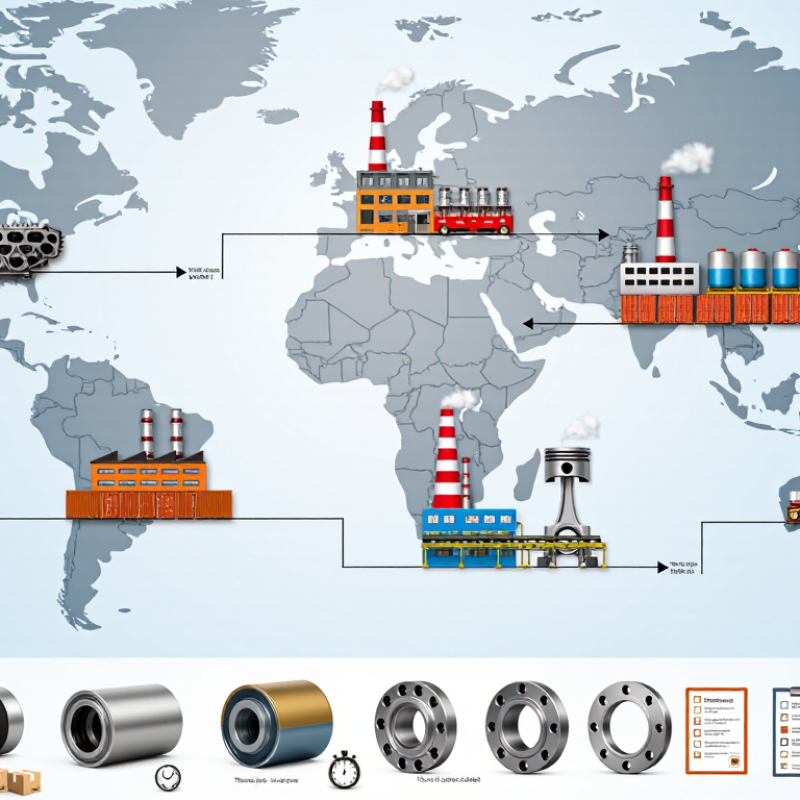
Dynamic seals are engineered to prevent fluid or gas leakage while two surfaces move against each other. They operate in hydraulic cylinders, pumps, rotating shafts, and pneumatic equipment. Unlike static seals, they must manage friction, pressure, temperature, speed, and wear at the same time.
Common designs include rod seals, piston seals, rotary shaft seals, and wipers. Materials may include polyurethane, rubber compounds, PTFE, or specialized composites. Each material behaves differently.
A seal that performs well in clean hydraulic oil may fail quickly in abrasive dust or extreme heat. Installation also matters. A scratched shaft, incorrect groove, or dry start can damage a new seal within hours.
Global buyers need dependable dynamic seals because equipment often works across different climates, service teams, and supply chains. Consistent dimensions, traceable materials, technical drawings, and test records reduce costly uncertainty. Reliable manufacturers should explain pressure ratings, temperature limits, chemical compatibility, and expected service life without hiding behind vague claims. They should also support sampling and quality checks before large orders.
Seven manufacturers may appear similar on paper. They are not always equal in process control or documentation. A common mistake is choosing only by unit price. That choice can create leakage, downtime, and repeated shipping costs. There is no universal seal. Buyers must review the real application, and sometimes revise their original specification.
Choosing a dynamic seal manufacturer requires more than comparing prices. Start with application data: shaft speed, pressure, temperature, media, movement, and expected service life. A capable supplier should ask these questions before recommending materials. That response shows practical experience, not just sales training. Request drawings, tolerance ranges, material certificates, and test reports. Clear documentation matters when products cross borders.
Evaluate engineering depth through design support and failure analysis. Ask whether the manufacturer can explain wear patterns, extrusion risks, friction, and chemical compatibility. Independent testing adds credibility, especially for demanding hydraulic, pneumatic, and rotating equipment. Check production controls, inspection records, traceability, and corrective-action procedures. A factory tour, video audit, or sample inspection can reveal details that brochures hide. Look closely at storage conditions and packaging.
Global reliability also depends on communication and supply continuity. Confirm lead times, minimum order quantities, export documents, and technical support across time zones. Review references from industries with similar operating conditions, not merely famous customer names. Price remains relevant, but a cheaper seal can create expensive downtime. Be careful with impressive claims. Some test results use ideal laboratory conditions and may not reflect field service. No audit is perfect. My own evaluation would remain provisional until samples survive real operating cycles. Recheck assumptions when temperature, fluid, or equipment design changes. A strong manufacturer welcomes that scrutiny and provides evidence without becoming defensive.
Global buyers often compare seven manufacturer profiles when sourcing dynamic seals.
The first specializes in hydraulic rod and piston seals, with strong pressure control and broad metric sizing.
The second focuses on PTFE seals, offering low friction for high-speed cylinders and chemically demanding equipment.
The third produces molded rubber seals, valued for flexible compounds, stable compression, and efficient large-volume production.
The fourth provides custom-engineered seals, using application drawings, shaft measurements, and pressure data to develop precise profiles.
The fifth serves original equipment manufacturers, combining consistent batch quality with production planning and technical documentation.
The sixth develops high-temperature and low-temperature materials, supporting equipment exposed to heat, cold, or aggressive fluids.
The seventh competes through regional manufacturing, shorter delivery routes, and practical customization for standard industrial machinery.
A seal may look perfect and still fail after weeks of cycling. Buyers should request test data for pressure, temperature, speed, fluid compatibility, and wear.
Check the details.
Ask whether the manufacturer has solved leakage around scored shafts, uneven bores, or frequent start-stop movement. Those problems reveal real engineering ability.
Still, no supplier is ideal for every application. Some offer excellent prototypes but weak volume support. Others provide low prices but limited failure analysis. A careful buyer should compare service life, not only unit cost, and review field feedback before approving a long-term supply agreement.
Choosing among the best dynamic seal manufacturers requires more than comparing catalog size. A broad product range should cover rod seals, piston seals, wipers, rotary seals, and guide elements. It should also include materials for heat, abrasion, chemicals, and high pressure. In practical sourcing work, I check whether the supplier explains limits clearly. A long catalog can still hide weak technical depth.
Quality depends on repeatable production, not attractive samples. Look for documented material control, dimensional inspection, surface-finish guidance, and batch traceability. Ask for test data that reflects real speed, pressure, temperature, and media. A seal that performs well in a laboratory may fail beside a dusty construction machine. That detail matters.
Customization is valuable when standard profiles cannot solve leakage, wear, or installation problems. Strong manufacturers can review drawings, recommend compounds, adjust groove dimensions, and produce trial samples. However, custom work may increase tooling costs and delivery time. Global support should include responsive engineers, clear technical files, export-ready packaging, and realistic lead-time updates. Regional inventory can reduce downtime, but availability claims need verification. I have seen buyers trust polished promises too quickly. Supplier scoring should include factory audits, sample evaluation, pilot orders, and after-sales response tests. The process is slower, but it exposes weaknesses before a full production purchase.
This buyer-side scorecard gives equal priority to product range and quality assurance, while customization and global support remain essential for international sourcing decisions. The percentages represent evaluation weights rather than company-specific performance data.
Choosing the right dynamic seal manufacturer requires more than comparing prices. Start with the seal’s working conditions: shaft speed, pressure, temperature, fluid type, and installation space. A capable manufacturer should recommend suitable materials and designs for your actual equipment, not offer one standard solution. Ask for test data, dimensional drawings, material certificates, and clear tolerance requirements. These details reveal technical discipline.
Review the manufacturer’s production experience and quality system. Check whether they control raw materials, inspect critical dimensions, and trace each batch. Sample seals should be tested under conditions close to your application, such as oil exposure, heat cycles, or continuous rotation. Speak with engineers, not only sales representatives. Their answers often show whether they understand failure causes. No supplier is perfect. I would still question unclear claims, missing test records, or unusually short lead times.
Tips: Compare at least seven qualified manufacturers using the same checklist. Request samples before placing a large order. Examine the sealing lip under magnification after testing. Confirm packaging, storage life, replacement support, and communication during production. A factory visit can help, but it is not proof by itself. Some suppliers look impressive during an audit yet struggle with consistent batches. Keep written records, define acceptance standards, and review performance after installation.
Anonymous capability benchmark for comparing dynamic seal suppliers
| Supplier Profile | Primary Capability | Common Dynamic Seal Types | Typical Material Options | Suitable Operating Conditions | Quality Evidence to Request | Customization Lead Time | Best Fit for Global Buyers | Selection Score |
|---|---|---|---|---|---|---|---|---|
| Profile 1 | High-volume molded sealing components | O-rings, rotary shaft seals, piston seals | NBR, FKM, EPDM, silicone, PTFE | General industrial service; approximately -40°C to 200°C depending on compound | ISO 9001 certificate, material certificates, batch traceability, dimensional inspection records | 3–6 weeks for new tooling and samples | Buyers prioritizing stable quality and competitive unit cost | 8.8/10 |
| Profile 2 | Engineered PTFE and low-friction sealing systems | Rod seals, step seals, rotary seals, energized seals | Virgin PTFE, filled PTFE, UHMW-PE, polyurethane, FKM | High chemical resistance, low friction, intermittent high-temperature service | Compound identification, friction and wear data, pressure testing, drawing approval records | 2–5 weeks for prototypes; 5–8 weeks for production tooling | Chemical processing, hydraulics, pumps, and demanding motion applications | 9.1/10 |
| Profile 3 | Hydraulic and pneumatic sealing packages | Piston seals, rod seals, wipers, guide rings, V-packings | Polyurethane, NBR, FKM, PTFE, fabric-reinforced elastomers | Moderate-to-high pressure hydraulic and pneumatic equipment | Pressure-cycle test reports, extrusion-gap calculations, material batch records, inspection plans | 2–4 weeks for standard profiles; 4–7 weeks for custom designs | Mobile equipment, industrial cylinders, presses, and automation systems | 9.0/10 |
| Profile 4 | Large-diameter and heavy-duty rotating seals | Heavy-duty oil seals, split seals, mechanical seals, labyrinth seals | NBR, FKM, PTFE, carbon, ceramic, stainless steel | Contaminated environments, high shaft speeds, large rotating equipment | Shaft-speed limits, runout tolerance data, leakage test results, installation guidelines | 5–10 weeks depending on diameter and construction | Mining, power generation, marine equipment, and large gearboxes | 8.6/10 |
| Profile 5 | Food, pharmaceutical, and hygienic sealing | Sanitary shaft seals, hygienic O-rings, diaphragm seals, custom gaskets | FDA-compliant elastomers, silicone, EPDM, PTFE, hygienic stainless steel | Frequent cleaning, washdown, steam exposure, and regulated contact environments | Food-contact declarations, lot traceability, surface-finish data, cleaning compatibility tests | 4–8 weeks for approved custom designs | Food processing, beverage filling, biotechnology, and pharmaceutical equipment | 9.2/10 |
| Profile 6 | Rapid prototyping and application engineering | Custom rotary seals, miniature seals, low-volume prototype parts | Machined PTFE, polyurethane, NBR, FKM, engineering plastics | Prototype and low-volume applications requiring fast design iterations | 3D models, tolerance analysis, design-for-manufacturing review, prototype inspection report | 1–3 weeks for machined prototypes; 3–6 weeks for molded parts | Equipment developers, maintenance teams, and buyers with urgent replacement needs | 8.7/10 |
| Profile 7 | Automotive and high-volume precision sealing | Valve-stem seals, transmission seals, wheel-end seals, precision O-rings | NBR, FKM, EPDM, ACM, PTFE, specialty thermoplastic compounds | Temperature cycling, vibration, oil exposure, and long-life service requirements | IATF 16949 evidence, PPAP documentation, control plans, capability studies, traceability records | 6–12 weeks for validated production programs | Automotive Tier suppliers and manufacturers requiring repeatable production quality | 9.3/10 |