
1101 W. Sanilac Rd. Caro, MI 48723
989.673.6690
Choosing an Abrasive Metal Cutting Disc in 2026 requires more than comparing price, diameter, and package quantity. Buyers must match the disc to the metal, machine, cutting speed, and working environment. A disc that slices mild steel cleanly may struggle with stainless steel, cast iron, or aluminum. The wrong choice can produce blue heat marks, rough edges, excessive sparks, or premature breakage.
Grinding-process specialist Dr. Jeffrey A. Badger offers a useful principle: “Abrasive technology is about controlling the process, not merely choosing a wheel.” That idea applies directly to cutting discs. Disc composition, bond hardness, reinforcement, thickness, and grain structure influence cutting speed and operator control. Aluminum oxide remains practical for many general steel applications. Zirconia alumina can provide stronger performance on demanding materials. Ceramic-grain products may reduce cutting pressure, but their higher cost deserves careful justification.
Small details matter.
Experienced buyers should inspect certification markings, storage conditions, expiry information, and compatibility with the grinder. Products should meet relevant manufacturer instructions and recognized abrasive-wheel safety requirements, such as EN 12413 or ANSI B7.1, where applicable. Never treat a lower price as proof of value. A disc that lasts twice as long may reduce downtime, yet that claim needs real job-site testing.
This guide compares the leading Abrasive Metal Cutting Disc types for 2026. It considers material compatibility, edge quality, service life, heat generation, safety, and total cutting cost. Some recommendations remain conditional. Real workshops differ, and laboratory performance does not always survive dust, vibration, or rushed handling.
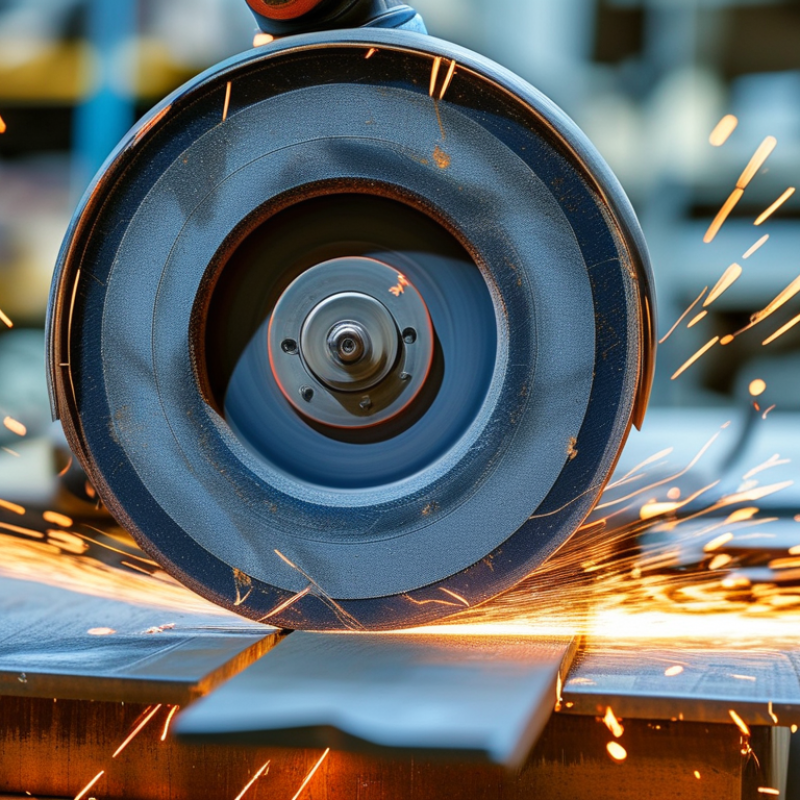
Abrasive metal cutting discs are thin, reinforced wheels that separate metal through controlled abrasion. Their cutting edges contain abrasive grains held in a resin bond. As the disc rotates, these grains fracture and remove small pieces of metal.
Most discs use aluminum oxide for steel and general ferrous metals. Some formulations suit stainless steel or non-ferrous materials better. The disc’s thickness affects speed, stability, and heat. Thin discs cut quickly, but they can flex more easily. Flat cutting discs provide direct access, while depressed-center designs offer clearance around certain tools.
Tips: Check the disc’s diameter, bore size, and maximum RPM before use. Match the disc to the metal, not only the machine. Inspect for cracks, chips, or moisture damage. Keep the guard fitted, and let the disc cut without forcing it.
In practical work, pressure is often the hidden problem. Excessive force creates heat, rough edges, and premature wear. A clean cut should produce controlled sparks, not violent vibration. Cutting mild steel, stainless steel, and aluminum may require different abrasive structures. Aluminum can load the disc quickly, which many new buyers overlook. A disc may look suitable and still perform poorly. This is where testing a small section helps. Results can vary with metal thickness, operator angle, and machine condition. Availability also influences the best choice, but performance should remain the main measure.
2026 Top Abrasive Metal Cutting Disc Types for Buyers
Metal cutting discs are classified by more than diameter. Their abrasive grain, bond, reinforcement, thickness, and intended metal all matter. The main grain families are aluminium oxide for carbon steel, zirconia alumina for tougher alloys, and silicon carbide for selected non-ferrous materials. Disc thickness also changes performance. Thin discs, often 1.0–1.6 mm, cut quickly with less material loss. Thicker discs provide stronger side support but may create more heat. They are not interchangeable.
The bonding system separates discs into resin-bonded and other engineered constructions. Reinforcement layers, usually fiberglass, improve resistance to bending and bursting. Buyers should check the maximum operating speed against the machine’s rated speed. EN 12413 and ISO 525 provide useful requirements for bonded abrasive products, including marking and safety information. The U.S. Bureau of Labor Statistics recorded 5,283 fatal occupational injuries in 2023, according to its Census of Fatal Occupational Injuries report. That figure is not specific to cutting discs, but it reinforces why classification cannot be treated as a catalog detail.
Application is another classification layer. Stainless steel discs should limit contamination from iron, while aluminium cutting requires careful control of loading and heat. A disc that cuts mild steel well may perform poorly on hardened steel. I have seen buyers focus only on price and diameter. That is a weak shortcut. Grain type, thickness, reinforcement, and cutting speed should be reviewed together. Classification is useful, but imperfect; real performance still depends on operator pressure, machine condition, and workpiece support.
| Disc Type | Primary Abrasive | Typical Bond and Construction | Common Metal Applications | Common Disc Shapes | Typical Thickness Range | Main Cutting Characteristics | Key Buyer Selection Factors |
|---|---|---|---|---|---|---|---|
| Aluminum Oxide Cutting Disc | Aluminum oxide, usually fused alumina | Resin-bonded, fiberglass-reinforced wheel with abrasive grain, resin bond and reinforcing layers | Mild steel, carbon steel, structural steel, steel tubing and general ferrous metals | Flat cutting wheel; commonly classified as Type 1 or EN 41 | Approximately 0.8–3.2 mm, depending on diameter and intended use | Balanced cutting performance and cost; suitable for everyday fabrication and maintenance work | Select the correct diameter, arbor size, wheel speed rating and steel compatibility; thinner wheels generally cut faster but can be more sensitive to side loading |
| Zirconia Alumina Cutting Disc | Zirconia alumina, often blended with aluminum oxide | Resin-bonded and fiberglass-reinforced construction | Stainless steel, high-strength steel and other demanding ferrous-metal applications | Flat cutting wheel; commonly Type 1 or EN 41 | Approximately 1.0–3.2 mm | High fracture toughness and good grain retention; can provide longer service life in difficult steel-cutting work | Choose a grade designed for stainless or high-alloy steel when lower contamination and improved durability are required |
| Stainless-Steel Cutting Disc | Usually aluminum oxide or zirconia alumina formulated for stainless steel | Resin-bonded, reinforced and commonly produced with low-iron, low-sulfur and low-chlorine specifications | Stainless steel sheet, pipe, profiles, fittings and fabricated components | Flat Type 1 or EN 41; some products use a depressed-center cutting design | Approximately 0.8–2.5 mm for many handheld applications | Designed to reduce discoloration, corrosion-related contamination and loading when cutting stainless steel | Check the product marking for stainless-steel suitability and contaminant restrictions; do not use a wheel previously used on ordinary carbon steel if contamination must be avoided |
| Thin Precision Cutting Disc | Fine aluminum oxide, zirconia alumina or a blended abrasive | Thin resin-bonded wheel with fiberglass reinforcement | Sheet metal, thin-wall tubing, small profiles, bolts and light-gauge steel components | Flat Type 1 or EN 41 | Approximately 0.8–1.2 mm | Fast kerf penetration, low material loss and relatively low heat input when used with controlled pressure | Use only with stable equipment and straight cuts; avoid twisting, bending or side pressure because thin wheels are more vulnerable to impact and flexing |
| Heavy-Duty Cut-Off Disc | Coarse aluminum oxide, zirconia alumina or a hybrid grain | Thicker resin-bonded wheel with multiple fiberglass reinforcement layers | Heavy carbon-steel sections, thick-wall pipe, rebar, rails and large structural profiles | Flat Type 1 or EN 41; some machine-cutting wheels use specialized profiles | Approximately 2.0–4.0 mm for common portable applications | Greater mechanical stability and durability for demanding cuts, with a wider kerf and usually slower penetration than thin discs | Confirm that the grinder or cut-off machine has adequate power and that the wheel diameter and maximum RPM match the equipment |
| Silicon Carbide Cutting Disc | Silicon carbide | Resin-bonded, reinforced construction; formulation varies by application | Cast iron, some non-ferrous metals and selected abrasive or difficult-to-cut materials | Usually flat Type 1 or EN 41 | Approximately 1.0–3.2 mm | Very hard, sharp abrasive grain; can cut certain brittle or non-ferrous materials effectively, but is not the default choice for general steel | Verify the wheel specification for the exact metal; use a steel-rated aluminum-oxide or zirconia disc when cutting ordinary ferrous steel |
| Diamond-Embedded Metal Cutting Disc | Industrial diamond particles | Metal-bonded, vacuum-brazed or sintered construction, depending on the product design | Typically carbide, abrasive composites and selected non-ferrous or specialty materials; not a general-purpose choice for steel | Flat or segmented specialty wheel | Commonly approximately 1.0–3.5 mm, depending on design | Very long abrasive retention in suitable materials; diamond is generally unsuitable for prolonged cutting of ferrous steel because high-temperature chemical wear can rapidly degrade the diamond | Use only when the wheel specification explicitly identifies the target material; do not assume that a diamond wheel is suitable for all metals |
| Machine Cut-Off Wheel | Aluminum oxide, zirconia alumina or other application-specific abrasive | Reinforced resin-bonded wheel manufactured for stationary, chop-saw or automated cutting equipment | Steel bar, tube, profiles, billets and production-line metal components | Flat Type 1 or EN 41; machine-specific forms may also be available | Approximately 2.0–6.0 mm, depending on machine, diameter and workpiece | Optimized for repeatable cutting, rigidity and controlled feed rates rather than handheld flexibility | Match the wheel to machine RPM, flange design, workpiece shape, coolant requirements and the manufacturer’s approved cutting method |
| Depressed-Center Cutting Disc | Aluminum oxide or zirconia alumina | Reinforced resin-bonded wheel with a recessed hub that provides clearance around the mounting flange | Structural steel, stainless steel and fabrication work where flange clearance is useful | Depressed-center cutting wheel; commonly Type 27 or EN 42 when specified by the manufacturer | Approximately 1.6–3.2 mm | Provides mounting clearance and can be useful for certain grinder configurations; it is still intended for cutting, not conventional side grinding | Confirm that the disc is specifically marked for cutting and that the guard, flange and machine orientation are compatible with the wheel type |
Choosing the right abrasive metal cutting disc starts with the grain material, not the lowest price.
Aluminum oxide remains practical for carbon steel and general fabrication. Zirconia grains cut more aggressively and resist dulling during stainless steel work.
Ceramic grains can remove material quickly, but their higher cost needs consistent production volume. Silicon carbide is usually better for non-ferrous metals and masonry than ordinary steel.
Material matters most.
Grand View Research’s 2024 abrasives market assessment valued the global market above 45 billion dollars and projected continued growth through 2030. That expansion reflects wider demand for specialized grains, thinner discs, and safer reinforced designs. However, market growth does not make every premium disc suitable. A 1.0 mm disc may reduce heat and waste, while a 1.6 mm disc can tolerate rougher handling. Thin is not automatically better.
Specifications must match the tool and workpiece.
Check diameter, bore size, disc thickness, maximum revolutions per minute, and the required safety standard, such as EN 12413 or ANSI B7.1. Reinforcement layers are also important; they help control breakage during cutting.
Safety guidance from the Federation of European Producers of Abrasives emphasizes correct mounting, guarded equipment, and operating within the marked speed limit. In practice, buyers often overlook RPM compatibility. I have seen specifications treated as paperwork, although a mismatched bore or excessive speed can create serious risk. The honest choice is sometimes less aggressive, but more stable.
2026 Top Abrasive Metal Cutting Disc Types for Buyers
Matching a disc to the metal starts with hardness, thickness, and the cutting tool. Aluminum oxide discs suit common carbon steel, structural steel, and mild steel. They provide predictable cuts and are usually economical for workshop use. Zirconia-alumina discs can handle tougher stainless steel and repeated cutting with less rapid dulling. Silicon carbide discs are useful for cast iron and some non-ferrous metals, but buyers should confirm compatibility before purchase.
Disc thickness changes the cutting experience. A thin 1.0 or 1.2 mm disc produces a narrow kerf and reduces heat on sheet metal. It can also feel less forgiving if the operator twists the grinder. Thicker discs offer greater stability on heavy plate, although they remove more material. Match the disc diameter and maximum RPM to the tool. Never assume a larger disc is automatically stronger.
I check the disc for cracks, moisture damage, and a clear marking before use. The test should match the real task: a short cut through 3 mm steel differs greatly from cutting 20 mm plate. I once chose a disc for hardness but ignored heat buildup; the edge burned blue and cutting slowed. That mistake still matters. Use steady pressure, avoid side loading, and wear eye, face, hearing, and hand protection. A clean cut is useful. A controlled cut is safer.
Choosing an abrasive metal cutting disc starts with the metal, not the lowest price. Aluminum oxide discs suit many steel applications, while specialized grains may cut stainless steel more cleanly. Thin discs usually create less heat and narrower cuts. However, they can be less forgiving under heavy side pressure.
Safety checks should be practical and visible. Match the disc’s maximum RPM with the grinder’s rated speed. Inspect both faces for cracks, distortion, moisture damage, or a missing label. Never use a disc past its marked expiry date. The guard must cover the wheel correctly, and the operator should wear eye, face, hand, and hearing protection.
Do not guess. A disc designed for cutting should not be used for grinding. Heat matters. Excessive pressure can cause discoloration, binding, or sudden breakage.
Tips:
Buy discs with clear specifications, batch details, and recognized safety markings. Store them flat, dry, and away from temperature swings. During supplier checks, request test documentation and confirm the abrasive matches your material. In real workshops, the overlooked detail is often storage, not cutting speed. No checklist is perfect. Recheck it when the job, machine, or material changes. One honest limitation matters: a disc that performs well on mild steel may cut stainless steel poorly and leave a rough, overheated edge.