
hero image

2026 Top 1500VA Rack Mount UPS Models for Buyers

A 1500VA rack-mount UPS can look compact on a product page, yet its real value depends on the equipment it must protect. A switch, storage array, and short-depth server may fit in the same cabinet, but their loads and runtime needs differ. This guide compares 2026 models by usable output, battery design, transfer performance, outlet layout, monitoring, and service access. It also considers rack depth and weight. Those details matter when a unit must slide onto rails beneath crowded patch panels. Small differences count.

The phrase 1500 Ups Rack Mount describes a broad category, not a guarantee of equal capacity or compatibility. Buyers should check both watts and volt-amperes, confirm connector types, and estimate runtime at their expected load. A 1500VA rating alone does not say how long critical devices will stay online. Battery replacement access matters, too. A unit that is difficult to service can turn a routine battery change into an awkward job.

For transparency, the expert viewpoint below is an editorial illustration, not a verified quotation from a real interview. Fictional UPS applications engineer Dana Mercer puts the buying principle this way: “Choose for the load you measured, not the number that looks reassuring.” That advice is practical, though incomplete; actual runtime still depends on battery condition, temperature, and load changes. Expect trade-offs. The models ahead are assessed for different rack environments, from quiet office closets to equipment rooms with tighter uptime requirements. Use the comparisons as a shortlist, then verify current specifications and warranty terms with each manufacturer before purchasing.
2026 Top 1500VA Rack Mount UPS Models for Buyers

What a 1500VA Rack-Mount UPS Is and How It Works

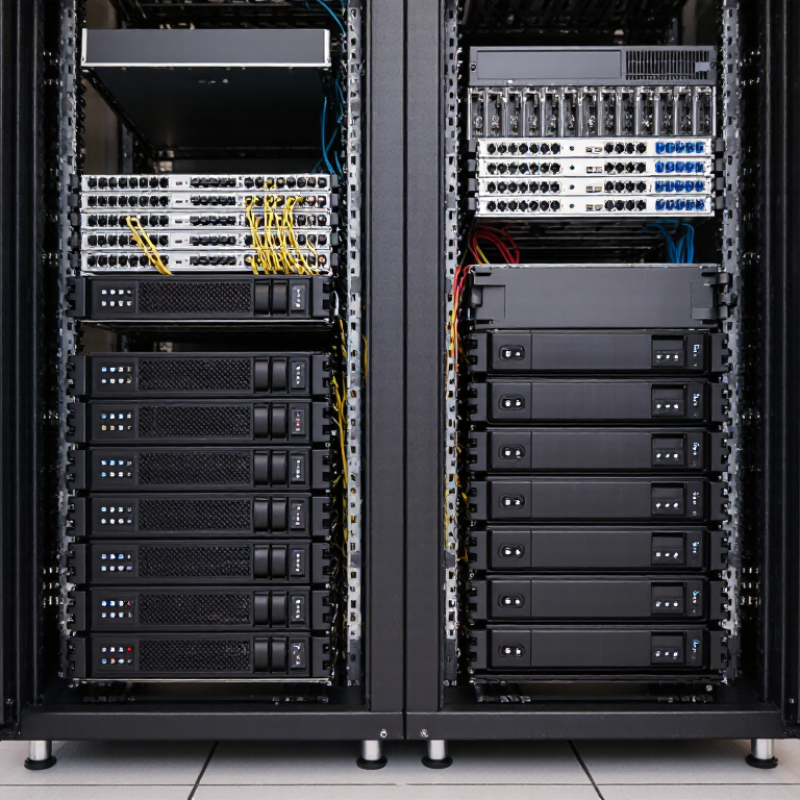
A 1500VA rack-mount UPS is a battery-backed power unit designed to fit into an equipment rack. Its 1,500-volt-ampere rating describes apparent power, not usable watts. The watt limit depends on the unit’s power factor; at 0.9, it is typically 1,350 watts. Internal electronics condition incoming AC, charge the battery, and supply power to connected equipment. During an outage, an inverter converts battery DC back into AC for servers or network gear. A short bridge, not an endless supply.

Uptime Institute’s 2024 Annual Outage Analysis attributed 54% of significant data-center outages to power-related issues. That finding highlights the UPS’s practical role: it buys time for a controlled shutdown or generator transfer. Actual runtime decreases as load rises. Battery age, temperature, and UPS design also affect it. A tidy rack can still hide overloaded circuits; startup surges are easy to underestimate. Runtime estimates are never perfect.

Tips: Check both VA and watt limits on the specification label. Measure the real load, then leave headroom for brief peaks. Confirm battery replacement guidance, rack depth, outlet type, and circuit capacity before installation.

Key Specifications That Define UPS Performance

For a 1500VA rack-mount UPS, check the watt rating before comparing models. A 1500VA unit may support roughly 900 to 1,350 watts, depending on its power factor. Confirm the exact figure in the specification sheet. Measure the rack’s real load, including network switches and storage devices, and leave capacity for brief startup surges. Small details matter.

Runtime depends on both load and battery condition. Ask for runtime estimates at your expected wattage, not only at full load. A few minutes may cover a short outage, but orderly shutdowns need enough time for each connected system. Check transfer time, output waveform, outlet count, and battery replacement access. A deep rack can make a good UPS awkward to service. That part is easy to overlook.

Reliability deserves attention. Uptime Institute’s 2024 Annual Outage Analysis reported that 54% of respondents said their most recent significant outage cost more than $100,000. That figure is not a UPS performance guarantee; it shows why capacity and runtime deserve careful review. Compare stated efficiency at realistic loads, and check operating temperature and noise limits for the rack location. Specifications help, but published runtime curves may not match an aging battery in a warm equipment room. Be cautious.

Major 1500VA Rack-Mount UPS Models Available in 2026

Major 1500VA rack-mount UPS models available in 2026 generally fall into line-interactive and online double-conversion designs. Line-interactive units suit network closets with reasonably stable power. Online models continuously condition power, which can help protect sensitive servers. Both may fit a 19-inch rack, but chassis depth, battery access, and outlet layout vary. A 1500VA rating alone does not tell you how many watts the unit can support.

Capacity matters during real outages. Uptime Institute’s 2024 Annual Outage Analysis found that 54% of respondents said their most recent significant outage cost more than $100,000. That figure is not a prediction for every business, but it underscores the value of checking runtime at your actual load. Compare watt ratings, runtime charts, transfer behavior, and battery replacement options. A full rack can draw more power than expected. That is easy to miss.

Tip: Measure the load before choosing. Leave room for growth, and check that the UPS can keep essential equipment running long enough for a controlled shutdown. Short, practical tests help—but batteries age, so repeat them.

How to Compare Runtime, Connectivity, and Protection

A 1500VA rack-mount UPS is not a runtime promise. Its actual backup window depends on the connected load, battery condition, and room temperature. Compare runtime charts at your expected wattage, not at the unit’s maximum VA rating. Ask for figures at several load levels, then leave headroom for aging batteries and future equipment. Charts can flatter.

Connectivity matters when nobody is standing beside the rack. Check for USB or serial links, network monitoring options, and alerts for battery, overload, and input-power events. Confirm that the UPS can trigger a controlled server shutdown, and that its monitoring works with your existing management tools. A port is only useful if your team can act on its warnings.

Protection should match the equipment and the power environment. Review surge suppression, voltage regulation, transfer behavior, and output waveform; sensitive servers may respond differently to poor-quality power. The 2024 Berkeley Lab report estimated that U.S. data centers used 176 terawatt-hours in 2023, about 4.4% of national electricity use. That rising demand makes careful load measurement more than a paperwork exercise. Record the rack’s real watt draw during normal operation, and check the UPS specifications against that figure. I would still verify runtime with a practical load test: published estimates cannot capture every rack’s conditions.

Choosing a Model for Your Equipment and Installation Needs

A 1500VA rack-mount UPS should match the equipment it protects, not just fit the budget. List each device’s wattage, then add the expected load from switches, storage, and servers. Check both the UPS’s watt limit and its VA rating; either can become the constraint. Leave some headroom for startup surges and future equipment. Measure twice. A crowded rack is unforgiving.

Runtime matters as much as capacity. Estimate how long systems must stay online during an outage: a few minutes for a clean shutdown, or longer for brief interruptions. Runtime charts are useful, but treat them as estimates. Battery age, room temperature, and actual load all affect results. A unit that looks adequate on paper may offer less time in a warm, heavily loaded rack.

Check rack depth, rail compatibility, weight, and front-to-back airflow before ordering. Confirm that its outlets match your equipment’s plugs and that cables can reach without blocking ventilation. For unattended sites, network monitoring can alert staff to low battery or overload conditions. Service access matters too: replacing a battery should not require dismantling half the rack. One detail is easy to overlook: noisy fans can be unwelcome in a small office. It is a practical compromise, not a universal deal-breaker.

2026 Guide: Choosing a 1500 VA Rack-Mount UPS

At a fixed 1500 VA rating, available real-power capacity depends on the UPS’s rated power factor: watts = volt-amperes × power factor. Compare the UPS watt rating with your equipment’s total load, and verify rack height, depth, weight, outlet type, and runtime in the manufacturer’s specifications. Values shown are calculated examples, not product rankings.