hero image

2026 Top Spindle Hub Bearing Assembly Types Buyers Need

Choosing the right Spindle Hub Bearing Assembly in 2026 requires more than comparing prices or outer dimensions. Buyers must examine load direction, spindle speed, heat exposure, sealing design, and available installation space. A bearing that fits the drawing may still fail under real operating conditions.

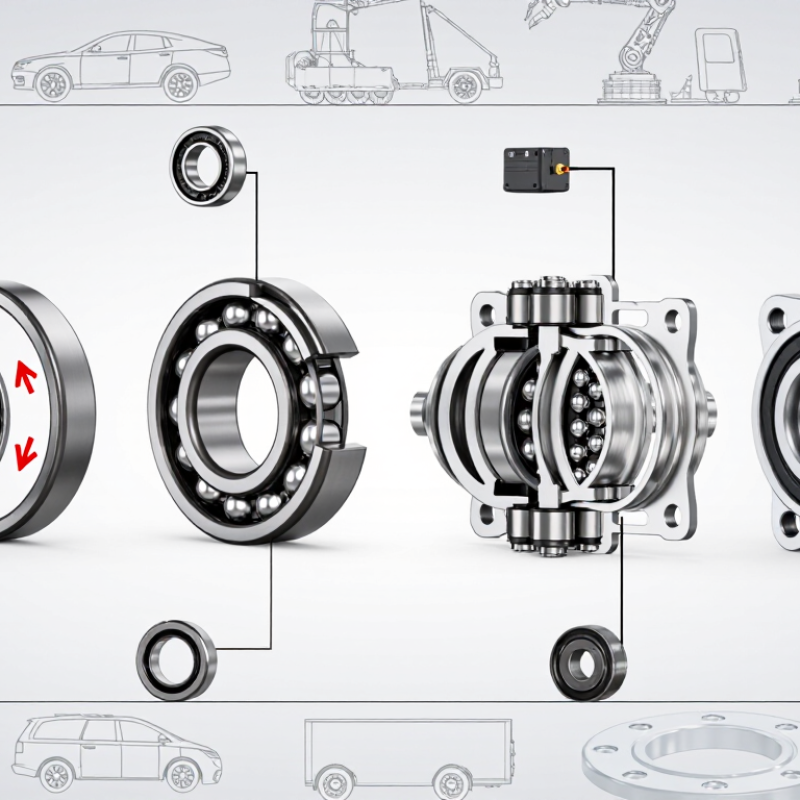
This guide introduces the main assembly types used across automotive, agricultural, industrial, and specialized equipment applications. Tapered roller assemblies handle combined radial and axial loads effectively. Double-row angular-contact designs can support compact layouts and demanding rotation. Unitized hub assemblies often simplify installation, while versions with integrated sensors support speed and safety monitoring. Each option carries different maintenance, tolerance, and replacement implications.

Field experience shows that small details matter. Grease leakage around a seal, uneven flange contact, or excessive preload can shorten service life quickly. Buyers should verify material grades, heat-treatment records, torque requirements, test reports, and supplier traceability. Certification helps, but it does not replace application testing.

Some catalog descriptions remain inconsistent.

That is worth questioning.

A reliable selection process compares verified specifications with actual duty cycles, including shock loads, contamination, temperature changes, and expected service intervals. Supplier engineering support also matters when dimensions, interfaces, or sensor signals differ between models. This article evaluates the top Spindle Hub Bearing Assembly types buyers may consider for 2026, while recognizing an important limitation: no single assembly is ideal for every machine. Careful review, prototype validation, and documented inspection remain essential for dependable performance.

2026 Top Spindle Hub Bearing Assembly Types Buyers Need

What Is a Spindle Hub Bearing Assembly?

2026 Top Spindle Hub Bearing Assembly Types Buyers Need

A spindle hub bearing assembly connects the wheel hub to the steering spindle or axle. It supports vehicle weight and allows the wheel to rotate smoothly. The assembly commonly includes an inner bearing, outer bearing, hub flange, seals, and mounting hardware. Some designs also include wheel-speed sensor rings.

Buyers will encounter serviceable and sealed unitized assemblies. Serviceable types allow bearing cleaning, inspection, and grease replacement. Sealed types arrive pre-lubricated and usually reduce routine maintenance. Driven hubs may include splines for a drive shaft, while non-driven hubs use a simpler mounting structure. Choose carefully.

In practical inspections, I check bearing play, seal damage, mounting surfaces, and sensor alignment. A slight rumble can become obvious vibration after installation. Incorrect preload is another common problem. Too loose, and the hub moves. Too tight, and heat builds quickly. Follow the vehicle maker’s torque specification and use clean tools during fitting.

Material quality matters. Hardened bearing steel, accurate raceways, and corrosion-resistant seals improve durability in rain, dust, and winter salts. Buyers should compare load rating, bore size, flange pattern, sensor compatibility, and operating temperature. I have seen catalog measurements look correct, yet a small flange offset caused brake alignment issues. Rechecking dimensions is slower, but it prevents expensive mistakes.

How Spindle Hub Bearing Assemblies Are Classified

2026 Top Spindle Hub Bearing Assembly Types Buyers Need

How Spindle Hub Bearing Assemblies Are Classified

Classification starts with architecture, not merely bearing diameter. Fortune Business Insights’ 2024 automotive wheel bearing report estimates the global market near USD 10 billion in 2023. This growth increases replacement demand and specification risk. Buyers should classify assemblies by generation, load path, flange design, sealing, preload, and sensor provision. This sounds technical. It is practical.

First-generation assemblies use separate hubs and bearings. They allow service replacement but require accurate press fits. Second-generation designs integrate a flange with the outer ring. This improves packaging and installation repeatability. Third-generation assemblies add a hub flange, encoder, and often an integrated speed sensor. Some applications use double-row angular-contact bearings, while others favor tapered-roller arrangements. The correct choice depends on radial load, axial load, stiffness, speed, and maintenance access.

ISO 15243 classifies bearing damage by mechanisms such as fatigue, wear, corrosion, and electrical erosion. That framework helps buyers connect assembly type with inspection findings. A 2024 technical market assessment also identifies sensor-enabled wheel-end systems as a major development direction. However, generation labels are not perfectly universal. Catalog conventions can differ. I would verify flange geometry, encoder orientation, connector position, and torque requirements before approval. A visually similar assembly may still produce incorrect signal timing, poor preload, or premature noise. Small details matter.

Key Differences Between Assembly Types

Choosing a spindle hub bearing assembly starts with its internal design, not its outer appearance. Tapered roller assemblies handle combined radial and axial loads effectively. They suit heavy equipment, slow rotation, and frequent shock loads. Double-row angular contact assemblies provide smoother rotation at higher speeds. Their fixed geometry also supports accurate axial positioning. Cartridge-style assemblies arrive preloaded and sealed. Installation is faster, but field adjustment is limited.

The differences become clear during inspection. Tapered rollers may need measured endplay or preload, depending on the application. Too much clearance can create hub movement and uneven wear. Excessive preload can raise temperature within minutes. Angular contact designs usually offer controlled preload from the manufacturer. They reduce setup errors, yet replacement is less flexible. Integrated hub assemblies combine bearings, seals, and sometimes sensing components. They save assembly time and protect internal surfaces from dust and water.

In practical service, I check shaft fit, mounting face runout, and seal condition before selecting a type. A clean 0.02-millimeter runout check can reveal a problem that feels like bearing failure. I once treated noise as a lubrication issue; the real cause was improper preload. That mistake still influences my inspection sequence. Buyers should compare load direction, rotational speed, maintenance access, and installation tools. The cheapest assembly may become expensive after repeated removal, especially when a press or precision measurement is required.

How to Choose the Right Bearing Assembly

2026 Top Spindle Hub Bearing Assembly Types Buyers Need

How to Choose the Right Bearing Assembly

Choosing a spindle hub bearing assembly starts with real operating conditions, not catalog size. Confirm spindle diameter, hub geometry, wheel load, brake heat, sealing requirements, and installation space. A compact assembly may fit perfectly yet fail under repeated cornering loads. That choice matters.

Use the dynamic load rating and rated life calculated under ISO 281 principles. Do not compare load ratings alone. Check preload control, sensor compatibility, grease retention, and flange runout. The International Energy Agency’s Global EV Outlook 2024 reported nearly 14 million electric car sales in 2023. Heavier battery vehicles can increase wheel-end loads, making thermal and fatigue performance more important. Buyers should request test data for their actual duty cycle.

Inspect failed units for spalling, fretting, water marks, and uneven raceway wear. Those details often reveal poor sealing or incorrect installation. A double-row angular-contact assembly may suit combined radial and axial loads. A tapered design can offer stronger adjustment control, but it may demand stricter setup. Field conditions are rarely clean. Mud, salt, and repeated thermal cycles expose weak seals quickly.

Do not rely on a single supplier’s calculation. Ask for material certificates, dimensional inspection records, endurance-test results, and traceability documents. The choice is still partly judgment. I may overvalue laboratory data when real road contamination tells another story. A controlled fitment trial remains essential before large-volume purchasing.

2026 Top Spindle Hub Bearing Assembly Types Buyers Need - How to Choose the Right Bearing Assembly

Assembly Type Primary Rolling Element Typical Vehicle Position Typical Load Capability Speed Capability Preload and Adjustment ABS Compatibility Key Advantages Limitations Best-Buying Criteria
Single-Row Ball Hub Assembly Deep-groove ball bearing Light-duty front or rear applications; commonly used where wheel loads and axial loads are moderate Moderate radial and axial capacity High; suitable for low-friction, high-speed wheel rotation Usually factory-set and sealed; no routine field adjustment Available with a magnetic encoder ring or tone ring, depending on vehicle design Low friction, compact design, low maintenance, and generally economical replacement Lower moment-load and impact-load capacity than many tapered roller designs Match bore, outer diameter, flange geometry, wheel-side offset, spline dimensions, and encoder signal pattern
Double-Row Ball Hub Assembly Two rows of angular-contact or deep-groove balls Front or rear passenger-vehicle applications requiring higher stiffness than a single-row design Moderate to high radial and axial capacity High, with good efficiency at normal road speeds Preloaded at the factory and permanently sealed in most integrated units Commonly available with integrated passive or active wheel-speed sensing Improved moment-load resistance, compact packaging, and consistent factory preload Sensitive to incorrect press-fit force and dimensional mismatch Verify bearing internal clearance, flange runout, press-fit direction, and sensor air gap
Tapered-Roller Hub Assembly Conical rollers arranged in one or two opposed rows Heavy-duty front axles, commercial vehicles, trailers, and applications with substantial combined loads High radial and axial capacity Moderate; typically lower friction and speed capability than ball-bearing assemblies May be adjustable with a nut and spacer, or factory-preloaded in a sealed cartridge Available with an integrated encoder or a separate speed-sensing arrangement Strong resistance to shock loads, cornering forces, and overturning moments Higher friction, greater mass, and possible sensitivity to incorrect preload Confirm dynamic and static load ratings, lubricant specification, preload method, seal design, and torque procedure
Flanged Outer-Ring Hub Assembly Single-row or double-row ball bearing Applications where the bearing outer ring is bolted directly to the knuckle or carrier Moderate to high, depending on row count and flange design High for typical passenger-vehicle operating speeds Factory-preloaded and sealed Often engineered with an integrated encoder ring Fast installation, accurate mounting location, and reduced need for separate bearing press work Flange distortion or bolt misalignment can cause premature noise and runout Check bolt-hole pattern, pilot diameter, flange thickness, mounting face runout, and sensor orientation
Flanged Inner-Ring Hub Assembly Ball bearing or tapered-roller bearing with a wheel-mounting flange Front or rear drive-wheel applications where the hub flange carries the wheel and rotor Moderate to high, determined by bearing architecture and flange section High for ball-bearing versions; moderate for tapered-roller versions Factory-preloaded in sealed assemblies; some serviceable designs use an adjustable arrangement Commonly offered with an integrated magnetic encoder Combines hub and bearing functions, reduces component count, and simplifies service Incorrect axle-nut torque can alter preload and damage the bearing Verify spline count, axle interface, wheel-stud pattern, flange offset, and specified axle-nut torque
Third-Generation Integrated Hub Unit Double-row ball bearing or tapered-roller bearing integrated with hub and mounting flange Modern front and rear vehicle platforms with high assembly integration High for its package size; application-specific High to moderate, according to the selected rolling-element design Factory-set preload, sealed lubrication, and non-adjustable service design Frequently supplied with an integrated active or passive encoder High installation accuracy, fewer loose parts, reduced assembly time, and stable sensor positioning Higher unit cost and full-unit replacement when an internal bearing fails Match electronic sensor protocol, connector, cable routing, flange geometry, and vehicle calibration requirements
Driven-Wheel Hub Bearing Assembly Usually double-row ball bearing or tapered-roller bearing Drive axles with a splined axle shaft passing through the hub High combined radial, axial, and torque-related loading High for ball-bearing designs; application-dependent for tapered rollers Factory-preloaded; axle-nut tightening is normally part of the preload control system Commonly available with integrated wheel-speed sensing Supports wheel loads while transmitting drive torque through the splined interface Incorrect spline fit, corrosion, or axle-nut torque may produce looseness, noise, or sensor faults Confirm spline dimensions, axle retention method, nut type, torque-plus-angle procedure, and encoder compatibility
Non-Driven Wheel Hub Bearing Assembly Ball bearing or tapered-roller bearing without a powered axle interface Free-rolling front or rear wheel positions Moderate to high, based on vehicle mass and cornering loads High for ball-bearing designs; moderate for tapered-roller designs Sealed factory preload or service-adjustable tapered-roller configuration Passive or active encoder options are available Simpler wheel interface and generally lower torque-related loading than driven hubs Serviceable designs require correct grease quantity, bearing seating, and end-play adjustment Identify whether the application requires a sealed unit or an adjustable service bearing, then verify end-play specifications
Heavy-Duty Trailer Hub Assembly Usually opposed tapered-roller bearings Trailer axles, utility equipment, and low-to-moderate-speed heavy-load service High radial and axial capacity Moderate; governed by load, tire size, lubrication, and operating temperature Often service-adjustable with a spindle nut, washer, and cotter or locking device Optional; depends on the braking and monitoring system Robust load handling, serviceability, and suitability for harsh operating conditions Requires periodic inspection and correct bearing adjustment; contamination can rapidly damage races Check spindle dimensions, bearing cup and cone compatibility, seal diameter, grease or oil lubrication, and permissible end play
Selection note: Dimensions, load ratings, preload, encoder type, and torque values are application-specific. Always validate the assembly against the vehicle or equipment manufacturer's engineering specifications, bearing reference dimensions, and installation procedure before purchase.

Installation, Maintenance, and Replacement Considerations

Installation, Maintenance, and Replacement Considerations

Installing a spindle hub bearing assembly requires cleanliness, correct alignment, and controlled tightening. Remove rust and debris from the spindle, mounting face, and wheel contact area. Even a thin rust scale can create misalignment, vibration, or uneven bearing load.

Use a calibrated torque wrench and follow the vehicle’s specified torque sequence. Never apply pressing force through the wrong bearing race. Check the sensor ring, wiring, and connector before securing the assembly. A damaged cable may look harmless but can trigger intermittent safety-system warnings. Confirm smooth rotation, correct endplay, and proper fastener engagement before lowering the vehicle.

Maintenance is mostly inspection because many modern hub assemblies are sealed. Listen for humming that changes during turns. Check for looseness, heat marks, leaking seals, or uneven tire wear. A torque wrench matters. However, a quiet road test does not prove the bearing is healthy. I have seen early damage hidden by tire noise, so hands-on inspection remains important.

Replace the complete assembly when play, roughness, corrosion, or sensor damage is confirmed. Do not reuse visibly stretched nuts, damaged bolts, or distorted mounting hardware. Inspect the spindle and nearby brake components during replacement. After installation, verify wheel rotation and complete a careful road test. One overlooked detail can return the vehicle to the workshop. Rechecking is not wasted time.

2026 Top Spindle Hub Bearing Assembly Types Buyers Need

The chart presents typical planning benchmarks for installation labor and routine inspection intervals across common spindle hub bearing assembly configurations. Actual values vary by equipment design, load, speed, sealing, contamination, and service access.

Unitized hub bearings generally reduce installation work because preload and sealing are integrated. Tapered roller and cylindrical roller assemblies require closer attention to seating, preload, lubrication, and contamination control. Replacement planning should always follow the equipment manufacturer’s service procedure and measured bearing condition.