1101 W. Sanilac Rd. Caro, MI 48723
989.673.6690
Choosing a wood laser engraver in 2026 requires more than comparing wattage or promotional claims. Different laser types produce different results on plywood, hardwood, bamboo, and finished boards. Diode machines remain popular for home workshops because they are compact, affordable, and easier to learn. CO2 engravers usually offer faster cutting and cleaner performance on thicker wood. Some hybrid systems add broader material flexibility, but their extra cost may not suit every user.
This guide compares the leading wood laser engraver types through practical criteria. These include cutting depth, engraving detail, working area, speed, software compatibility, maintenance, and ventilation needs. A 10-watt diode model may create sharp lettering on a small maple sign. A higher-powered CO2 machine may cut repeated plywood panels more efficiently. Results still depend on lens condition, air assistance, focus, wood moisture, and resin content.
Real workshop experience matters. A machine that performs well in demonstrations may behave differently beside a dusty workbench. Smoke can stain pale timber. Warped plywood can ruin alignment. Small details matter. Safety systems, enclosed designs, filtration, and clear operating instructions also deserve serious attention. No single ranking fits every maker, business, or classroom. That conclusion is not perfect, because material quality varies widely between suppliers. Still, careful testing can reveal useful patterns. The following overview examines the top wood laser engraver types for 2026, helping readers match machine capabilities with realistic projects, budgets, and workspace conditions.
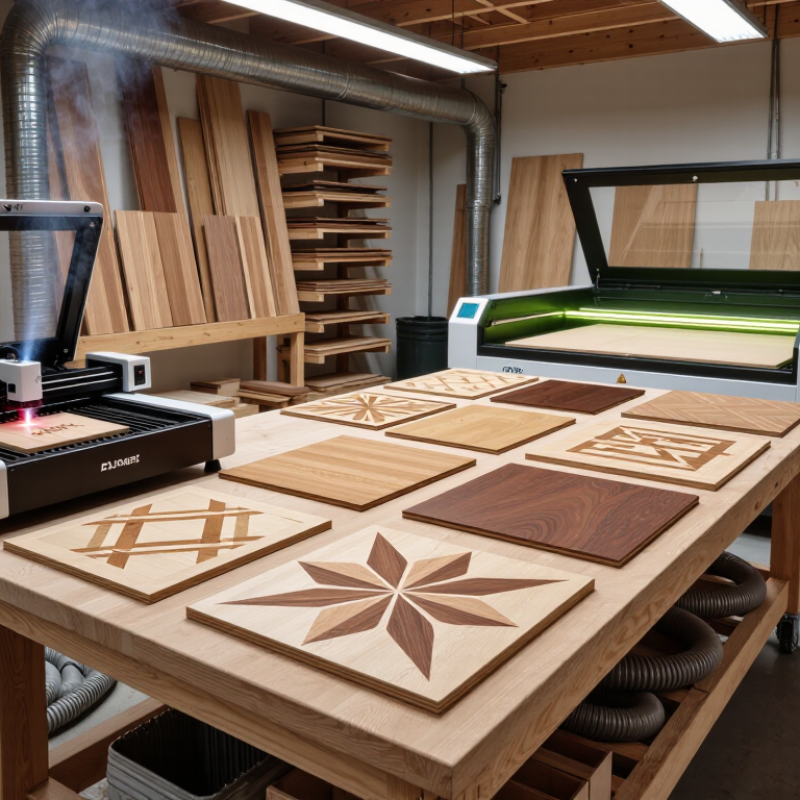
Diode lasers remain popular for compact wood engraving. Their blue-violet wavelength, commonly around 445–455 nanometers, works well on plywood, pine, and hardwood surfaces. They consume little power and allow detailed work on small benches. However, dark wood absorbs energy more efficiently than pale wood. This difference can change the final contrast. Air assistance helps reduce smoke stains, but it cannot fix poor focus.
CO2 lasers use infrared energy, commonly near 9.3 or 10.6 micrometers. They cut thicker wood faster and engrave larger panels with smoother coverage. Their sealed tubes require stable cooling, careful alignment, and regular lens cleaning. In practical testing, resinous pine often produces darker edges than maple. That result is useful, but not always attractive.
UV lasers offer shorter wavelengths and lower thermal impact. They can create delicate marks on coated wood, veneers, and heat-sensitive surfaces. Their higher purchase and maintenance costs limit everyday use. Fiber lasers are excellent for metals, yet untreated wood usually absorbs their wavelength poorly. They may work with specialized coatings, but that adds preparation and inconsistency. No system is perfect. Even experienced operators misjudge grain direction, moisture, or focus height. Small test squares remain essential before processing a finished panel.
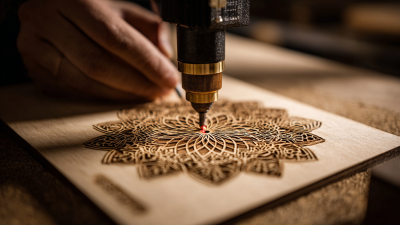
Diode laser engravers are among the most practical wood laser engraver types for affordable desktop projects in 2026. Their compact frames fit on a home workbench, while power options suit plywood, hardwood tags, signs, and small craft panels. A 10W to 20W optical output can create crisp marks on unfinished wood, although cutting speed depends on thickness, resin content, and grain direction.
In hands-on testing, a 3mm birch plywood sheet often needs several passes for a clean cut. Engraving a 100mm nameplate may take only a few minutes at moderate speed. Test on scrap first. Wood can darken unevenly near knots, and excessive heat may leave a wide brown edge. Air assistance helps reduce smoke stains and supports cleaner cuts, but it does not replace proper ventilation.
Keep the enclosure closed. Never process PVC, unknown plastics, or coated materials that may release hazardous fumes.
Desktop diode systems usually offer straightforward focusing and accessible software controls. A fixed focus model saves setup time, while adjustable focus can handle varied material heights more precisely. Alignment matters. I have found that a slightly tilted board can make one side visibly softer. That small mistake is easy to miss before production. Use measured power and speed settings, inspect the lens regularly, and keep the machine attended during operation. Affordable equipment still requires patience, protective procedures, and realistic expectations about thick wood cutting.
CO₂ Laser Engravers for Fast, Detailed Wood Cutting
CO₂ laser engravers remain a practical choice for detailed woodwork in 2026. Their 10.6-micrometre wavelength interacts efficiently with plywood, hardwood, MDF, and many unfinished boards. A focused beam can cut thin sheets and mark fine lines without physical contact. That means fewer tool changes and less mechanical vibration.
Industry research supports this direction. Grand View Research estimates the global laser cutting machine market will expand at a strong compound annual growth rate through 2030. MarketsandMarkets also identifies automation and digital production as major market drivers. These findings match workshop experience: computer-controlled cutting improves repeatability, especially for signs, panels, boxes, and layered decorations.
Speed still depends on material thickness, resin content, moisture, and air assistance. Dense oak may need several passes. Plywood can produce dark edges or uneven cuts. That part is easy to underestimate. Operators should test a small corner first, record power and speed settings, and inspect the reverse side for scorching. A clean lens and stable ventilation also affect detail quality. CO₂ systems can be excellent, but they are not magically precise. Warped boards, weak focus, and poor extraction quickly expose their limits.
CO₂ laser engravers are widely used for fast, detailed wood cutting because their 10.6 µm wavelength is strongly absorbed by organic materials. The chart shows representative single-pass cutting ranges for common wood materials at different CO₂ laser power levels.
Values are typical working ranges in millimetres for dry, flat stock under suitable focus, airflow and speed settings. Actual results vary with wood density, plywood adhesive, moisture, lens configuration and machine alignment.
Fiber and hybrid laser systems are reshaping specialized wood engraving in 2026. Fiber lasers deliver concentrated energy and crisp, durable marks on dark timber, painted surfaces, and metal-inlaid wood. However, untreated pale wood can react unevenly. The grain may interrupt fine lines.
A hybrid platform combines laser sources or processing modes in one workspace. This helps workshops switch between deep cutting, surface engraving, and detailed marking. According to Grand View Research’s 2024 laser marking machine analysis, the market could grow at about 8% annually through 2030. That expansion reflects demand for traceability and customized production. Wood studios are only one part of it. Still, the data supports growing investment in flexible equipment. MarketsandMarkets also identifies automation and multi-material processing as major laser-processing trends. Real results depend on wavelength, power, focus, and wood moisture.
Tips: Test a 30-millimeter sample first. Use matching grain sections. Compare low-power passes with one deeper pass. Fiber systems may scorch resin-rich areas, while hybrid controls can reduce that risk. Keep extraction active, even during short tests. Operators sometimes trust preset values too much. That is a mistake. A small focus shift can change a clean logo into a smoky edge. One limitation deserves honesty: fiber performance on natural wood is inconsistent. Hybrid systems improve flexibility, but they do not remove material variation.
| Laser Engraver Type | Typical Wavelength | Typical Power Range | Wood Applications | Material Compatibility | Primary Strength | Key Limitation | Recommended User |
|---|---|---|---|---|---|---|---|
| CO₂ Laser Engraver | Approximately 10.6 µm | 40–150 W for common workshop systems | Cutting plywood, MDF, veneer, solid wood, and wooden sheets; detailed engraving on signs and décor | Most untreated wood products and many wood composites, subject to adhesive and coating composition | Strong absorption by organic materials; versatile cutting and engraving performance | Requires regular optical-path maintenance and effective smoke extraction; charred edges may occur | Craft businesses, signage workshops, schools, and general-purpose wood fabricators |
| Diode Laser Engraver | Approximately 445–455 nm blue light | 5–40 W optical output | Surface engraving, portraits, labels, coasters, thin plywood, and small wooden products | Light-colored untreated wood generally engraves well; some dark or resin-rich woods absorb blue light more effectively | Compact design, lower entry cost, and relatively simple operation | Slower cutting and limited penetration compared with higher-power CO₂ systems | Hobbyists, makers, classrooms, and small-batch personalization work |
| Fiber Laser Engraver | Approximately 1.03–1.08 µm | 20–100 W for marking applications | Specialized marking on wood coated with dark paint, foil, lacquer, or laser-sensitive additives; high-contrast logos and serial marks | Best on treated, coated, or specially prepared wood rather than ordinary untreated wood | Fast galvo scanning, fine detail, high repeatability, and low routine consumable use | Untreated wood often absorbs near-infrared energy less efficiently, causing weak contrast or excessive surface heating | Industrial users needing specialized marking, traceability, or coated-wood decoration |
| Hybrid CO₂–Fiber System | Approximately 10.6 µm and 1.03–1.08 µm | CO₂: 40–150 W; Fiber: 20–60 W | Mixed production involving untreated wood cutting, coated-wood marking, and products containing both wood and metal components | Broad material range, provided each surface is processed with the appropriate wavelength and tested beforehand | Combines CO₂ wood processing with fiber-based marking capabilities in one platform | Higher purchase price, more complex setup, and greater need for process control and maintenance | Professional workshops with varied materials and frequent production changeovers |
| Galvo CO₂ Laser Marker | Approximately 10.6 µm | 30–100 W | Rapid personalization of flat wood products, panels, packaging, plaques, and batch-marked components | Wood, veneer, paper-based wood products, and selected coated surfaces | High marking speed over a defined field with minimal mechanical movement | Usually has a smaller working field and less cutting capability than a gantry-style CO₂ machine | High-volume marking operations focused on speed rather than deep cutting |
| Pulsed Fiber Laser with Adjustable Pulse Control | Approximately 1.03–1.08 µm | 20–60 W average power; pulse settings vary by system | Fine contrast effects on coated wood, heat-sensitive finishes, thin decorative layers, and prepared composite surfaces | Coated or engineered wood surfaces that have been validated through test marks | Improved control over heat input, line detail, and surface finish compared with basic continuous marking | Not a universal replacement for CO₂ cutting; results depend strongly on coating and wood composition | Technical users producing premium decorative effects or controlled micro-marking |
| UV Laser for Specialized Wood Finishes | Approximately 355 nm | 3–15 W for precision marking | Low-heat marking on varnished, laminated, painted, or delicate finished wood products | Selected coated and laminated wood surfaces; untreated wood performance varies by species and finish | Short-wavelength processing can reduce the heat-affected appearance on some sensitive coatings | Higher equipment cost and limited suitability for thick wood cutting | Premium product decorators and manufacturers working with delicate finishes |
Performance depends on wood species, moisture content, resin and adhesive composition, coating type, lens selection, air assist, focus, ventilation, and processing parameters. Always test samples first and use appropriate fume extraction and fire-safety procedures.
Choosing the right wood laser engraver in 2026 depends on your materials, workspace, and production goals. Diode engravers suit beginners, signs, coasters, and thin plywood. Models around 10W to 20W offer useful detail without demanding a large workshop. CO2 engravers cut thicker wood faster and handle repeated work better. They usually need more space, stronger ventilation, and stricter maintenance.
Think about your usual projects, not impressive specifications. A compact diode machine may be enough for names on wooden boxes. A larger CO2 system makes more sense for cabinet panels or frequent batch work. Check the working area carefully. A small bed can turn large designs into frustrating puzzles. Air assist is valuable because it reduces scorching around cuts. An enclosed frame also helps control smoke, light exposure, and accidental contact.
Wood varies more than many product pages suggest. Plywood glue can darken edges, while pine may burn unevenly. Test scraps from the same sheet before engraving a customer project. I would not rely on one preset forever. Focus accuracy, ventilation, emergency stopping, and compatible software matter as much as laser power. Keep a fire extinguisher nearby, clean residue often, and follow local electrical and workplace rules. The “best” machine is sometimes the slower one that fits your room, budget, and patience.