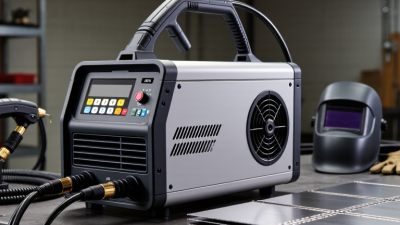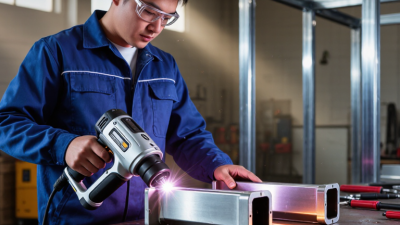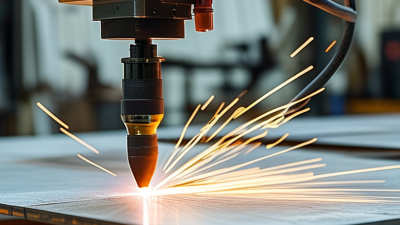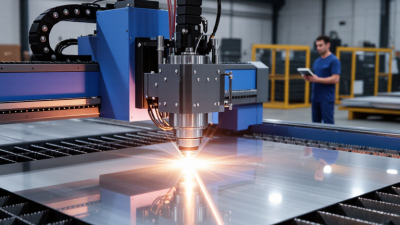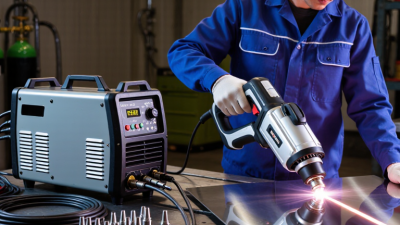


The handheld laser welding machine has moved from a specialist tool into many fabrication workshops. Operators now use it for stainless steel cabinets, aluminum frames, kitchen equipment, and repair work. Its appeal is clear: a narrow heat-affected zone, fast travel speed, and cleaner welds with less post-processing. Still, performance depends on material thickness, joint design, shielding gas, and operator control.
Industry reports show why this category deserves careful evaluation. Grand View Research valued the global laser welding machine market at approximately USD 2.7 billion in 2023 and expects continued growth through 2030. MarketsandMarkets has also identified automation, lightweight manufacturing, and demand for precise joining as major market drivers. These figures describe the wider laser welding sector, not only handheld systems. That distinction matters. Market claims can sound broader than the evidence.
This guide examines ten leading handheld laser welding machines using practical and technical criteria. We consider laser power, beam stability, cooling design, wire-feeding options, portability, safety interlocks, service support, and warranty coverage. We also compare real workshop details, such as how easily an operator moves a 15-kilogram unit around a crowded production table. Compliance with applicable electrical, laser-safety, and workplace requirements remains essential. Manufacturer specifications were reviewed alongside independent industry data and user-oriented performance factors. No ranking is perfect. A machine that suits thin stainless panels may struggle with thicker aluminum assemblies. Buyers should verify local service access, training quality, and application testing before purchase. In short, this list aims to support informed decisions, not repeat attractive brochure language.
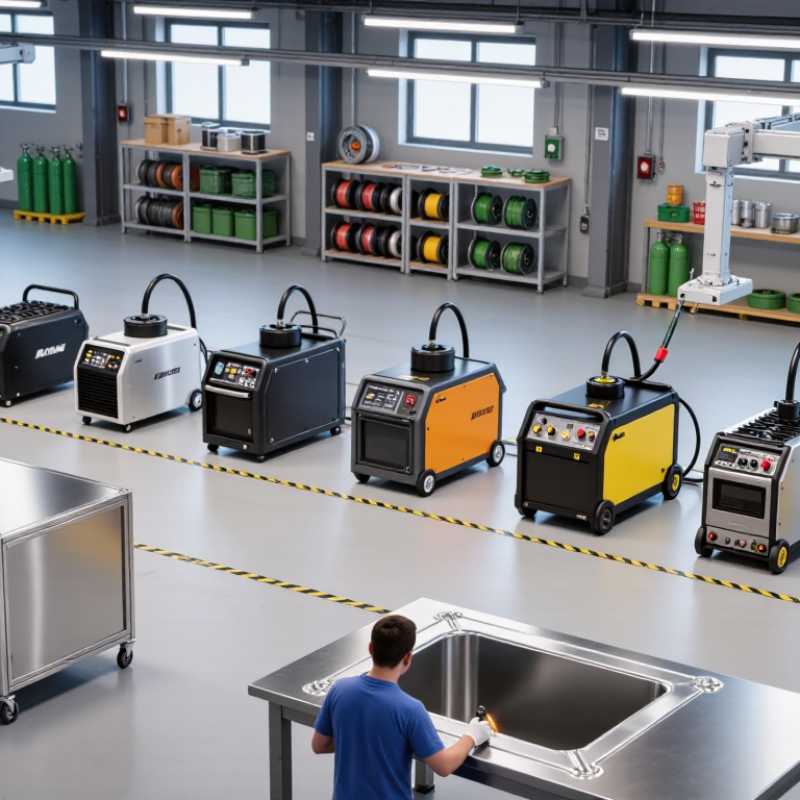
Handheld laser welding uses a compact fiber-laser source, delivery cable, focusing gun, shielding gas, and a controlled workbench. The practical standard is 1,000–3,000 watts. Lower power suits thin stainless steel and aluminum sheets. Higher power supports thicker joints, faster travel, and deeper penetration. It is not simply “a powerful torch.” Beam alignment, focal distance, wire feeding, and heat control decide weld quality.
Industry reports show why this range receives attention. MarketsandMarkets’ 2024 laser processing market analysis values the global market in the tens of billions of dollars and forecasts continued growth through 2029. The International Energy Agency reports that industrial electric motor systems can represent over 40% of industrial electricity demand, making efficient production equipment increasingly important. Fiber lasers usually convert electrical input to laser output more efficiently than older gas-laser designs, although actual savings depend on cooling and operating hours.
For the top ten handheld machines, compare rated power, continuous duty cycle, weld thickness, beam modes, cooling capacity, and safety interlocks. Check whether a 2,000-watt rating reflects continuous output or only a short peak. That difference matters. A small workshop may prefer stable 1,000 watts over an oversized unit with expensive cooling. Operators also need training, eye protection, ventilation, and documented procedures. Published performance figures are not perfectly comparable. Real results change with joint fit-up, material reflectivity, gas flow, and operator experience. That is where many buying guides become too confident.
Handheld laser welding in this comparison refers to continuous-wave fiber-laser systems using an approximately 1,070 nm wavelength, a handheld welding head, shielding gas, and output power between 1,000 W and 3,000 W. The rankings are application-based configurations rather than company or brand models.
| Rank | Handheld Machine Configuration | Rated Laser Power | Typical Materials | Indicative Single-Pass Thickness | Recommended Shielding Gas | Cooling Method | Best-Fit Application | Key Selection Advantage |
|---|---|---|---|---|---|---|---|---|
| 1 | High-Productivity 3,000 W Fiber-Laser Welder | 3,000 W | Carbon steel, stainless steel, aluminum alloys | Up to approximately 8–10 mm, depending on joint design and material | Argon or helium-argon blend | Closed-loop water chiller | Heavy frames, structural assemblies, and thick plate fabrication | Highest heat input and welding speed within the 1,000–3,000 W range |
| 2 | Heavy-Duty 2,500 W Fiber-Laser Welder | 2,500 W | Stainless steel, carbon steel, galvanized steel, aluminum | Up to approximately 6–8 mm, depending on material and fit-up | Argon or nitrogen for selected stainless-steel applications | Closed-loop water chiller | Industrial enclosures, machinery parts, and medium-heavy fabrication | Strong balance between penetration, speed, and operating cost |
| 3 | Versatile 2,000 W Fiber-Laser Welder | 2,000 W | Carbon steel, stainless steel, aluminum, brass with suitable settings | Up to approximately 5–6 mm, depending on joint preparation | Argon; helium or mixed gas for difficult reflectivity conditions | Closed-loop water chiller | General metal fabrication and mixed-material production | Broadest practical range of handheld welding tasks |
| 4 | Precision 1,500 W Fiber-Laser Welder | 1,500 W | Stainless steel, mild steel, aluminum sheet, coated components | Up to approximately 3–5 mm, depending on material and welding speed | Argon or nitrogen | Water cooling or manufacturer-specified compact chiller | Cabinets, furniture, thin sheet, and repair work | Lower distortion while retaining useful production speed |
| 5 | Compact 1,200 W Fiber-Laser Welder | 1,200 W | Thin carbon steel, stainless steel, and aluminum | Up to approximately 2–4 mm, depending on fit-up and thermal control | Argon or nitrogen | Air cooling for suitable duty cycles or compact water cooling | Light fabrication, maintenance, and small-batch production | Lower electrical demand and easier shop-floor integration |
| 6 | Entry-Level 1,000 W Fiber-Laser Welder | 1,000 W | Thin stainless steel, mild steel, and selected aluminum parts | Up to approximately 2–3 mm, depending on joint configuration | Argon or nitrogen | Air cooling or compact water cooling, subject to duty cycle | Light sheet-metal work, prototypes, and repair operations | Lowest purchase and operating-power requirement in the range |
| 7 | Aluminum-Optimized 2,000 W Fiber-Laser Welder | 2,000 W | Aluminum alloys, stainless steel, and low-carbon steel | Approximately 3–5 mm for aluminum, depending on alloy and joint design | High-purity argon or helium-argon blend | Closed-loop water chiller | Transportation components, frames, and aluminum enclosures | Higher power reserve helps manage aluminum’s thermal conductivity |
| 8 | Low-Distortion 1,500 W Fiber-Laser Welder | 1,500 W | Stainless steel, galvanized steel, and thin carbon steel | Approximately 1.5–4 mm, depending on coating removal and settings | Argon; nitrogen may be suitable for selected stainless-steel work | Water cooling recommended for continuous operation | Visible seams, clean-finish parts, and precision sheet fabrication | Reduced heat-affected zone compared with many conventional processes |
| 9 | High-Speed 2,500 W Fiber-Laser Welder | 2,500 W | Carbon steel, stainless steel, aluminum, and selected copper alloys | Approximately 4–7 mm, depending on reflectivity and joint geometry | Argon or helium-rich shielding gas for reflective materials | Closed-loop water chiller | Repetitive production, brackets, frames, and welded assemblies | High throughput with a useful reserve for thicker sections |
| 10 | Flexible Multi-Material 1,800 W Fiber-Laser Welder | 1,800 W | Stainless steel, carbon steel, aluminum, and some brass applications | Approximately 3–5 mm, depending on material reflectivity and preparation | Argon; helium-argon blend for reflective materials | Closed-loop water chiller | Job shops handling varied materials and component sizes | Practical compromise between portability, flexibility, and penetration |
Technical note: Thickness figures are indicative working ranges, not guaranteed specifications. Actual results depend on material grade, reflectivity, joint gap, edge preparation, focal position, scan width, wire addition, shielding-gas flow, travel speed, and operator technique. Class 4 laser safety controls, interlocks, suitable eye protection, fume extraction, and a controlled work area are required for handheld fiber-laser welding.