2026 Best Indoor Isolating Switch for Global Buyers?
Global power demand is entering a more demanding phase. The IEA Electricity 2024 report forecasts average annual electricity-demand growth of 3.4% through 2026. Data centres, factories, solar farms, and urban infrastructure are intensifying switching requirements.
That changes the buying question.
The best Indoor Isolating Switch is not simply the cheapest unit with a high current rating. It must provide visible isolation, dependable mechanical endurance, suitable insulation, and clear position indication. IEC 62271-102 offers a useful reference for high-voltage disconnectors and earthing switches. Buyers should still verify the exact voltage class, pollution level, altitude, short-time withstand current, and installation environment.
Small details matter. A stiff operating handle can delay maintenance. A poorly sealed enclosure can invite dust and moisture. A missing interlock may create an avoidable operational risk.
Jim Pauley, NFPA president and chief executive, has repeatedly expressed the wider safety principle: “Electrical safety is everyone’s responsibility.” His statement applies directly to switch selection, installation, inspection, and training.
Market research from MarketsandMarkets links switchgear demand with grid modernization, renewable integration, and industrial expansion. Yet forecasts are not product guarantees. They cannot replace factory test reports, type-test evidence, or local engineering review.
This guide compares 2026 options for global buyers. It considers safety, serviceability, certification, lifecycle cost, and supplier reliability. Some specifications look impressive on paper. Real performance may differ.
That is worth questioning.
A careful buyer should examine drawings, test certificates, spare-part access, and after-sales support before approving any Indoor Isolating Switch.
What Is an Indoor Isolating Switch and Why Does It Matter?
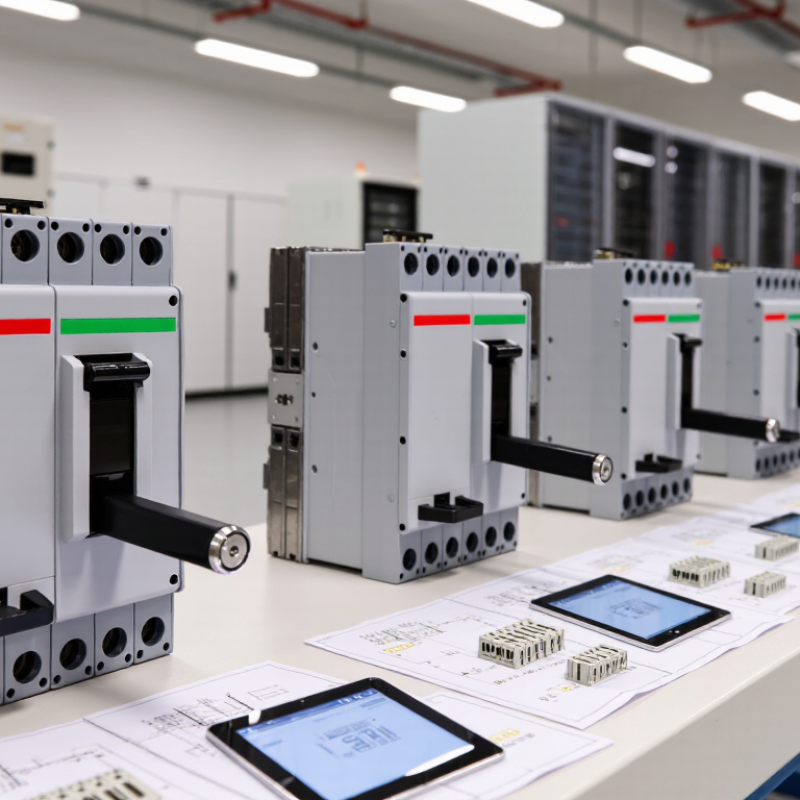
An indoor isolating switch is a mechanical device that creates a safe, visible separation in an electrical circuit. It is commonly installed inside medium-voltage switchgear, substations, and industrial distribution rooms. Under IEC 62271-102, its main purpose is isolation, not routine load interruption or fault clearing. That distinction matters. Opening the wrong device under load can create severe arcing, equipment damage, and personal risk.
The need for dependable isolation is growing. The IEA Electricity 2024 report forecasts global electricity demand will rise by an average of 3.4% annually from 2024 to 2026. IRENA’s Renewable Capacity Statistics 2024 records 473 GW of renewable capacity added in 2023. More generation and switching points mean more maintenance decisions behind closed doors. A suitable indoor isolating switch should match rated voltage, short-time withstand current, insulation level, operating method, and enclosure conditions. Check the details.
In practical inspections, operators should confirm the position indicator, interlocking system, earthing arrangement, and clearance from conductive surfaces. Dust, condensation, and cramped panels can quietly weaken reliability. These issues are easy to underestimate. A switch may meet its nameplate rating yet perform poorly in a neglected room. I would also challenge the assumption that the highest rating is always best; coordination, installation quality, testing records, and trained operation often matter just as much.
Key Technical Specifications for Choosing the Right 2026 Model
For a 2026 indoor isolating switch, technical specifications matter more than appearance. Start with rated operational voltage, current, frequency, and pole arrangement. Common systems include 230/400 V and 480 V, but project data must decide. Select an AC-22A category for mixed loads, or AC-23A for motors and highly inductive equipment. IEC 60947-3 also requires attention to rated short-time withstand current and conditional short-circuit performance. A switch may carry 160 A continuously, yet fail under an unsuitable fault level. That distinction is easy to miss.
The enclosure should match the installation environment. Check IP protection under IEC 60529, insulation voltage, pollution degree, terminal temperature limits, and cable capacity. Clear contact indication and a lockable handle improve maintenance safety. IEA’s Electricity 2024 report projected global electricity demand growth of about 4% annually through 2026. IRENA reported 585 GW of renewable capacity added in 2024, increasing the need for dependable isolation across varied networks. Certification alone is not enough. Verify local grid requirements, 50 or 60 Hz operation, and upstream protection coordination. I still prefer testing the actual cable size and torque on site. Catalog assumptions can be wrong. Keep spare clearance around the handle. Small details matter.
How to Compare Safety, Performance, and Installation Requirements
2026 Best Indoor Isolating Switch for Global Buyers?
When comparing an indoor isolating switch, safety should guide every purchasing decision. Choose a device with clear position markings and a secure isolation gap. The enclosure should suit the room’s moisture, dust, and temperature conditions. Check the rated voltage, current, pole arrangement, and short-circuit withstand capability. A protective device and an isolating switch do different jobs. Do not treat them as interchangeable. Request current test documents, material specifications, and traceable production records from the supplier.
Performance depends on more than electrical ratings. Compare mechanical endurance, terminal capacity, contact stability, and temperature rise during continuous operation. A firm handle can reduce accidental switching. Lockout compatibility may also support safer maintenance procedures. Numbers can look impressive. Real use is less tidy. Loose terminals, poor alignment, or repeated overloads can reduce service life. Ask whether testing reflects realistic indoor conditions, not only ideal laboratory results.
Installation requirements often decide whether a suitable switch works well. Confirm the cutout size, mounting method, cable direction, conductor range, and tightening torque before ordering. Check whether neutral switching is required by the local electrical rules. A qualified electrician should verify the circuit design and installation method. Regional standards differ, even between nearby markets. Installation is where plans fail. Leave space for cable bending and future inspection. A compact enclosure may save cabinet space, but it can make wiring unnecessarily difficult.
2026 Best Indoor Isolating Switch for Global Buyers?
How to compare safety, performance, and installation requirements
How to read the chart: The second digit of an IP code indicates protection against water ingress under IEC 60529. Higher values provide greater water protection, but an IP rating does not replace correct voltage, current, short-circuit, isolation, earthing, and installation checks.
For typical indoor selection, IP20 is intended for dry locations, IP44 provides protection against splashing water, IP54 adds protection against dust ingress, and IP65 is dust-tight with protection against water jets. Always verify the isolating switch against the applicable local standard, rated voltage, rated current, utilization category, enclosure temperature, and installation method.
Best Indoor Isolating Switch Types for Different Global Applications
The best indoor isolating switch depends on the application, not only the rated current. A rotary isolator suits low-voltage distribution boards, HVAC units, and workshop machinery. It offers clear manual operation and simple maintenance access. A modular DIN-rail isolator fits compact office panels and residential control boxes. Space is limited there.
For circuits needing added protection, a fused switch-disconnector can combine isolation with replaceable fuse protection. Confirm the fuse rating and coordination with upstream devices. A four-pole version can disconnect three-phase conductors and the neutral when the installation requires it. For indoor medium-voltage rooms, an earthing switch or metal-enclosed isolating system provides controlled separation during service. These units need trained installation and carefully verified interlocking.
Global buyers should check voltage, current, frequency, pole count, short-circuit withstand, terminal size, and enclosure rating. A dusty factory may need stronger protection than a clean electrical room. In field inspections, loose terminals and poorly labeled handles appear surprisingly often. Correct torque matters. So does visible isolation. Certification requirements also vary by market, so technical documents should match the destination country. I would not select a switch from price alone; a cheaper enclosure may weaken safety, wiring space, or service life. Verify drawings, test reports, installation instructions, and spare-part access before ordering.
Global Standards, Certification, and Purchasing Considerations
2026 Best Indoor Isolating Switch for Global Buyers?
Global buyers should begin with the installation standard, not the product price. IEC 60947-3 covers low-voltage switch-disconnectors and isolating switches. It defines requirements for ratings, endurance, temperature rise, and safe isolation. Select the correct utilization category, such as AC-22A or AC-23A. Motor loads need stronger switching performance. A compact enclosure is useful, but poor terminal space creates real installation problems.
Certification must match the destination market. Request test reports, certificates, wiring diagrams, and traceability records before ordering. CE marking may support European access, while other regions can require separate national approvals. Check rated operational voltage, current, short-circuit withstand, IP protection, and pollution degree. IEA’s Electricity 2024 report expects global electricity demand to grow by nearly 4% annually through 2026. More electrical projects may increase demand, but growth does not remove compliance risks. Documentation still matters.
Tips: Compare the switch against the complete circuit, not a catalog headline. Ask for samples and inspect contact alignment, torque markings, and enclosure seals. Confirm whether certification covers the exact pole count and rating. I have found that buyers sometimes trust translated certificates too quickly. That is understandable, but it can hide missing test conditions or expired approvals. Leave space for thermal derating. Indoor rooms can still become hot, dusty, and surprisingly unforgiving.